
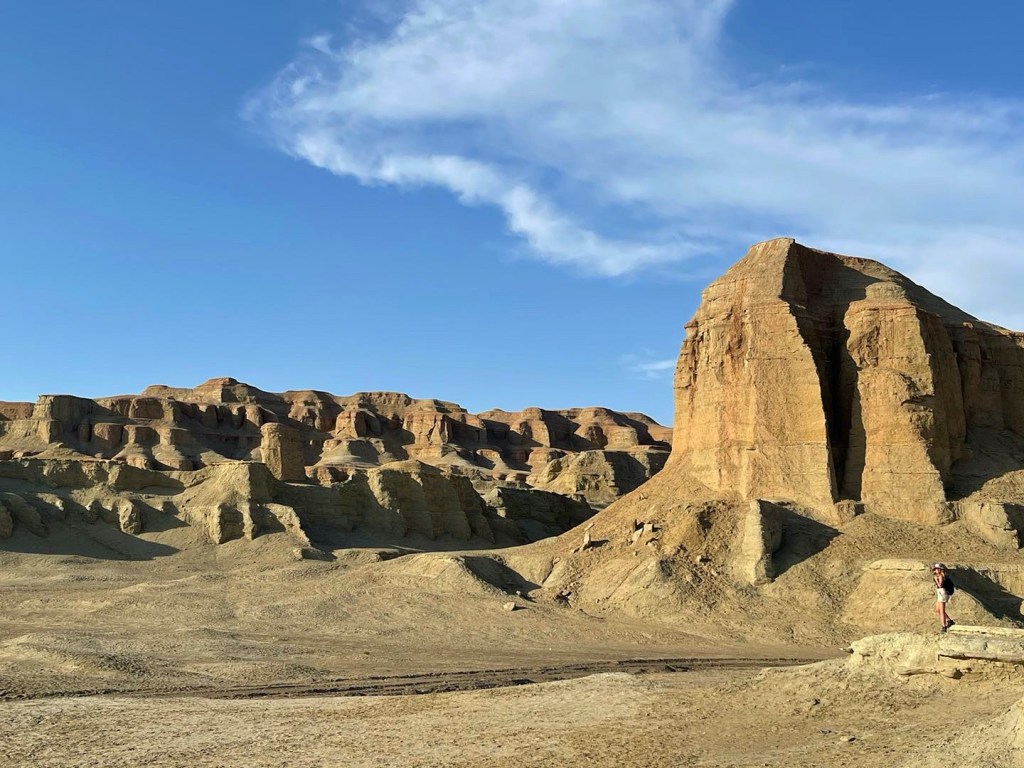
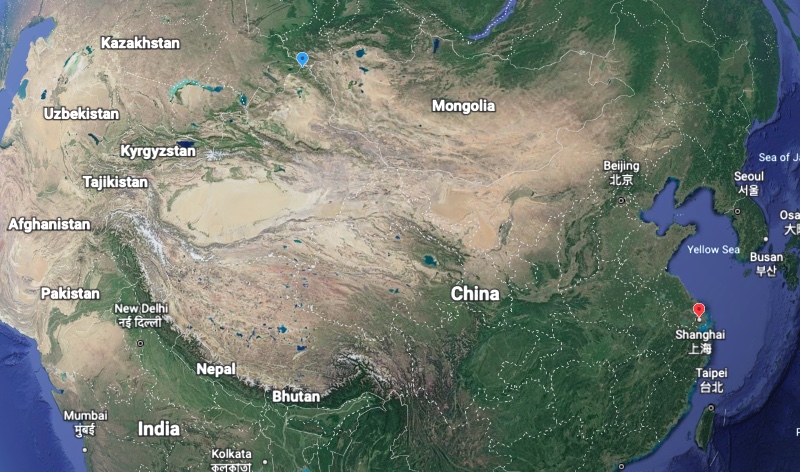
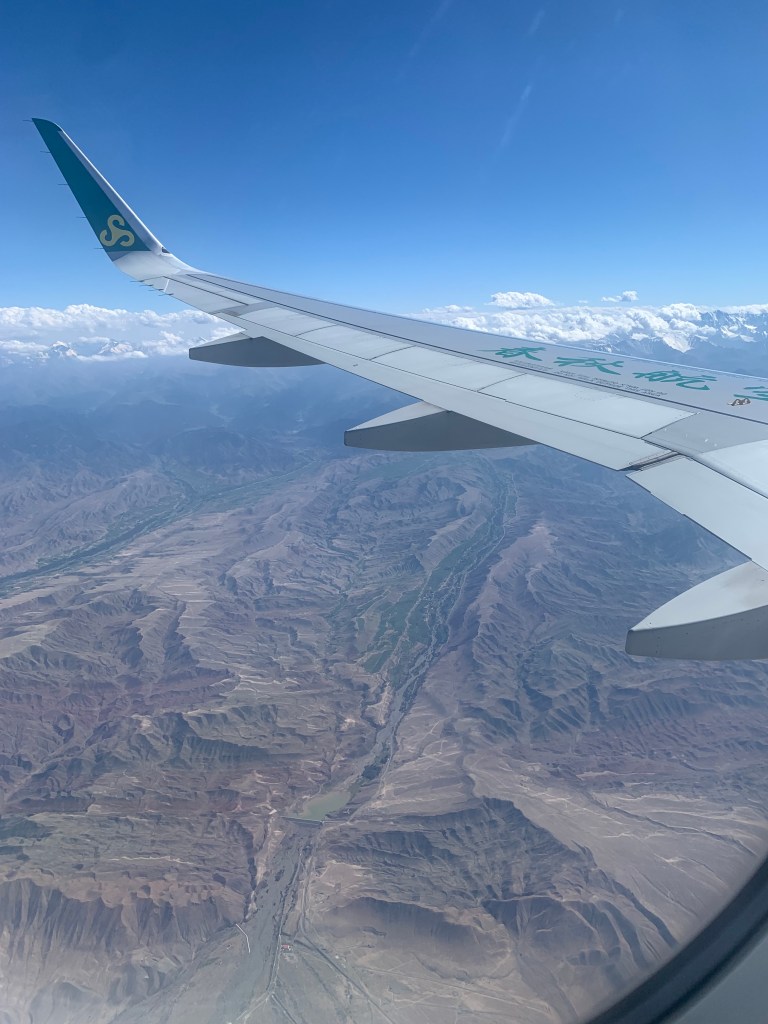
When touring through a region as large (truly, just….massive) as Xinjiang, you’ve got to take the negatives along with the positives. Negative: after having just finished a full day of driving to get to the desert, the next step was another 8+ hours in the van to get to our next destination. Positive: just look at where those 8 hours took us…
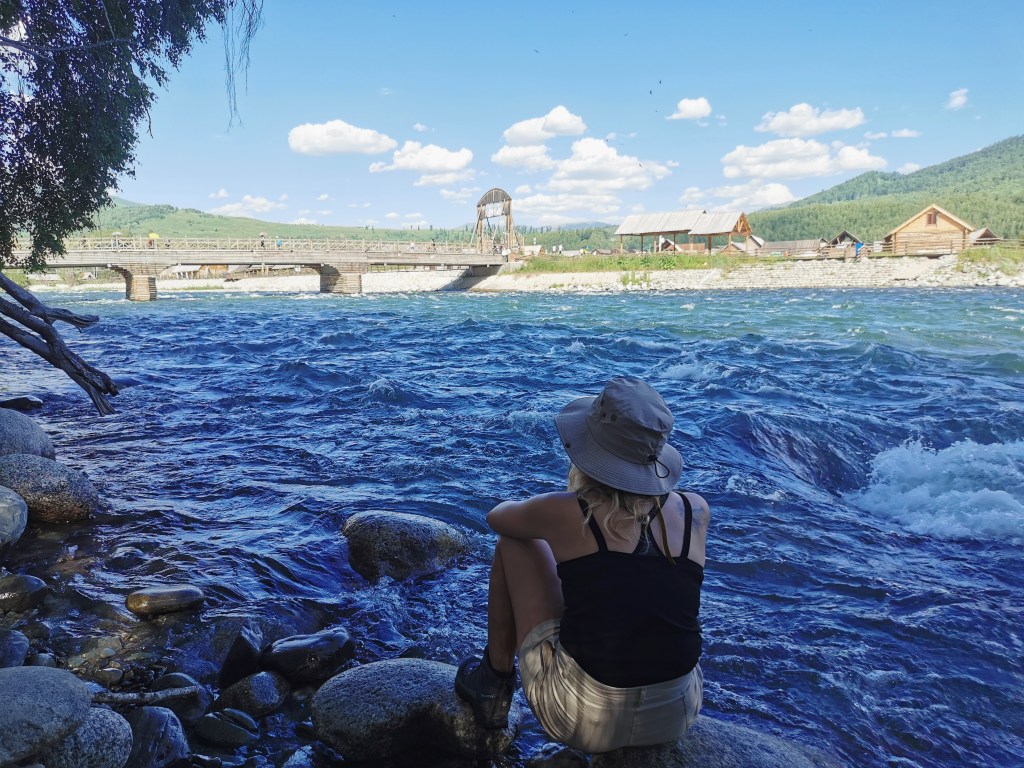
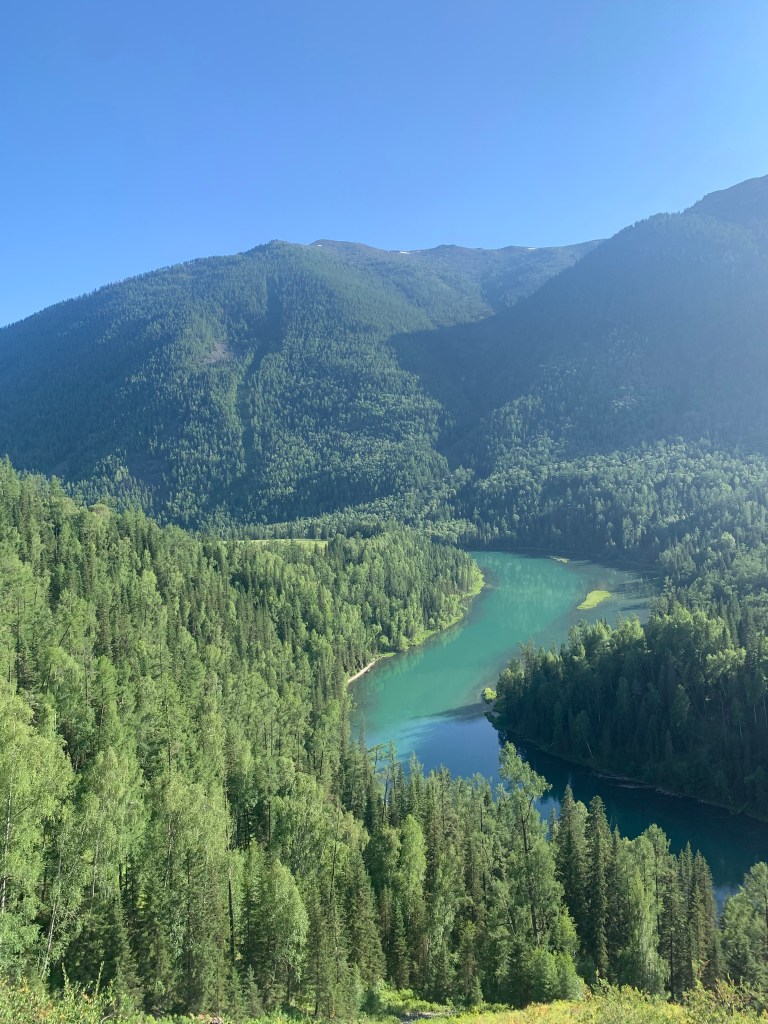
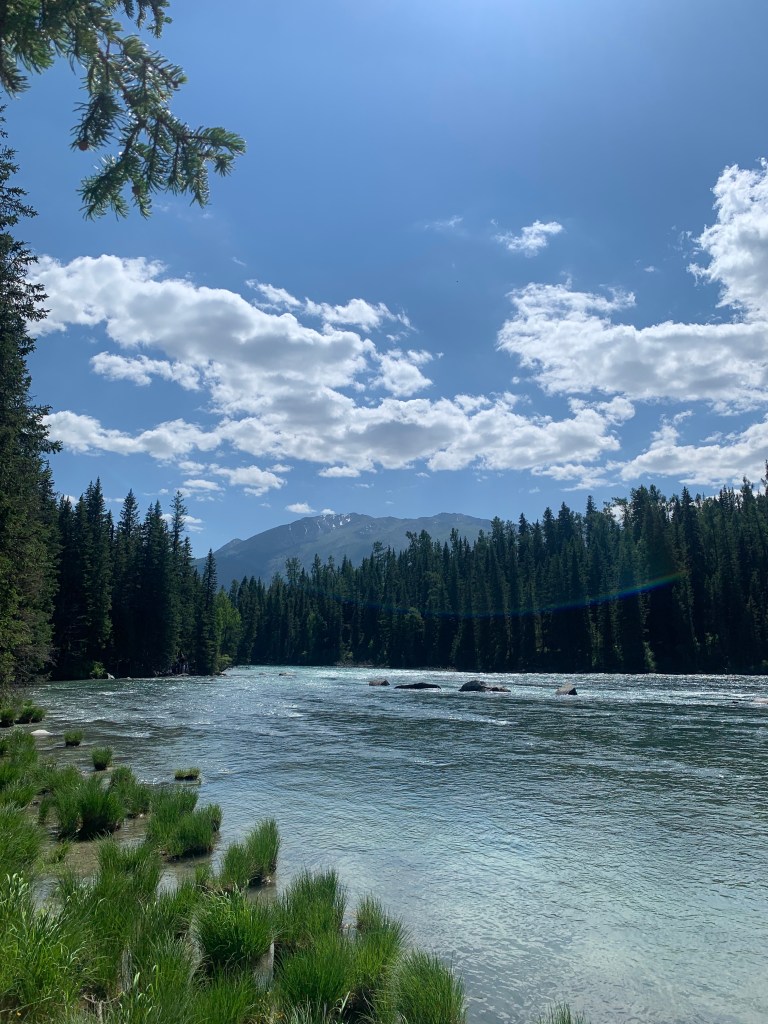
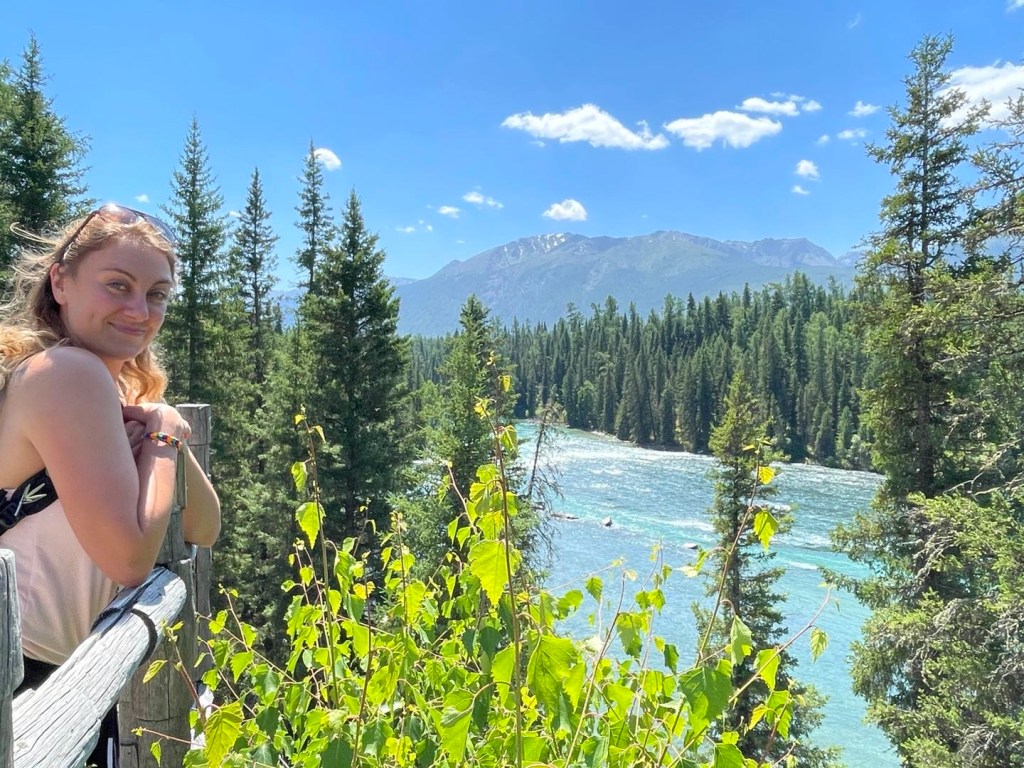
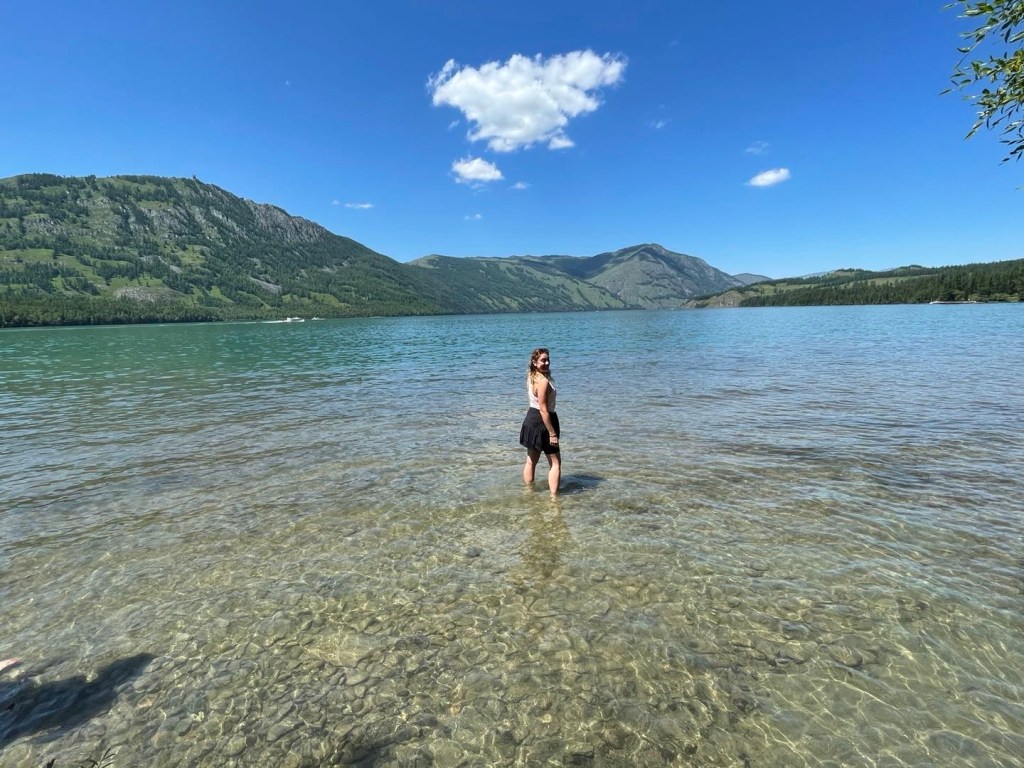
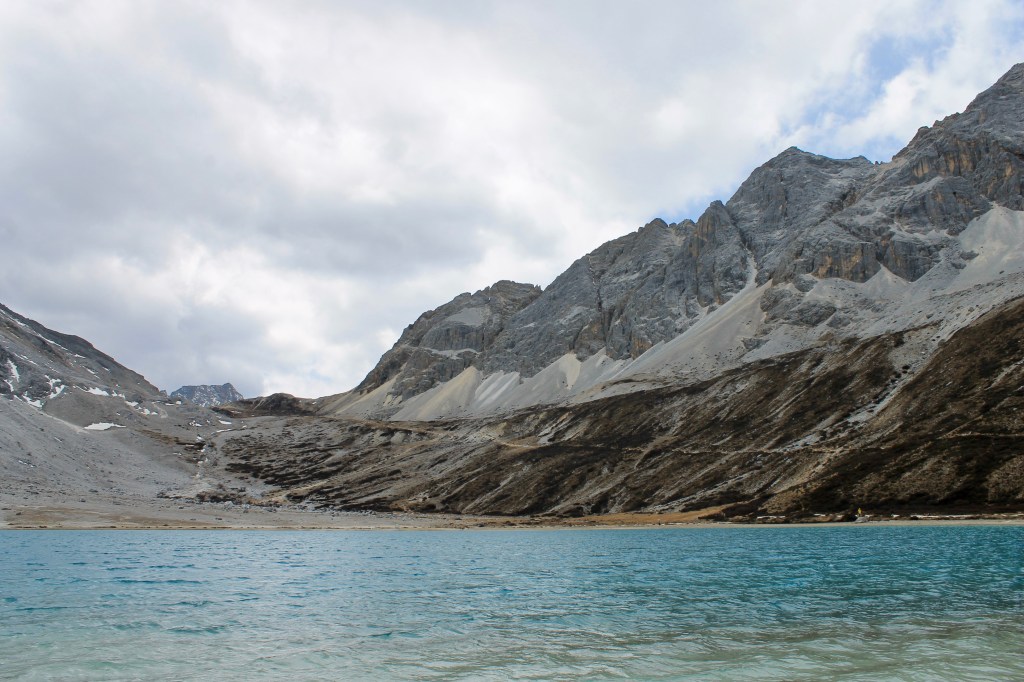
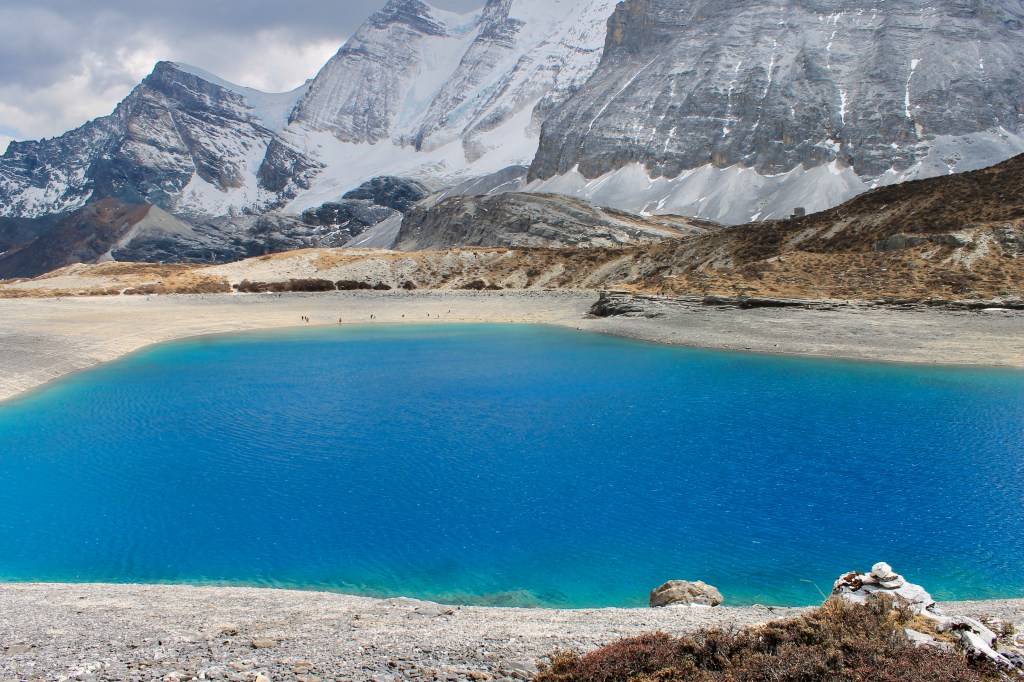
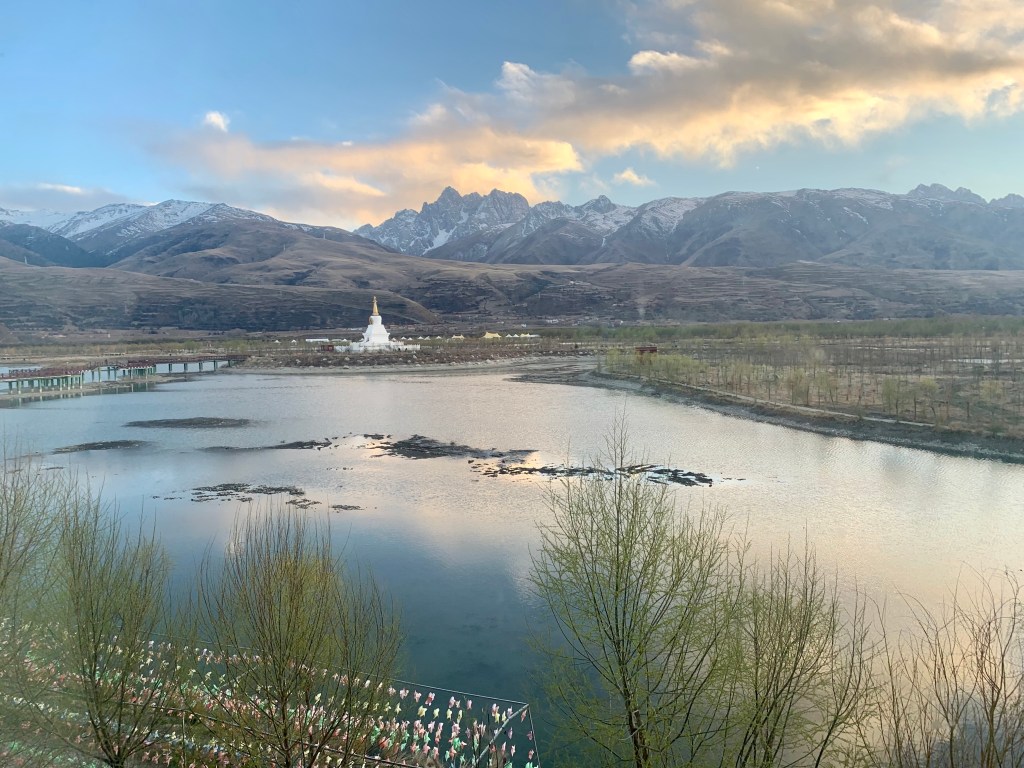
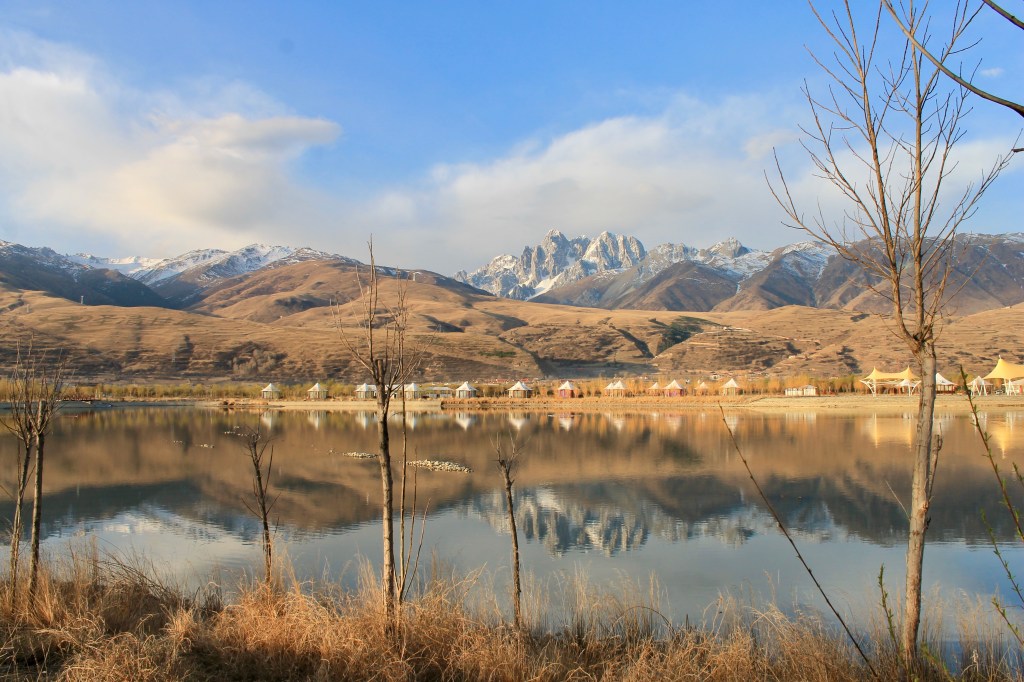
To break up the long (long, loooooooong) van ride, we were able to take a midday stop at 赛里木湖 Sayram Lake. Sayram – which means “blessing” in the Kazakh language – is the largest and highest alpine lake in all of Xinjiang. It is often thought of as a “Pearl of the Ancient Silk Road” and I mean, well, yeah. Just look at it!

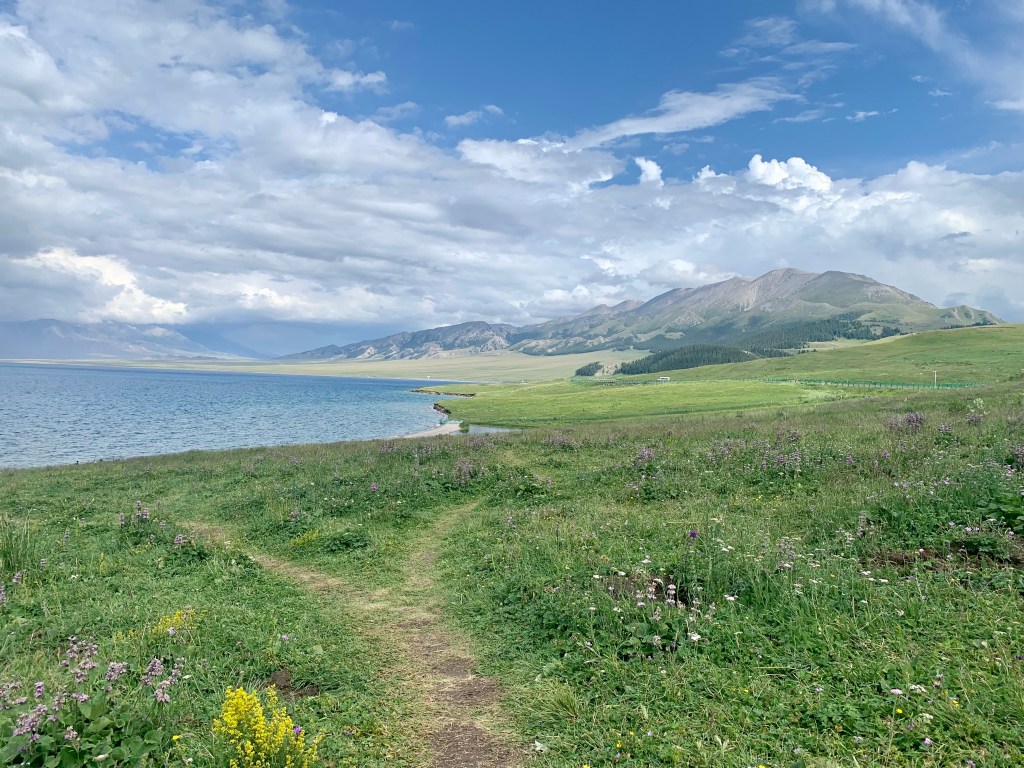
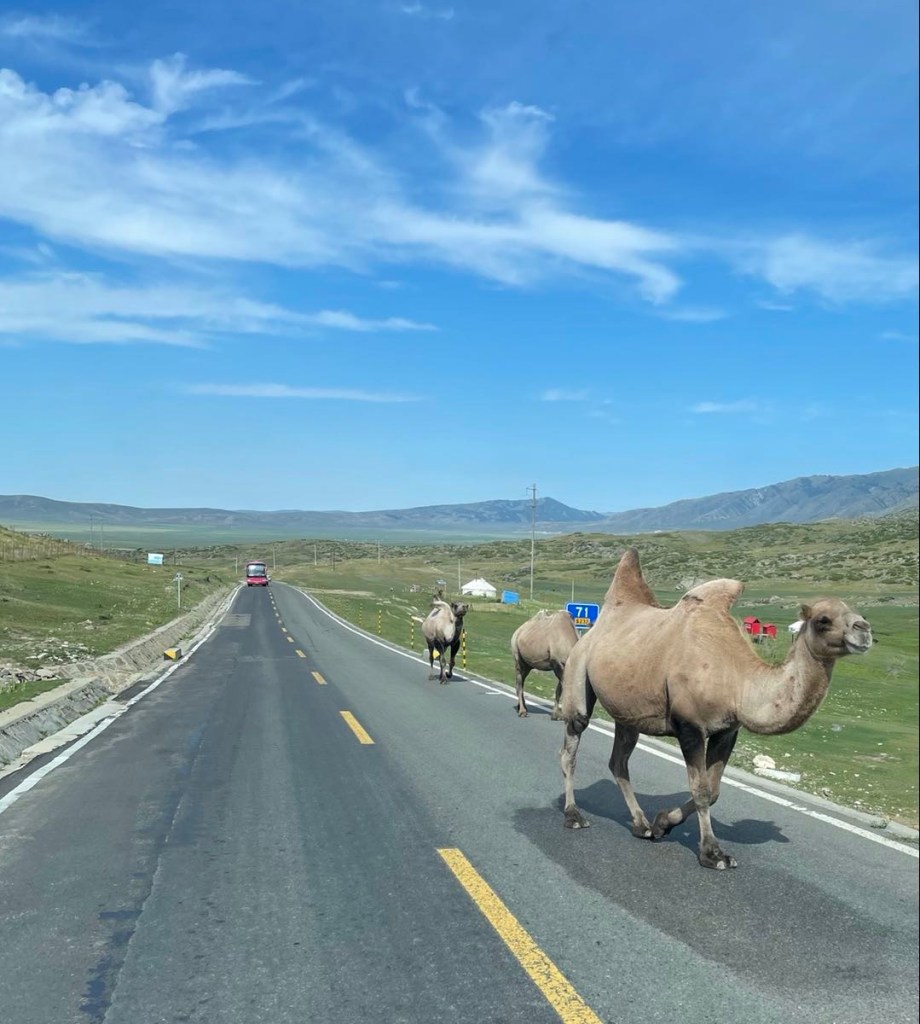
We could see a storm starting to make its way across the lake so we didn’t have too long to explore, but it felt amazing to get out and stretch my legs walking around the water a bit. There were some camels available for rides and photo ops, and various little pathways to walk around, but mostly there were a LOT of tourists taking pictures. Don’t be fooled by the pictures I post — in some (most) of these places, it takes quite a bit of effort to get a photo that isn’t swarming with other people. Don’t get me wrong, I too am one of those tourists wanting a picture, so I can’t be all that upset, but oh boy can it be a struggle.
It’s been something to adjust to, traveling through China — lakes like these, hikes, desert views, they’re never just a quaint, beautiful little spot you can happen to drive up to. Most are ticketed, require getting on a bus/golf cart to be driven there, and feel a bit like you’re waiting in line at Disney World when you first approach the gate. It’s why I am always so excited to go off and do my own thing, to veer from the trail on a hike, to walk a little faster than the rest of the people in my group: I am standing here in these breathtakingly beautiful forces of nature, and I just want some time to appreciate them without other people’s music and conversations. (We get it, you’re a travel snob, get over yourself, Madison.) I guess I share all of this just to say: don’t let the fancypants travel influencers fool you. Many of the travel photos you see online are curated, some even heavily photoshopped to adjust colors/erase the other people. Most of the beautiful things you’ll get to see, you’ll be sharing the view with a bunch of other people too. And I can complain about it all day long, but at the end of the day, I’m doing the same thing, aren’t I?
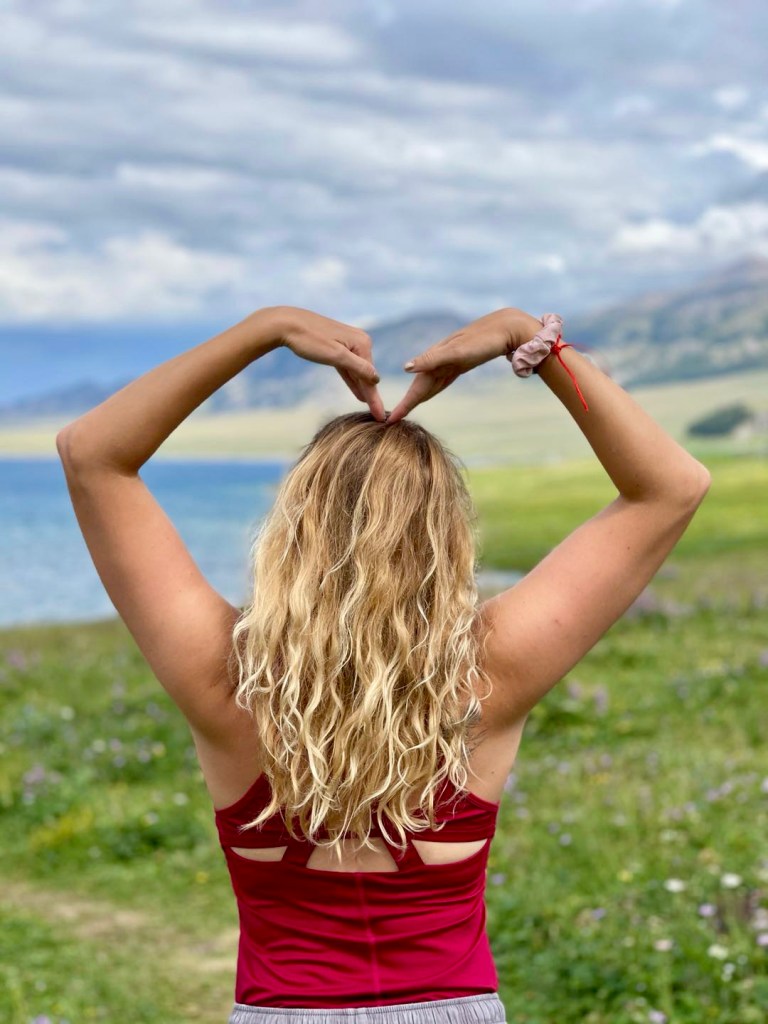
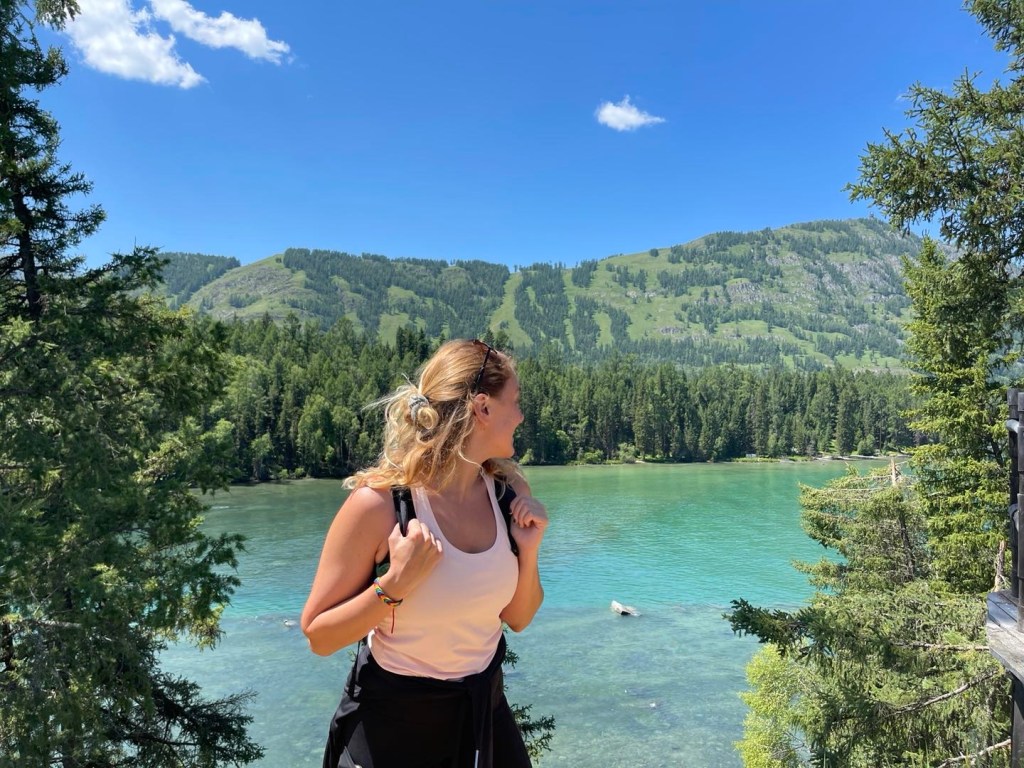
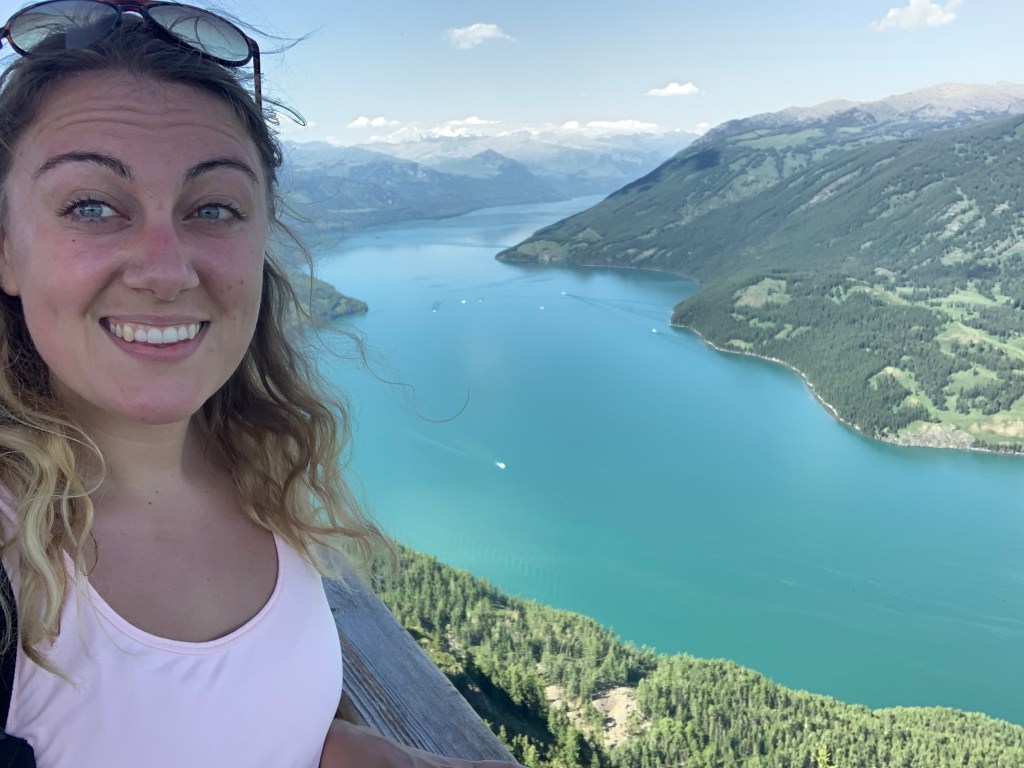
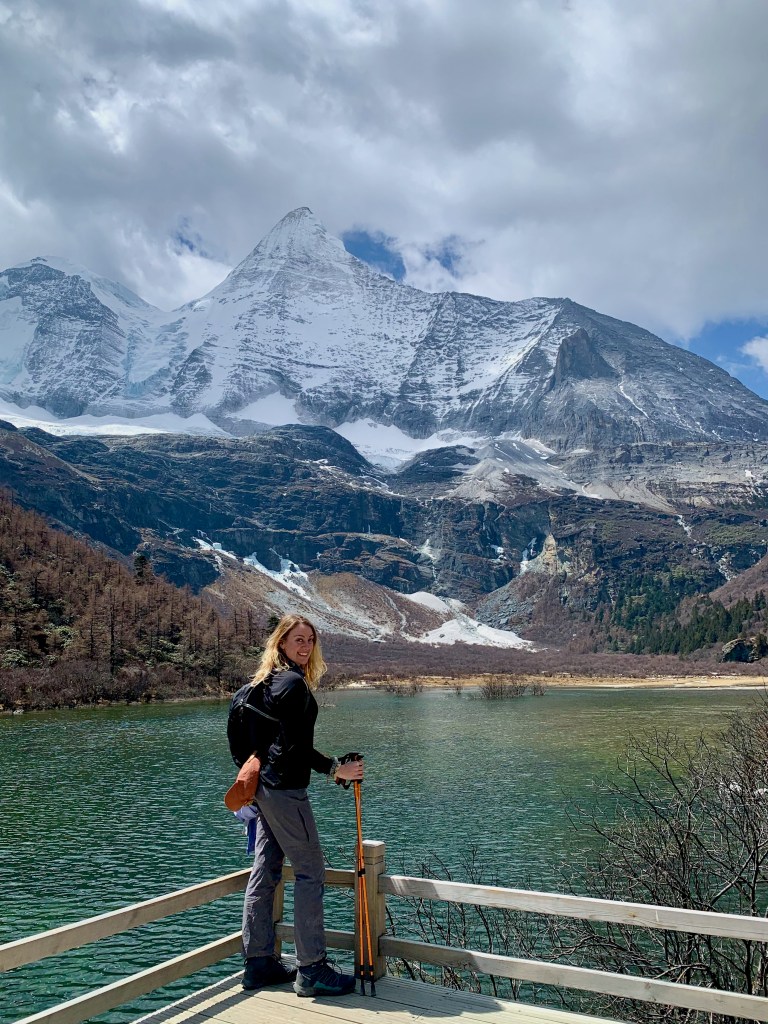
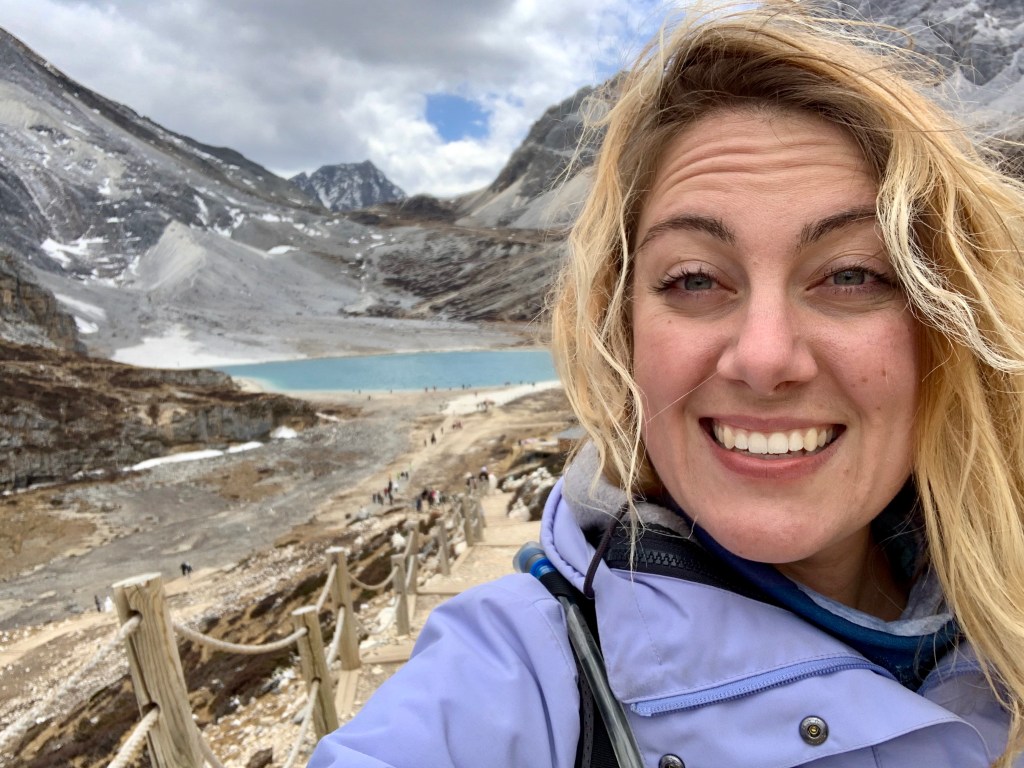
So anyways, speaking of pictures (cool segue Madie, saved it!): here is what may be the most epic-looking, hypothetical “meet the author” picture in the multiverse where I write a book. And here is the awkward tongue-blip picture that was taken just after. It wouldn’t be fair to post one without the other, eh?


We woke up the next morning in 霍城县 Huocheng County قورغاس ناھىيىسى of 伊犁州 Yili ىله وبلىسى ئىلى ئوبلاستى, or with its full Targaryan name: 伊犁哈萨克自治州 the Yili Kazakh Prefecture ىله قازاق اۆتونومىيالى وبلىسى ئىلى قازاق ئاپتونوم ئوبلاستى of the the Xinjiang Uyghur Autonomous Region of China. (I know, the many names can be a lot, and a bit confusing. But if I was trying to explain where I went to school to someone who had no knowledge of US geography, I would say the city of Philadelphia, in the state of Pennsylvania, on the east coast of the country of the United States. We don’t all have the same frames of reference. Zooming out to zoom in can be helpful and important.)
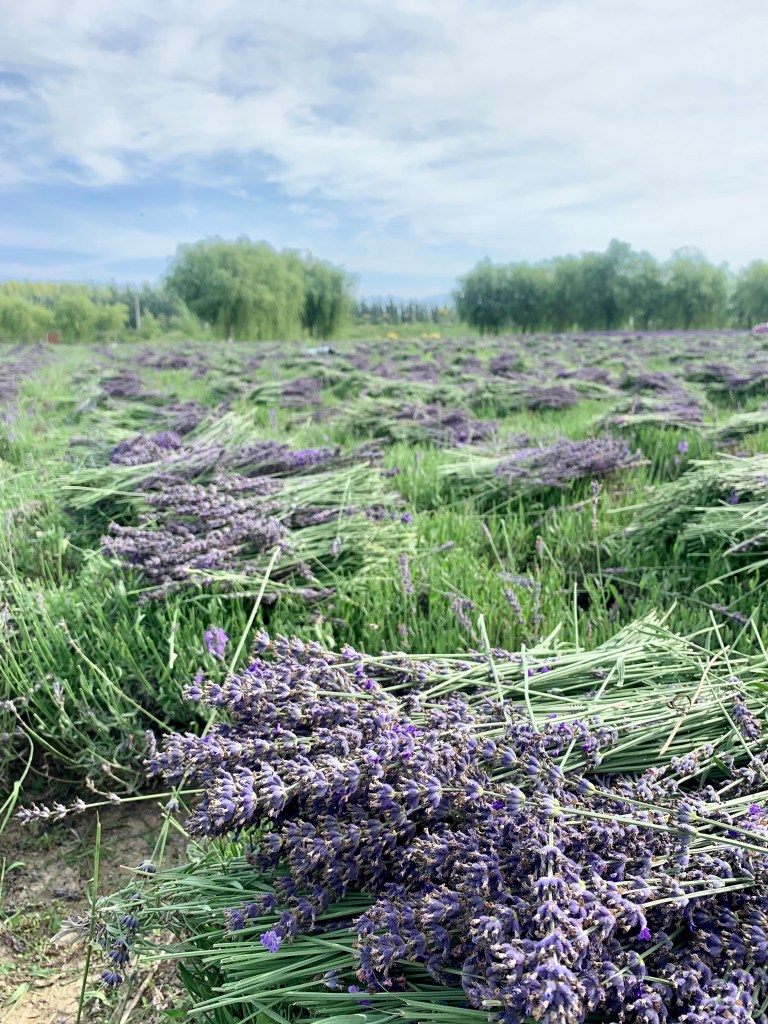
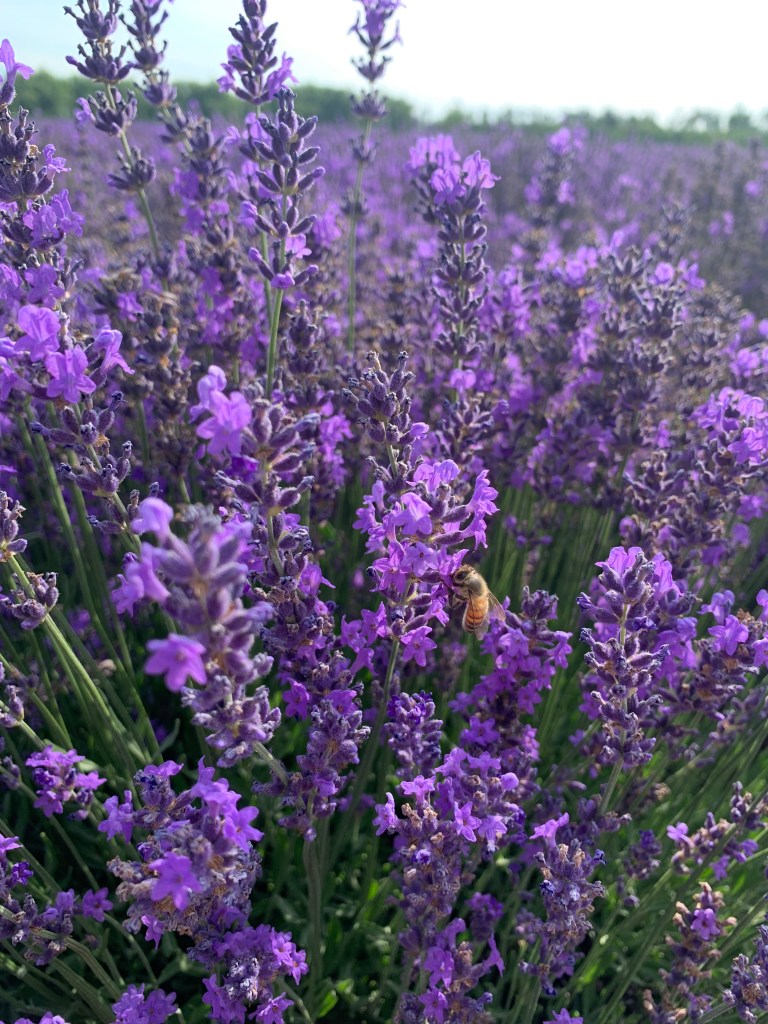
Yili is famous for its natural and historical sites, such as Sayram Lake (above!) and the Narat Grasslands (coming soon!), but it is also well known for something else that I never would have guessed: lavender! Following Provence in France and Hokkaido in Japan, Yili is the third largest producer of lavender anywhere in the world! Who knew?! Apparently, the climate in Yili is perfect for growing lavender — surrounded by mountains on three sides, humid, mild in the winter and cool in the summer, lots of sunshine… When driving, we were surrounded by fields of purple on all sides! Huocheng County is known as the “City of Lavender,” and so we couldn’t pass through without stopping to experience one of the farms for ourselves!
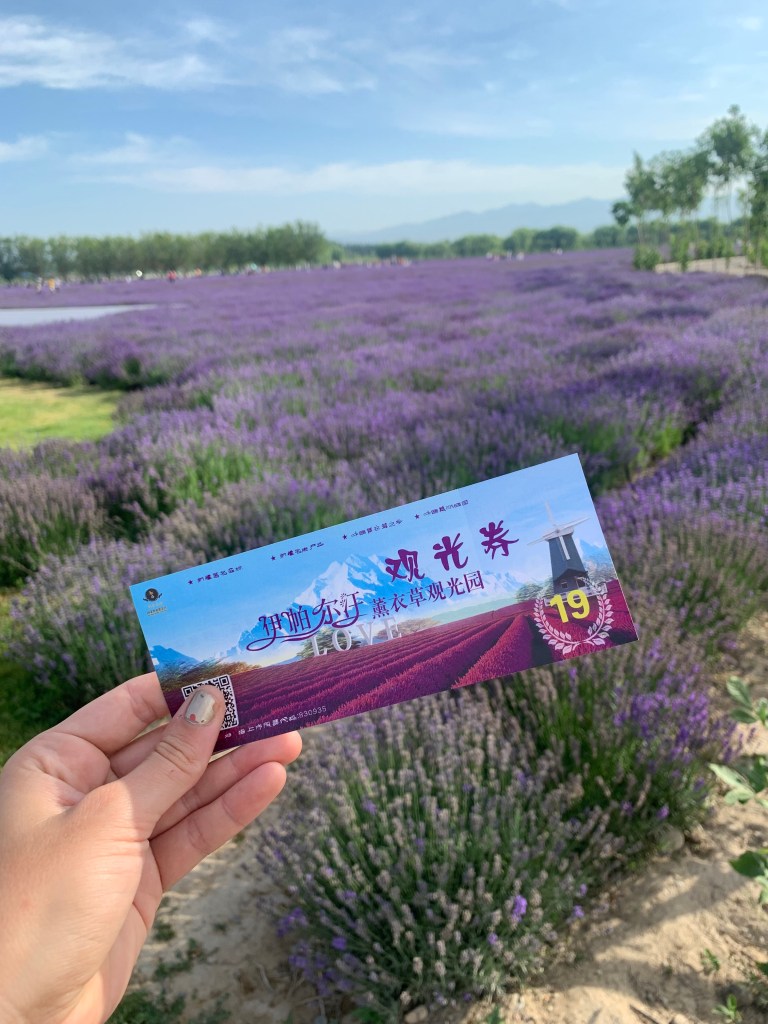


Now, I have to be honest, it took some real digging to try to figure out the name of the lavender farm we went to. (Admittedly, there are MANY to choose from. Close your eyes and point in a direction, you’ll see one.) Through a combination of attempting to translate the name on the ticket stub, searching for any close matches online, and digging through Trip.com pictures to look for recognizable landmarks, I was able to discover that the farm we went to was the Ipar Khan/Eprhan Lavender Tourist Park. We bought our tickets and walked through a small museum before reaching the giant sea of lavender awaiting us. I don’t know why every fairytale is not set in a field of lavender. It is absolutely MAGICAL.
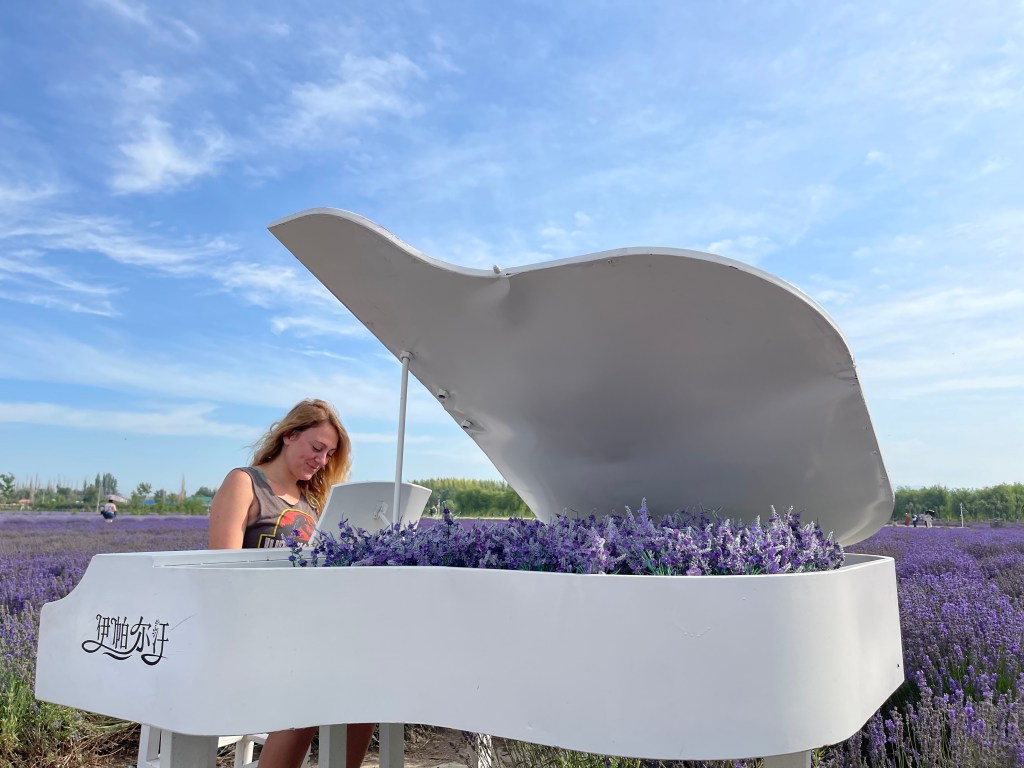
According to Eprhan’s website, they wanted the overall vibe of the park to be “romantic and fashionable,” and I’ve got to say, I think they achieved it. I mean, personally, just walking out into a field of vibrant purple was romantic and fashionable enough, but they also had a bunch of big props staged to encourage the taking of photos: a Cinderella-looking carriage, a giant white (fake) grand piano, an enormous diamond ring you could pose inside. (You know you’re at a Chinese tourism sight when there are photo props around…) (And yes, I did pose with the piano. Because duh. The ROMANCE of it all.)

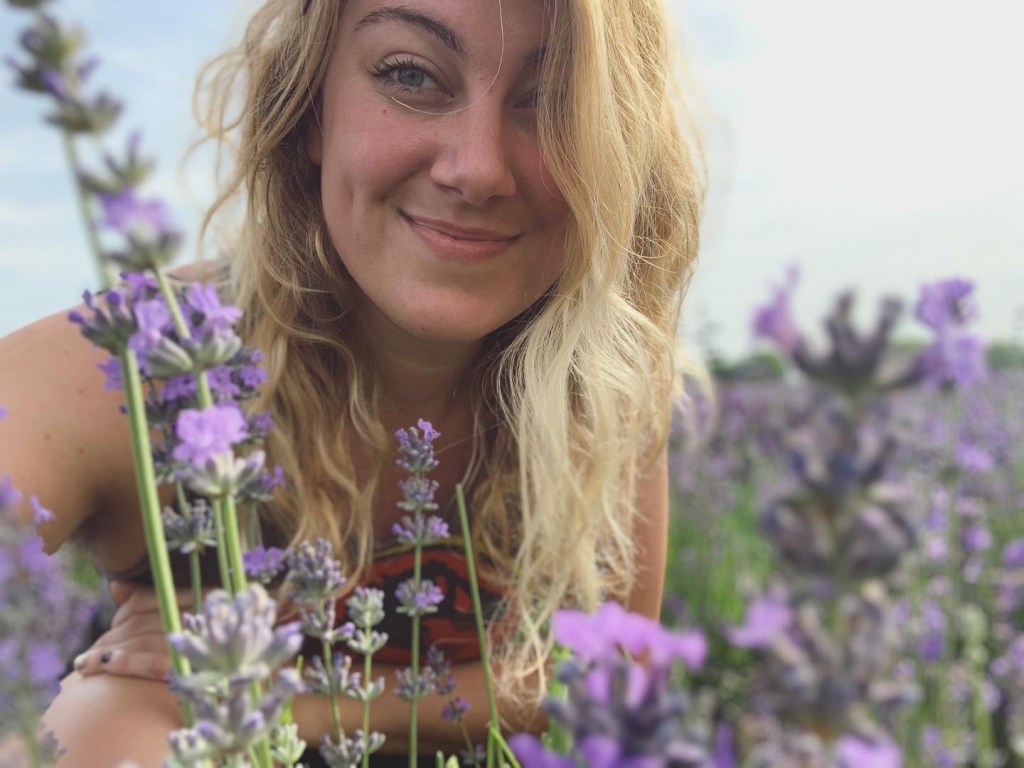

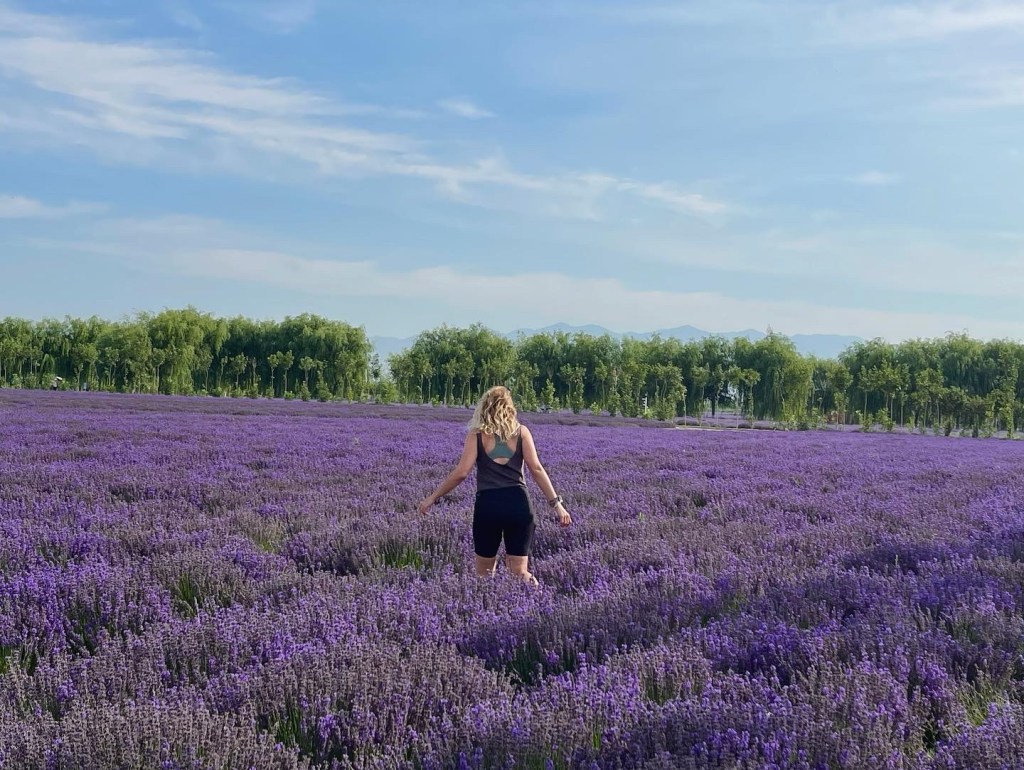
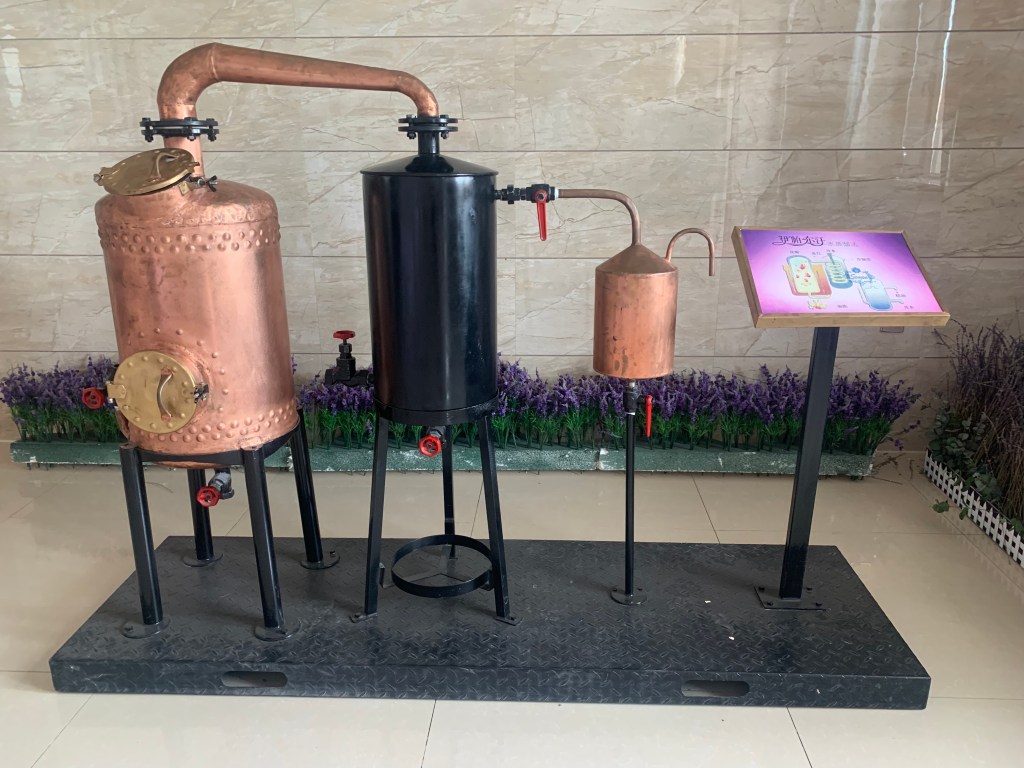
As we were led through the paths around the farm, we were accompanied by a tour guide who gave us more information about the lavender, the distillation process, and what makes the lavender at this farm special. Now, the Ravenclaw in me is struggling with how little information I have been able to find (I will not lie, I have spent hours trying every combination, translating web pages, ending up with only 3 Google results…it’s been a journey) BUT here’s what I’ve been able to put together based on the game of Telephone between our guide trying to translate the information from Uyghur to English, and the little I’ve been able to find online:
Eprhan’s lavender is known as space blue lavender because it was bred up in space! Basically, the Xinjiang Production and Construction Corps selected some special lavender seeds that were apparently really good at being seeds (sorry y’all, I’m doing my best here, I am not a space breeding expert…yet) then they sent them up on a returnable science and technology experimental satellite for 18 days for space breeding. Why? Does that affect the lavender somehow? Unclear. They say the lavender is now a deeper blue color than other lavender, so it is called their Space Blue Lavender. Eprhan then distills the essential oils to make all kinds of skincare and aromatherapy products. Do I entirely understand what’s going on here? Despite my best efforts, no. But still: I can now say I’ve visited a farm where they’ve been space breeding lavender. And I left with some space blue lavender lotion. I’ll take it.
Had to. Couldn’t help it.
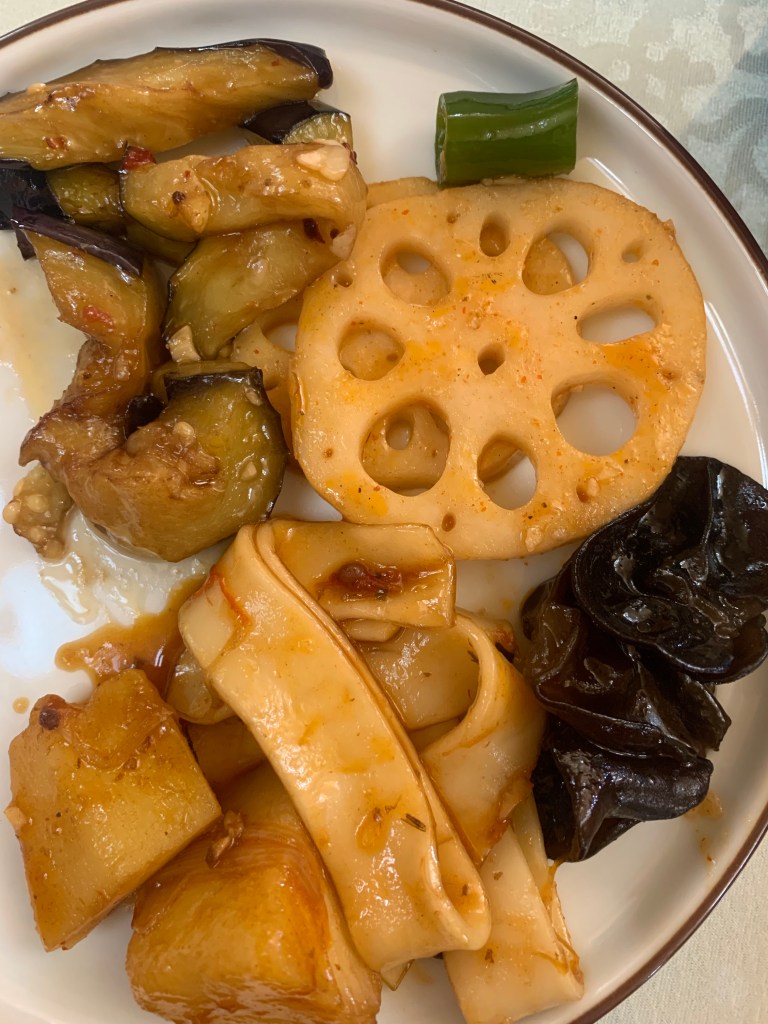
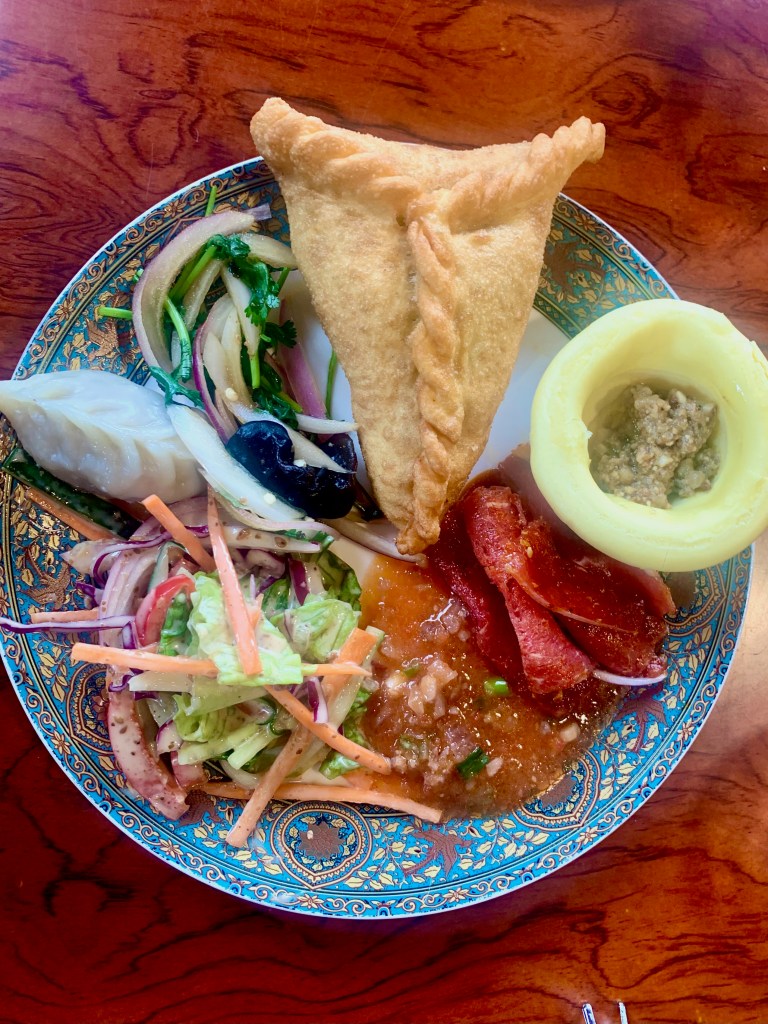
After romping around through lavender for an hour, we got back in the van and drove to the next place we’d be using as a home base for the next few days: 特克斯县 Tekes تېكەس ناھىيىسى. Now before I share anything more about Tekes, I MUST ramble on and share ALL the pictures from what may be my favorite restaurant I have ever been to, ever. It’s nothing fancy, our guide probably just knew the owners and so brought us, but we ate there three days in a row and it is probably my favorite of all of the food I’ve tried in China. (Which is saying a lot — I live in the home of the pork soup dumpling.) My friends, may I introduce you to: Uyghur cuisine.

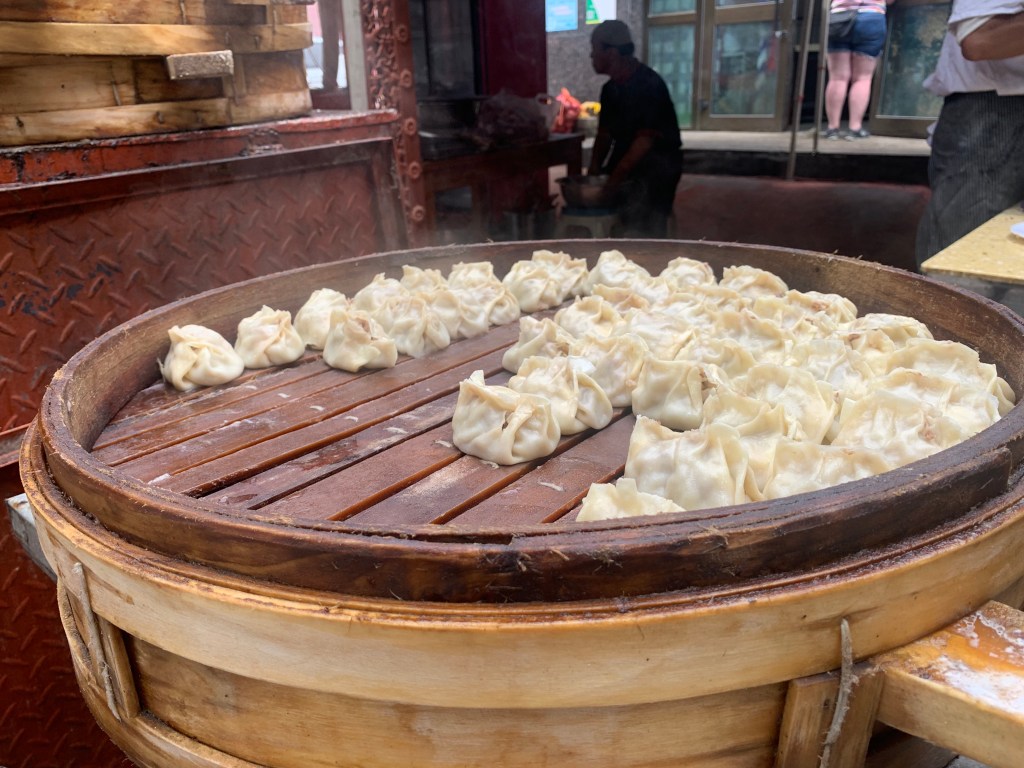
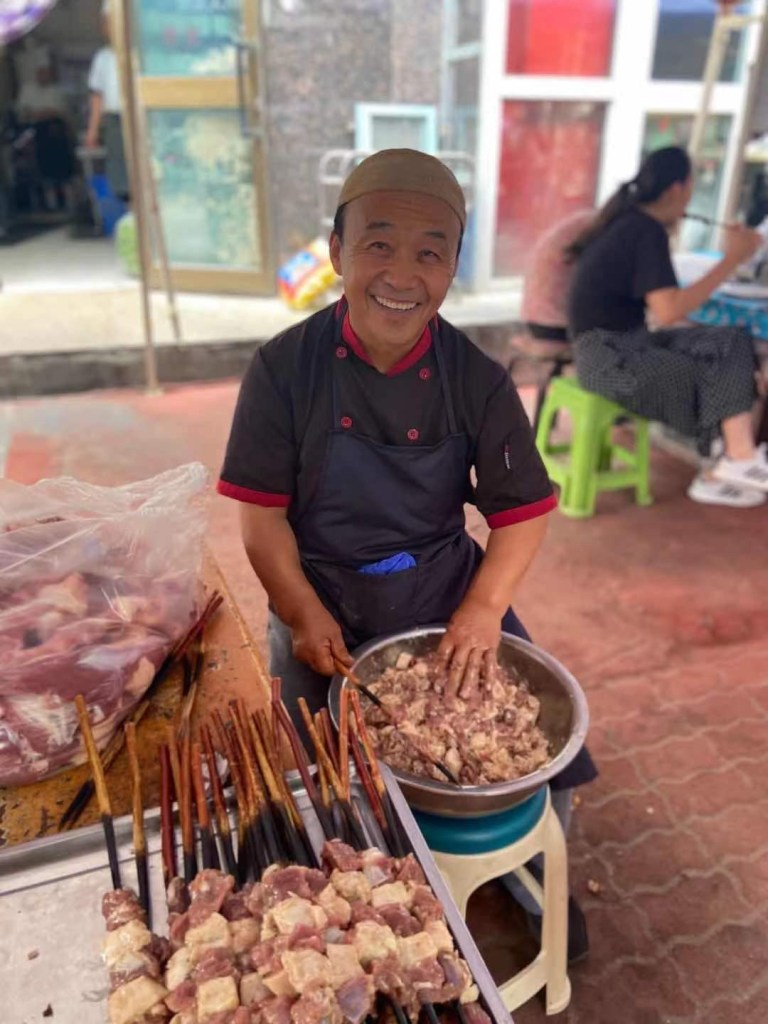
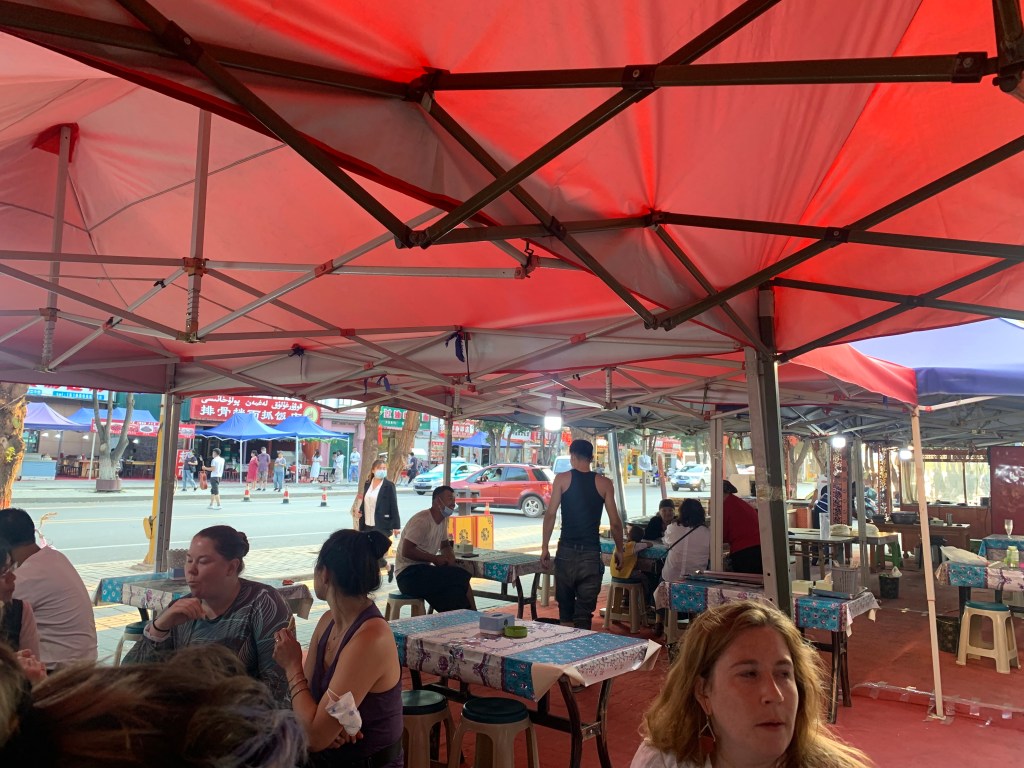
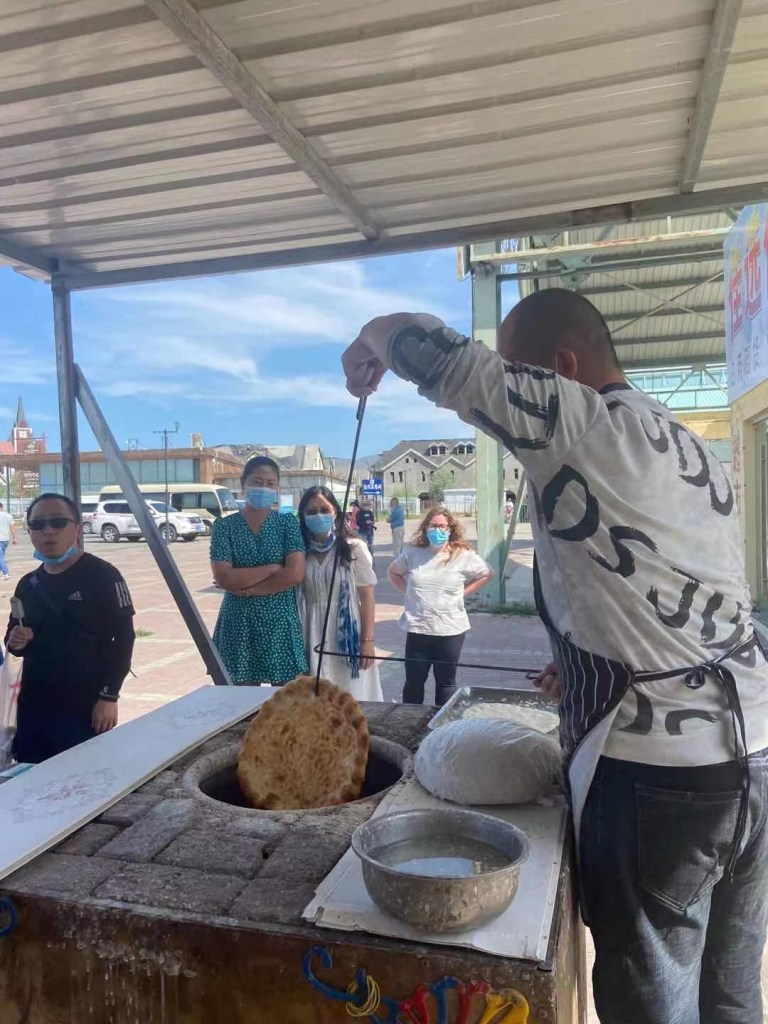
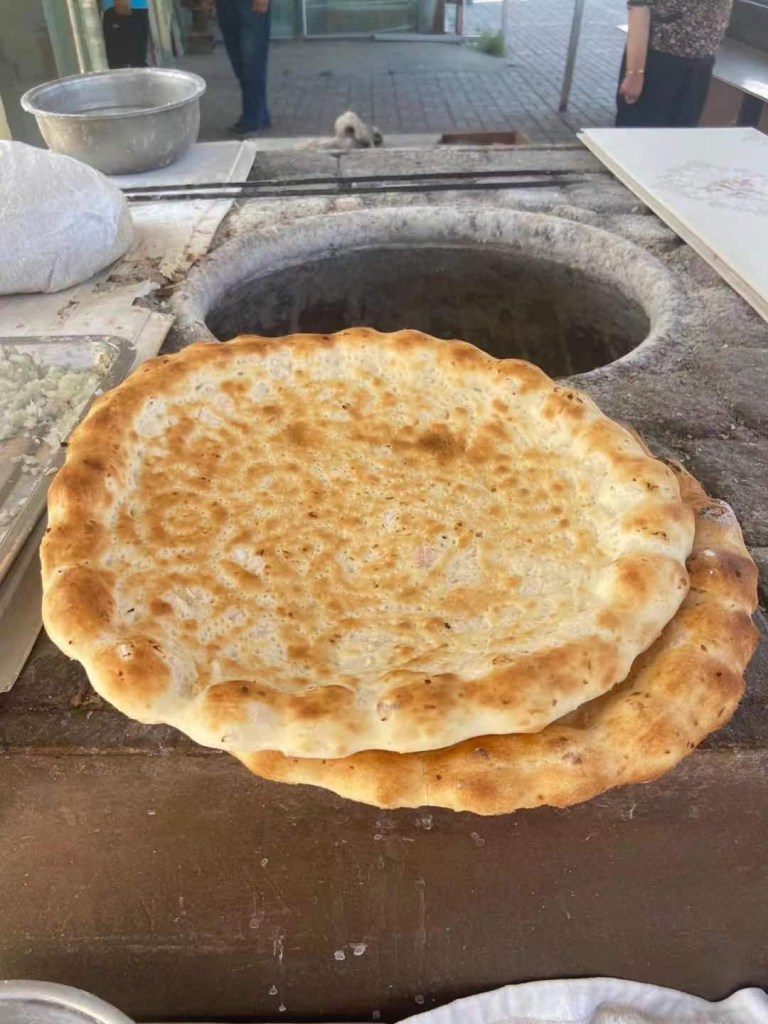
Look, I know I’m not normally a food blog (my palate is not nearly advanced enough) but I would be doing you a disservice if I did not do my damnedest to convince you to travel to Xinjiang just to try the food, so, a few words on some of my favorites. First up, our repeat offender from my last blog: بازارنان nang 馕. Also known as naan, nan, or nangbing, just about everywhere you look someone is baking up this delicious flatbread, ready for you fresh out of the tandoor oven. Sometimes served with sesame seeds, onions, or even stuffed with lamb, it is warm, fluffy, and wonderful.


Next up: زىخچە كاۋاپ Kawap 烤肉, or, lamb kebobs! I have to be honest, in my normal life I don’t eat a lot of meat, and I definitely do not eat a lot of lamb. When traveling, I make more exceptions than usual to try the local cuisine, and OH BOY am I glad I did. I don’t know if it’s because they alternate between a bite of meat and a bite of fat, back and forth on the skewer; the generous coating of cumin, salt, and other spices on every side; the way it’s grilled over the fire… it’s perfect. It’s just perfect.
We’ve also got manta (lamb dumplings) and polo (rice pilaf typically served with mutton and carrot) but my all-time favorite Uyghur dish? لەغمەن Laghman 拌面. Oh, laghman, how do I describe my love for thee? Probably the most famous in the cuisine, laghman is a dish composed of hand-pulled noodles, lamb (or, sometimes, beef), and fried vegetables such as peppers, tomatoes, onions, beans, and all sorts of amazing spices. I’m very much a texture person when I’m eating, and there is something about these noodles that is just so incredibly satisfying. After the dough is made, it is rolled, pulled, and stretched into long thin noodles, after which they are boiled and then covered with the sauce. The noodle-making is impressive, and they know it; many restaurants will have open windows into the kitchens just so you can watch the process. Sometimes the noodles are kept long, sometimes they’re cut into more bite-size pieces, either way I am absolutely in love with this dish.
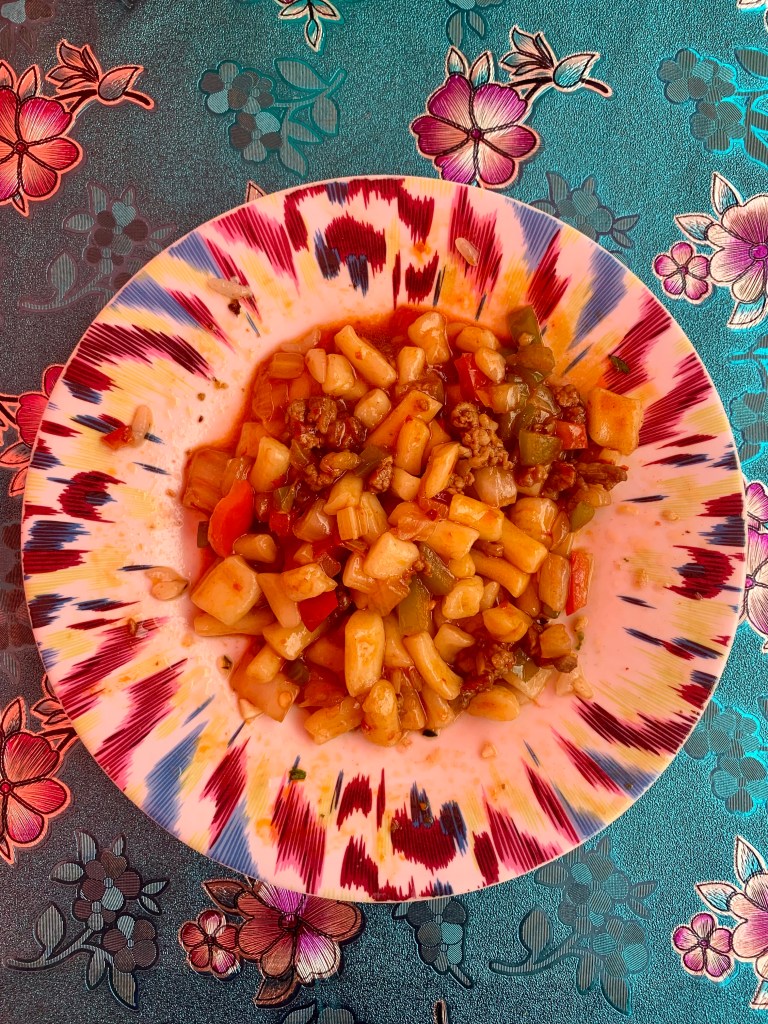
Laghman, short noodles 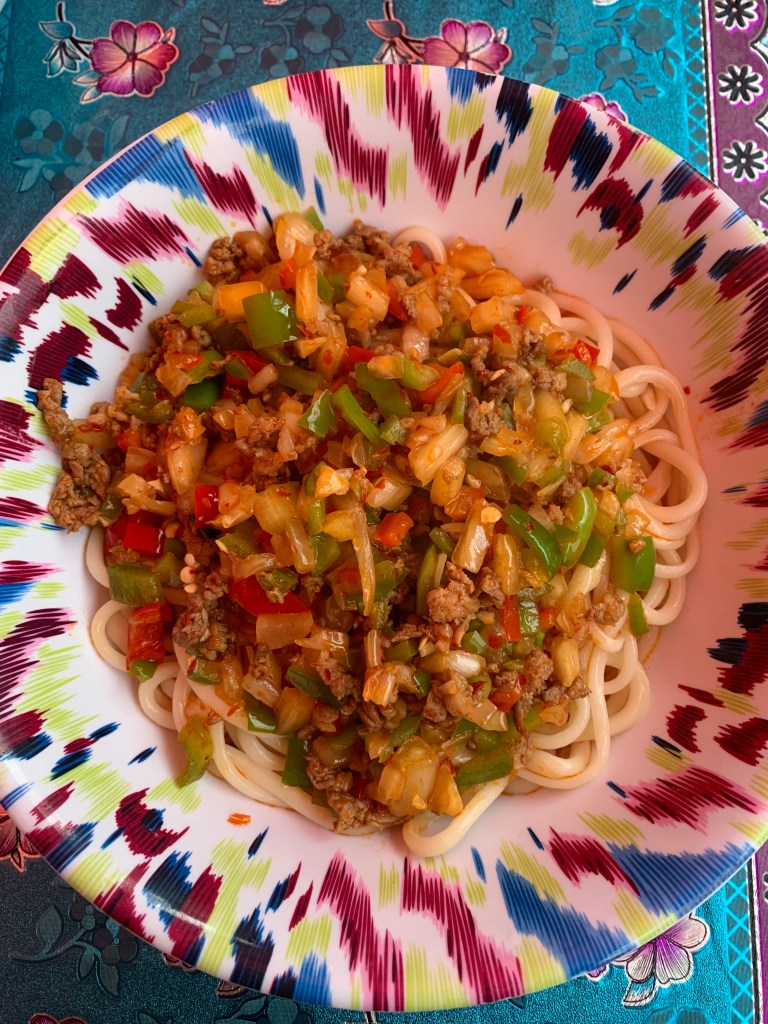
Laghman, long noodles 
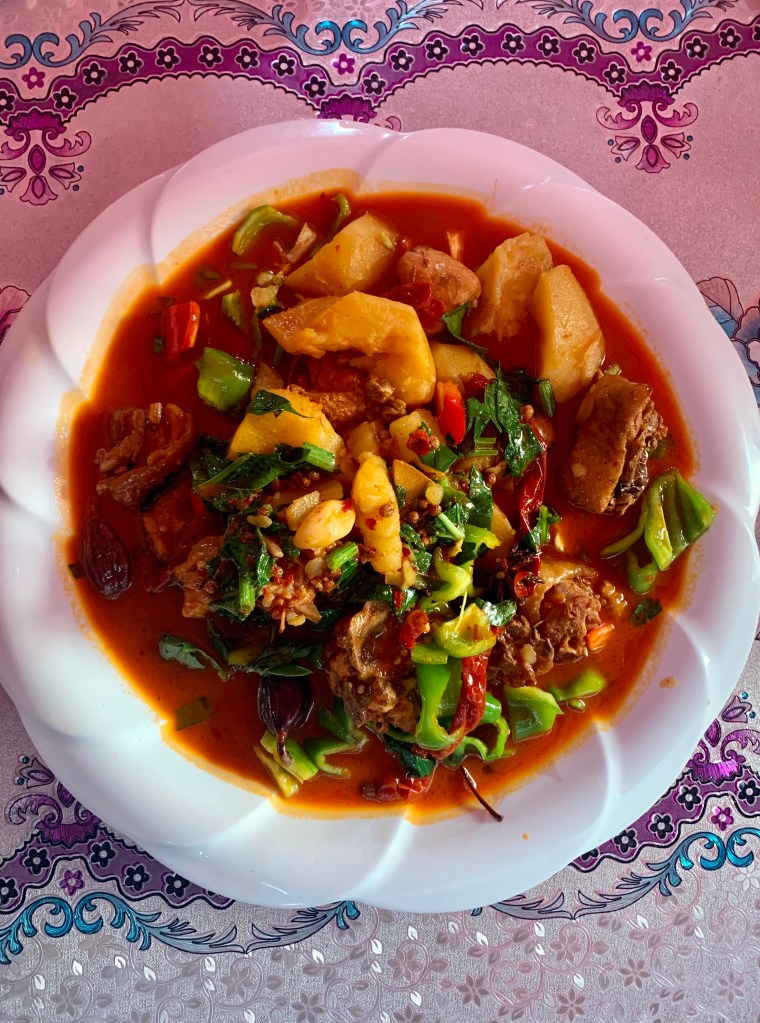


Polo & Manta
And now, to finish off my raving about dining in Xinjiang (for now) – kawas. If laghman wins favorite food in Xinjiang, kawas wins favorite drink, hands down. Kawas (or kvass/kavas) is a carbonated, fermented, non-alcoholic, honey-sweetened cup of happiness and joy. It’s like a honey beer. But bubbly. Sort of. It was likely introduced to Xinjiang by Russians in the 19th century, and is enjoyed throughout many Slavic countries. Guys, this may be my new favorite drink. In Xinjiang, it is EVERYWHERE. Served out of these giant barrels. We ordered an entire jug of it for the table, and took the leftovers back to the hotel with us. Worth it!!


After absolutely stuffing our faces, we had the afternoon to explore Tekes. What makes the central part of the county — called Tekes Bagua City or Tekes Town — interesting is that it was built in the shape of a 八卦 bagua, the 8-sided shape used in Taoist cosmology to represent the 8 fundamental principles of reality: Heaven, Earth, Wind, Thunder, Water, Fire, Mountain, and Lake. (Think of feng shui!) With eight streets that meet in the very center connected by four rings of roads moving outwards, it was very cool to see that the city operates without any traffic lights whatsoever!

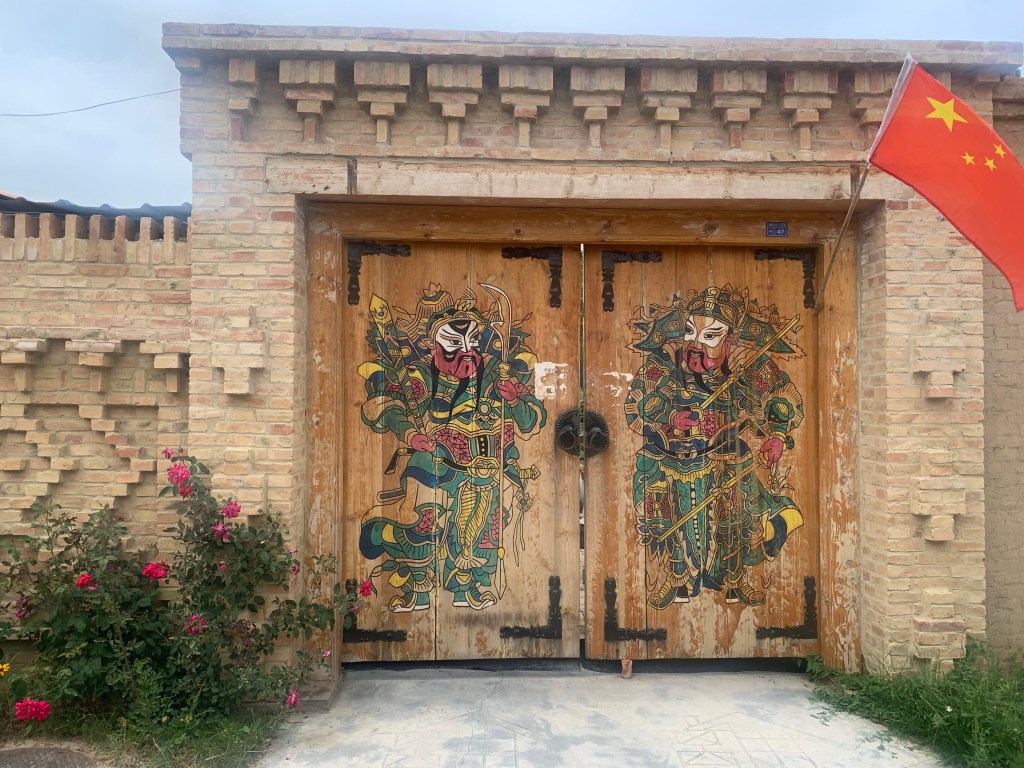
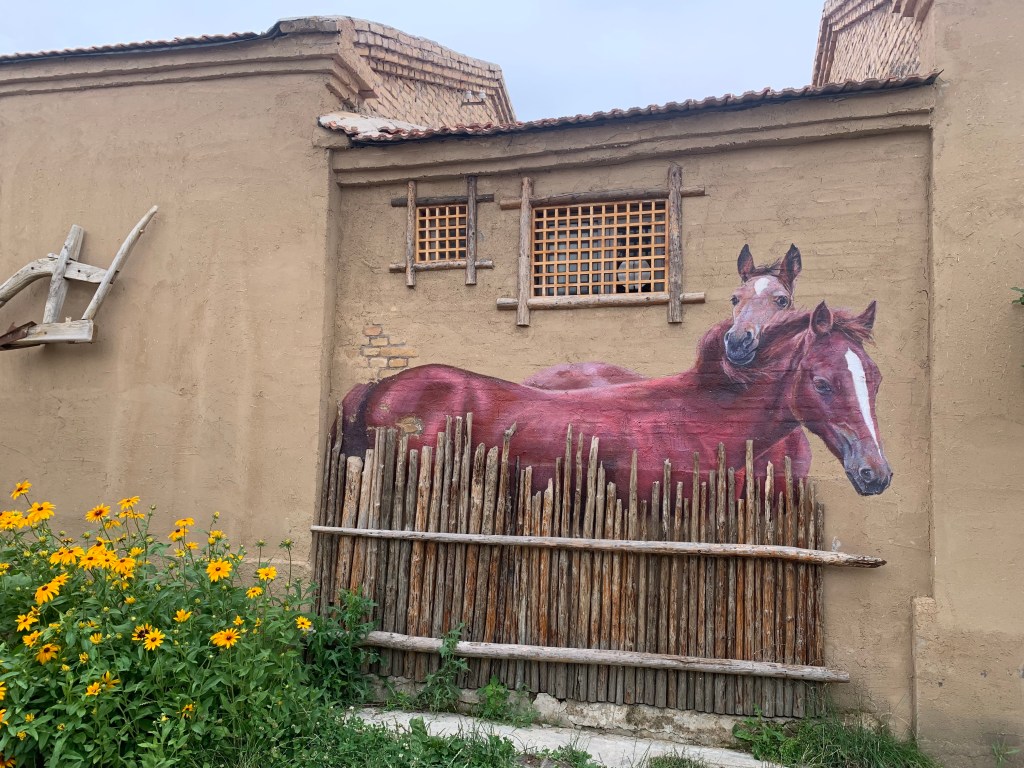
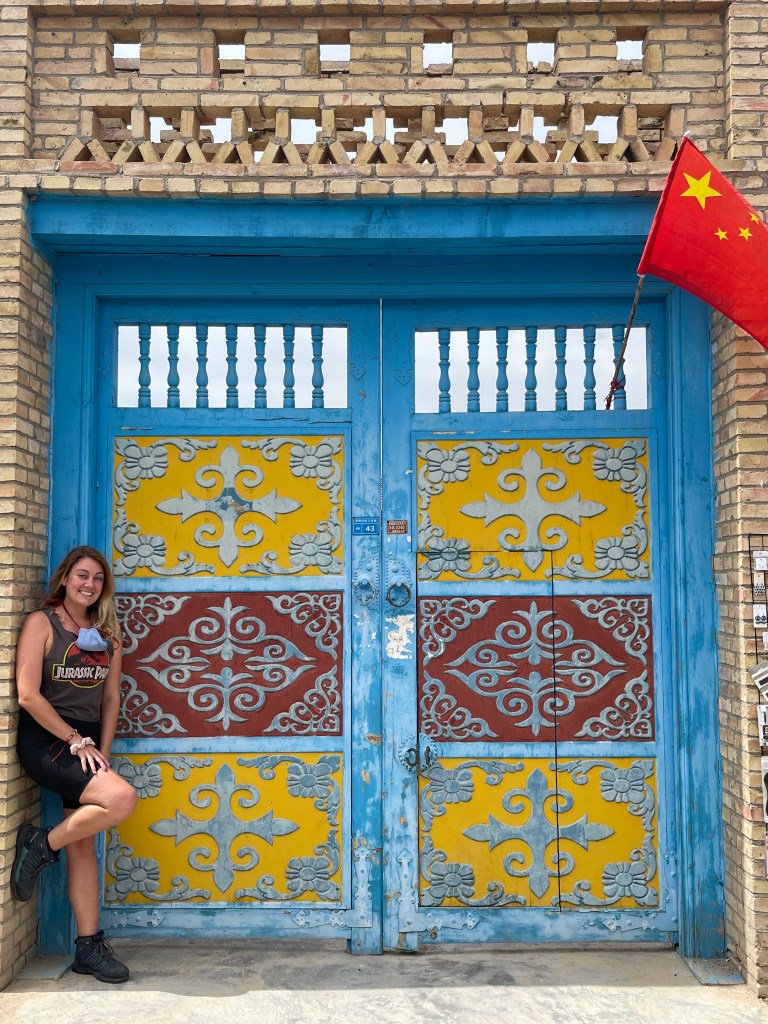
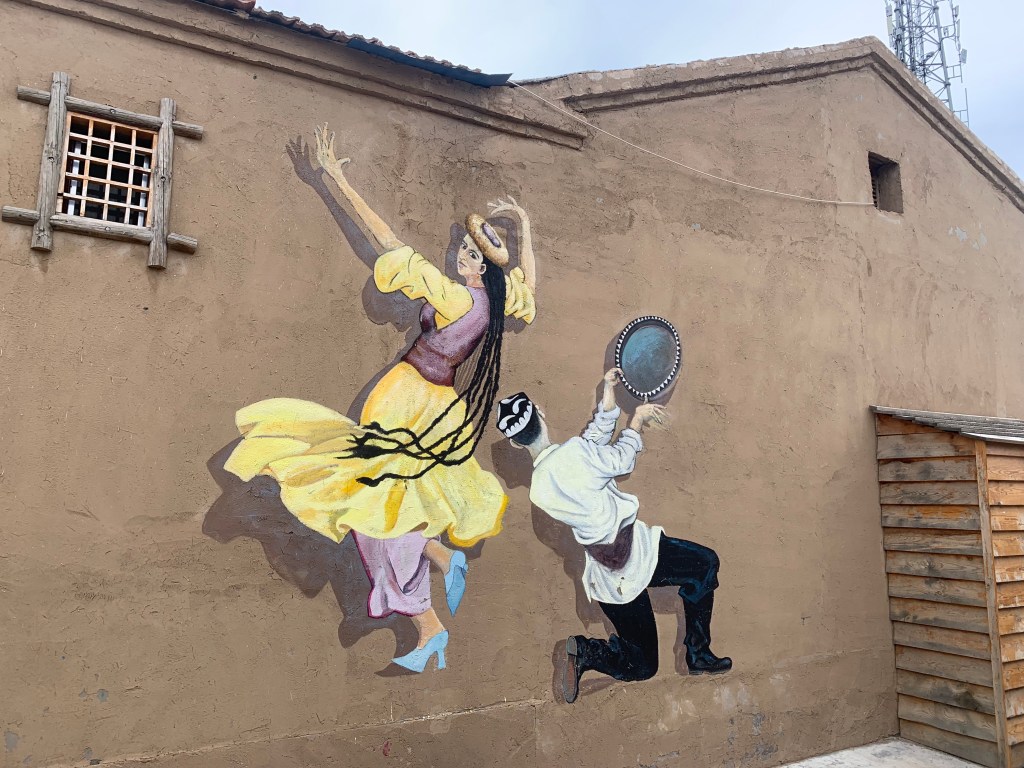
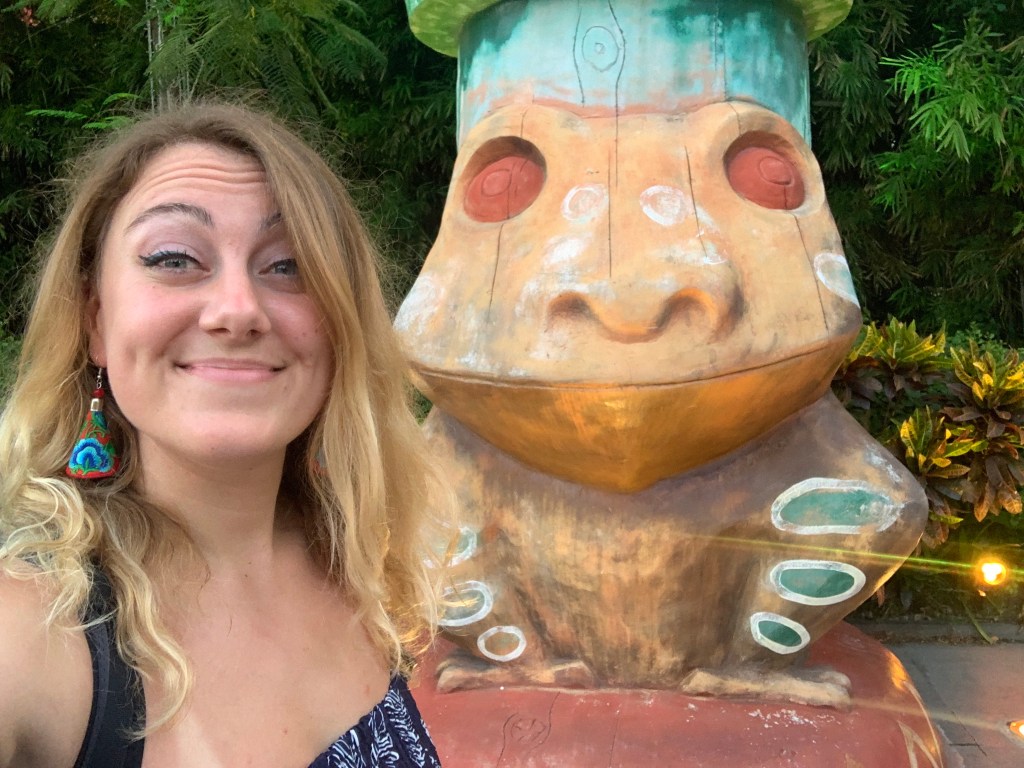
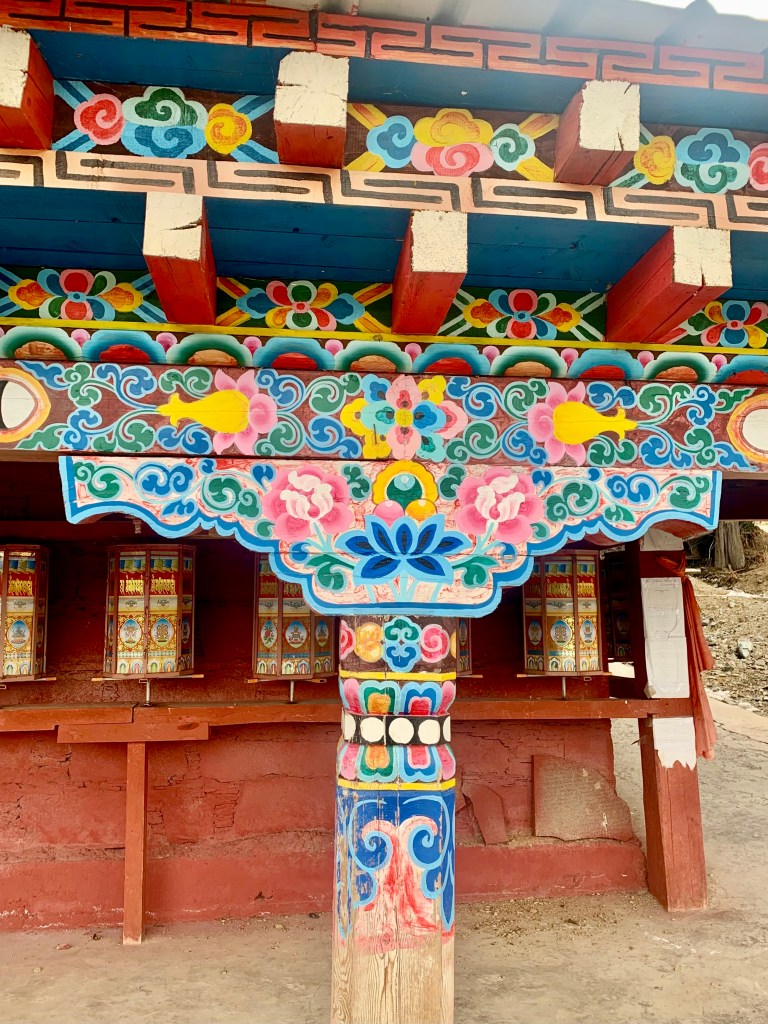
Near to our hotel, we wandered our way into a folk pedestrian street that divided up into little areas for shopping, eating, and observing various cultural displays. Though many of the shops seemed to be closed while we were there (except for the few who, seeing us coming, decided to open their doors) we still managed to find ourselves another glass of kawas and proceeded to walk around looking at all of the beautiful street art! (I know, way too many pictures on this post, but can you blame me??!)





As I look back on these pictures while writing these blogs (admittedly, a few too many months later than I intended to, and now stuck in a 5+ week citywide lockdown), I am reminded again just how lucky I have been to be able to travel to Xinjiang. This is a part of the world that, in all likelihood, my friends and family will never see. It is not your typical international travel destination. And so, as always, it is my hope that in reading this, you too will have your curiosity ignited, will learn about these new cultures and awe-inspiring places, and join me in marveling at all that our planet has to offer. It’s a great big world out there, and I intend to see as much of it as I can. Hopefully you’ll stick along for the ride.




































































 Adventure in the Great Wide Somewhere