After returning home from Sanya, I packed up my backpack for what would be the longest and most epic of my summer 2021 travels: a 15-day trip to Xinjiang.
Now, before I get into it, a note: these next few blog posts are ones I have been unsure of how to begin. Visiting this part of the world is tricky, especially as a foreigner, and there is a lot of political tension surrounding it. (If you are not aware… do some research.) That being said, that’s not what I plan on getting into with my writing these. My purpose in blogging while traveling is to share the beauty and wonder of all of the cultures and places I am visiting – to bridge the gap between “us” and “them” that creeps its way into our brains. Leading with love. Xinjiang is one of the most beautiful places that I’ve ever visited, with a vibrant, unique culture. I am excited to share what I’ve learned with you. (And hey, if we are ever in person, I am happy to chat more about all of this and more offline over a drink or two.)
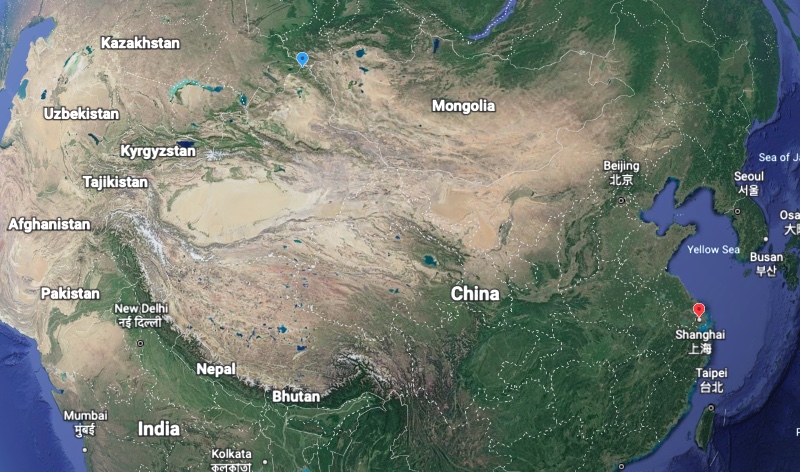
新疆 Xinjiang (or, the 新疆维吾尔自治区 Xinjiang Uyghur Autonomous Region شىنجاڭ ئۇيغۇر ئاپتونوم رايونى) is the largest of all of China’s provinces, though sparsely populated: though it spans over 1.6 million square kilometers (roughly the size of Iran!) it has around the same number of people as the city of Shanghai, at 25 million. AKA we spent a few 8 hour driving days seeing nothing but desert, and oh boy is there a lot of it – only about 10% of the land is able to be inhabited! Looking at a map, Xinjiang occupies the entire northwest corner of China; it shares a border with 8 different countries – Russia, Mongolia, Kazakhstan, Kyrgyzstan, Tajikistan, Afghanistan, Pakistan, and India. (Try saying that 5 times fast.) A key link on the Silk Road, Xinjiang is known for its music, fruit, carpets, minerals, gas, and so much more!
When planning out my summer travel, I knew I wanted to hit this region. It looked so different from everything else I’d seen so far in China, and was a part of the world I’d never even come close to experiencing before. Xinjiang is divided by one of the largest continuous mountain ranges in the world, extending 2,500 km roughly west-east across Central Asia: 天山 Tian Shan [تەڭرىتاغ Tengri Tagh], or, “Celestial Mountains.” Most organized trips to this region either take you north of Tian Shan, to the alpine lakes and vast grasslands of North Xinjiang, or to the bustling bazaars and remote deserts of South Xinjiang. Me? I couldn’t choose between the two, so… I signed up for two back to back trips, one week up north and then one week down south. Adventure is out there!

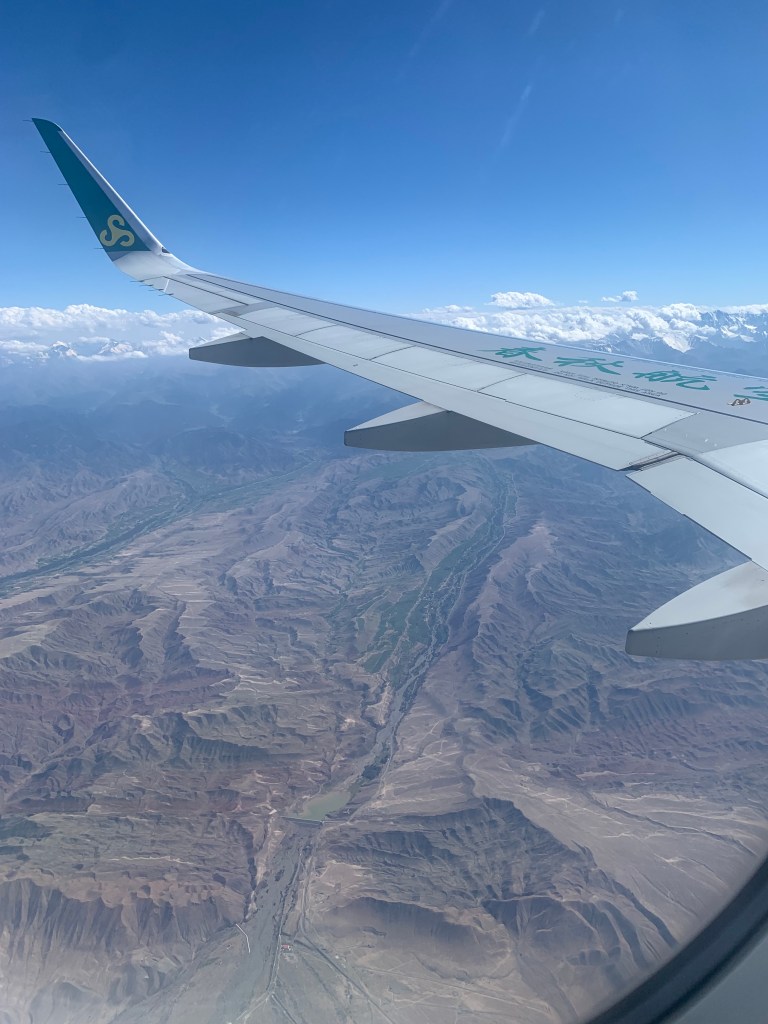
First up was a long flight from Shanghai to ئۈرۈمچی Ürümqi [乌鲁木齐 Wulumuqi], the capital of Xinjiang. (Fun fact: Ürümqi holds the Guinness world record for being the most remote city from any sea in the entire world!) A quick overnight to rest up before our adventures began, then we were off super early the next morning on another flight, this time taking us way up to the northern tip of Xinjiang! We landed in a TINY little airport and were immediately asked by at least 4 different people for our names, phone numbers, and passport numbers; a regular occurrence, we would soon find out — there are seemingly endless police checks, especially as foreigners, when traveling through Xinjiang. We then made our way to where we would be spending a majority of our time over the next 7 days… the van! As Xinjiang is SUCH a big region and we had a pretty busy schedule, we would spend anywhere from 2-9 hours driving around each day. Luckily, my years road-tripping as a military brat had prepared me for this. Plus, this is one of my favorite parts of traveling – the first time you get to look out your window and explore!
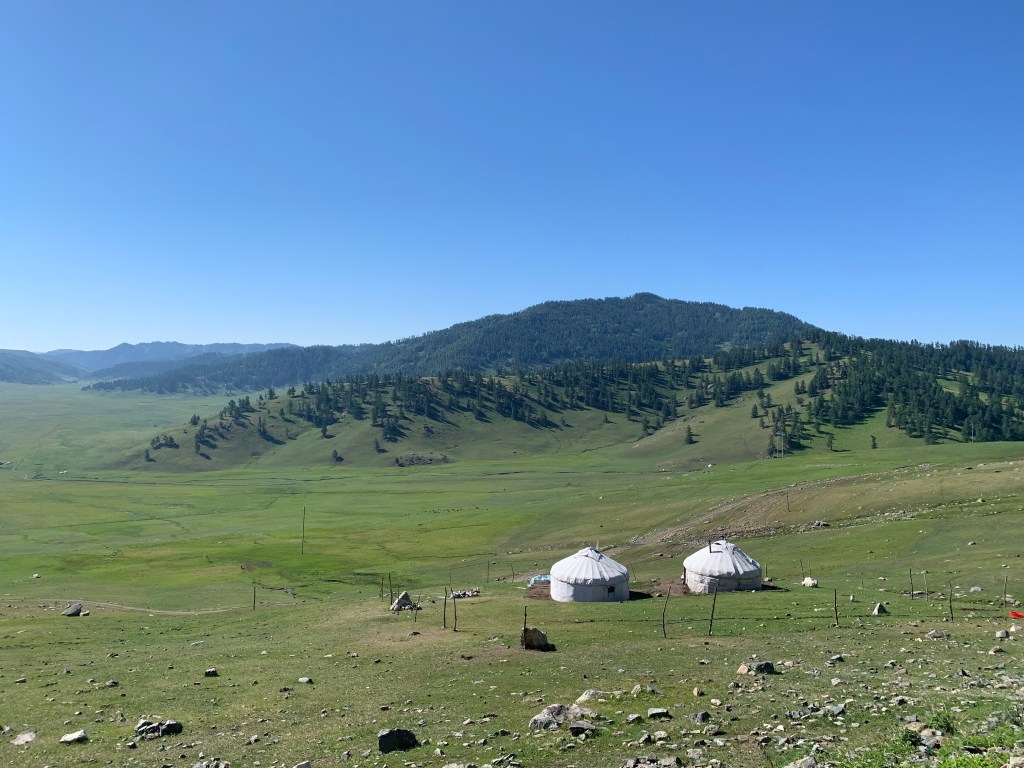
As we drove through lush grasslands, I enjoyed getting to see all of the herds of animals scattered across the hills. Horses, cows, sheep… But one of the most exciting things I saw: yurts! Many of the Turkic ethnic minority groups (Kazakh, Kyrgyz, Mongol, Tuva, etc) are nomadic, moving their herds as the seasons change. These yurts – circular tents constructed out of a wooden base – only take a few hours to set up and tear down, and so you can see them throughout the region! Stacked with warm carpets inside, they look pretty cozy!


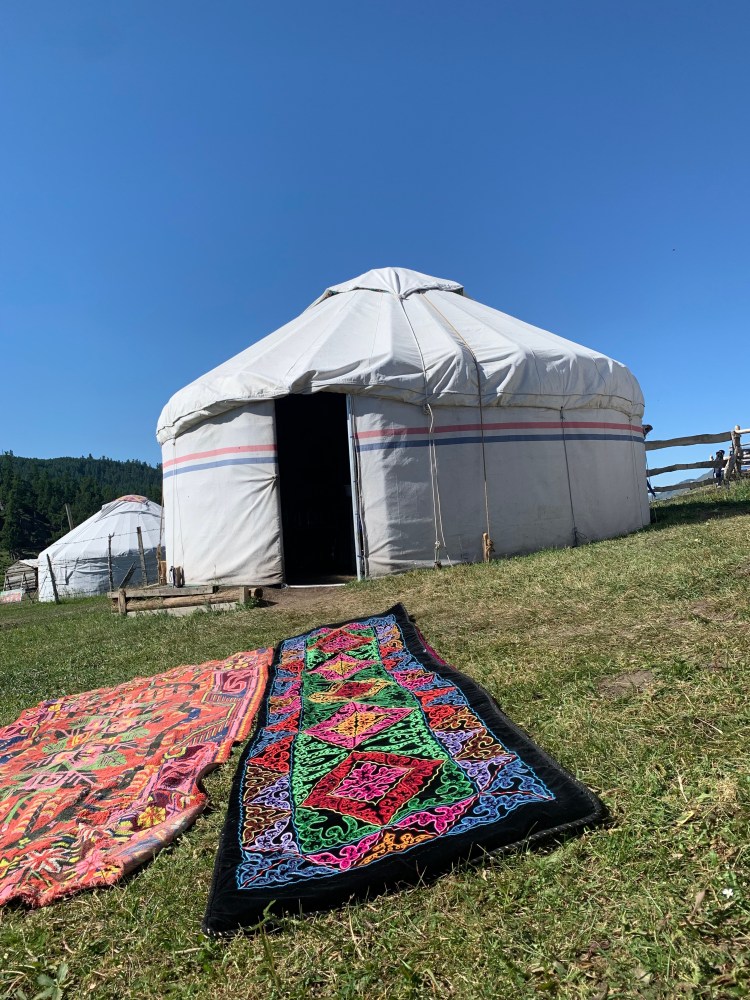

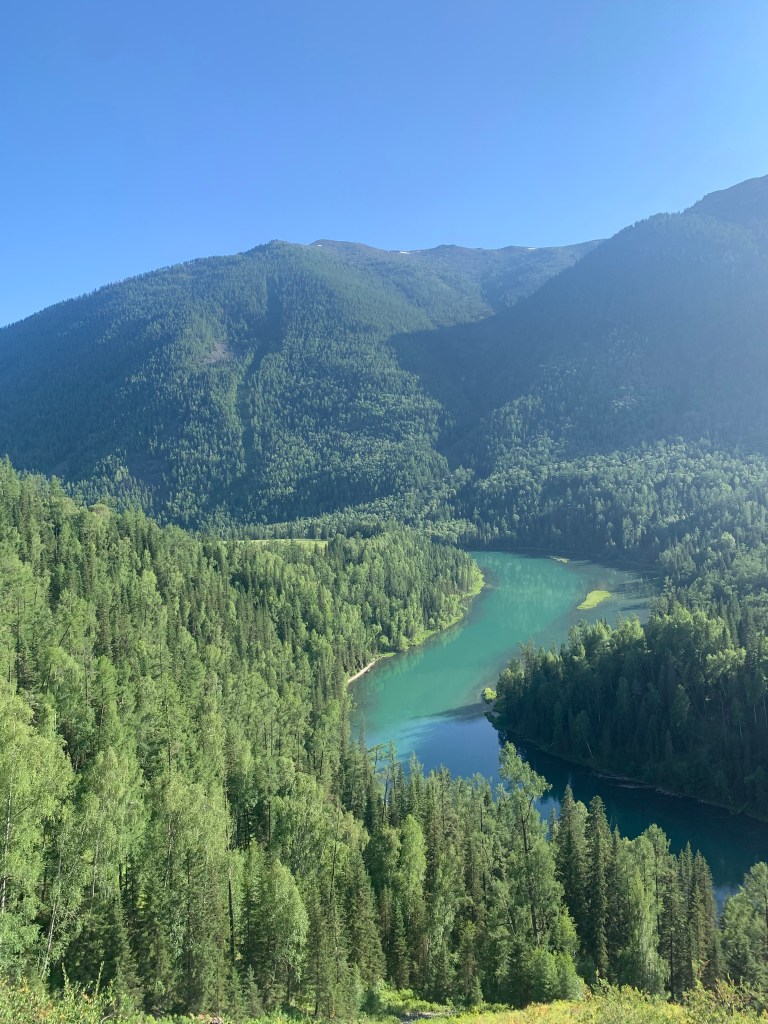
After a few hours in the van, we reached our first destination: Kanas! Located in the Altay Prefecture of Xinjiang, 喀纳斯 Kanas is often thought of as a fairyland or “the garden of the gods,” and it’s not very hard to see why. I felt like I had suddenly stepped into an ancient place where magic still lives and breathes. Kanas, which is a Mongol word meaning “beautiful, mysterious, and abundant,” is most well known for the splendor of its natural beauty. Kanas covers an area of 10,030 square kilometers and includes 55 scenic spots consisting of lakes, mountains, grasslands, forests, and more. On the border of the Siberian Taiga, this is the only place in China where Siberian species of plants and animals can be found. We headed in to the Kanas National Geopark to wander and explore.
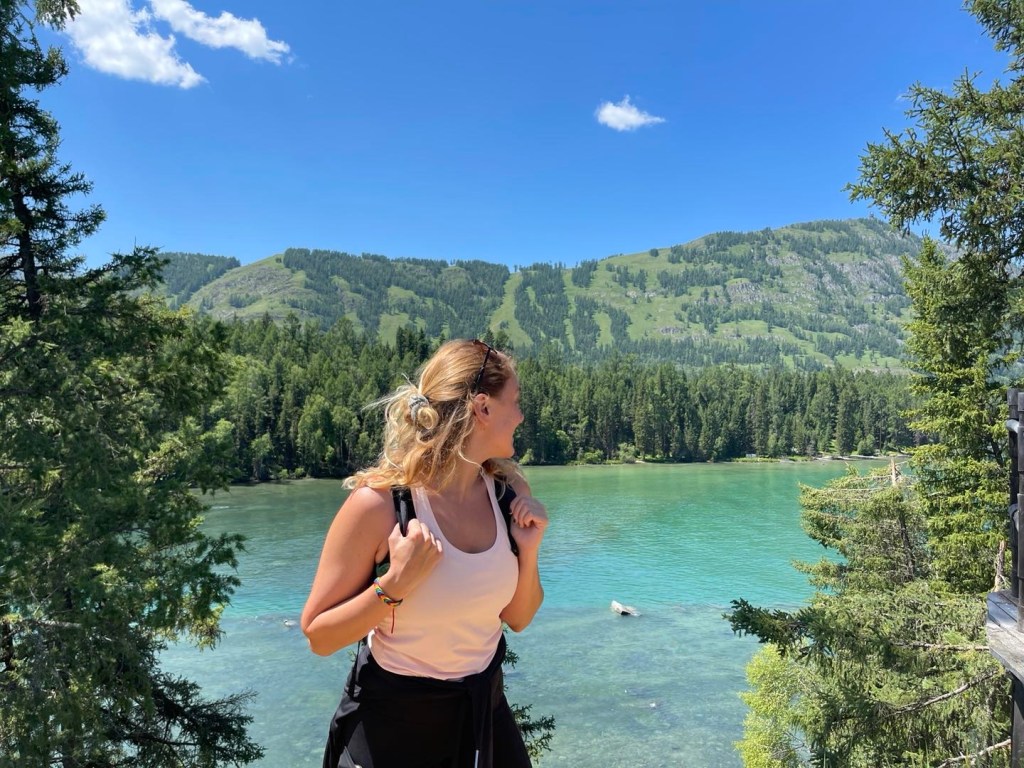
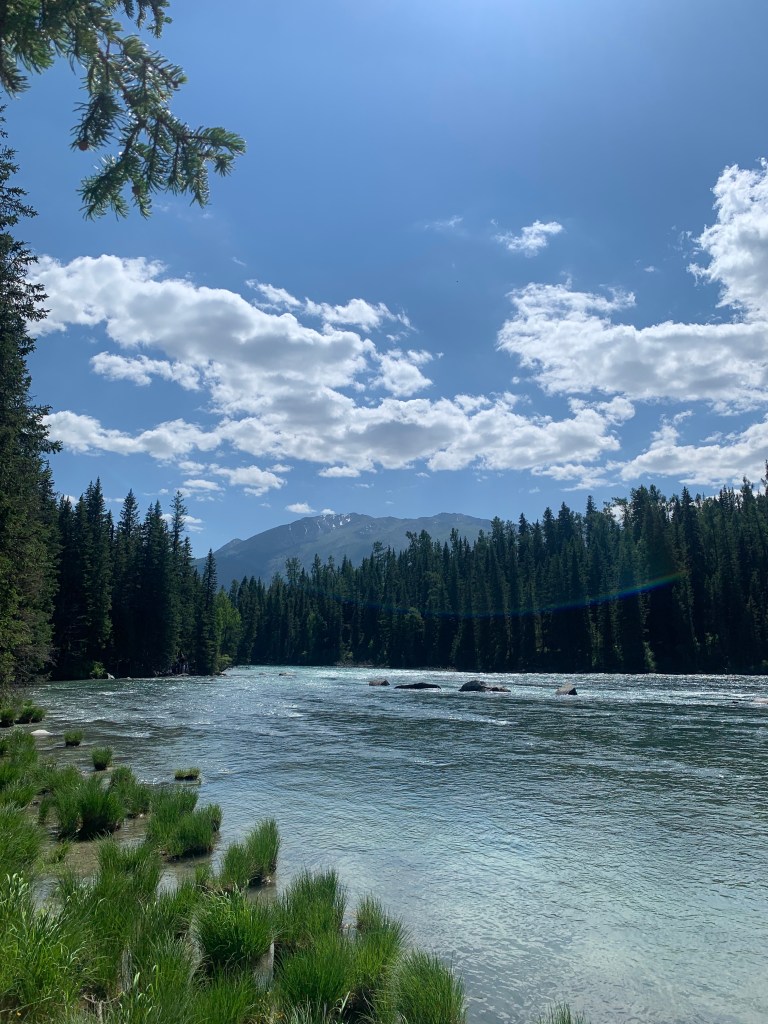
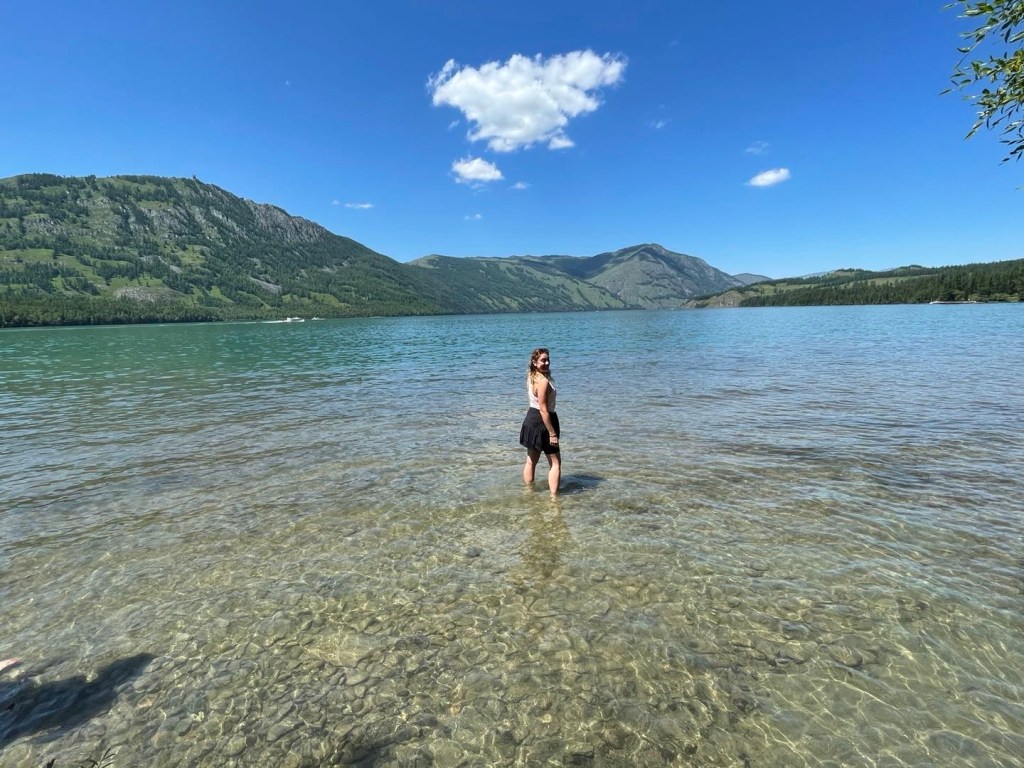
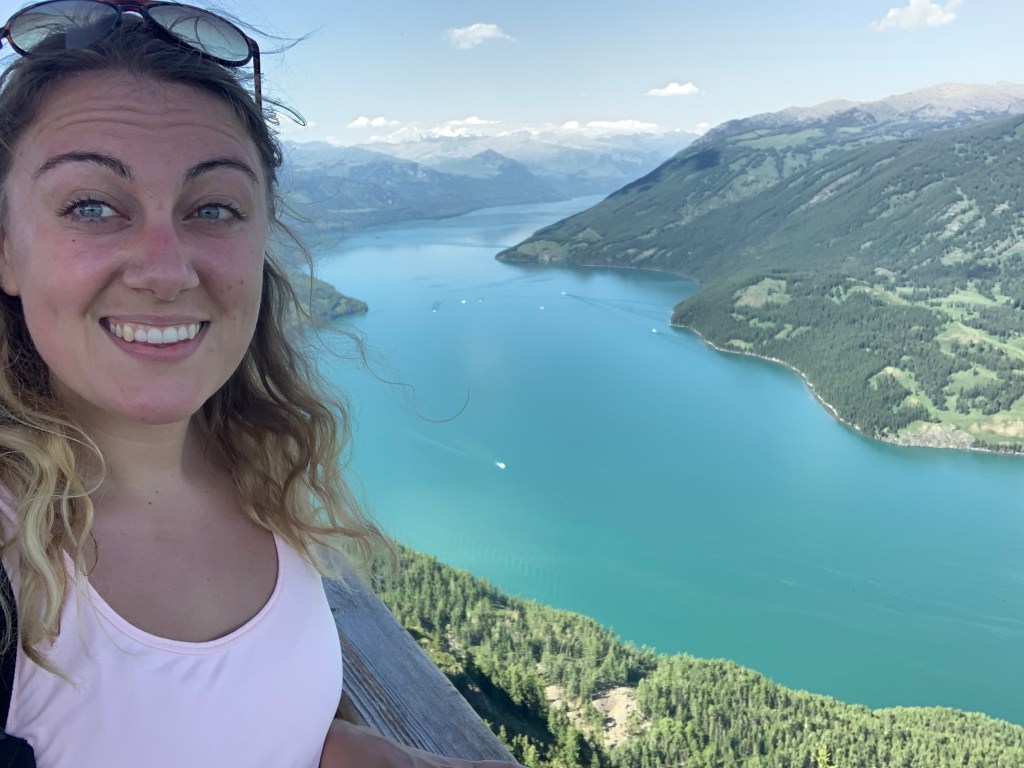
The main feature of the park, and the reason most people travel to this part of Xinjiang, is Kanas Lake. The aquamarine water of this crescent-shaped lake covers 45 square kilometers (17 square miles) – with an average depth of 120 meters (400 feet), Kanas Lake is the deepest freshwater lake in all of China!
We started by walking through various pathways around the lake, taking it all in. The air felt so fresh and clean! We even found a little area where we could climb in and get our feet wet. The water was cold, but felt so good! After seeing the lake from ground view for a while, I decided I wanted to find an even better view of it — from above!
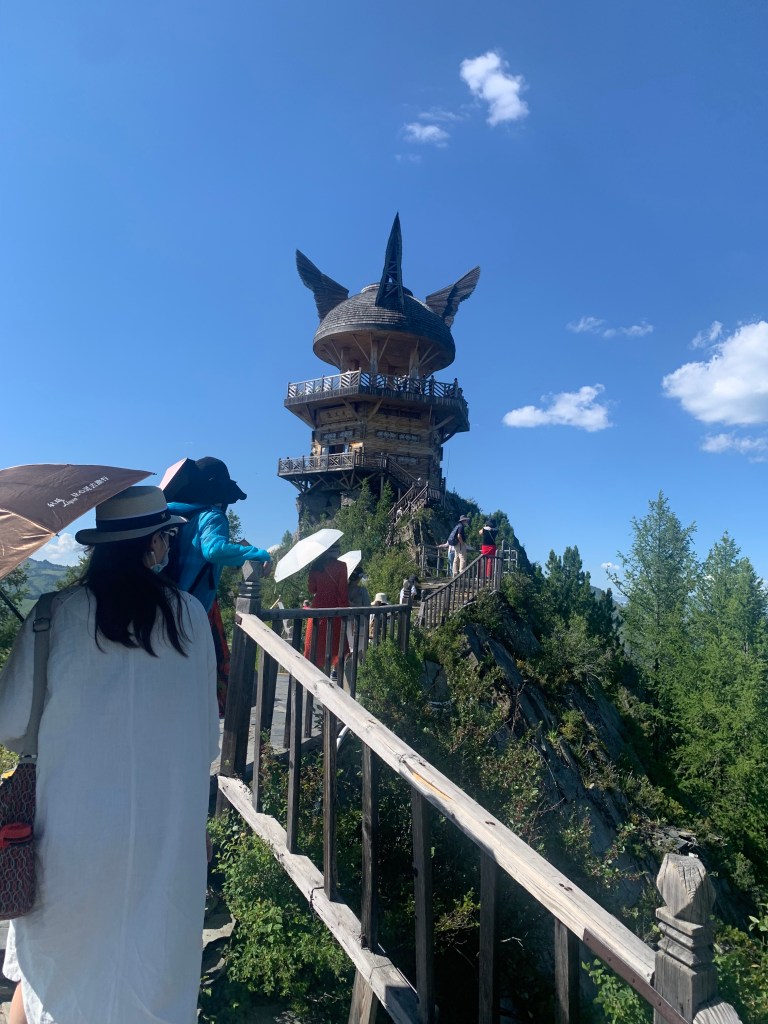
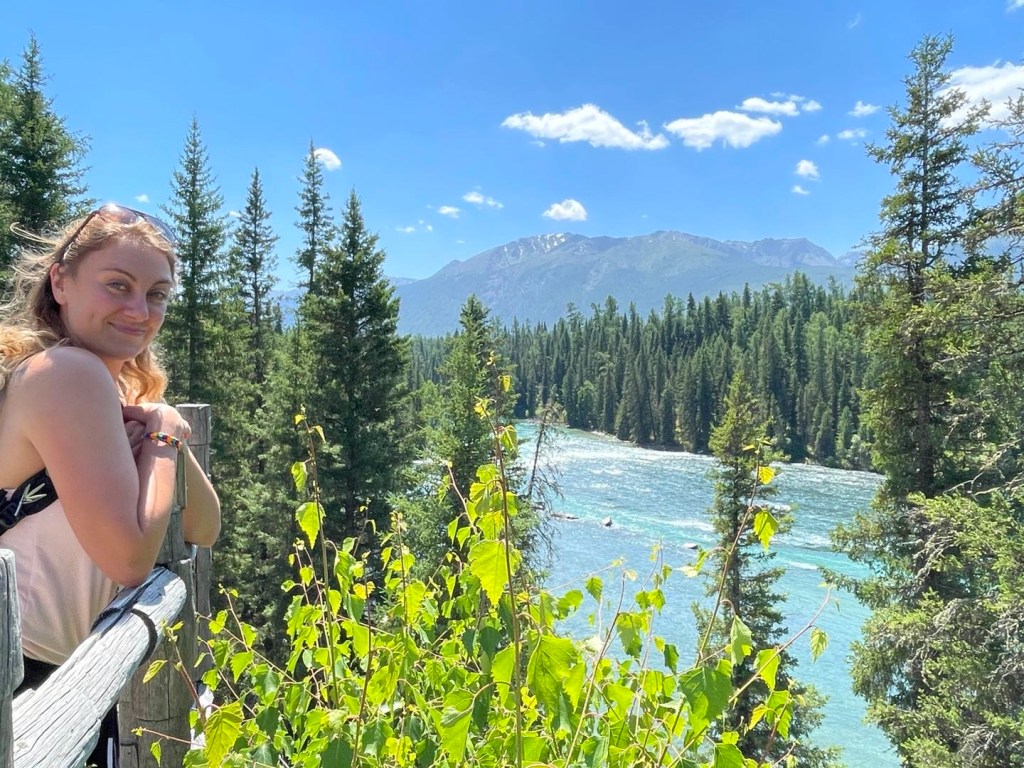
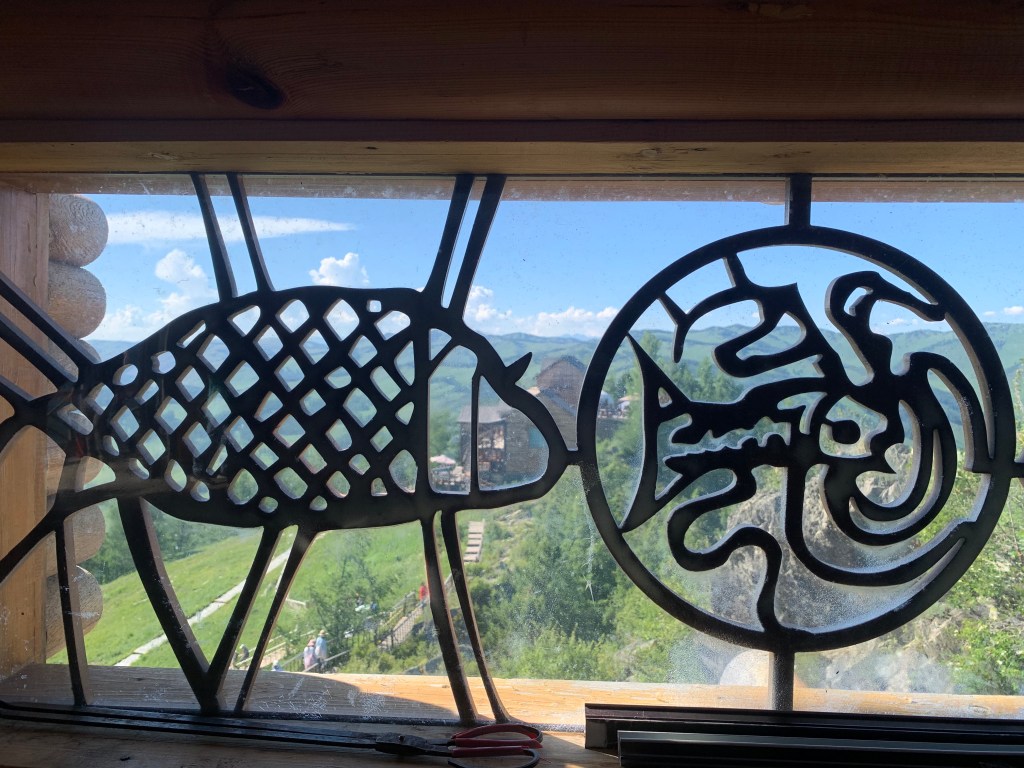
The 观鱼台 Guanyu Pavilion (Fish Viewing Pavilion) sits atop a 2,030 meter hilltop with a full panoramic view of Kanas Lake. However, to get up to the view from the top, you first have to walk 1,068 wooden stairs to get there. I admit, I had to stop for a breathing break here and there. But the higher and higher I climbed, the more the lake came into view and OH BOY is it worth it.

“But Madison,” you may be asking aloud to your computer, “you said this is the Fish Viewing Pavilion. How could you POSSIBLY see any FISH from this far above the lake?!”
A very good question, Anonymous Reader. I have an answer for that.
Legends – and many aspiring cryptozoologists – tell us that this beautiful alpine lake is home to the 喀斯湖水怪 Kanas Lake Monster, Xinjiang’s very own Loch Ness! As the story goes, on their first expedition west, Genghis Khan led the Mongolian army through the Altai Mountains. After traveling for days, they were exhausted and so stopped to rest by a lake. After Genghis Khan drank from the water, he enjoyed it so much that they declared that the water was now the “holy water of Khan,” or “Khan’s water,” and so named it “Kanas.” After he died, Genghis Khan’s body was preserved at the bottom of the lake, where lake monsters now serve as his guards and protect his soul.

“But Madie,” you may be saying once again, “that’s just a myth. Give us some cold, hard FACTS!”
Very well then.
For centuries, people have spoken of giant monsters in the lake snatching nearby sheep, cattle, and even horses and dragging them into the lake. The Tuva people who live in this region are believed to be descendants of Genghis Khan himself, and have often spoken of the “Lake Saint” who guards the body of Khan. However, the first official sighting was reported by the state-run Guangming Daily in 1980; the report described a mysterious shadow and large waves appearing in the middle of the usually calm lake surface. In 1985, Professor Yuan Guoying and his students at the Xinjiang University Department of Biology conducted the first scientific research on the matter. They observed a group of around 50 giant red fish measuring between 10-15 meters (30-50 feet!!!!!) – they assessed that each fish could weigh up to 4 tons. Since then, there have been dozens of sightings of these lake monsters, especially since the early 2000s when tourism started booming and everyone wanted to catch these mysterious animals on video. Though the videos mostly feature large shadows and rising waves, it’s clear that there’s something there.

Scientists have speculated that the giant creatures could be Hucho Taimen, or Siberian Giant Trouts, in the salmon family. Hucho Taimen, most commonly found in rivers in Eastern Europe and Northern Asia, are known to be ferocious and secretive, swimming in both deep and shallow waters to hunt for prey. They can emerge above the water, making waves, as they prey on snakes, frogs, birds, rodents, and smaller fish. One of the largest freshwater fish in the world, the Hucho Taimen have been know to grow to be up to 2 meters long and can live to be more than 50 years old.
So, is Kanas Lake home to some exceptionally large and deeply mysterious Hucho Taimen? Or is there something else lurking under these waters, guarding the body of the great Mongolian Emperor?
Tune in next time on Cryptozoology Travel Adventures to find out… (Just kidding. But also sort of not. I might be on to something here…)
 Adventure in the Great Wide Somewhere
One thought on “Adventures in Xinjiang: Lake Monsters and Fairylands”