
(To read the first part of this trip, click here!)
The pictures from the beginning of this blog post will look completely different from the pictures at the end, and that’s one of the things I absolutely love about traveling around this country. Before moving to China, I ignorantly didn’t know a lot about the different regions, cultures, and environments I would find here – if asked what I expected to see, I would have been able to guess the Great Wall, bamboo, and pandas. Traveling through Xinjiang, where I went from dipping my feet in a river in the Arctic water system down to 106 degree heat on the edge of the Gobi Desert in the span of a few days, all of my previous expectations were turned on their heads.
About 70 kilometers (43 miles) away from Kanas Lake, deep in Northern Xinjiang’s Altai Mountains, you can find the “Private Land of the Gods” – 禾木村 Hemu Village. At only 3,040 square meters, Hemu is a fairly small village nestled along a river and surrounded by mountains and birch trees; as the northernmost village in all of Western China, Hemu has become a popular place to visit not only for the stunning natural beauty, but for the cultural significance: Hemu Village is the largest and most remote of the three villages of the Tuva ethnic minority in China.
The 图瓦族 Tuva people, believed to be the direct descendants of Genghis Khan, have called the Altai Mountains home for over a thousand years. Traditionally, the Tuva were nomadic hunters and livestock farmers, raising sheep, horse, cattle, yak, and reindeer. During the Tang Dynasty (which lasted from the year 618 to 907) and the Yuan Dynasty (1271-1368), the Tuva were described as “skiing hunters” and “forest people” – they lived a simple life hunting and raising animals. Today, there are less than 3,000 Tuva people living in China. (For clarification: there are Tuva people living in Mongolia and Russia as well, but within China they only live in these three villages in Northern Xinjiang.) Getting to visit Hemu Village feels a bit like stepping into a different time, as the Tuva people still keep many of their ancient traditions.

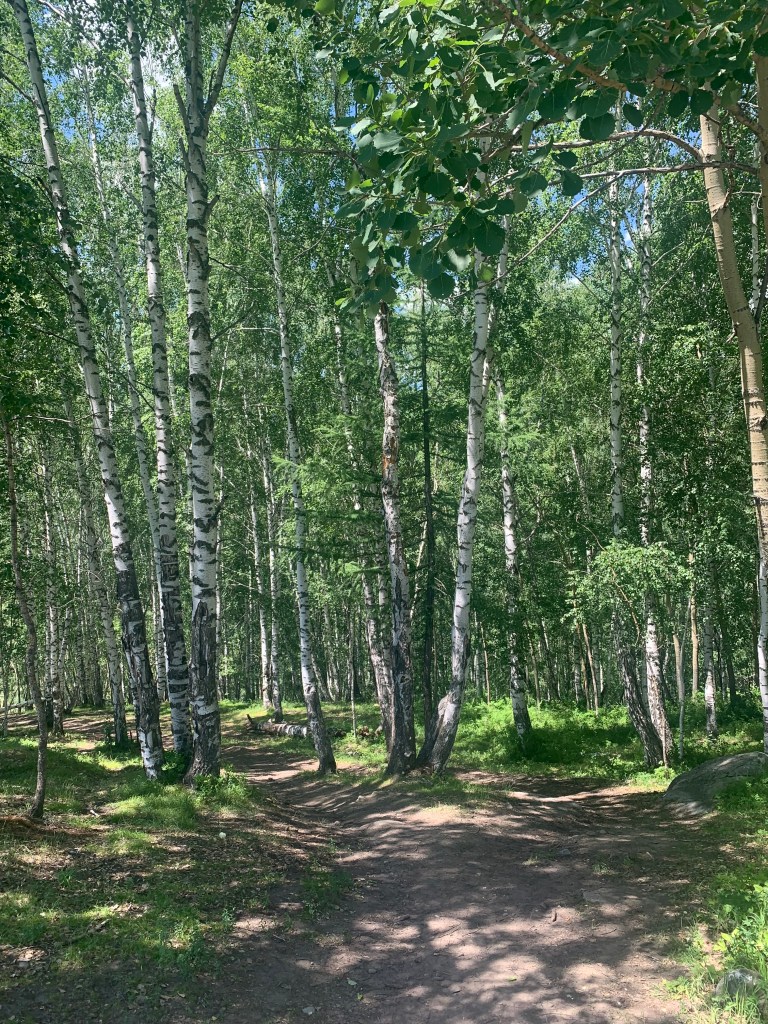
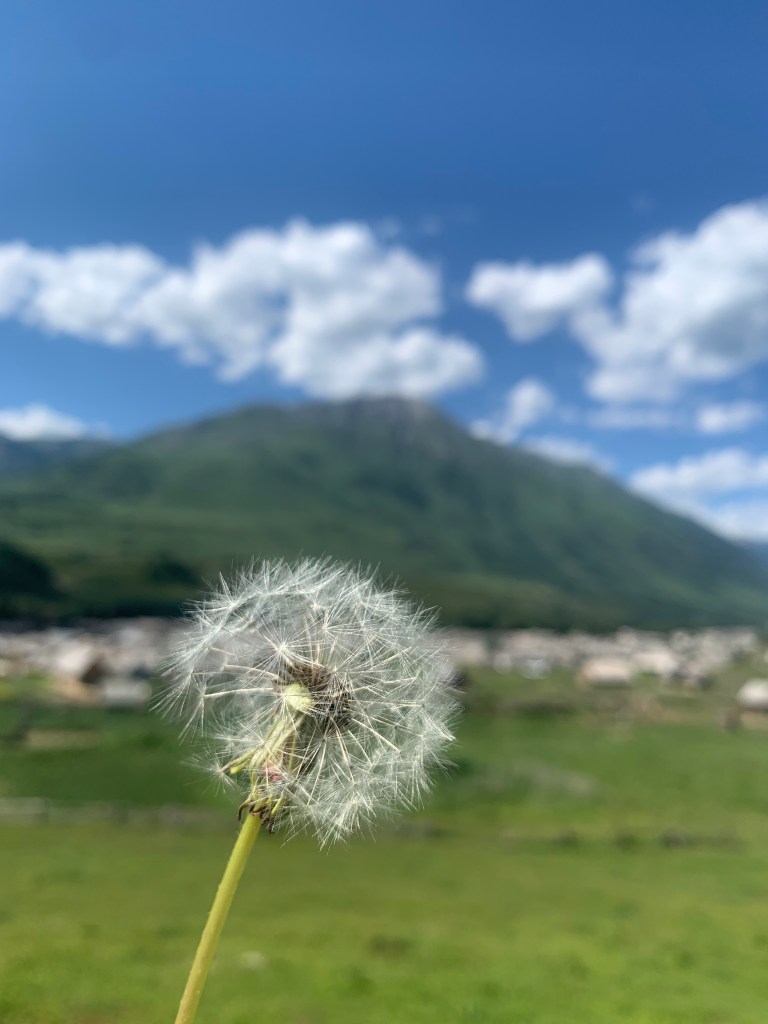
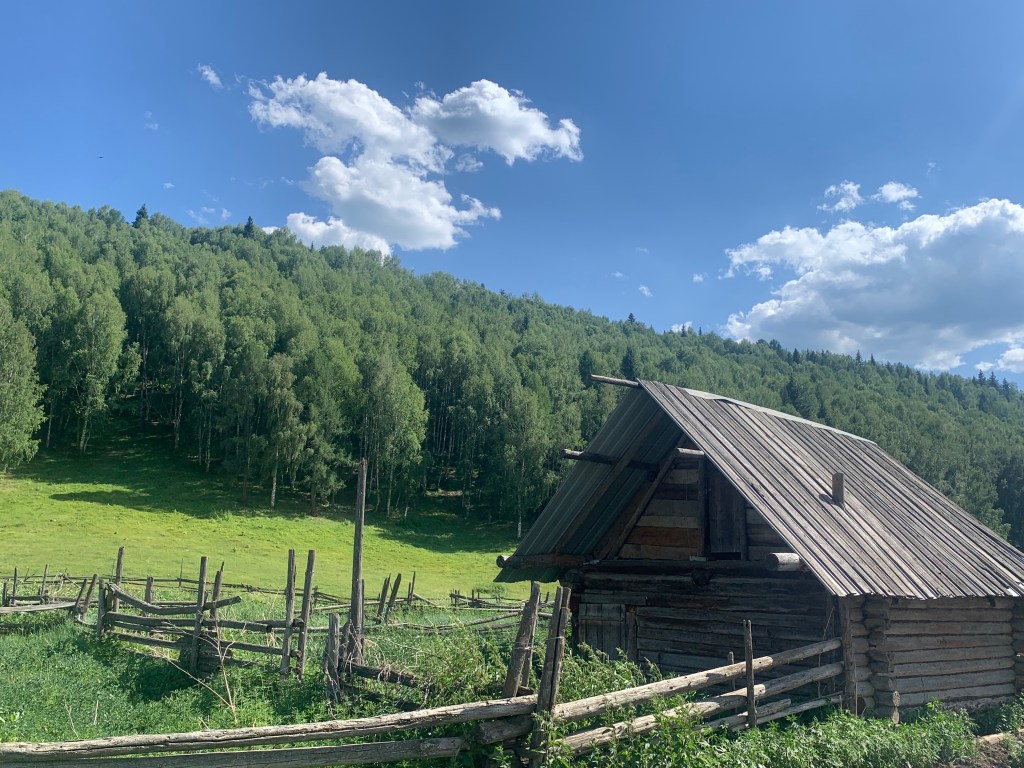
All of the Tuva houses are log cabins built by hand, using wood collected from the forests surrounding the village. The front door to each house is built facing the east, so all of the homes are facing the same direction. Many of the homes have small gated pastures or barns, and walking through the village you will find all kinds of animals peacefully grazing. There are about 100 families living in the village proper, and a separate lodge just over the hill where tourists are able to come and stay. Because of the beautiful natural landscape, Hemu is a very popular spots for photographers to visit — especially during the fall when the leaves change colors.
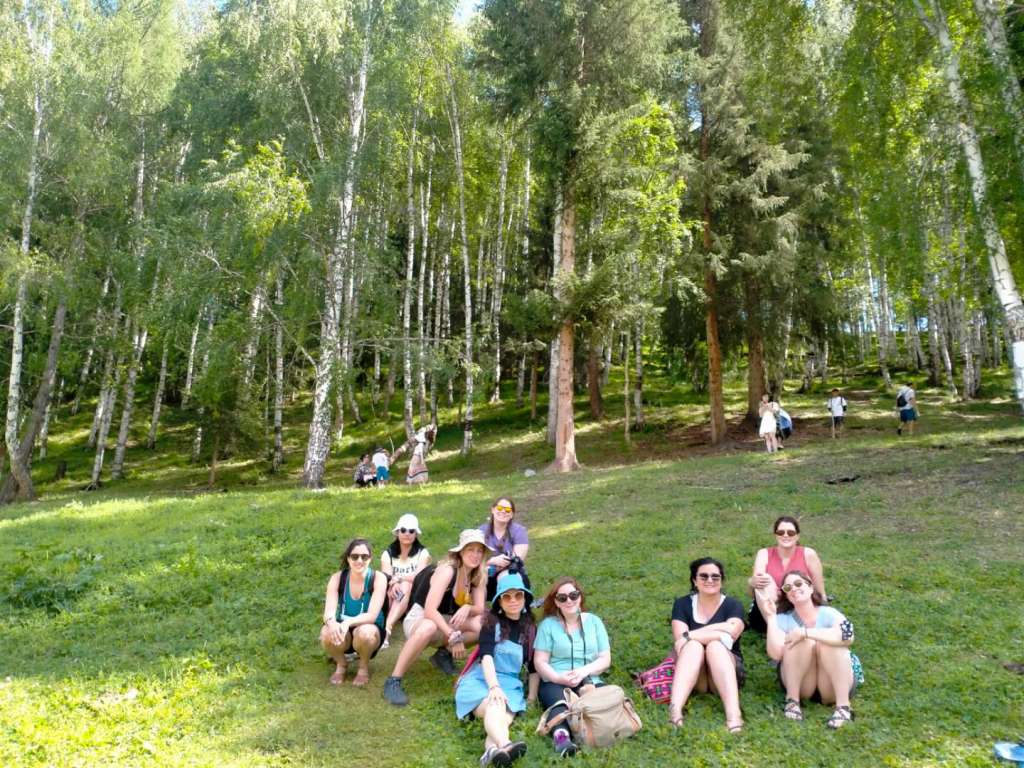
Upon getting settled in our lodge, we had a few hours of free time to do with as we chose. Eager to go out and explore on my own, I put on my hiking boots, grabbed my hat, and set out. Without a set destination in mind, I found a path and decided to follow it and see where it led – up through a luscious grassy hill, in through a forest of birch trees, only to find my way out in an open valley. Though the path stopped, I didn’t see any signs telling me not to keep going, so I made my way through the tall grass, taking in the view. With the village in the distance, a few horses here and there, and not another person in sight, I paused to just breathe and enjoy the experience. Especially when traveling in a group, it can be hard to find time just to sit with yourself; I was thrilled to be out, in the middle of this gorgeous open grassland, surrounded by trees and mountains, occasionally hearing the neigh of a horse, feeling the sun on my skin… it doesn’t get much better than that. (Also, I KNOW The Sound of Music doesn’t take place in China, but looking around at Hemu Village….. are we SURE?!)

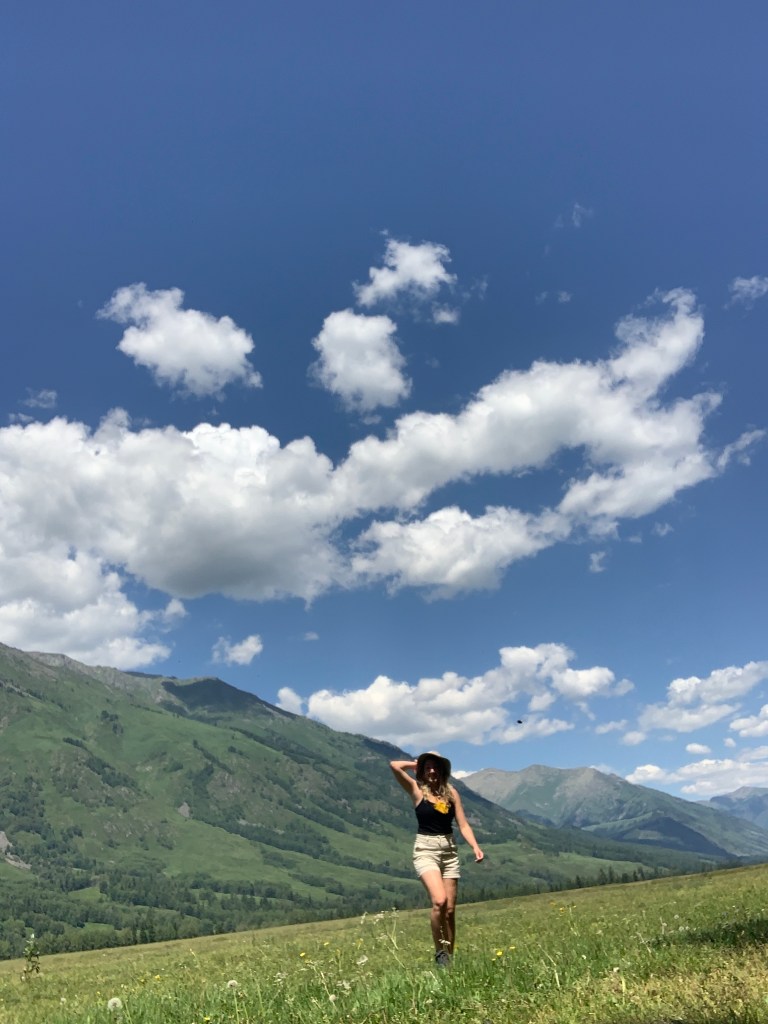
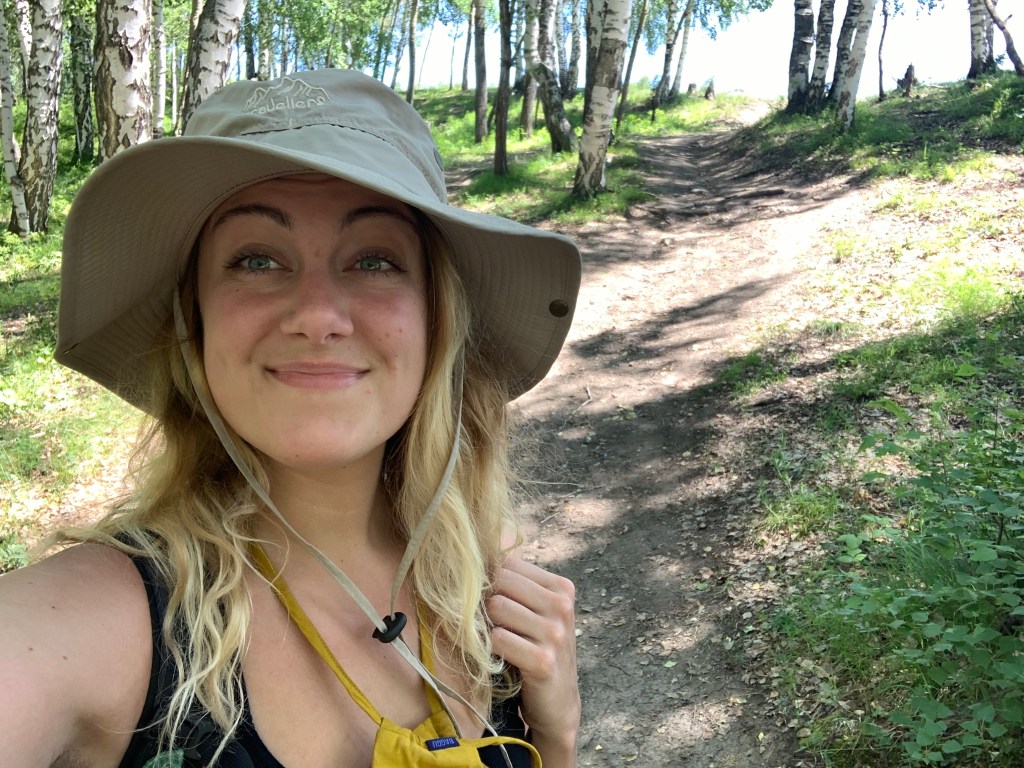
After my solo wander, I walked back to the lodge and met up with the group for our afternoon of exploring. We took a walk through the village and hiked up some of the surrounding hills; when given the option to either stay where there was a faint path and not go very far in or forego the path to explore deeper, you can guess which option I chose. (For the record, my guide also chose that option, so, it was fine, I was safe.) We were able to find some wild strawberries to snack on and got to spend about an hour trying to hike our way through the dense forest. I was delighted.
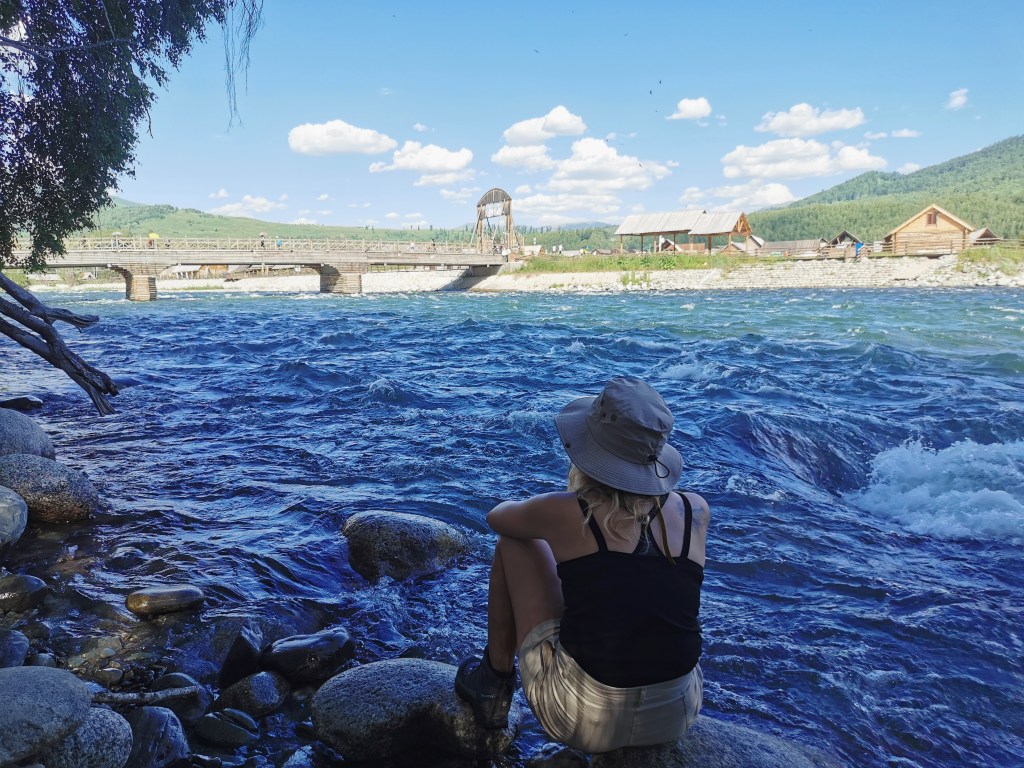
One of our last stops of the day was the 禾木河 Hemu River, whose water comes from the melting snow on a nearby mountain. Where the Hemu River meets the Kanas River (flowing from the southern end of Kanas Lake, from my last post!), the Burqin River is formed, which further on runs into the Irtysh and Ob Rivers, which finally runs in to the Arctic Ocean. So…. this water will eventually end up in the Arctic! Though China has over 1,500 rivers throughout the country, almost all of them flow east or south into the Pacific Valley and the Indian Ocean Valley — this is the only river system that flows west and belongs to the Arctic Ocean Valley. River facts! Cool!

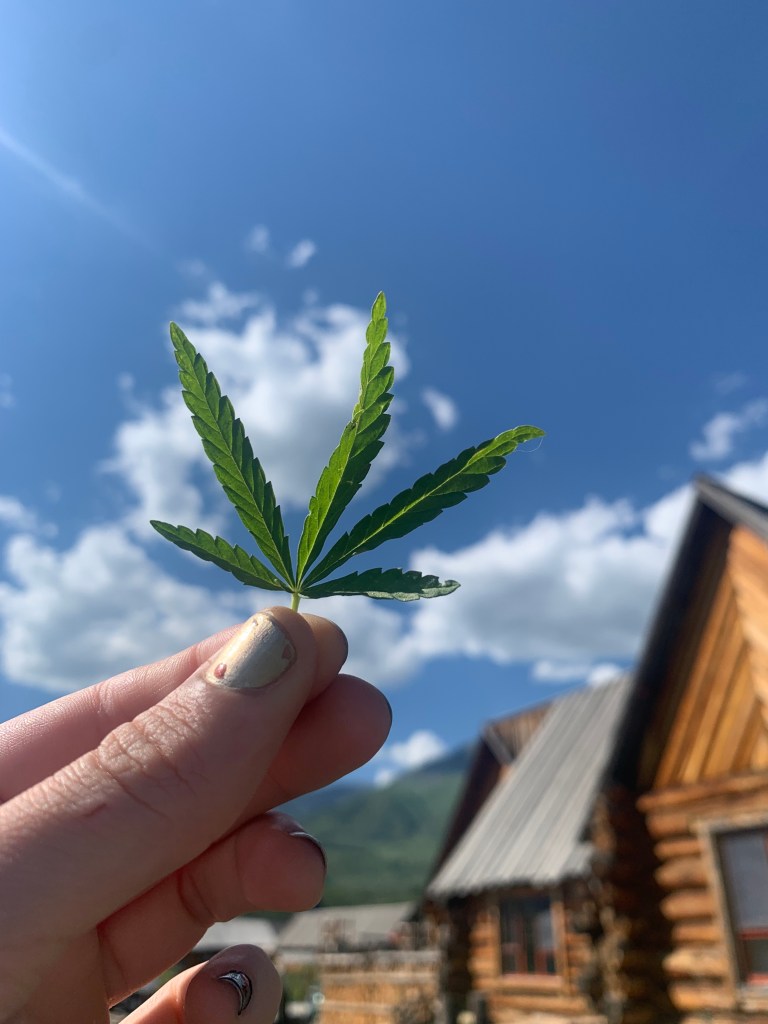
Found a mysterious plant growing on the side of the road. Interesting. 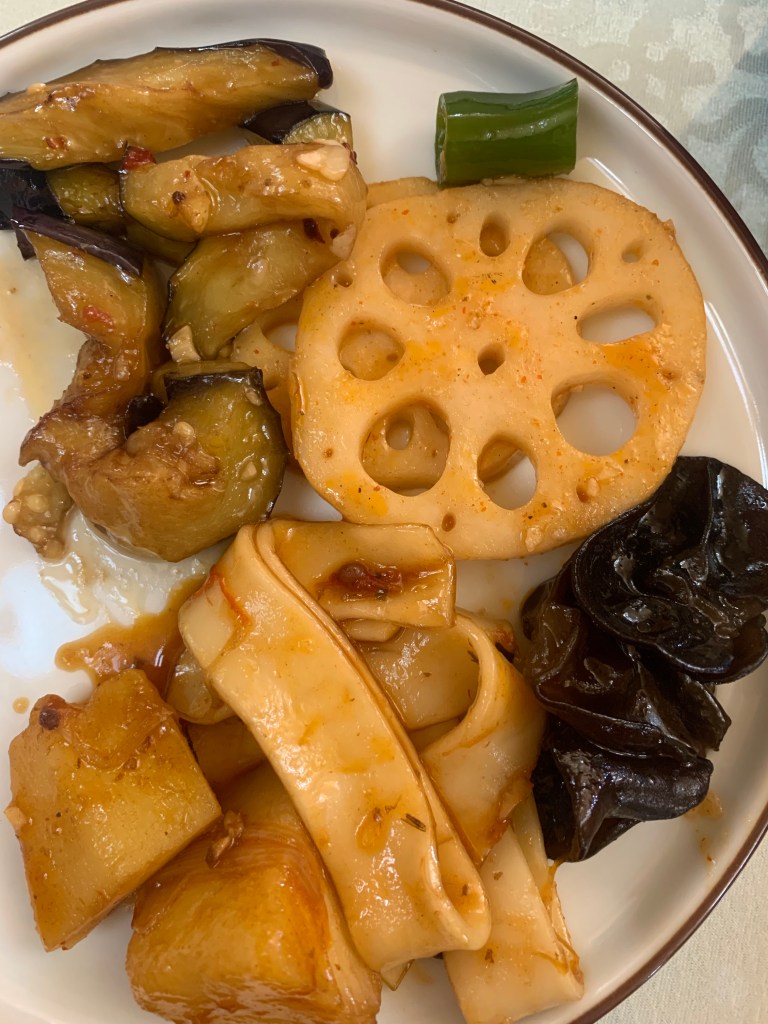
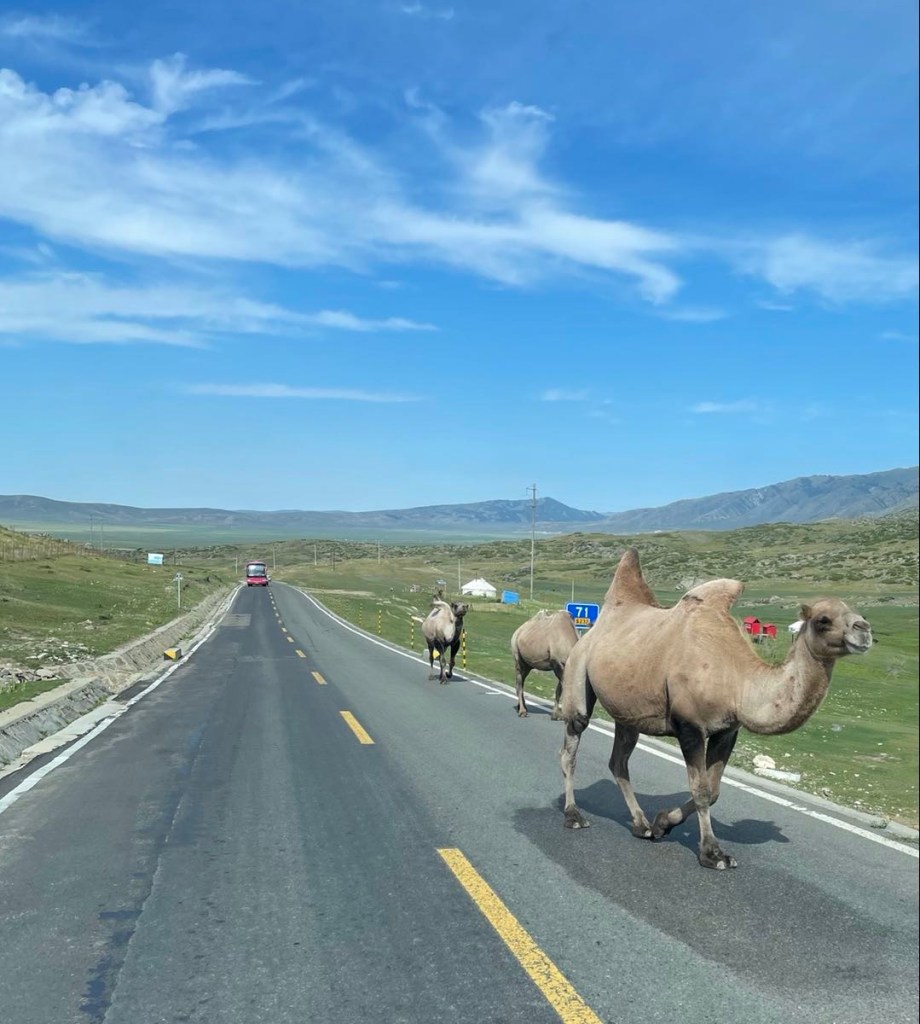
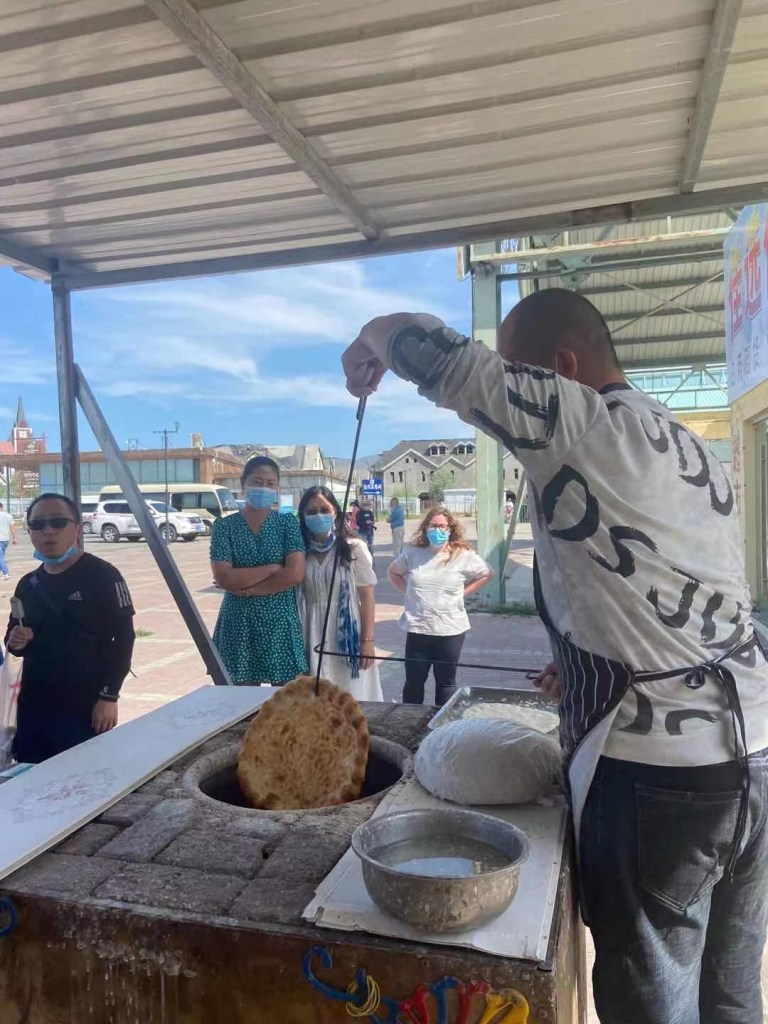
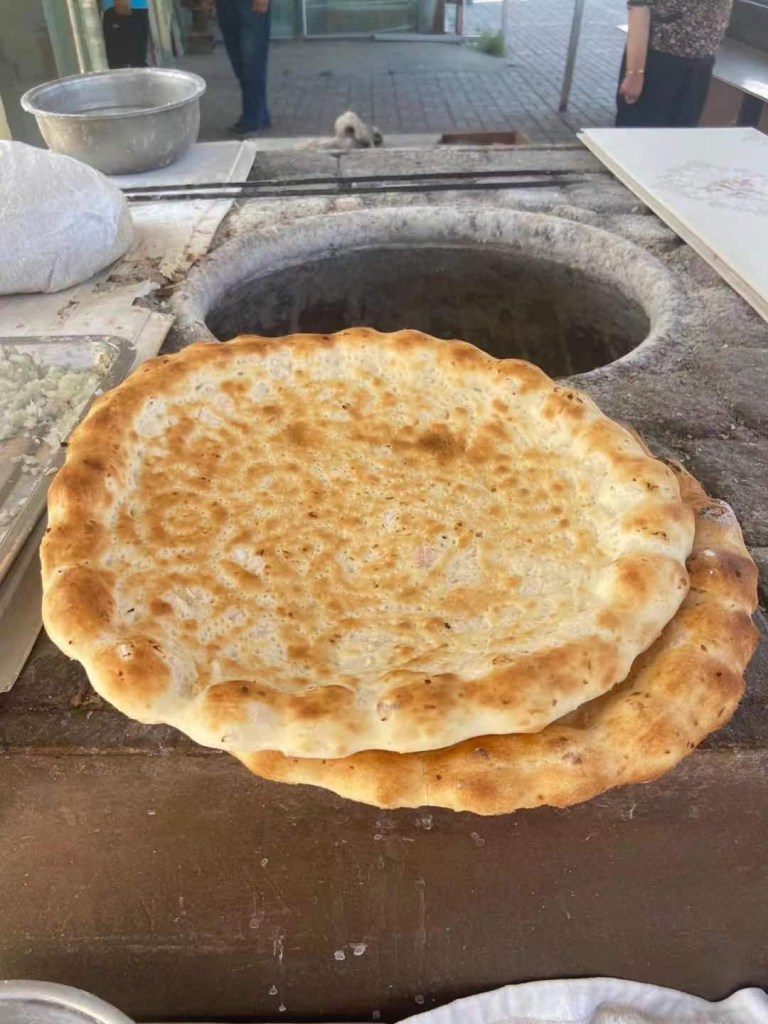
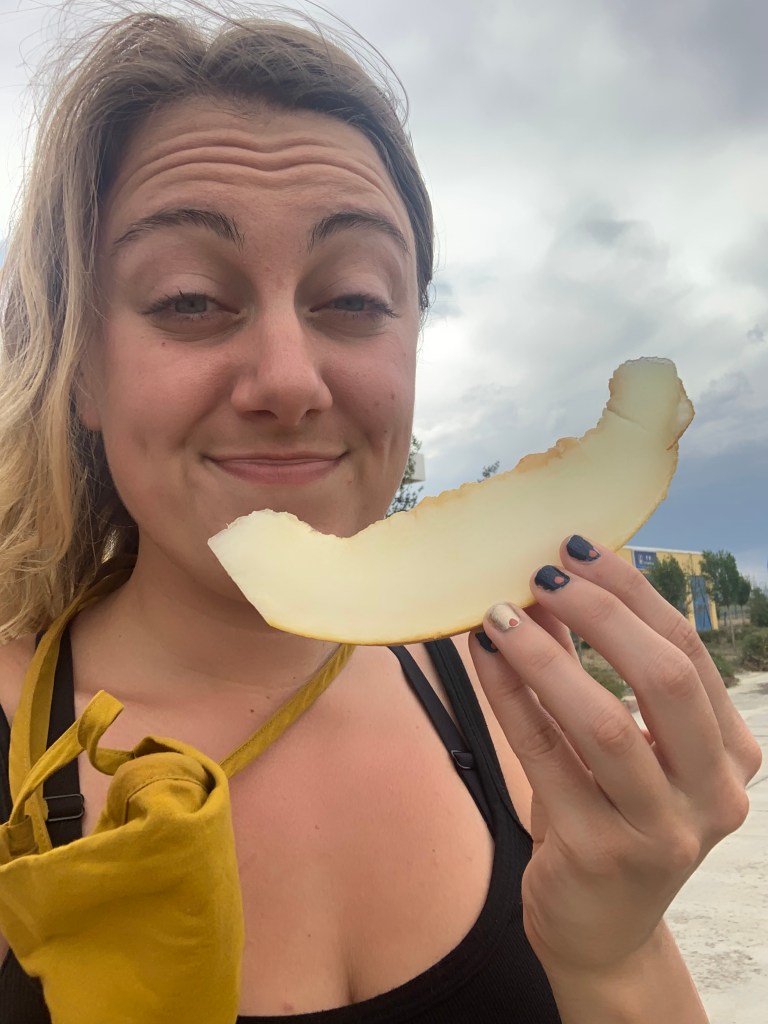
After our wonderful stay in Hemu Village, it was time to pile back in the van and get ready for our next looooong driving day – with about 8 hours of road time to go before we’d reach our final destination for the night, we were able to break the day up into various pit stops to stretch our legs and admire the changing scenery. As we started heading further south, we started seeing less and less of the luscious green grassland portion of Xinjiang, and watched as the view from the window became rockier and drier. However, with the change of landscape came some other very exciting firsts: our first camels, and first experience with some classic Xinjiang foods: Hami melon and 馕 nang. Nang (which I’m sure I will talk about MANY more times because it is just that good) is a traditional Uyghur bread, often freshly baked outside at a small bread stand with a big brick oven. It is delicious and wonderful and warm and EVERYWHERE in Xinjiang and I am now sitting here in my Shanghai apartment writing this and desperately wishing I had some to munch on. Just so good. Ugh.


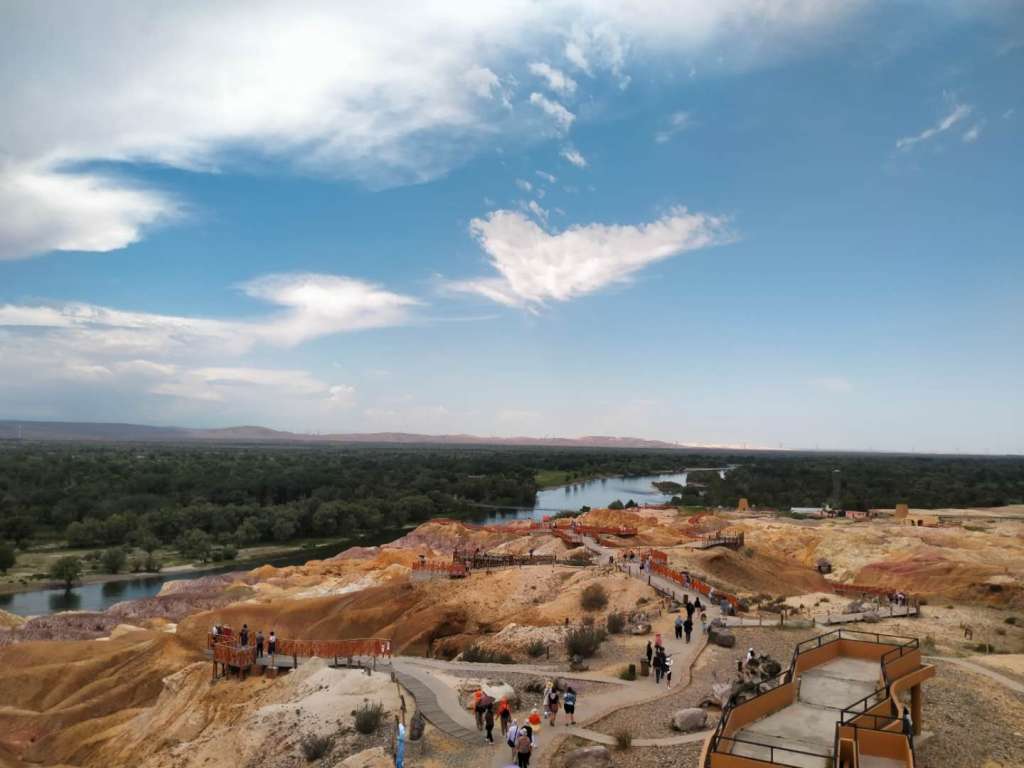
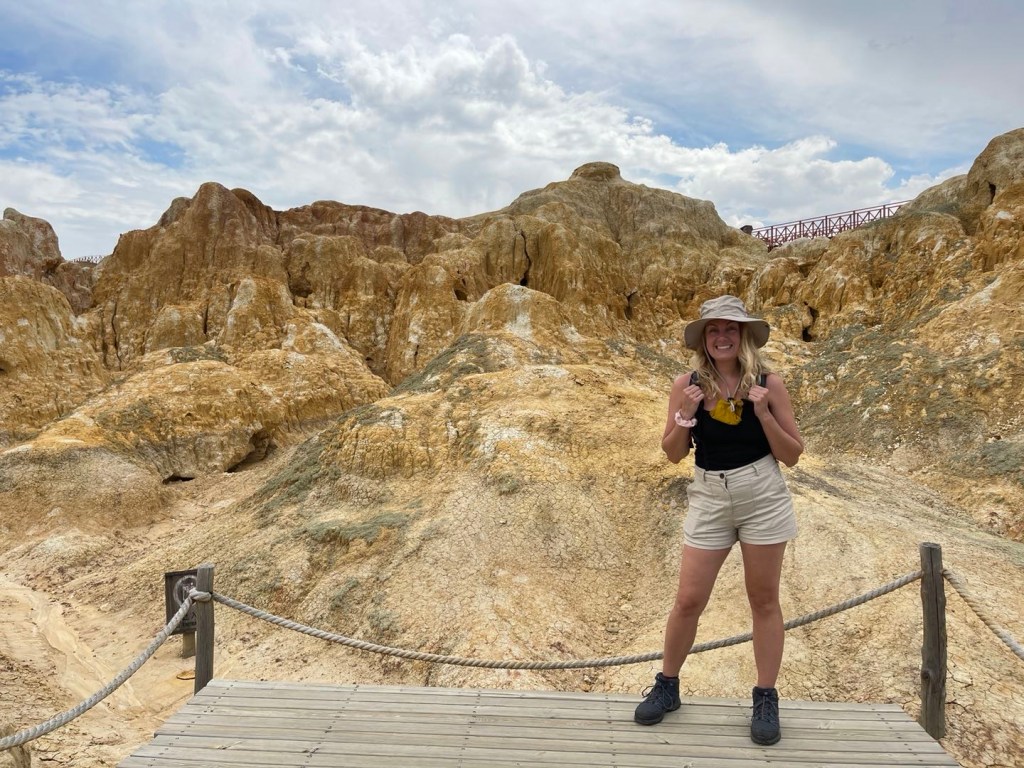
Our first big stop of the day was 五彩滩 Wucaitan, which translates to “Five-Colored Hills,” or, more commonly: Rainbow Beach! Through some combination of various minerals in the rocks, wind erosion, and Mama Nature playing around with her art supplies, these colorful rock formations along the Irtysh River (see above for cool river facts) make for a unique and interesting landscape to walk through for an hour. You’d think after having seen the amount of cool rock formations and desert landscapes that I have, I would stop feeling like I’m suddenly in some sci-fi space travel adventure story each time I explore one, but, no. Instant Star Wars scenario in my head, every time.
After a few more hours in the van, we loaded up with water bottles to head out to our next site: the 魔鬼城 Karamay Ghost City, located between the Altai Mountains and the Tian Shan Mountains in the Jung’gar Basin, on the outer edge of the Gobi Desert. Even at 6:00 pm, we stepped out into 106 degree heat that just hits you in the face. And the body. And the soul. It’s a lot.
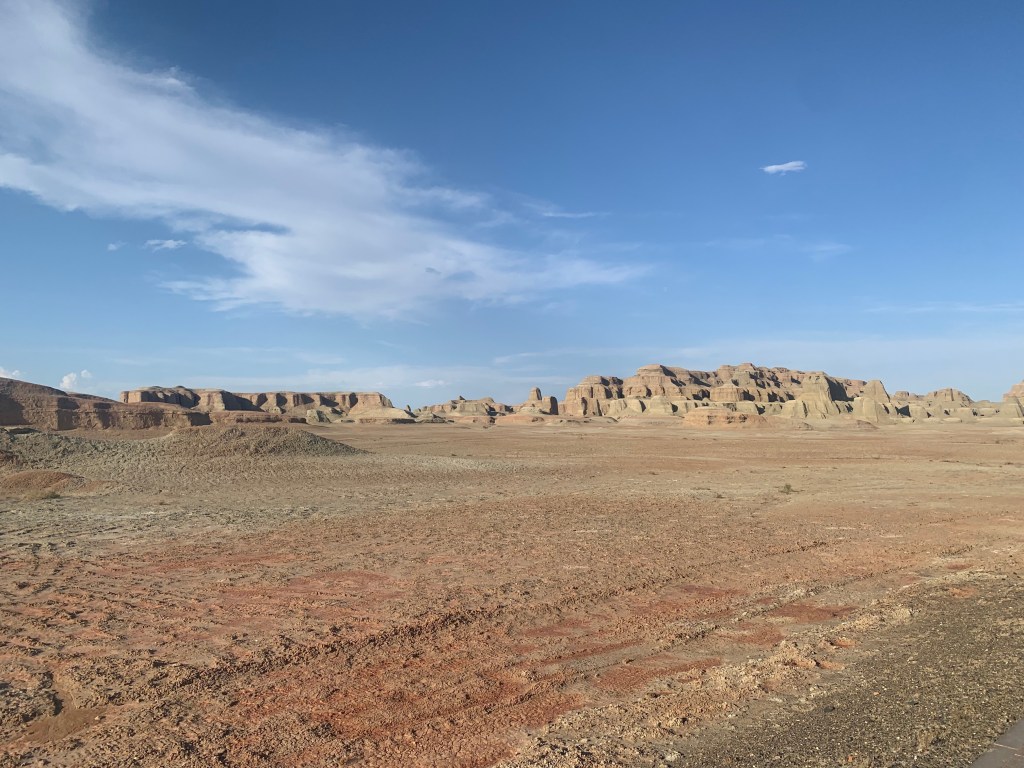
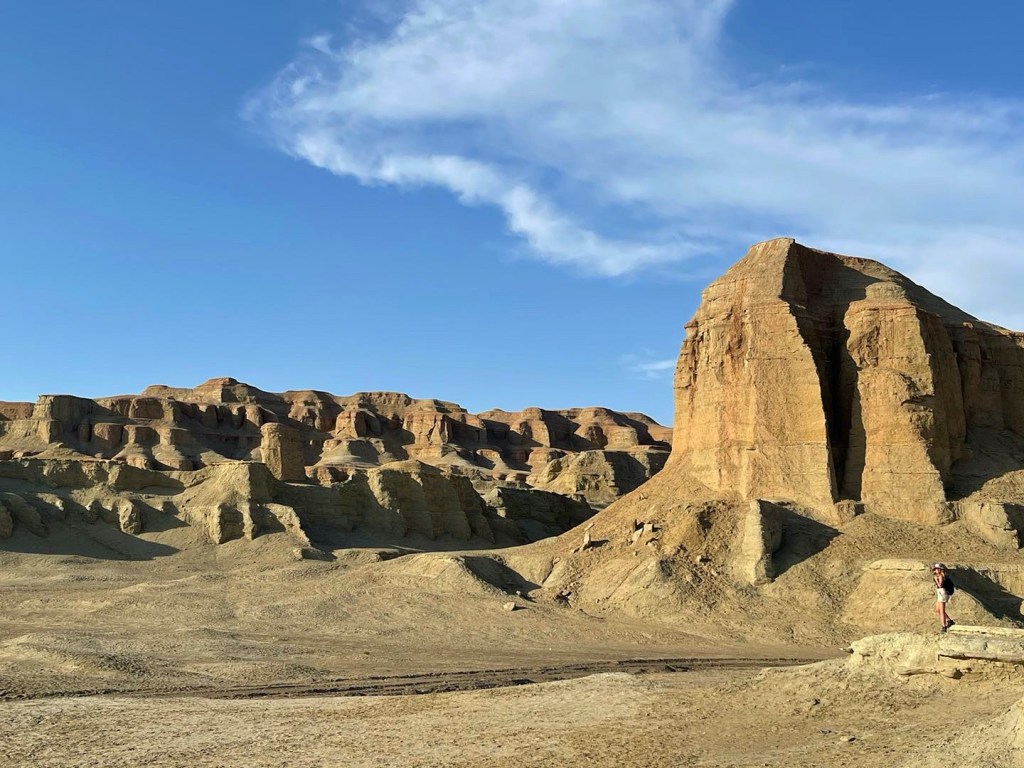
The Ghost City is made up of a collection of yardang formations that have been shaped and formed after thousands and thousands of years of wind and water erosion. Research shows that one hundred million years ago, this land was covered by a giant freshwater lake and tropical trees. (Also, HELLO lots of cool dinosaurs!!!) Now, the yardangs jut out of the sand and rock to form all sorts of strange and interesting shapes – check out the one they’ve named after the Titanic! This region has also served as the filming location for many Chinese movies and, most recognizably, Crouching Tiger, Hidden Dragon! (One of these days I really should watch that movie.)


I’m the king of the WOOOOOOOOOORLD!!! 

“But Madison — Ghost City?! Where do the ghosts come in??”
Long ago, when there were no roads linking this region with the outside world, Kazakh nomads would often hear strange and eery sounds howling throughout the yardangs, the sounds of ghosts crying out in the night. As strong winds blew through the desert, whipping around in between the rock formations, these noises convinced people that the area must be haunted. Honestly, can’t say that I blame them; if I was out here in the middle of nowhere at night hearing howling noises, even knowing it was the wind, I too would be reaching out to the Ghostbusters.

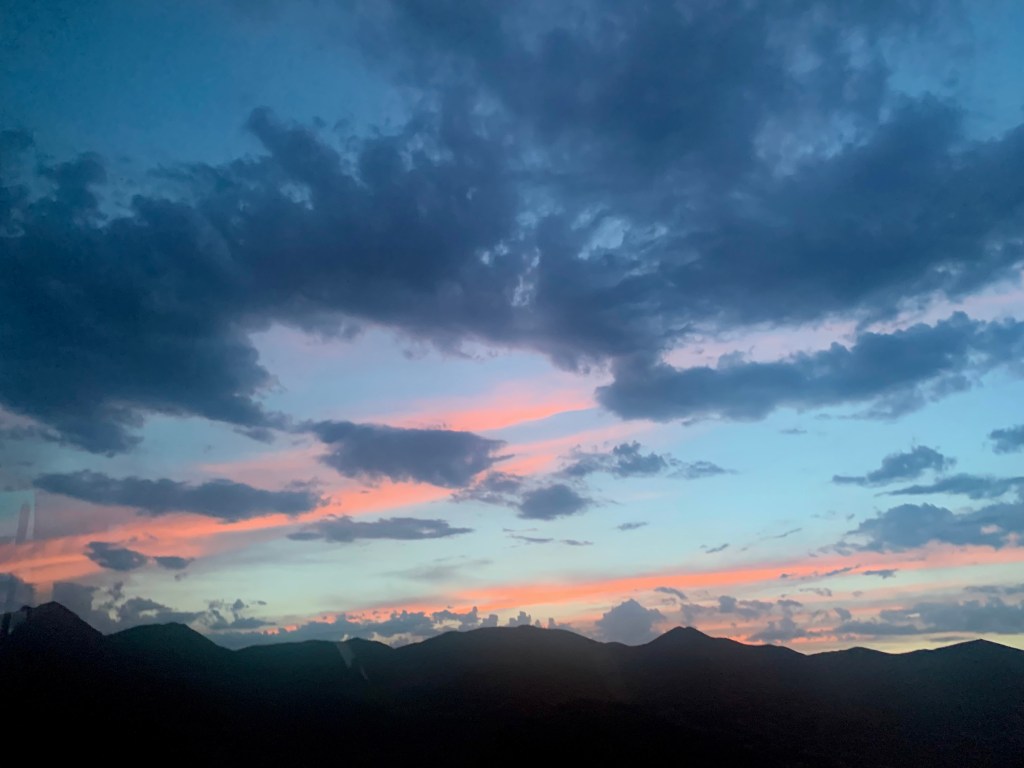
Two consecutive nights, two beautiful sunsets. But two wildly different days. It truly is one of the best things about traveling – you just never know where the next sunset is going to take you.
 Adventure in the Great Wide Somewhere
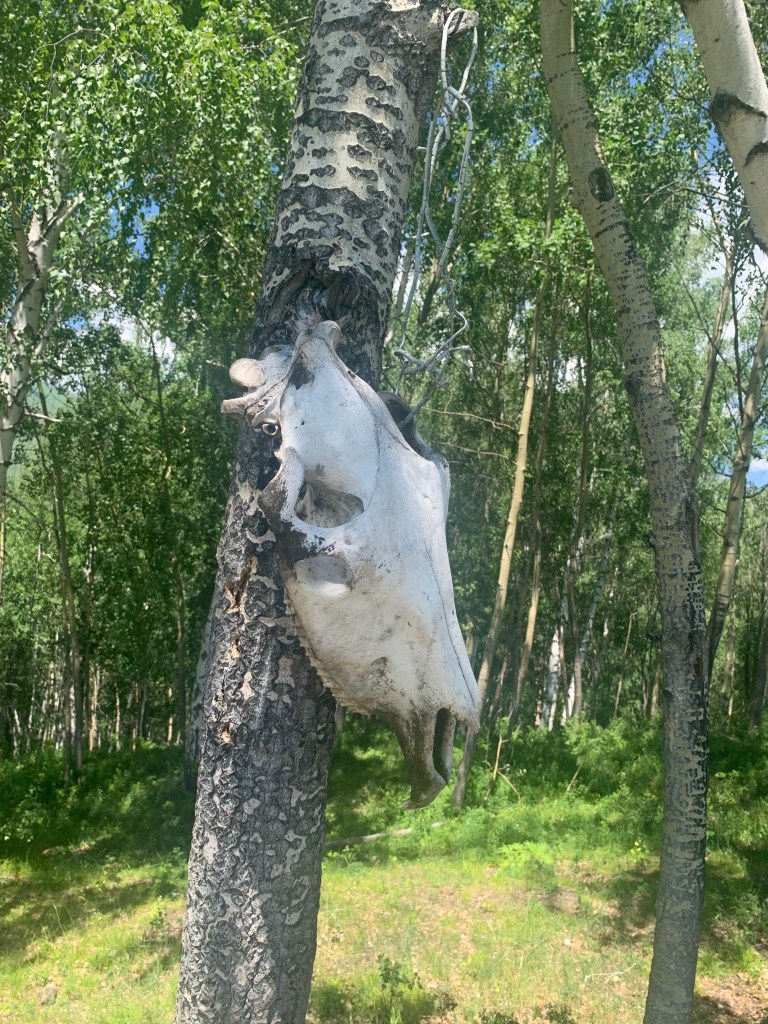
Is the white thing hanging on the tree in your second set of pictures at the Hemu Village an animal?
Thanks as always for your fascinating narrative as you take us with you 🙏❤️🥳!
LikeLiked by 1 person
Yes, some kind of skull they had hanging on the tree!
LikeLiked by 1 person