As we continued on our end-of-summer adventure through Ningxia (click HERE to read Part 1!) our next stop would have us once again hopping back and forth throughout time as we learned about the incredible depth of history in this area of China. (Seriously, there’s just SO MUCH.) We prepared for another hot day outside in the dry desert sun, and headed off to start our day at the 宁夏水洞沟旅游区 Ningxia Shuidonggou Tourist Area. Now, some context:
During the Ming Dynasty (1368-1644), Shuidonggou was an important defensive military site; to build up their defense against northern nomadic tribes (we are right at the border to Inner Mongolia here – one side of the Wall is Ningxia, the other is Inner Mongolia), they built this section of the Great Wall, known as the East Line of the Ming Dynasty. (There are other sections of the Wall in this region that were built during other dynasties as well. Everything about Chinese history is long and complicated and a bit hard for my brain to comprehend in its entirety, but I’m trying.) As opposed to the typical view of the Great Wall you might be picturing, this section was made using rammed earth, cutting across the desert landscape. So anyways, we can put this on your mental timeline from about 400-600 years ago: Ming Dynasty builds the Great Wall here as a defensive structure. Great, now:
Fast forward to 1923, about 100 years ago. After some investigation of this site, two French paleontologists, Émile Licent and Teilhard de Chardin, discovered and excavated mammal fossils, burnt bones, and stone artifacts dating back thousands and thousands of years. As excavations continued over the next hundred years, more than 30,000 stone tools and 67 ancient animal fossils have been discovered from the Old Stone Age, providing evidence that humans were living here at Shuidonggou about 40,000-30,000 years ago. Shuidonggou is currently the most important site complex for the Late Paleolithic area in northern China, and is thought of as the “Birthplace of Prehistoric Archaeology in China.” There is SO MUCH written about this – if super intense scientific research papers about archaeology and the Paleolithic Era are your thing, seriously, go do a search and dive in; I just spent like 10 minutes just reading about color-stained ostrich eggshell beads from 32,000 years ago. It’s a lot.
So before we move into the specifics of our time there, to summarize what we have so far on this wild mental timeline of Ningxia:
* Paleolithic Era/Old Stone Age (~30,000 years ago): Early humans living here and making stone tools and fancy ostrich eggshell beads.
* Mesolithic Era/Middle Stone Age (~10,000 years ago): Petroglyphs and rock paintings created in the Helan Mountains.
* Tang/Han Dynasties (206 BC – 907 AD): Important spot for trade and transportation on Ancient Silk Road.
* Xixia Dynasty (1038-1227): Central ruling area for the Xixia Dynastry, big beautiful imperial tombs created.
* Ming Dynasty (1368-1644): New areas of the Great Wall built as a defense against the nomadic tribes of the north. (Who, if you remember, had completely wiped out the Xixia Dynasty in this very area only a few hundred years before.)
* 1958: Ningxia formally becomes an autonomous region of China.
* 1980s: Ningxia starts bringing over fancy grapes from France and making wine!
And that’s only the stuff we’ve talked about!!!
So anyways, we began our third day in Ningxia with a visit to 水洞沟 Shuidonggou. We started with the sweet relief of air-conditioning Shuidonggou Site Museum, where many of the prehistoric artifacts that have been uncovered are on display. As we walked through the various rooms, learning more about how humans lived at that time, we got to see many of the various stone tools that were used. Now, I fairly regularly have a hard time in Chinese museums getting my brain to grasp time properly (“you mean this is from 2,000 years ago?!”), so trying to wrap my mind around 30,000 years nearly broke it.
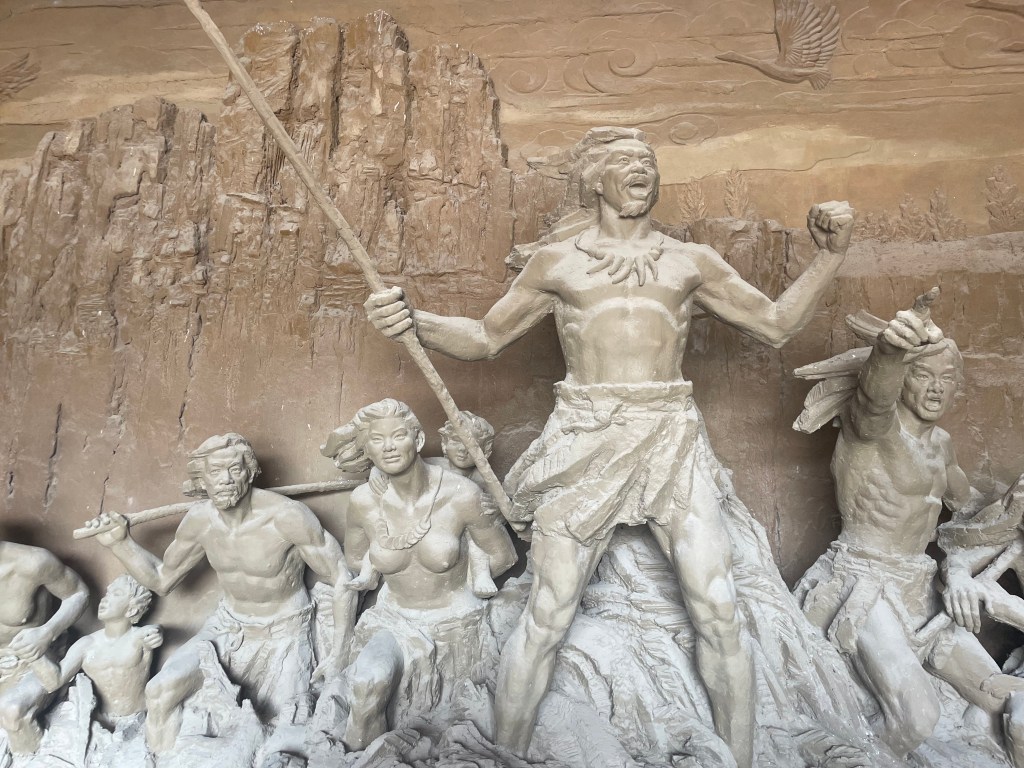

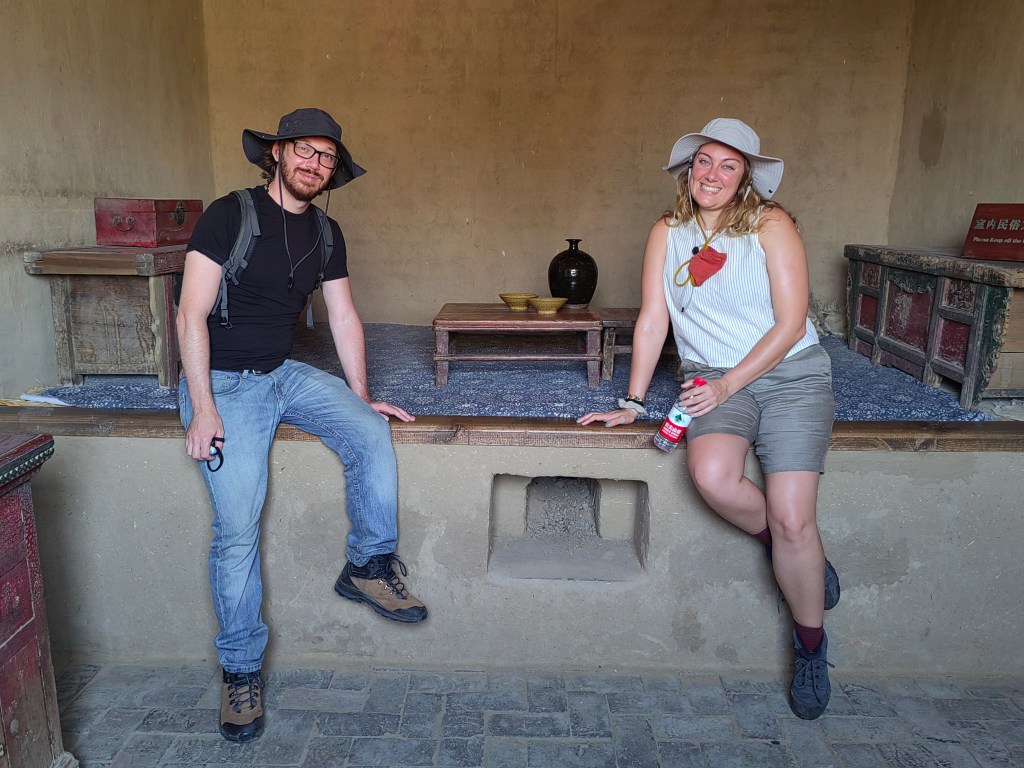
As we headed out from the museum and into the rest of the Shuidonggou site, we passed one of the current excavation sites where they are actively working on uncovering more artifacts, fossils, and more. It’s so incredibly cool to see things like this, where time is spanning backwards and forwards all at the same time. (Maybe I can be an archaeologist in another life. For this one, I’ll just have to enjoy the little glimpses of cool history that I can get!)

Then, we shifted our brains back into the Ming Dynasty (600ish years ago) history of this site to visit the 萬里長城 Great Wall of China! For all of the traveling that I’d done around China thus far, I still had never seen the Great Wall! And though this is perhaps not the typical “first viewing” that people get, I still had the little stomach butterflies singing you are about to see something really cool and important. (Does anyone else experience that? I’ve noticed when I’m traveling and going to see THE thing – THE Great Wall, THE Colosseum, THE equator, THE whatever it is – I get almost anxious? My body gets all bubbly and nervous and excited, knowing that I’m about to see something I’ve always read about, something that many people dream of seeing. It’s a strange and magical feeling and I hope I never lose it.)
For any who don’t know, the Great Wall of China is not just one big long brick wall across China that was all built at the same time. There are many little sections of wall, not all connected, across various parts of China and that were built thousands of years apart from each other. Some areas of the Wall were built as early as the 7th century BC, then again during the Qin Dynasty, the Han Dynasty, the Northern Wei Dynasty, etc etc etc. The Ming Dynasty was responsible for building much of the Wall that we typically associate with the Great Wall – those sweeping images of a never-ending brick wall rolling through the mountains (don’t worry, I’ll get to that in a later blog…) – as well as much of the Wall that still remains today across northern China. So while our first visit to the Great Wall was not perhaps what many would expect, I kind of love that our first sighting was out of the ordinary, in a smaller province that not as many people travel to. It feels right, for us.
We reached the section of the wall that has had a small wooden platform built atop it so we could actually climb up and walk on the Great Wall. Though it might not look as technically impressive as some of our future Wall visits, I felt so lucky to be there and experiencing this. Plus, it was pretty cool to be standing right on the border between Ningxia and Inner Mongolia, which I’d travelled to the summer before!


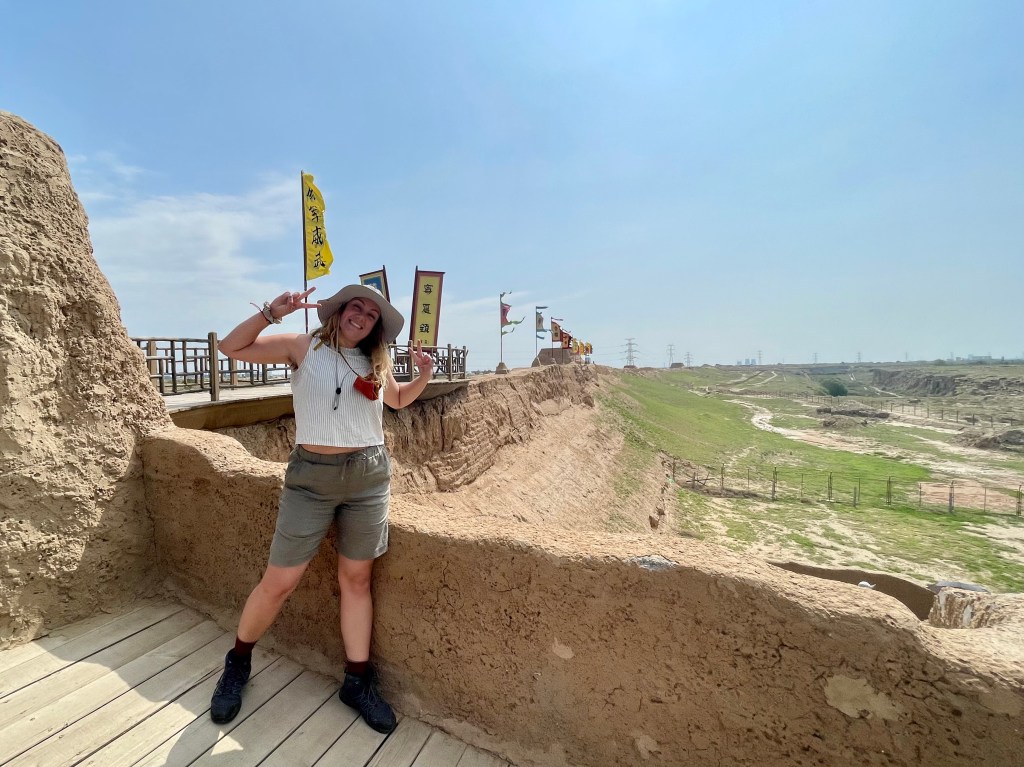
After the Wall, we headed on to explore more of the Shuidonggou Tourist Area. As is pretty common in a lot of these Chinese tourist areas I’ve been to, there are a sequence of little gimmicks or activities to do as you go throughout the area. So we rode a small boat along the river, walked a path through a petting zoo, rode both a donkey-drawn and camel-drawn cart, and just enjoyed the desert landscape as we headed to our next destination.

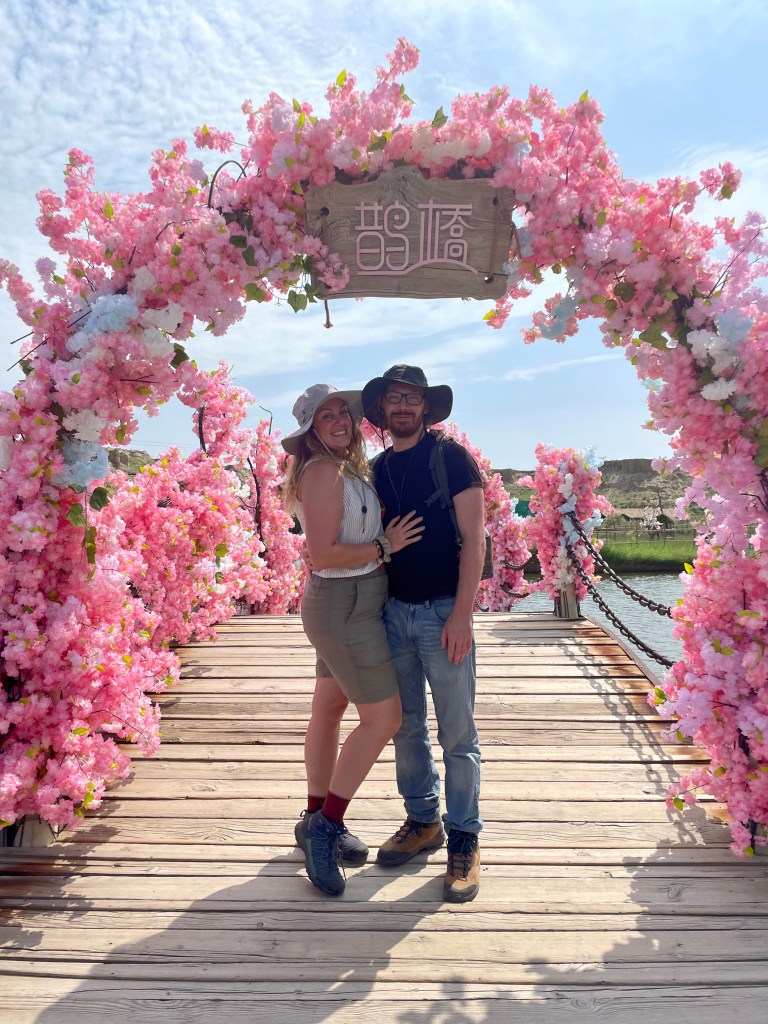
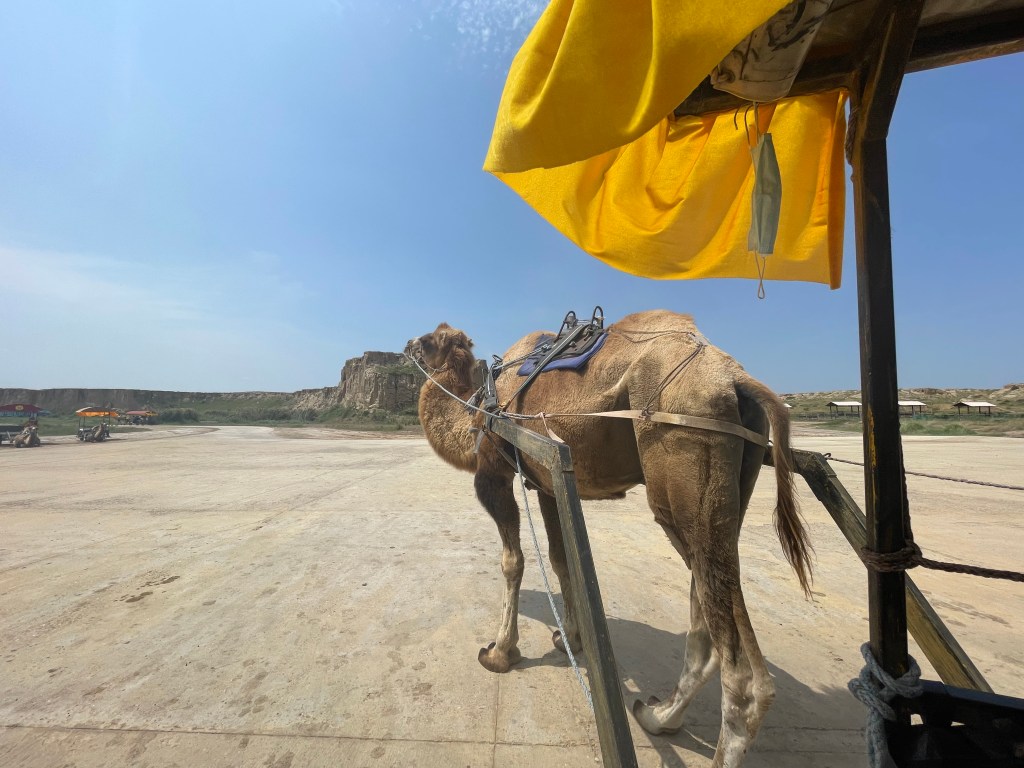
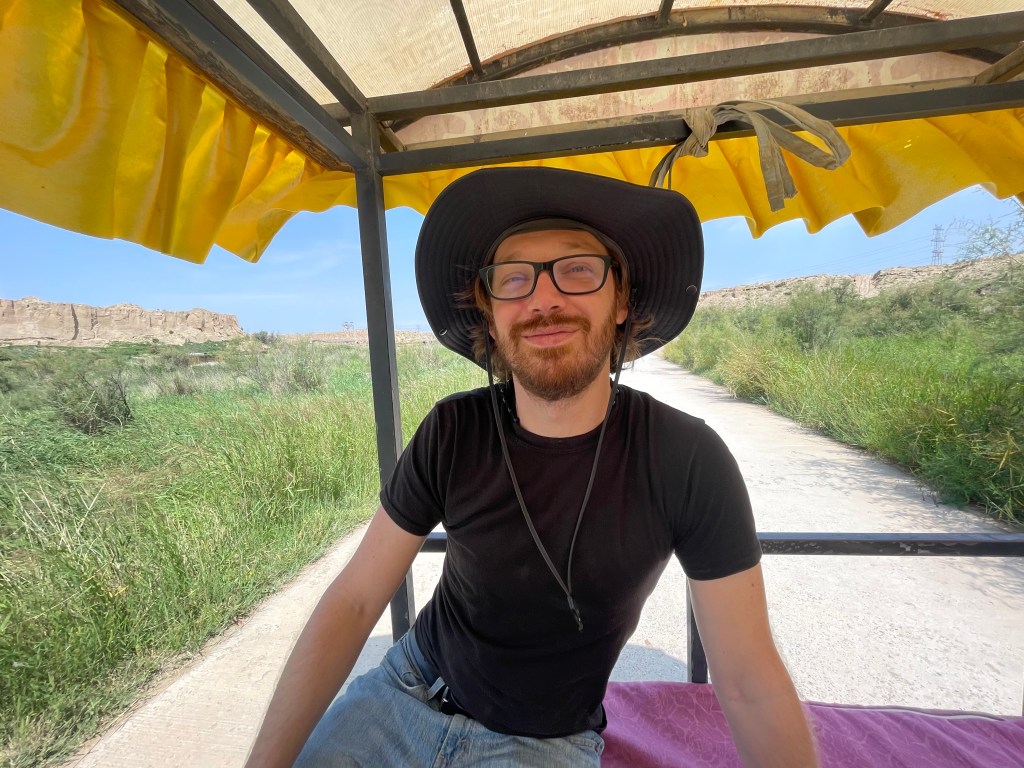
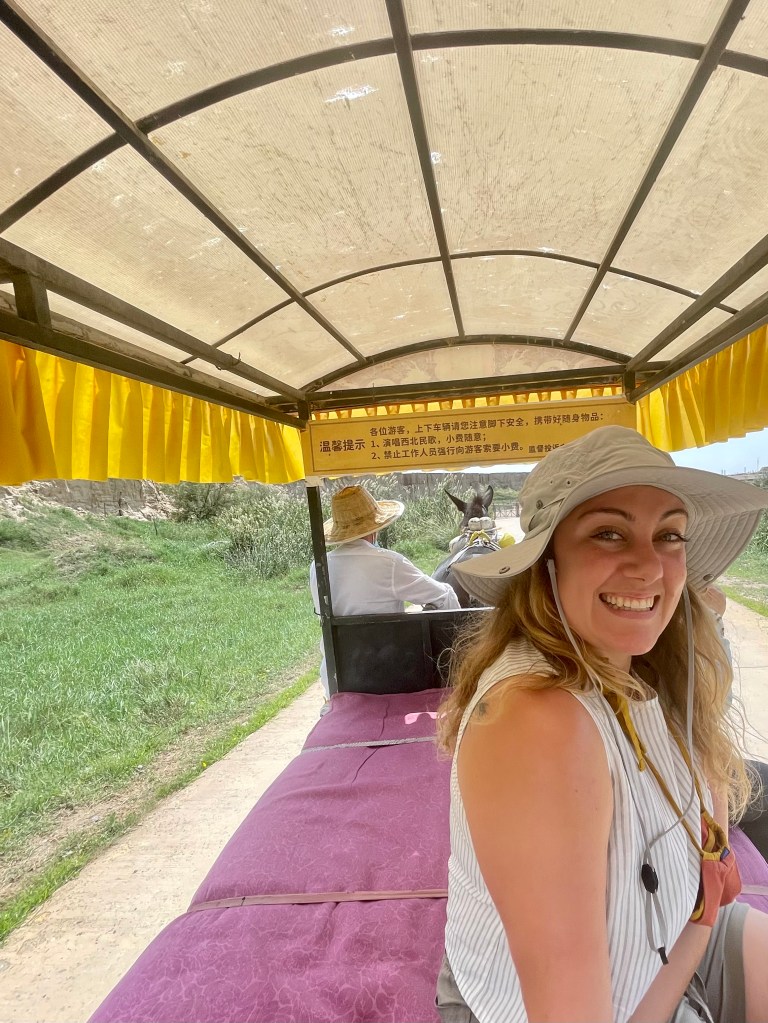

Though usually you ride the carts with a small group, we actually lucked out and got a cart all to ourselves for the first ride! For a tip, the drivers would sing traditional local folk songs while pulling you along. (A no brainer – bring on the music!) It was one of those special moments when you can’t see another living soul, just gliding bumpily along through this new landscape being underscored by an unfamiliar music, the finishing touch on the experience.
Finally, we reached our next destination: 红山堡 Hongshanbao, a Ming Dynasty fort used during wartime. Built in 1521, Hongshanbao could hold around 1,200 soldiers, and was in charge of eight beacon fire stations. But the part that we found most interesting was actually below the surface, in the Ancient-Troop Hiding Cave; this cave of endless branch tunnels, twisting and turning in a multi-directional maze, not only had bed rooms, meeting rooms, kitchens, and storage rooms, but also an assortment of traps and holes with hidden weapons. If invaders managed to get into the cave in an attempt to break through to China, not only would they have a hard time navigating and maneuvering through the thin unfamiliar passageways, but they would be met with booby traps and sneak attacks. Historians have uncovered ancient swords, spears, firecrackers, shells, spiking iron balls, waist sabers, waist swords, arrows, quivers, and more.
As our guide walked us through the maze of tunnels, we walked through all sorts of traps that felt right out of Indiana Jones – sudden pits in the ground filled with sharp spikes, small intentionally-placed holes in the wall where someone could thrust out a weapon as you pass, step-here-and-this-giant-rock-falls-on-top-of-you rigs, the whole nine yards. It was epic. According to historical records, while many areas of the Great Wall were broken down or pushed through during invasions, the defense lines at Hongshanbao were never successfully broken through.


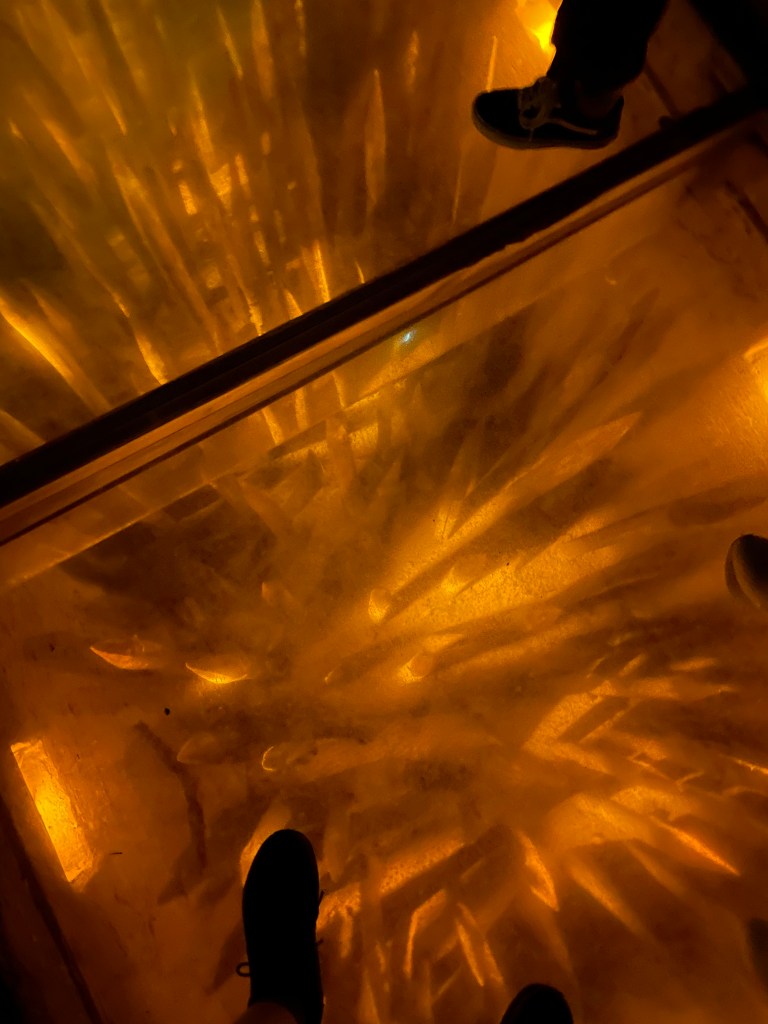
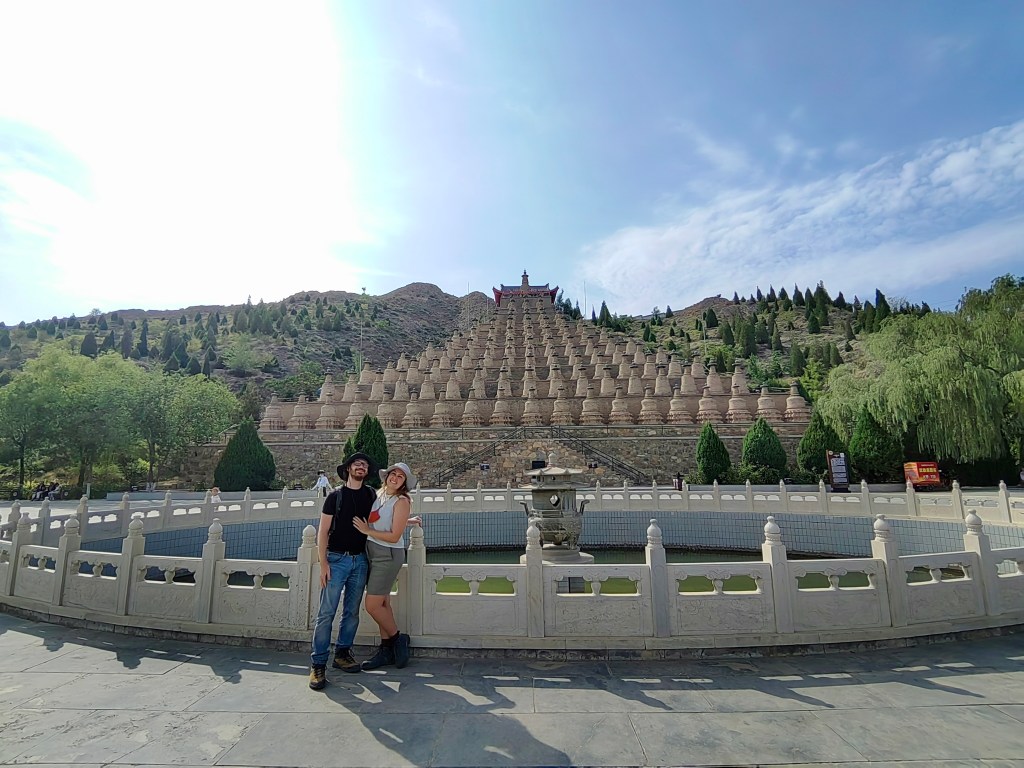
After finishing up our morning at Shuidonggou, we headed over to the Qingtongxia Yellow River Grand Canyon Tourist Area to see another popular landmark in Yinchuan: the One Hundred and Eight Pagodas. The 一百零八塔 One Hundred and Eight Pagodas were first built during the Xixia Dynasty (remember them? The beehive tombs?) and were an important piece of Buddhist architecture during that time, as there was also a grand temple in this area. After being repaired multiple times in the Yuan, Ming, and Qing Dynasties, the pagodas were eventually rebuilt into brick pagodas. During the process of rebuilding, multiple artifacts were unearthed – brick Buddha statues, silk paintings, sacred books, and other cultural relics that have contributed to the research on the historical Xixia culture.
According to Buddhism, there are 108 different types of feelings, and 108 types of earthly desires or temptations that a person must overcome to achieve nirvana. To work to eliminate these temptations, people need to pray to Buddha 108 times, knock a bell 108 times, etc… So the number 108 is incredible significant, as can be seen in the layout of this historic spot. It is said that anyone who walks around all 108 pagodas will have eternal luck.


While we did not walk around each of the 108 pagodas, our guide told us that the local custom is to circle the pagoda at the very top three times for good luck and prosperity. With guidance from the other locals at the top, we circled our way around the three required times – we’ll always take a little extra good luck!


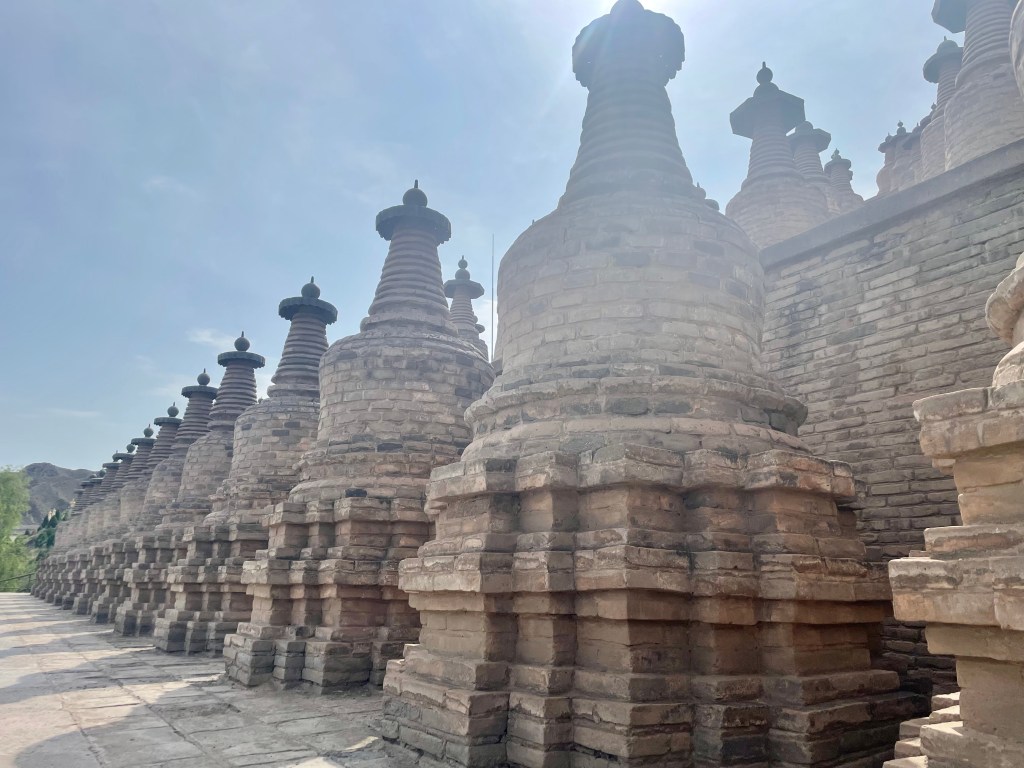
We spent a bit more time exploring the area of the Yellow River Grand Canyon and enjoying this beautiful place.
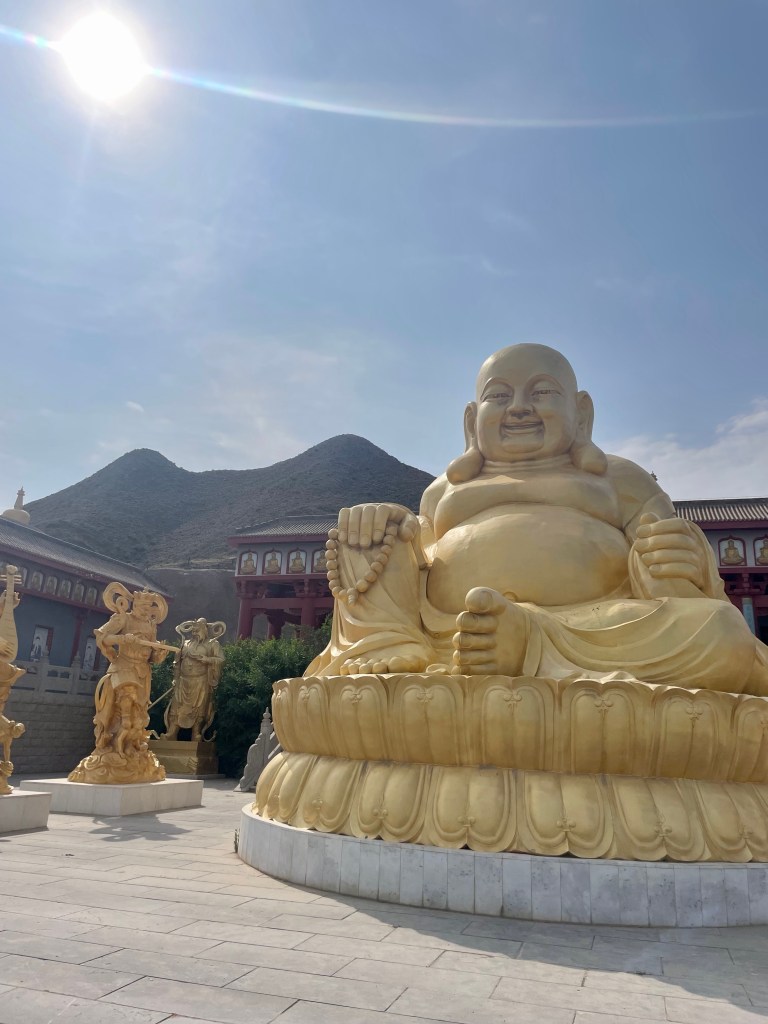
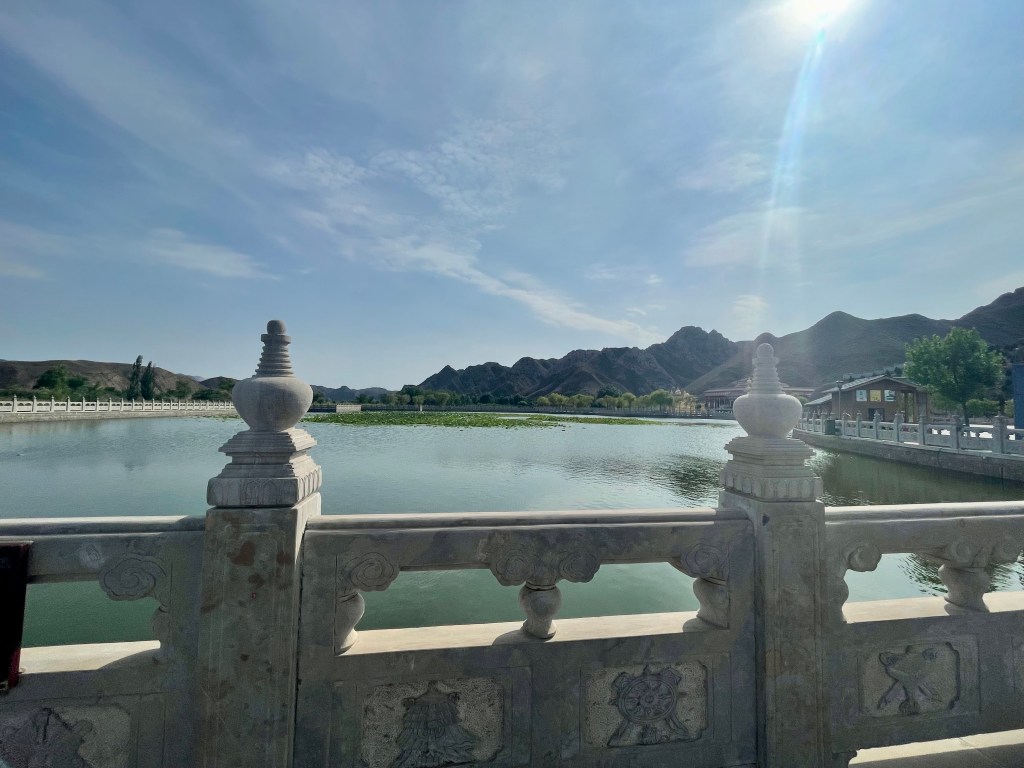

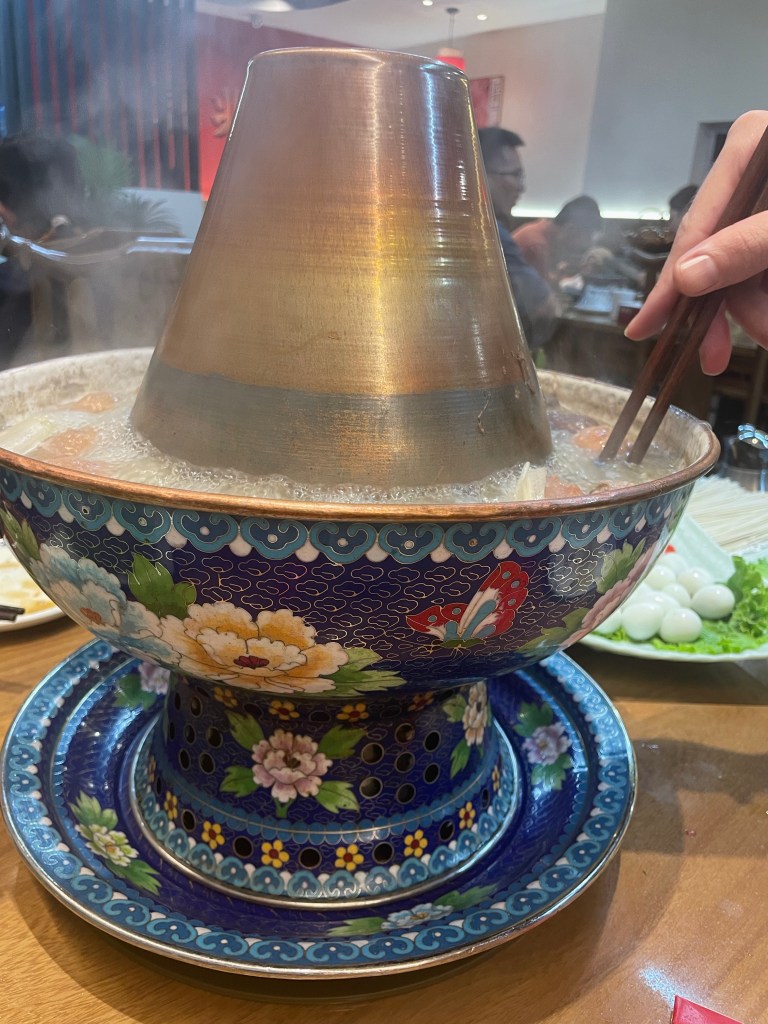
After driving back into Yinchuan, our guide joined us for an excellent traditional hotpot dinner before we tucked in for the night after another fantastic day.

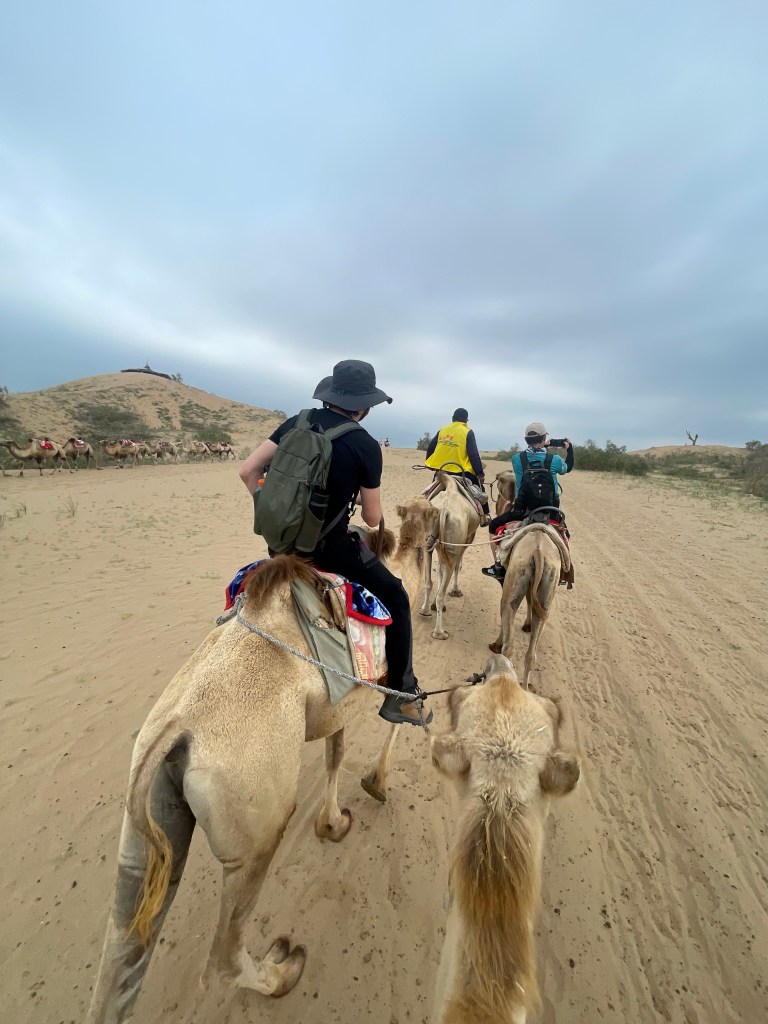
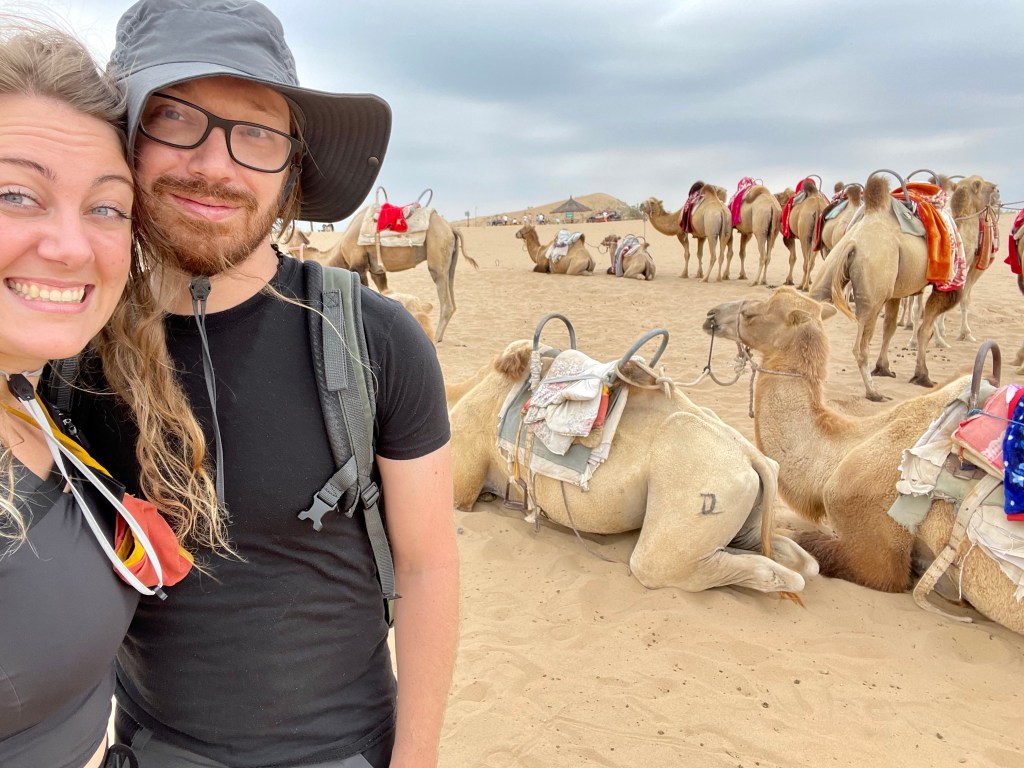
For our last full day in Ningxia, we were originally supposed to be heading further out into the desert for a bonfire and some other fun activities, but due to (you guessed it) pandemic restrictions, the company had to cancel last minute. Luckily, our guide was great and worked to find us something else fun and desert-y to do, so she bought us to the Shapotou Scenic Area. Shapotou is, basically, a desert amusement park. There are little rides, a boat ride, a sand slide, a zip line, all sorts of stuff. It would be a great place to go with kids, as you can really work your way around the park hopping from activity to activity. The highlight of the day for us, easily, was the camel ride! Even though it was only maybe a 5-minute ride in a straight line up one hill (again, desert amusement park, not just…desert travel), it was my first time riding a camel and I loved it!

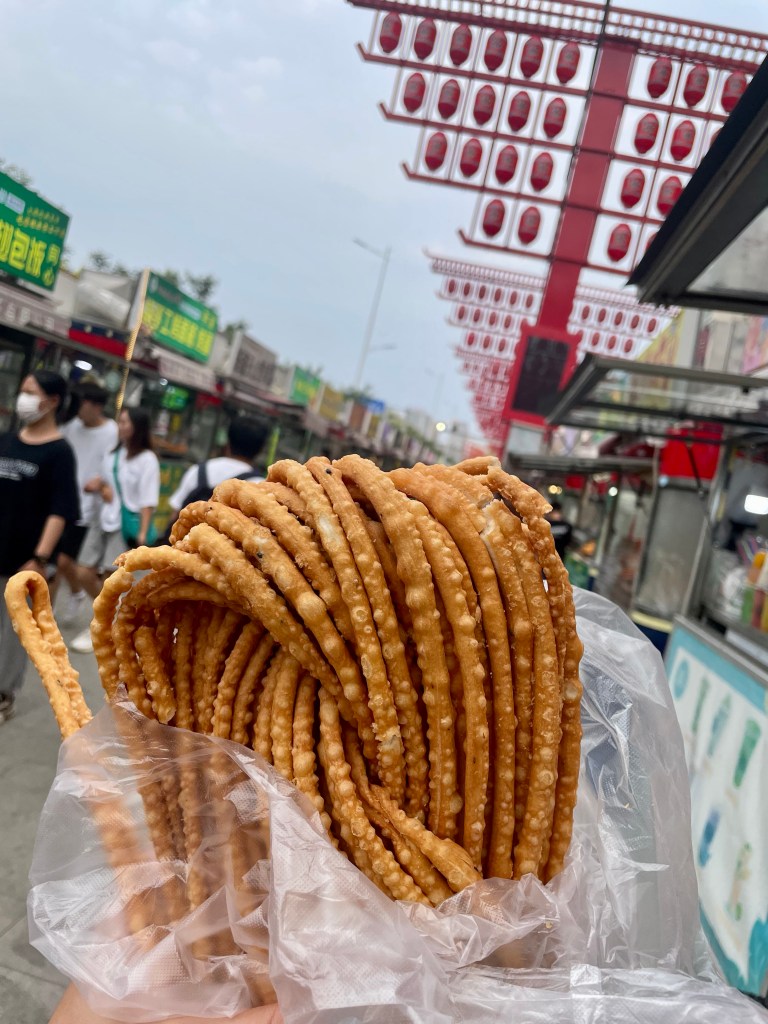
For our last evening in Ningxia, Michael and I ventured out for one more big food adventure at the 怀远观光夜市 Huaiyuan Night Market. With hundreds of little food stalls (and crowds getting bigger and bigger as the night went on), we knew that this was going to be a great place to get a few more authentic local tastes before flying home. Now, sometimes when we’re traveling we have specific snacks or meals we are looking for, things we’ve researched ahead of time and know we want to try while there. (We did a lot of that in Italy – blogs to come soon!) Sometimes, we just wing it and look for the longest lines to see what everyone else is going for. This was definitely one of those times. We wandered up and down the various streets, stopping when we saw something that either looked good, looked interesting, or else we saw other people eating and wanted to try ourselves! I would give more specific details on what we ate, but honestly – I don’t know! We had sort of a long pretzel-wonton type crunchy snack, some kind of hot milk with goji berry drink, some kind of spiced hard-boiled eggs – anything and everything!


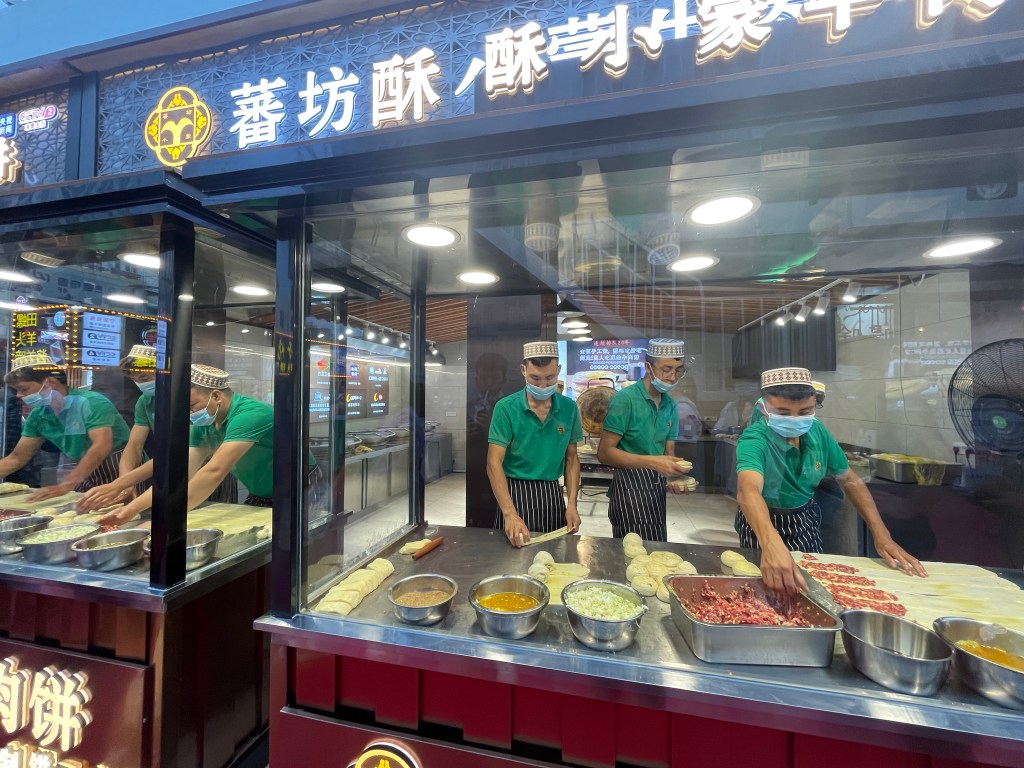
In keeping with our “look for the longest line and there you will find the food to eat” mentality, when we found one of the central areas of the night market we saw a long line, chefs preparing food in front of a window where everyone was taking their picture, and everyone eating from the same kind of wrapper. Guess we found our dinner!
After doing some after-the-fact research, I have been able to identify that we ordered crispy beef patties from what is either called Mafuming, or Bo Fang Su Xiao Meng, or something with an abbreviation of MJR that was written on the wrapper. I wish I could give you more information, but I am still learning how to navigate the Chinese internet and a Google search isn’t giving me anymore information. Based on the long lines and the CCTV sticker, I’m guessing this is some kind of famous food stand? Either way, we found a spot to sit down with a beer and our absolutely delicious crispy beef patties and had a fantastic time doing what we love.


Even though we were not hungry in the slightest anymore, on our way out of the night market we passed one more food stall that we absolutely could not pass without stopping. We saw what looked to be a corn dog covered in green sprinkles? For scientific purposes, we obviously had to order one.

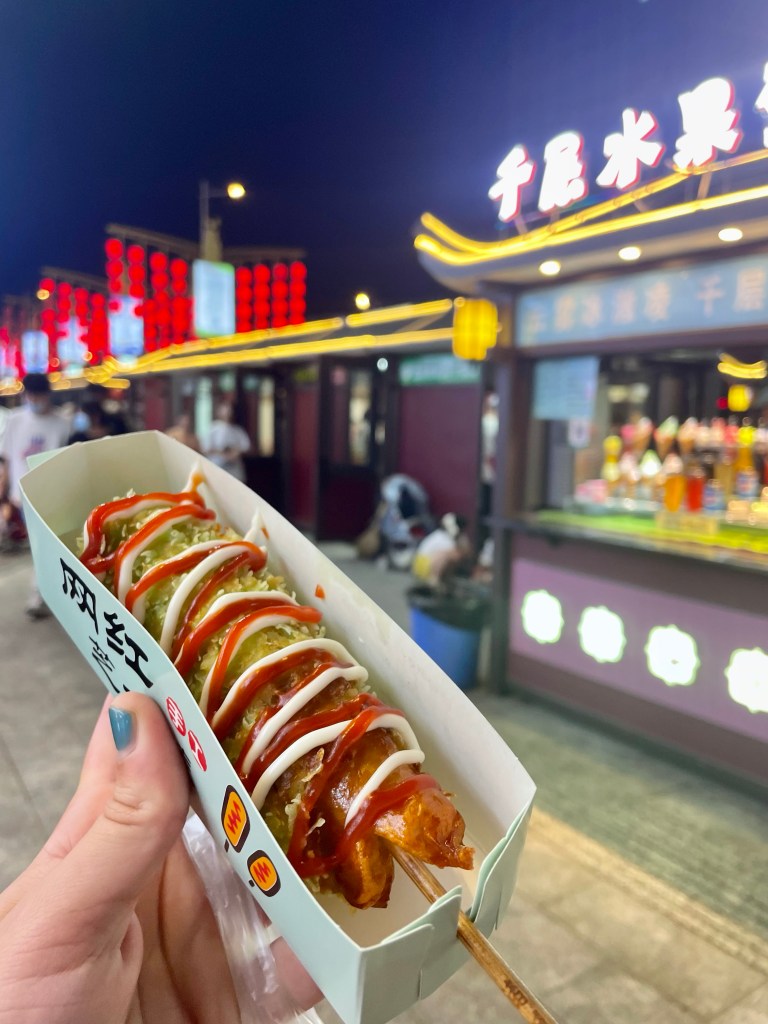
The result? Well, I’ll leave you with Michael’s first reaction upon biting into it…
 Adventure in the Great Wide Somewhere