
(To no one’s surprise, it’s been nearly two months since I’ve last posted and I am approximately 10 months and 20+ blogs behind schedule. Thank you for your patience and I promise I have so many amazing things to share with you, it’ll just take me a while to get them all out there! Also, hello to all of my middle school students who have found my website and were shocked to discover I am a real person with a real life who doesn’t just live at the school 24/7.)
After a thrilling first day exploring Yangshuo from up on top of the karst mountains, for our second day we set out to explore Yangshuo from the ground in one of the popular activities – biking! Our guide Evelyn helped us rent bikes, then we set off to ride through the villages and along the Li River.


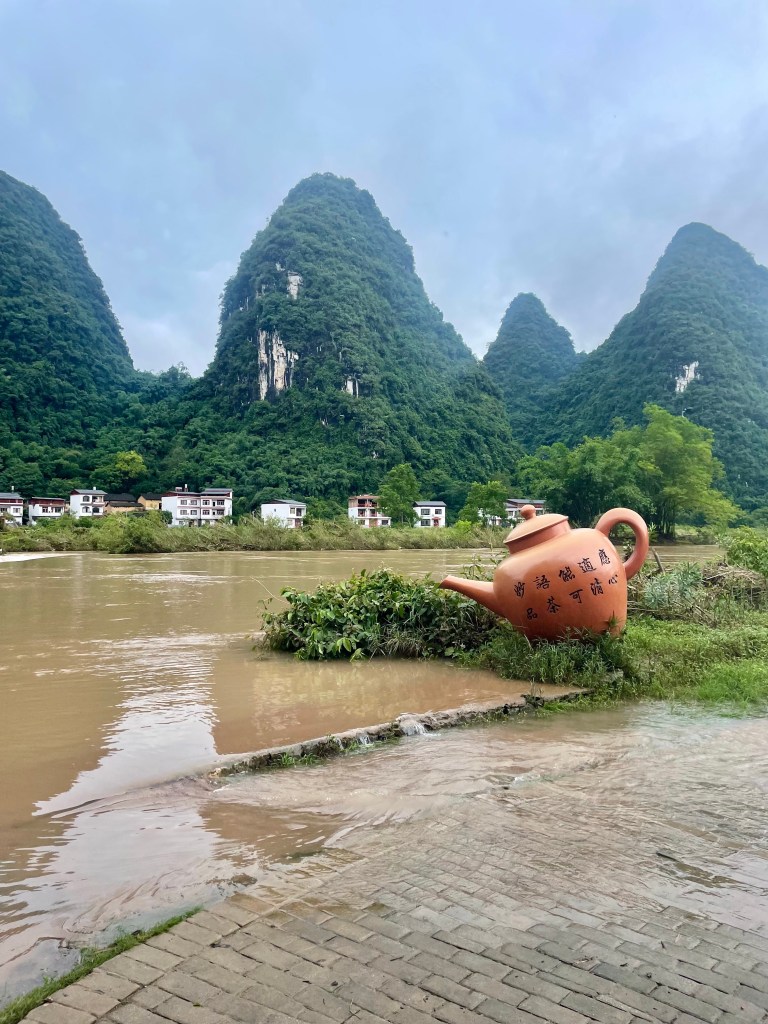

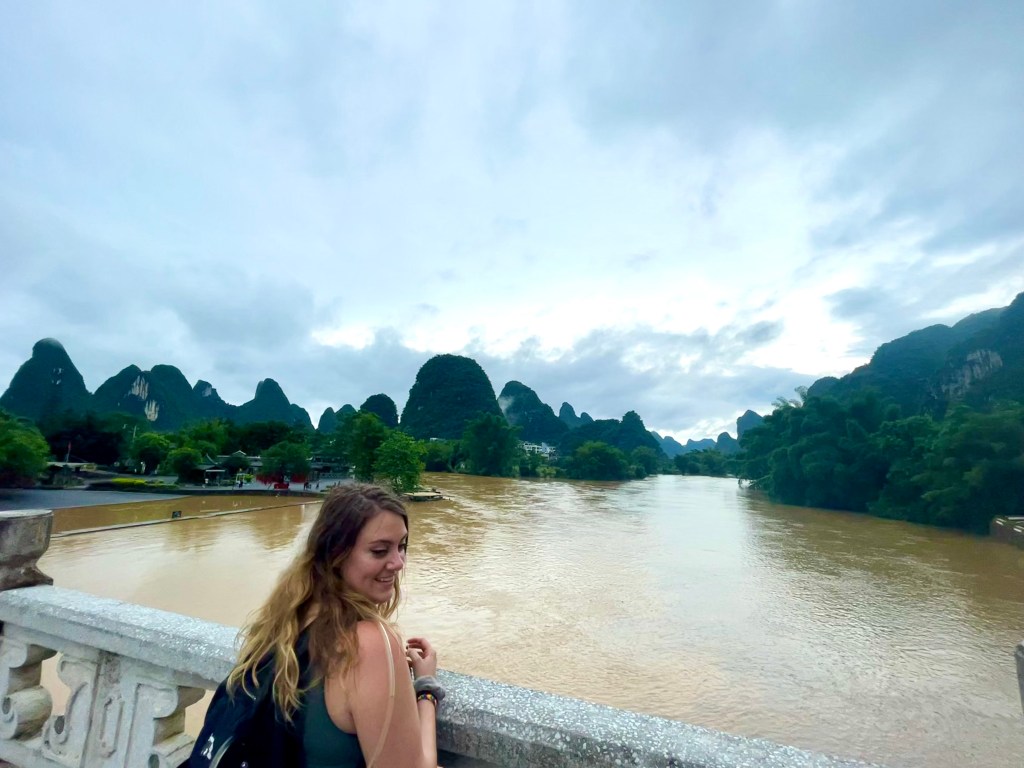
Initially, we were also supposed to be able to ride the bamboo rafts along the Li River – another popular tourist activity in Yangshuo – but because it had been so rainy this season, the river was flooded. The waters were too high and too strong for any rafting (which was a shame, I hear it’s lovely… guess we’ll just have to go back!) so we decided to just keep biking around instead!


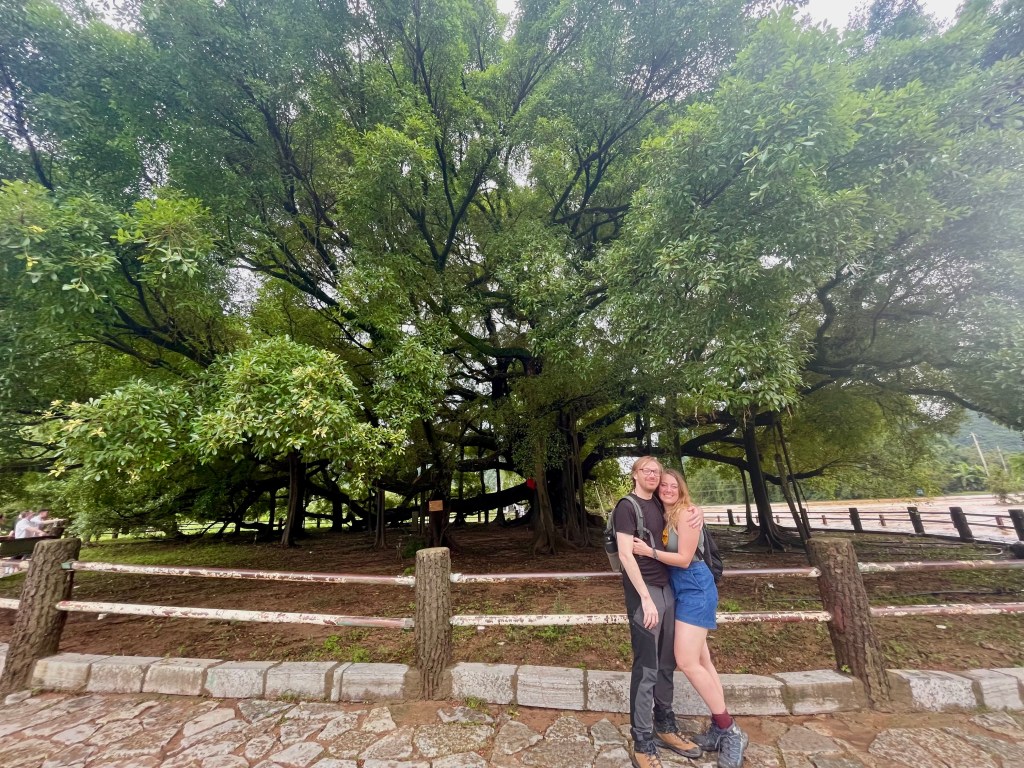
We rode over to see the Big Banyan Tree, a 1,400 year old tree that was planted here in Yangshuo during the Sui Dynasty (581-618). After growing here for over a thousand years, the tree is now about 17 meters/56 feet tall with a circumference of 7 meters/23 feet – it’s HUGE! The Big Banyan Tree spans out like a giant green umbrella, its roots twisting and turning below.
Apparently this tree was featured in a romantic scene in a 1960s Chinese film adaptation of the myth of 刘三姐 Third Sister Liu; in the film, under this banyan tree the main character 刘三姐 Liu San Jie (the “Goddess of Songs” in the Zhuang minority) sings a love song with 阿牛哥 The A’niu, then throws him an embroidered silk ball – he catches the ball, and their love (and engagement!) is confirmed. This act of throwing an embroidered ball is a traditional custom in this region; women stitch handmade 绣球 xiuqiu, or silk decorative balls, for the Zhuang Nationality Song Festival. During the festival (inspired by the story of 刘三姐 Liu San Jie) young girls sing call-and-response songs to which the boys must sing back their responses. If a girl decides that she likes a boy after hearing his responses, she throws him her xiuqiu; if he returns the feelings, he attaches a small gift and throws the ball back to her. They are then considered a match. (I’ve included a picture of a xiuqiu a bit further down in the blog!)
Because this famous scene was filmed here, many lovers now come to the Big Banyan Tree to wish that their relationship will be a long and happy one. According to some, couples who make wishes under the tree will have their dreams come true.
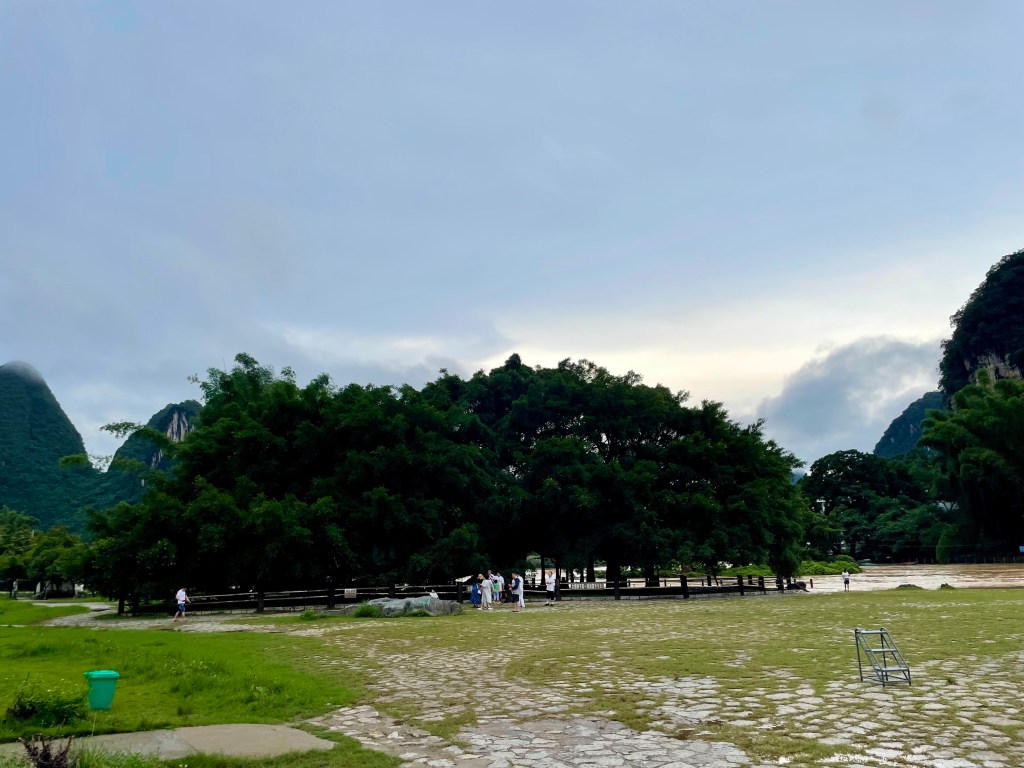


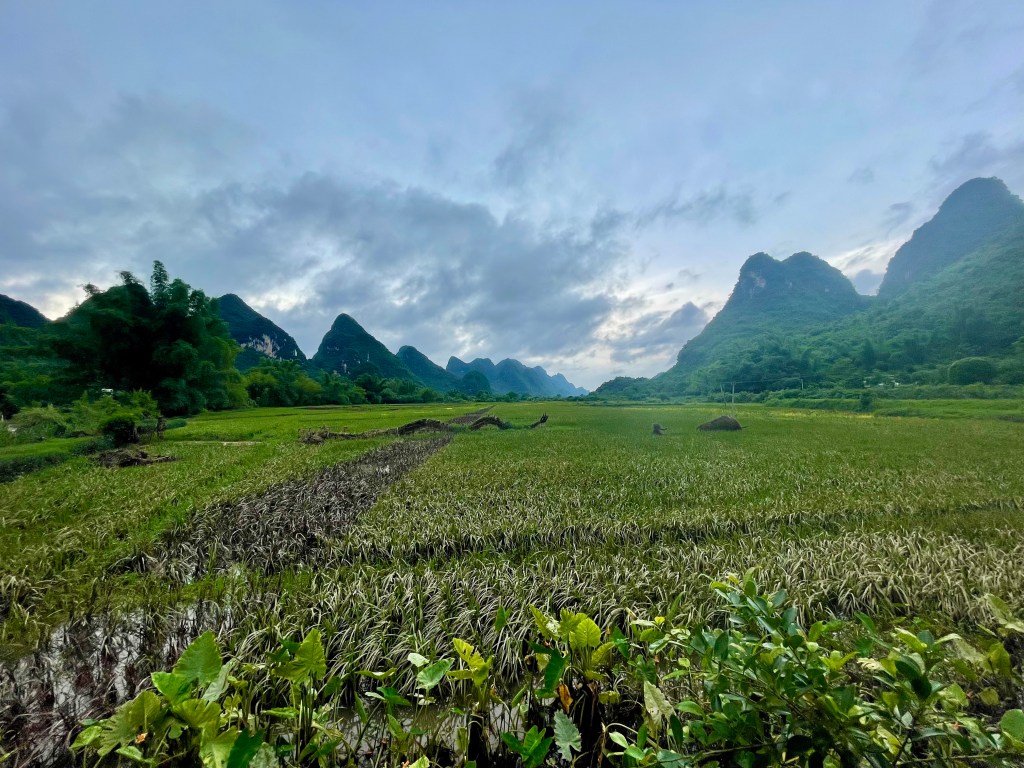
We continued biking throughout Yangshuo and marveling at all of the beauty of the area. Pictures truly can’t capture it; even with cloudy/muddy days like we had while there, it is one of the most beautiful places I’ve seen in China.


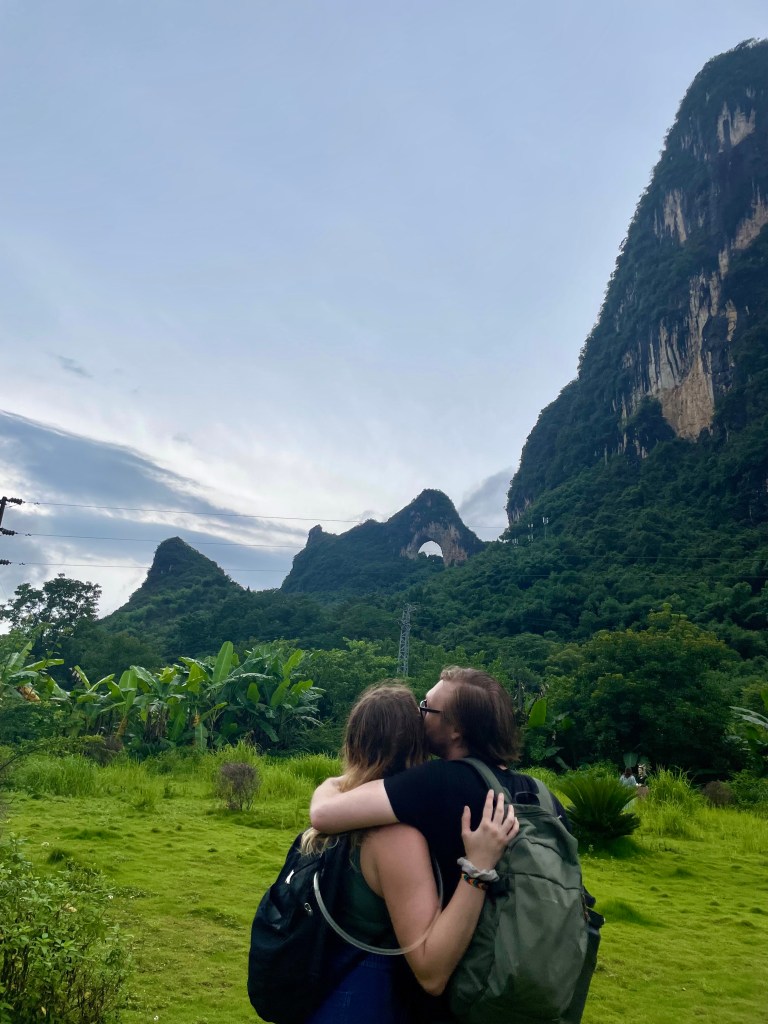
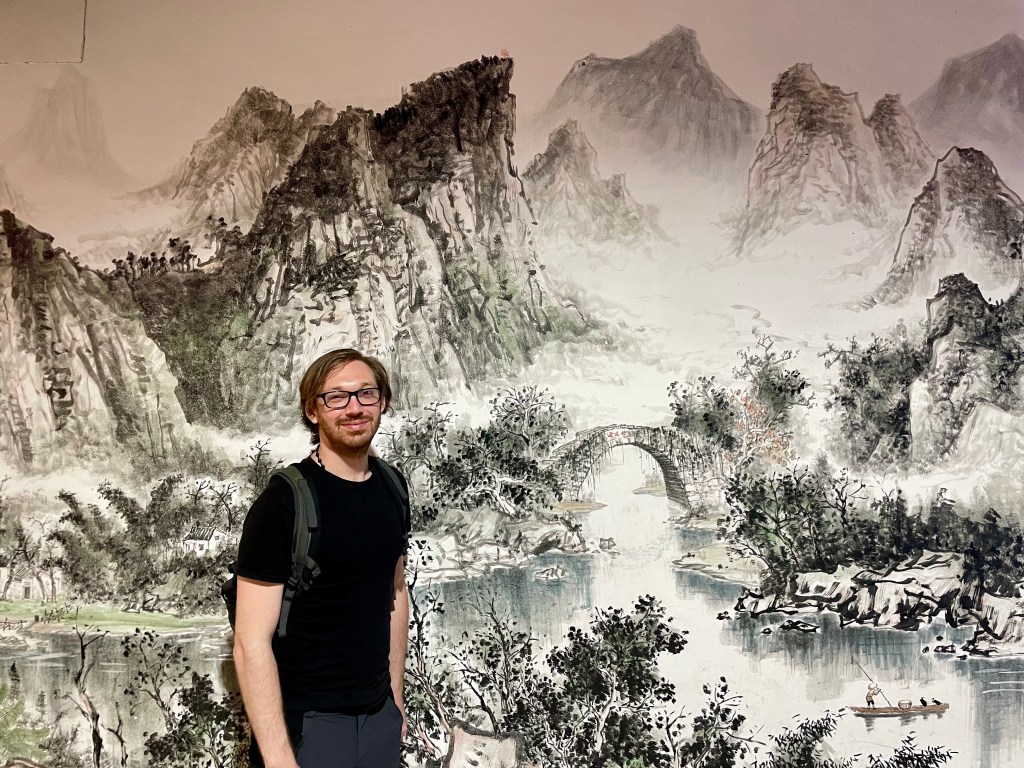
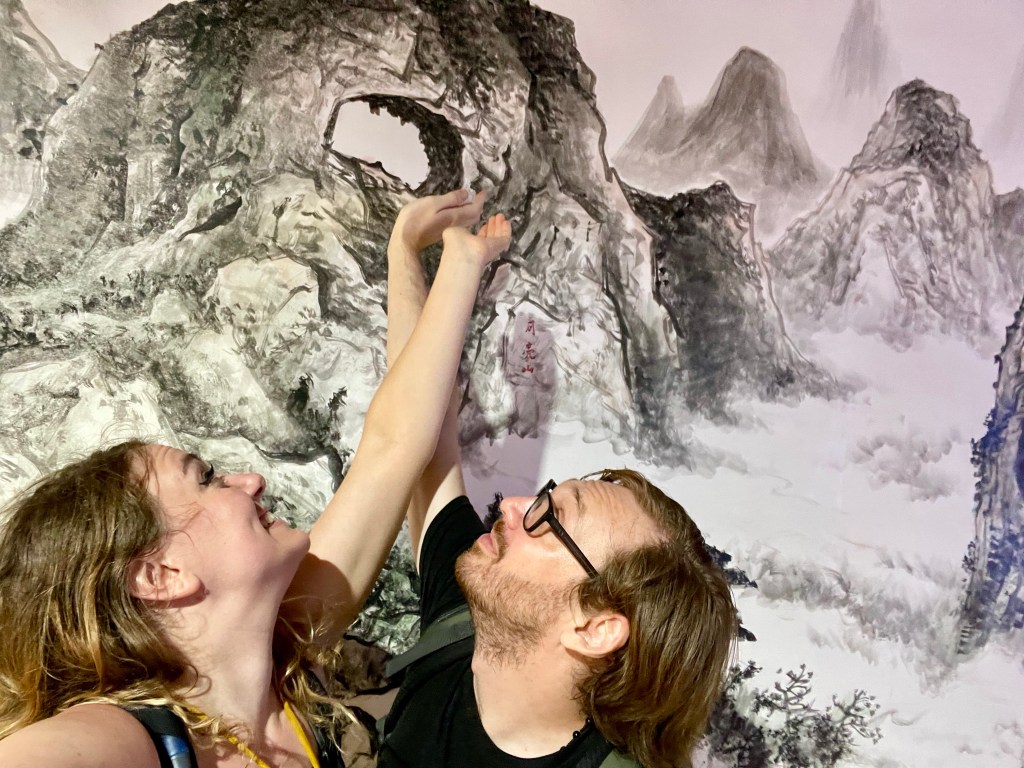
To finish out our bike ride, we rode out to see the famous 月亮山 Moon Hill, considered to be one of the icons of Yangshuo. Though we weren’t able to get up to the top on this trip, there are a few hiking paths as well as some rock climbing routes that make it a popular destination when people visit Yangshuo. (Evelyn tried coaching us into a pose that made it look like we were holding the “moon” in our hands. We…were not the most successful. But we DID feature in the photographs of the 20-30 high schoolers that were delighted to see us trying.)

That evening, after having seen it while biking by earlier, we decided to visit the 桂林千古情 Guilin Romance Park. As I’ve written about before when I visited Sanya the previous summer, China has a variety of Romance Parks (at least 7, but there could be more) throughout the country that highlight (in a Disneyland kind of way) the local minority culture and feature a spectacular circus/dance show. They are ridiculous and I love them. Michael and I want to make punch cards and visit all of the Romance Parks.
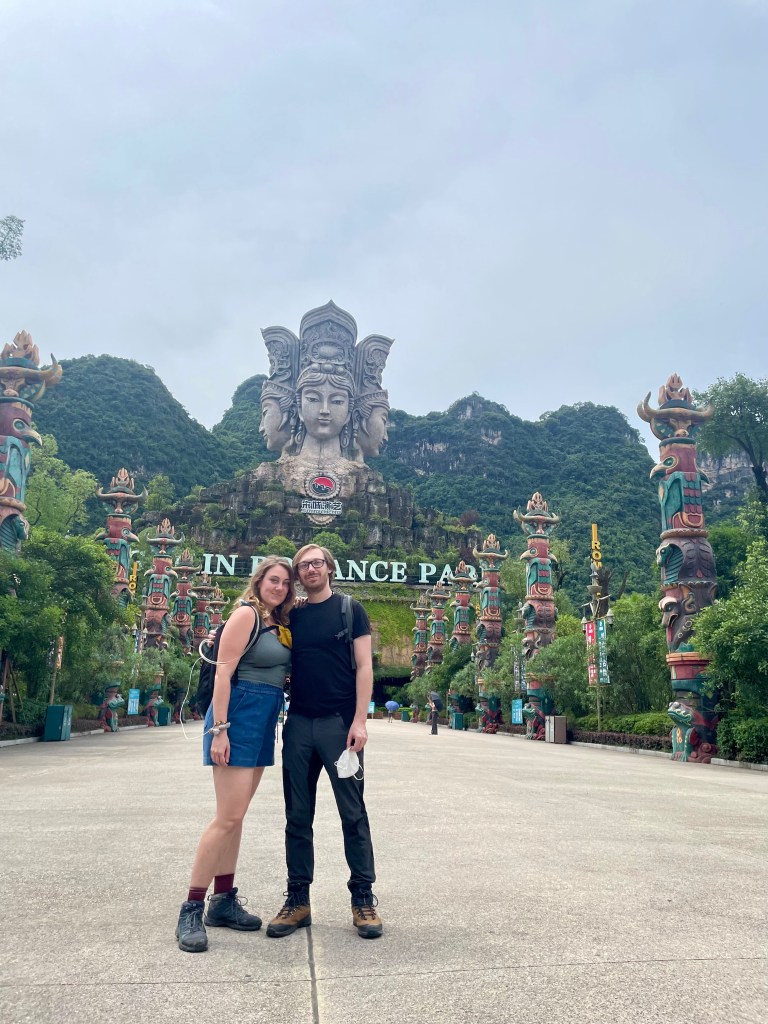


I always love getting to see the traditional costumes! 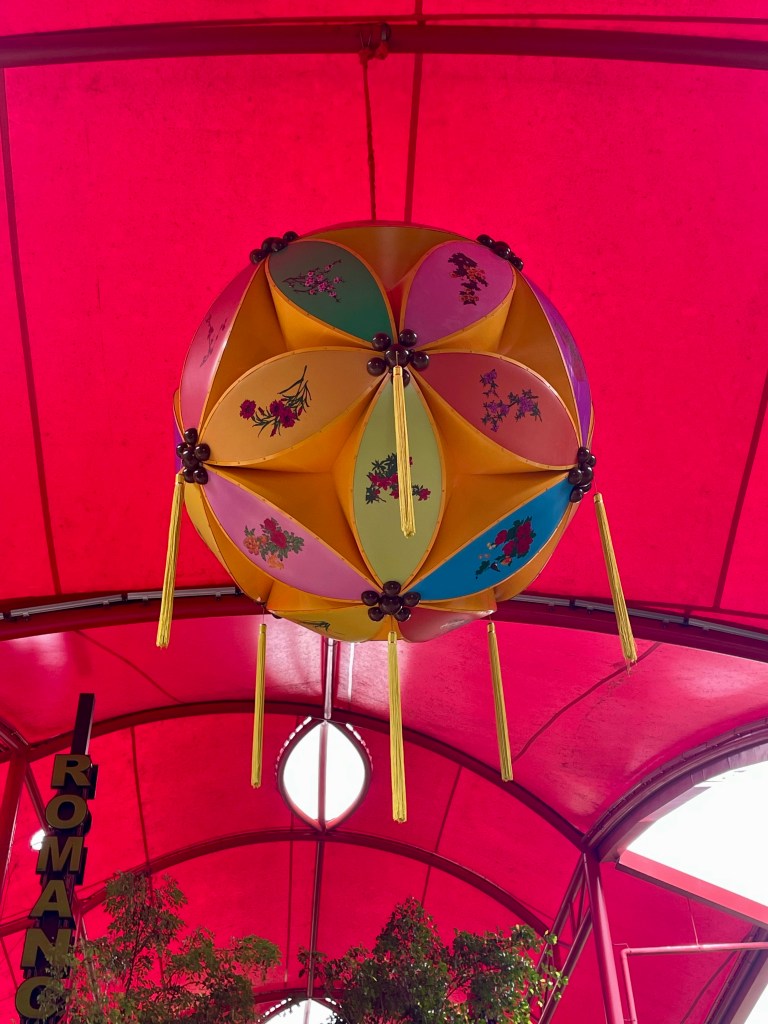
This is a large example of the xiuqiu, the embroidered silk love balls! 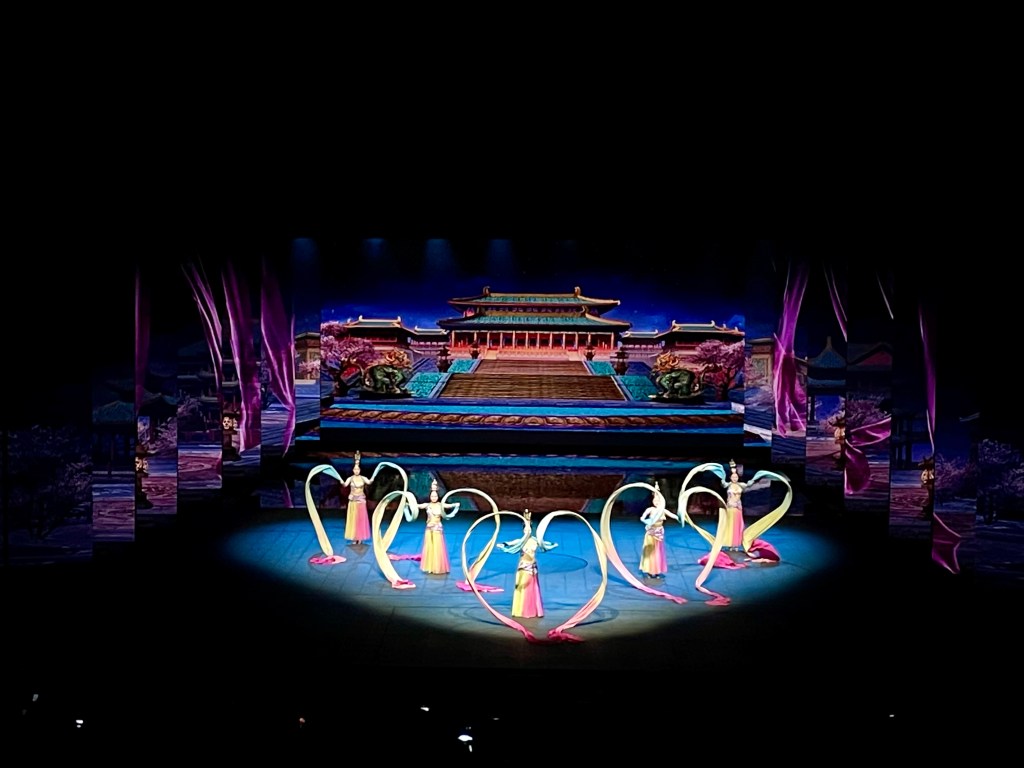
The performance featured 5 local myths and legends, each with their own songs, dances, and circus performances. Aerial silks, contortionists, local dances, stage combat – these shows are incredibly demanding and the performers are FANTASTIC. (I’m pretty sure they all go to a specific training program – it’s all very Cirque du Soleil.) The big thing about the Romance shows that Michael and I just love is how heavily they rely on spectacle.
If you are a theatre goer, especially if you’ve ever seen any of those epic mega-musicals from the 1980s, you understand spectacle. A chandelier crashing to the stage in Phantom of the Opera, a helicopter flying down in Miss Saigon, the battle on the barricade in Les Miserables… you know the type. China LOVES spectacle, and so, without fail, these Romance shows always feature at least one thing that is specifically included to wow the audience. For the Guilin Romance show, it was….noodles. Lots and lots of noodles.
Allow me to explain. Guilin (and, thus, Yangshuo) is FAMOUS for its rice noodles. (And with good reason, they are fantastic.) So, when we reached the third story in the show, from what we could gather (the shows are all in Mandarin so we’re working mostly with context clues): there was a woman who had to send her son/husband (unclear) off to the war. She was sad about it. The war was rough. Her son/husband died? Everyone was sad. And then there were all of these soldiers who were…smuggling big bags of something past the enemies? (They literally zip-lined their way onto the stage running horizontally on the walls of the theatre, Michael giggled aloud he was so excited.) Maybe they were bags of rice? And then we see the woman in her kitchen kneading dough, and epic triumphant music starts playing, and suddenly a sky full of noodles sweeps across the entire theatre making its way to the stage. I wish I could say I was exaggerating, but I am very much not. And then everyone was happy, probably because they now had noodles. So we assume this story had something to do with…bringing the noodles to Guilin? Or coming up with the recipe for the rice noodles? Or cheering up the troops with starchy carbs? Either way, we were delighted. Who needs a chandelier when you have THOUSANDS OF NOODLES?!

But hands down my FAVORITE thing we saw at the Guilin Romance Park was the incredible 变脸 Bian Lian “Face Changing” performance. Though this style of performance originates in the Sichuan province rather than the Guangxi province, I was not complaining – it is completely and utterly magical. One performer, dressed in an elaborate and colorful costume, has multiple silk masks all representing different characters or moods. As the performer goes about his movement, he changes his face in a split second. (No, seriously. It’s unreal.) This ancient Chinese art form is a secret that is incredibly well protected, and the knowledge of how to do it is taught in a special school and often passed down from generation to generation. Please click on the video below and watch it. I was speechless. It is AMAZING.
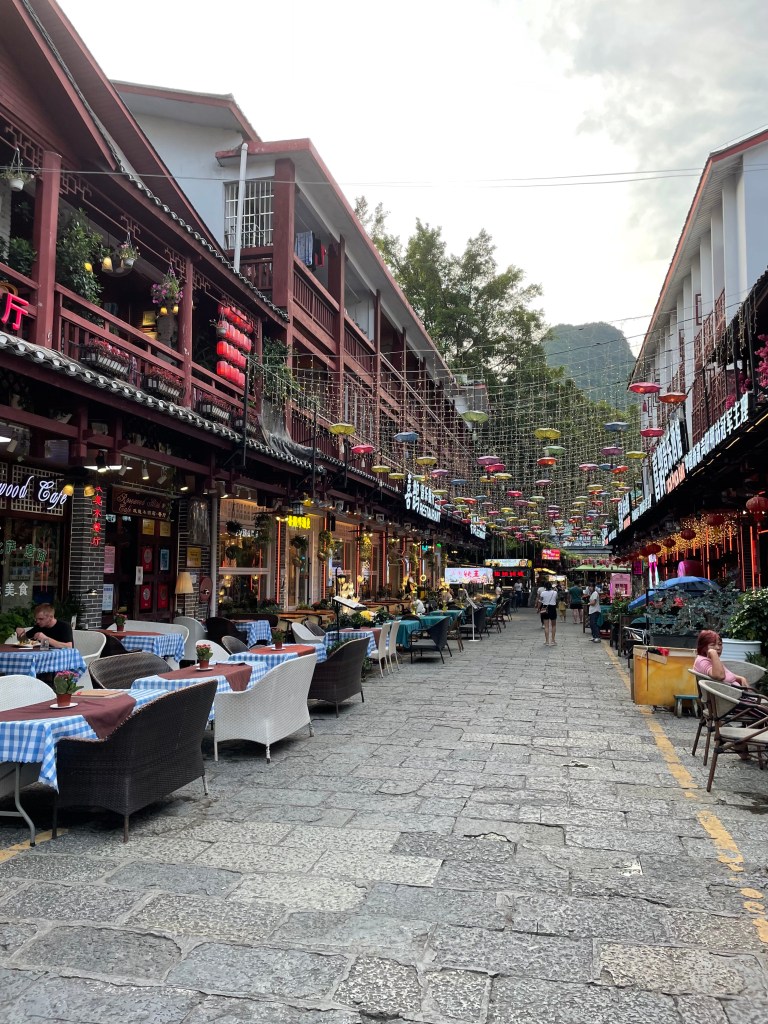
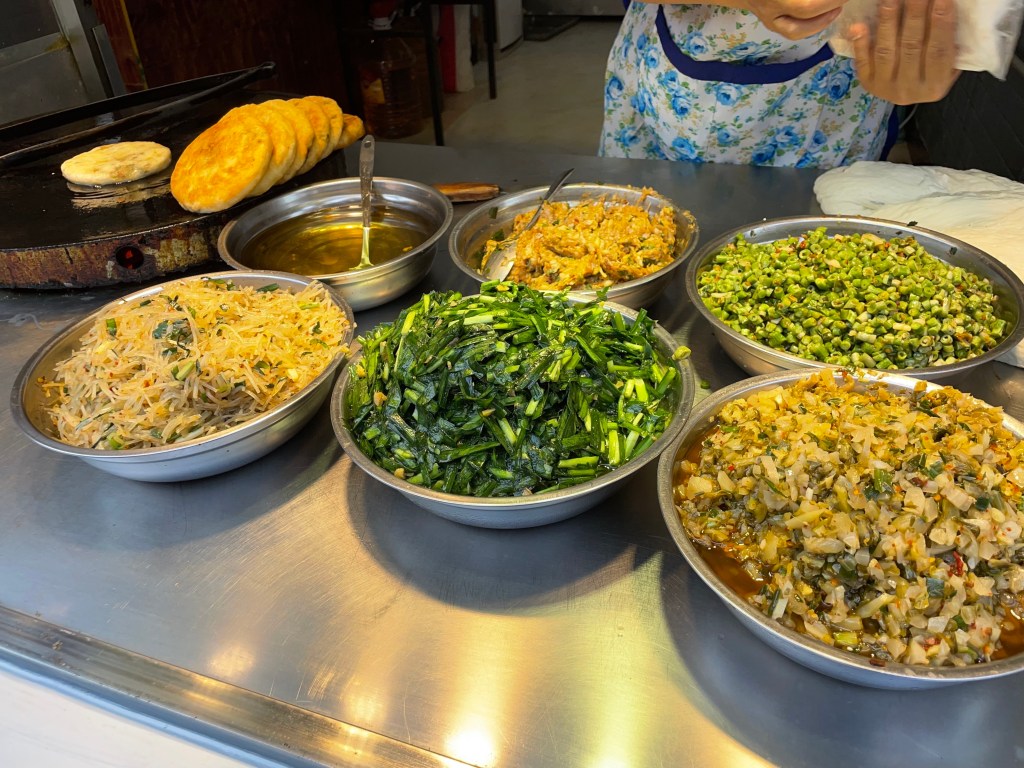
After our time at the Guilin Romance Park, we headed back for one last night out in Yangshuo’s West Street. (These pictures are misleading – an hour later, everything was PACKED with people.) We tried some street food, purchased some small gifts and souvenirs, and settled down for dinner with live music while appreciating the atmosphere of West Street. As I said in my last post, it really reminds me of being in New Orleans – music, food, dancing, and contagious joy.


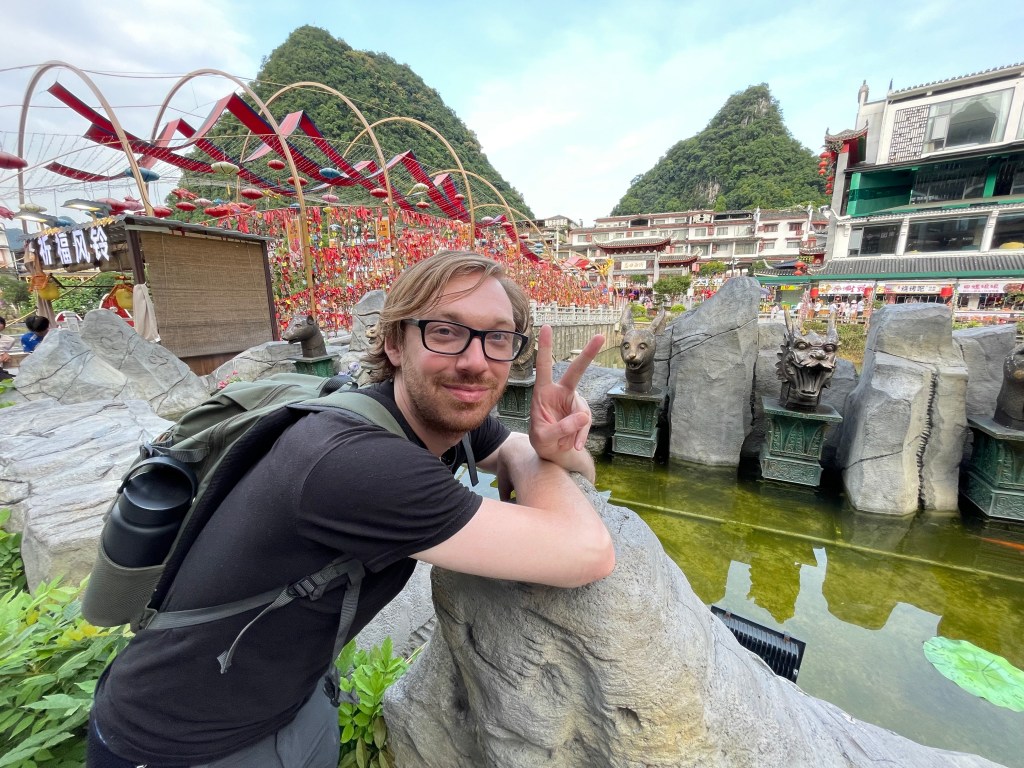
The main thing we learned from our time in Guilin and Yangshuo was that we absolutely wanted to return. Though I’ve seen many, many incredible places throughout China, this one truly is in the top few. Though we were sad to be leaving the Guangxi province, our summer adventures were not over yet…
 Adventure in the Great Wide Somewhere