
After a 65-day lockdown that took our spring away from us, my boyfriend and I were very anxious to get out of Shanghai and do some traveling over the summer. As you can probably assume, if you have not yet witnessed the madness yourself, I am the master of hypothetical itineraries. Before Lockdown (B.L.?), I had put together a truly epic 2-month summer travel adventure that would have us visiting Xi’an, Qinghai, Gansu, Guizhou, Tiger Leaping Gorge, Yangshuo, Beijing, Zhangjiajie… Once June hit and it was clear that summer travel was still not going to be fully back to normal, I had to reevaluate. While most provinces’ borders were closed, or others were closed specifically to those coming from Shanghai, it became a game of Who Will Let Us In (Please Please Please Someone, Anyone, Let Us In). As we reached the final few weeks of online teaching for the year (our school year doesn’t finish up until the end of June) there was a tiny spark of hope – Hainan and Guangxi were both open for visitors. In the span of maybe 12 reckless hours, Michael and I reached out to the travel companies we’d been in contact with and booked our trips: a 5-day tour of Guilin/Yangshuo, a 7-day tour of the Detian Waterfall and southern Guangxi, and some time down in Sanya in between the two trips. I’m pretty sure we finalized all of our flights and trip deposits 3 days before we were supposed to leave? I guess you could say we were a bit desperate. But (please please please please) we had a plan, and a summer of travel ahead of us!
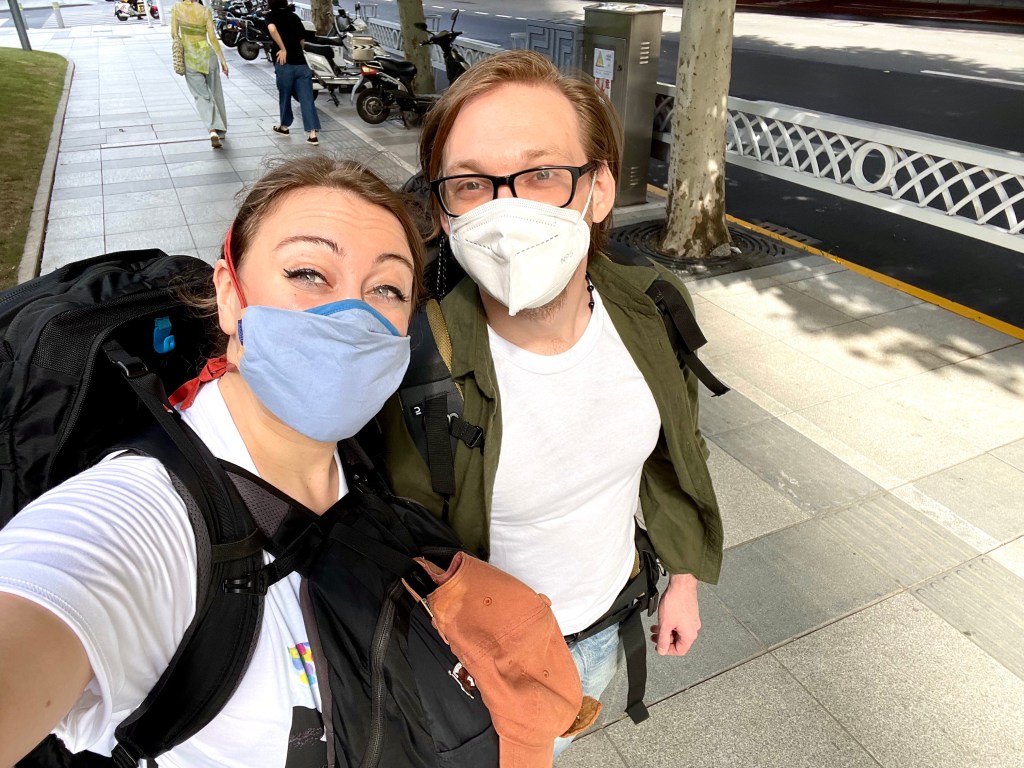
For our Guilin tour, we were signed up to be going with Joy Travel – a company neither of us had used before. Though we had originally signed up for a group tour, as we’d done in the past, the 3 other people who were supposed to be traveling with us were from Chengdu and were undergoing their own lockdown just before the trip was supposed to happen. Noooooo! We asked the company if there was any way the trip could still happen (please please please!) and we were able to, with a bit higher price, organize a private tour following the same itinerary we had signed up for. Though we felt a bit silly and bougie at first (you must remember, we both spent our 20s living paycheck to paycheck as broke theatre artists – the concept of a private tour was very foreign to us) we were willing to do whatever was needed. Whatever it takes. (Thanks, Captain America.)
Getting out of Shanghai felt WILD. We anticipated higher security and health checks every few steps, but it still felt like we were doing something we weren’t supposed to be doing. With each step, we kept waiting for them to turn us around and send us home; especially when we reached the airport. As foreigners, or 老外 laowai, as we hear just about everywhere we go, there’s always a bit more suspicion present when we’re checking in through flights. Are you coming from abroad? Have you been abroad in the past 14 days? What about the past 40? When was your last entry into China? Are you sure? Are you really sure? Where is your entry stamp? Where is your visa? Can I see your health code? Can I see your negative test results? Okay, your travel code? Look dude, I’ve been here for nearly two years straight, I’ve been in lockdown same as you, now please just let me leave. After a (loooong) check-in process, we made our way through the eerily empty airport and waited in the heat (no air conditioning for fear of spreading the virus) for our flight. The whole time we were in the air, we were still mentally preparing ourselves for them to turn us away as soon as we landed when they saw we were from Shanghai. To our surprise and delight, they didn’t. We had made it to Guilin.
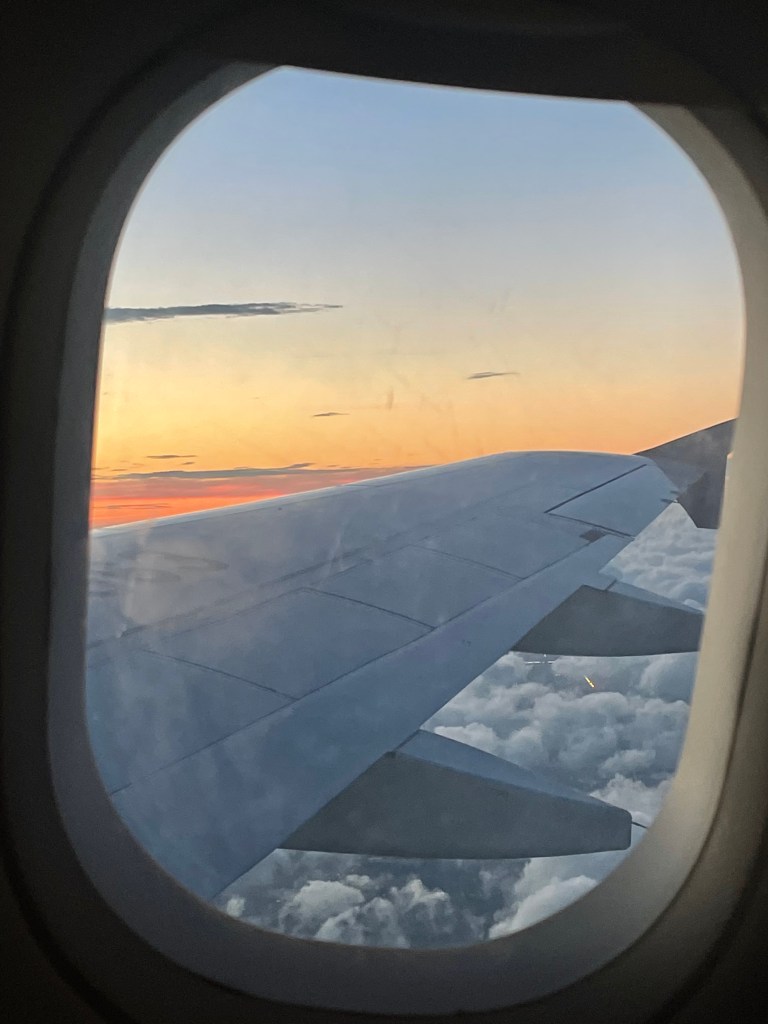


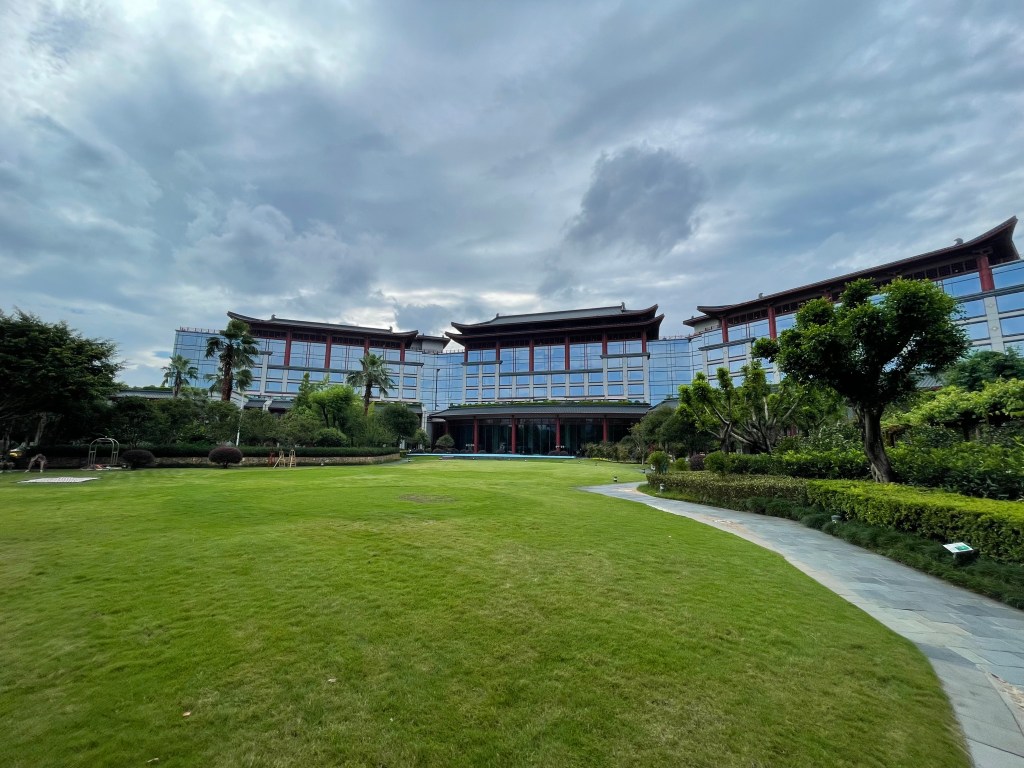
Located in the northern region of the 广西壮族自治区 Guangxi Zhuang Autonomous Region, which is in the south of China and borders both Vietnam and the Gulf of Tonkin, 桂林 Guilin is one of the most popular tourist destinations in all of China. Guilin (pronounced “gway-lin”) means “forest of sweet osmanthus,” and is is known for its gorgeous scenery and serene atmosphere. Epic karst mountains, sweeping rice terraces, and peaceful rivers – it’s like jumping into a fairytale. As the famous Chinese epithet says: 桂林山水甲天下 (By water, by mountains, most lovely, Guilin/Guilin’s scenery is the best among all under heaven). Since I first moved to Shanghai, people had been telling me I needed to travel here – now I was going to find out why.
After arriving and getting set up at our hotel the night before, we met up with our local private tour guide, Evelyn, who would be showing us around for the next few days. (Side note: we love Evelyn. We wanted to adopt her as our cool Chinese auntie and bring her with us on every trip from here on out. She was, to quote her Despicable Me-loving son, “brilliant.”) The first item on our itinerary would take us back in time over 180 million years ago: the Reed Flute Cave.
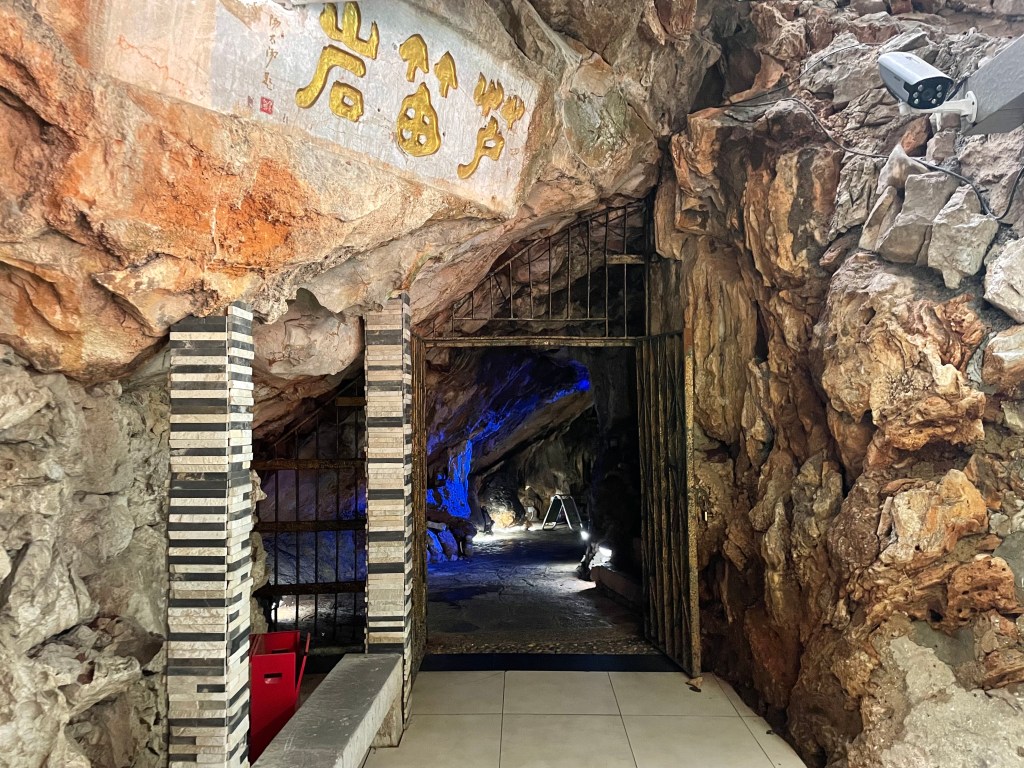


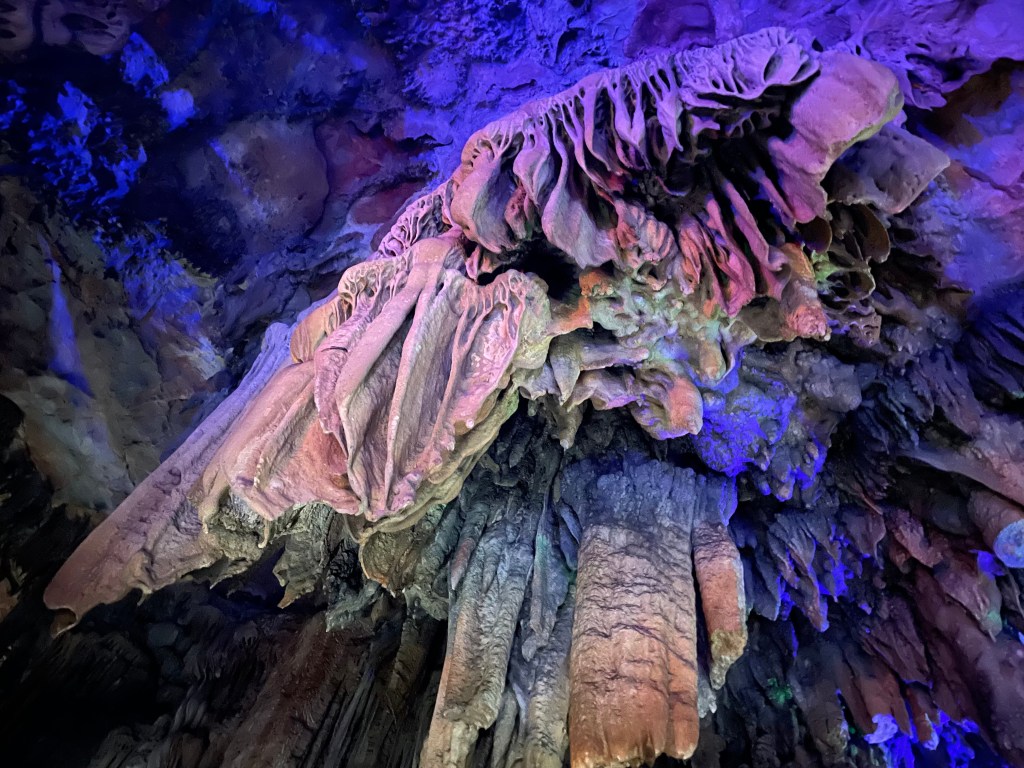
芦笛岩 Ludi Yan, or the Reed Flute Cave, has been a landmark and tourist attraction in Guilin for over 1,200 years. Within the cave, there are more than 70 ink inscriptions that can be dated back as far as 792 AD, during the Tang Dynasty (618-907). However, it is believed that knowledge of the cave was forgotten and it remained left untouched for over a thousand years before it was rediscovered in the 1940s by a group of fleeing refugees. Reed Flute Cave (so named for the reeds growing around the mouth of the cave, which can be turned into flutes) was officially opened as a tourist attraction in 1962, and has since received millions of visitors (including former US Presidents Nixon and Carter!) to appreciate its beauty.
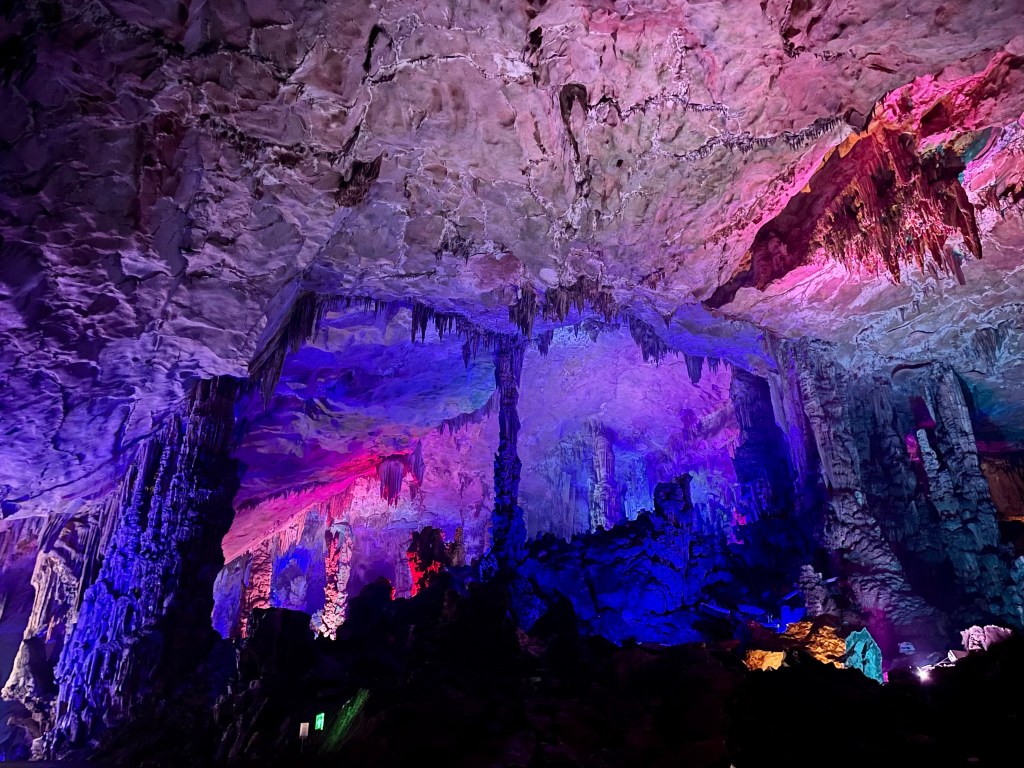
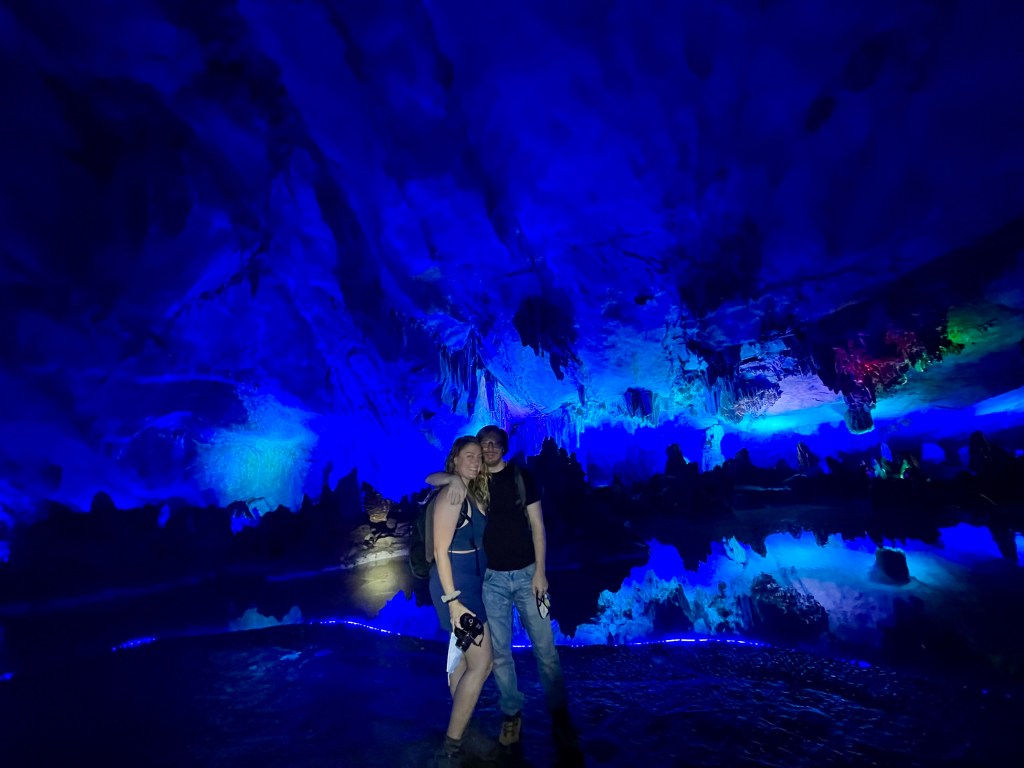
I will admit, when I saw this on the itinerary I was not particularly thrilled. I’ve seen caves before, quite a few actually, and they’re fine, but they’re just… caves. HELLO I WAS WRONG. I would like to live inside this cave with an army of Dwarves and our thriving underground society. I would like to host a Vampire Ball in this cave and float around in a dark velvet gown. I would like to get married in this cave and dance the night away under the stalactite chandelier with the music from the orchestra bouncing off the walls. This cave is ABSOLUTELY STUNNING. Since we were on a private tour, Evelyn was able to get us in before the giant group of tourists that were waiting in the queue when we arrived. We were able to slowly walk through, gaping at this awe-inspiring natural masterpiece, without anyone else in sight. It truly felt like we were on another magical planet. Normally, I’m not a fan of the rainbow lights used to light up caves, but here it just worked. These pictures don’t even come close to capturing the magnificence, but, just LOOK.
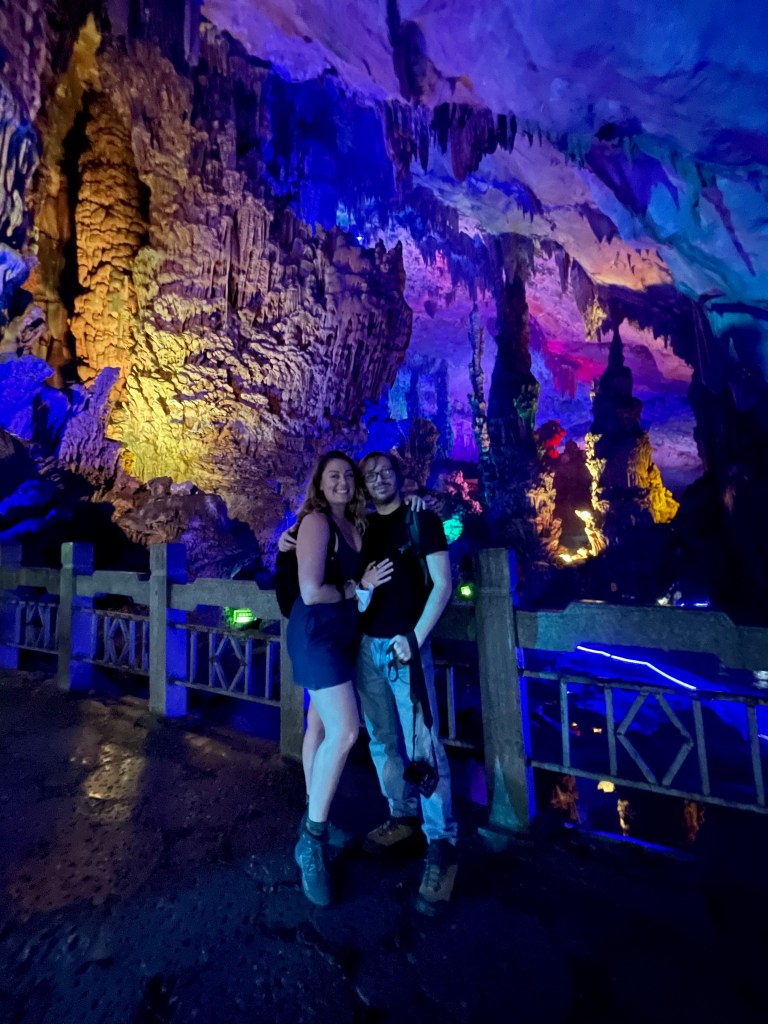
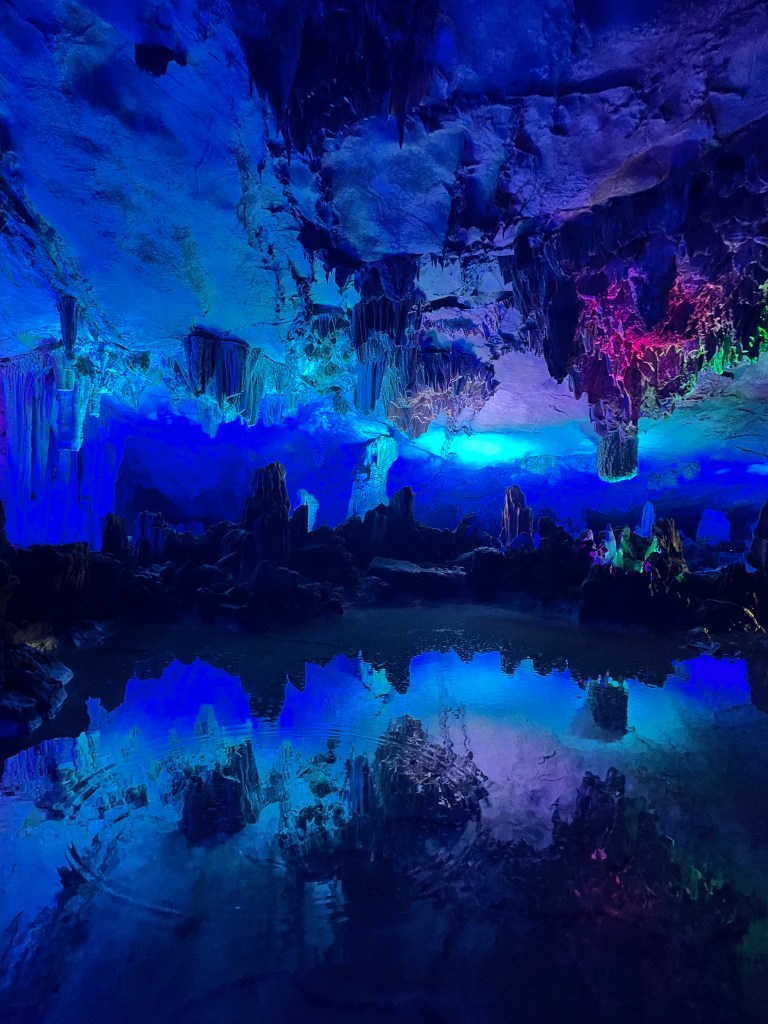
A perfect reflection in the natural underground pool. 
There was this VAST Great Hall within the cave – just incredible! 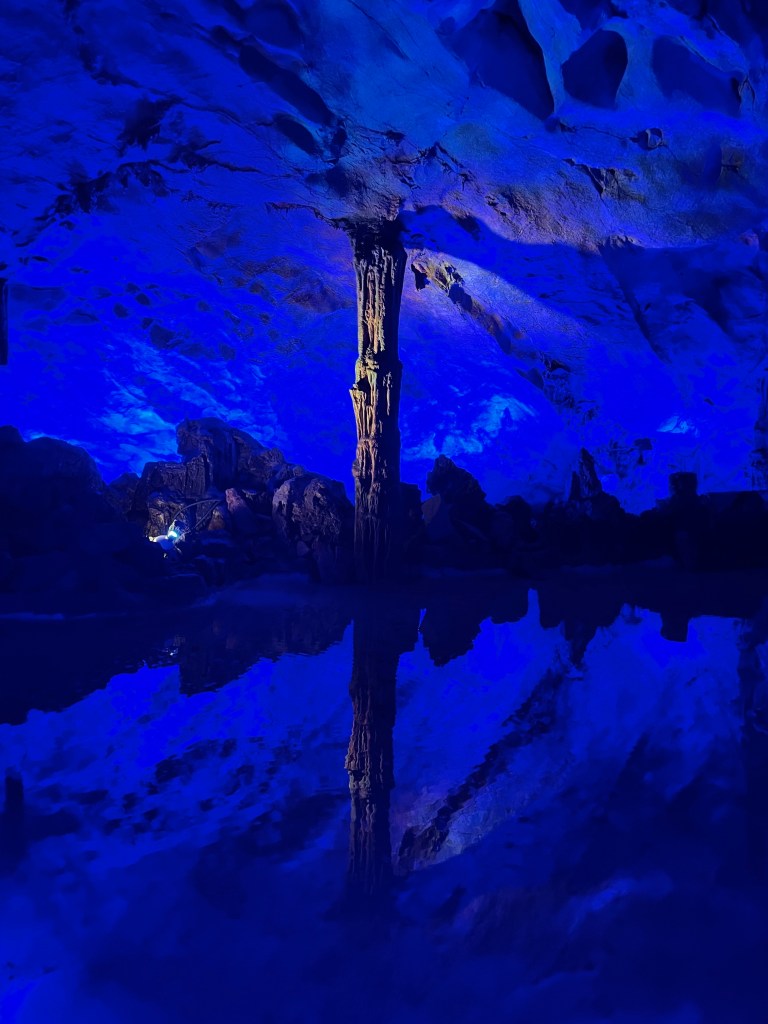
The Monkey King’s staff 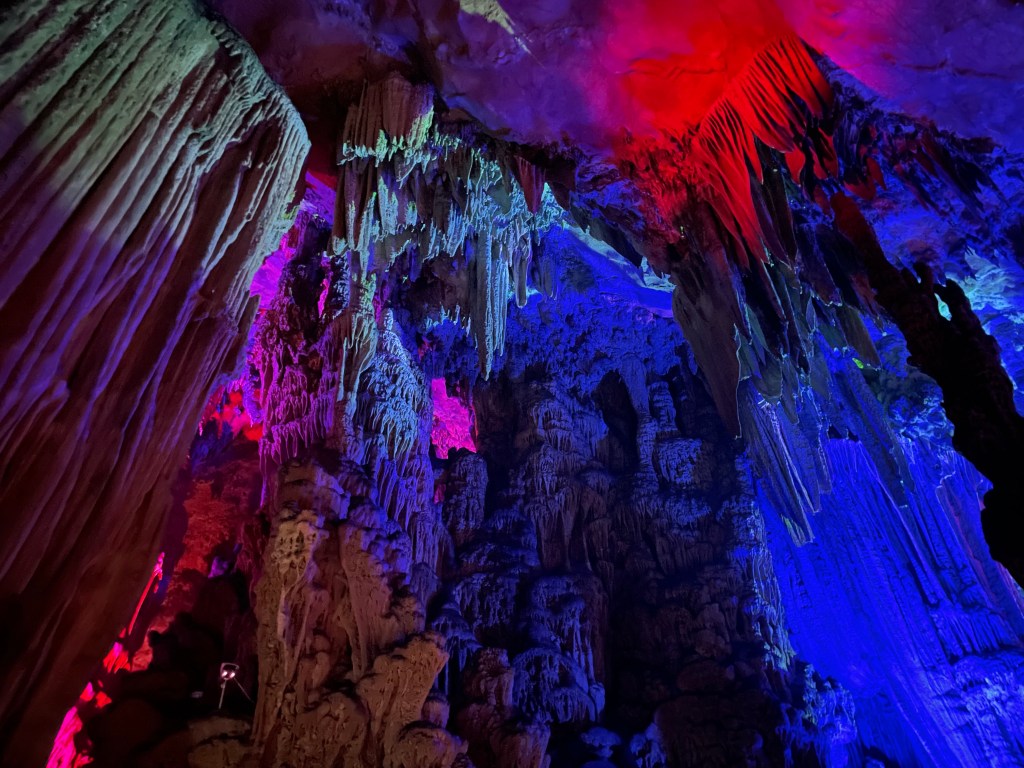

We spent a few hours wandering through while Evelyn showed us the various named cave architecture: a lion, a mushroom, a snowman, Santa… Exploring the Reed Flute Cave was SUCH a great way to start our summer adventure; we couldn’t imagine that anything could possibly top this on our trip.
After we finished in the cave, we had a short walk to get back to our driver and van. As we walked, we got our first glimpse of some of the karst landscape that Guilin is famous for. The lush rounded mountains jut up from the ground, looking like trolls that have been frozen in place for centuries. I remember seeing these and being very excited — I wanted to make sure I got some pictures just in case I didn’t see anymore. Oh, silly Madison, just wait until you get to Yangshuo…
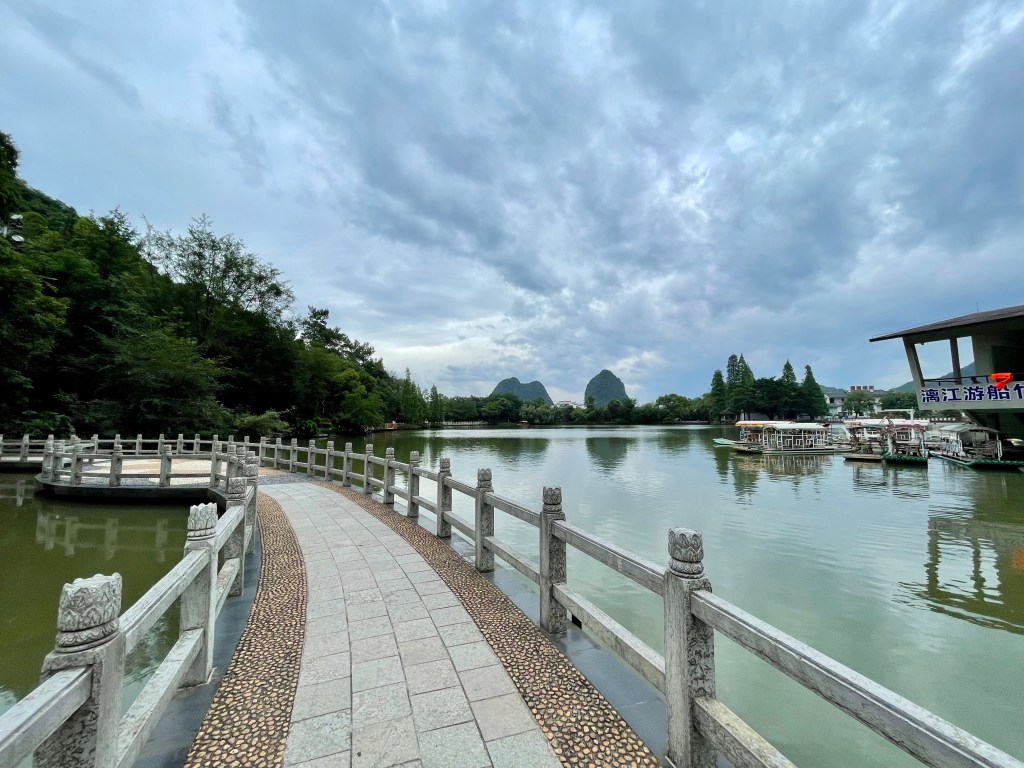
Our first karst mountain sighting! 
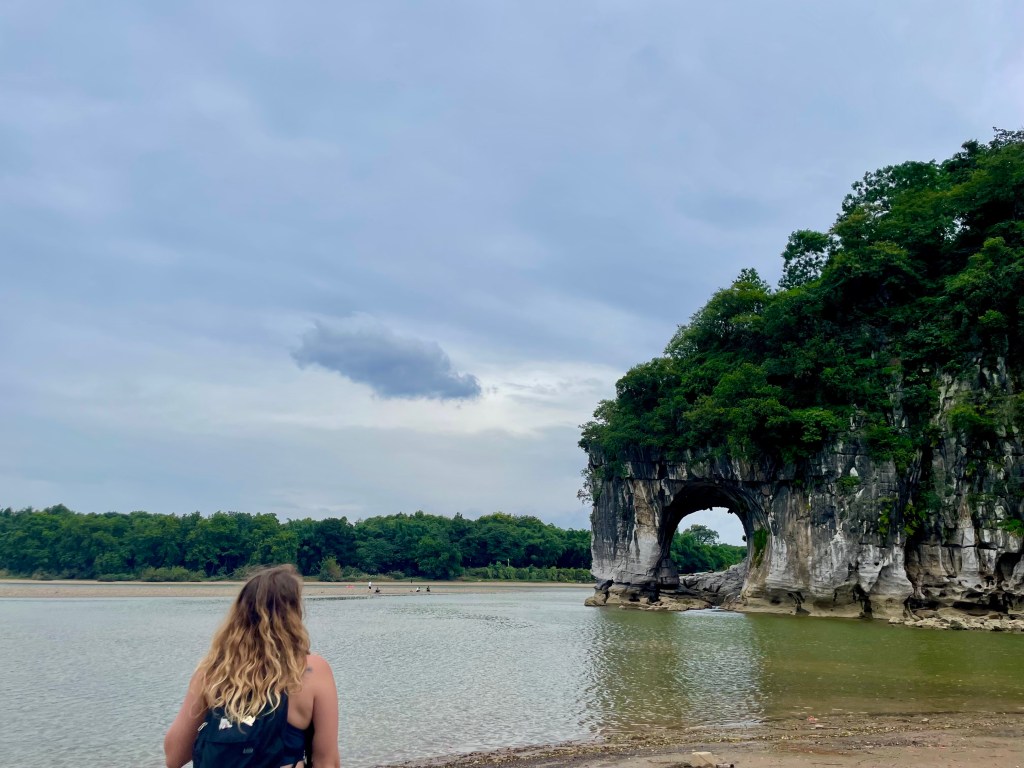
Next, we headed to another iconic Guilin landmark: 象鼻山 Xiàngbí Shān, Elephant Trunk Hill. Similar to the Reed Flute Cave, Elephant Trunk Hill – named because it looks like a giant elephant drinking water from the river below – has been a tourist destination since the Tang Dynasty. The opening formed between the elephant’s body and trunk is known as the Water Moon Cave; at night, the cave and the reflection in the Li River below seem to form a “water moon,” which has been painted and written about by Chinese artists for centuries. Some of the inscriptions on the walls within the Water Moon Cave have dated back to the Song Dynasty (960-1279).
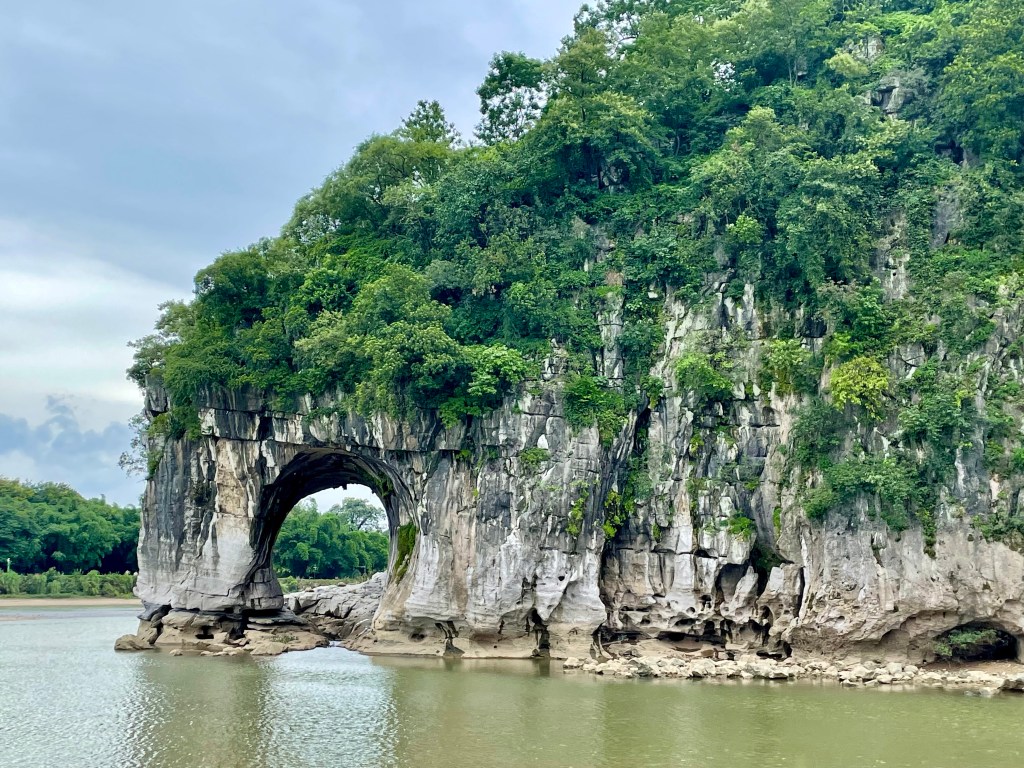
Legend tells us that Elephant Trunk Hill is the embodiment of a God Elephant who was once the mount of the Emperor of Heaven. The elephant was injured in battle and separated from the Emperor; he found his way to Guilin where he could tend to his wounds. A kind, local couple took care of the Elephant and nursed him back to health. By that point, the Elephant had fallen in love with Guilin and wished to remain there rather than returning to Heaven with the Emperor. The Emperor bestowed a pagoda to help the Elephant protect the people of Guilin, and here the Elephant remains.
Sometimes when traveling, there are these iconic landmarks that come up in every guidebook, every blog you read, everyone’s recommendation. People have been coming to see this landmark for over 1,000 years, it is synonymous with this location. And yet… it was a bit underwhelming. Or, rather, the amount of people jam-packed in to a tOuRiSt pArK all scrambling to take pictures and buy postcards and sell keychains and hit the right pose in their TikTok video… it was a lot. I would have loved to learn about Elephant Trunk Hill and find it in a small, peaceful park. But that is no longer the experience. And, unfortunately, as more people are traveling, hearing about destinations on social media, and trying to be the next big travel influencer, this is the case with more and more of these famous tourist destinations. (I am not one to talk. Obviously I am writing a travel blog as well. I too am taking pictures. It’s a complicated situation.) I am glad that China has protected this landmark by making it an official tourist zone, with tickets for entry and guards ensuring its upkeep, but also… now it kind of feels like a theme park. Regardless, it was cool to see this unique piece of nature and history. (And then immediately try to push out of the crowd of people surrounding it.)


The famous Sun and Moon Pagodas on Fir Lake 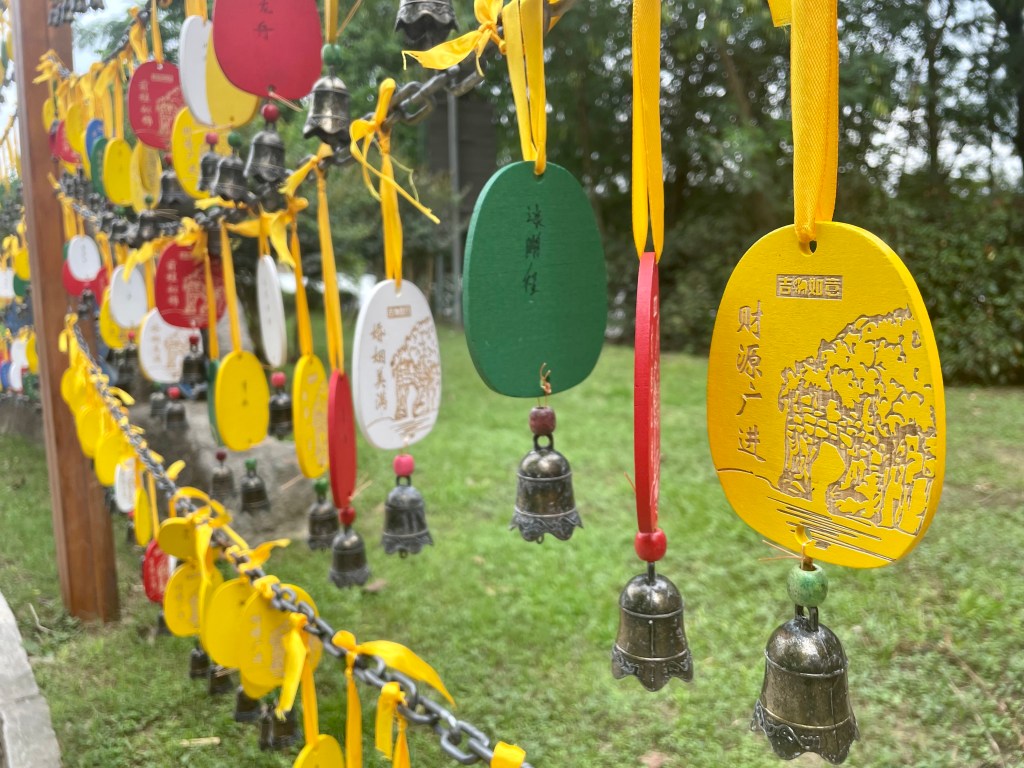
Next, we were feeling hungry after a big day and ready to eat some dinner. We asked Evelyn for a recommendation and said we were not looking for anything fancy — we didn’t need an expensive restaurant with a fancy chef, we wanted to eat where the local people liked to eat. She knew just the place.
First, she brought us to a tiny little food cart for a quick (and DELICIOUS) bite: 糯米饭 Nuo Mi Fan, or Chinese savory sticky rice. They scooped sticky rice, chilies, sausage, garlic, greens, and possibly actual magic into a tiny little plastic bag then sent us on our way. We ate it right out of the bag, and this truly may be one of my favorite street food bites I’ve ever had. It was AMAZING.


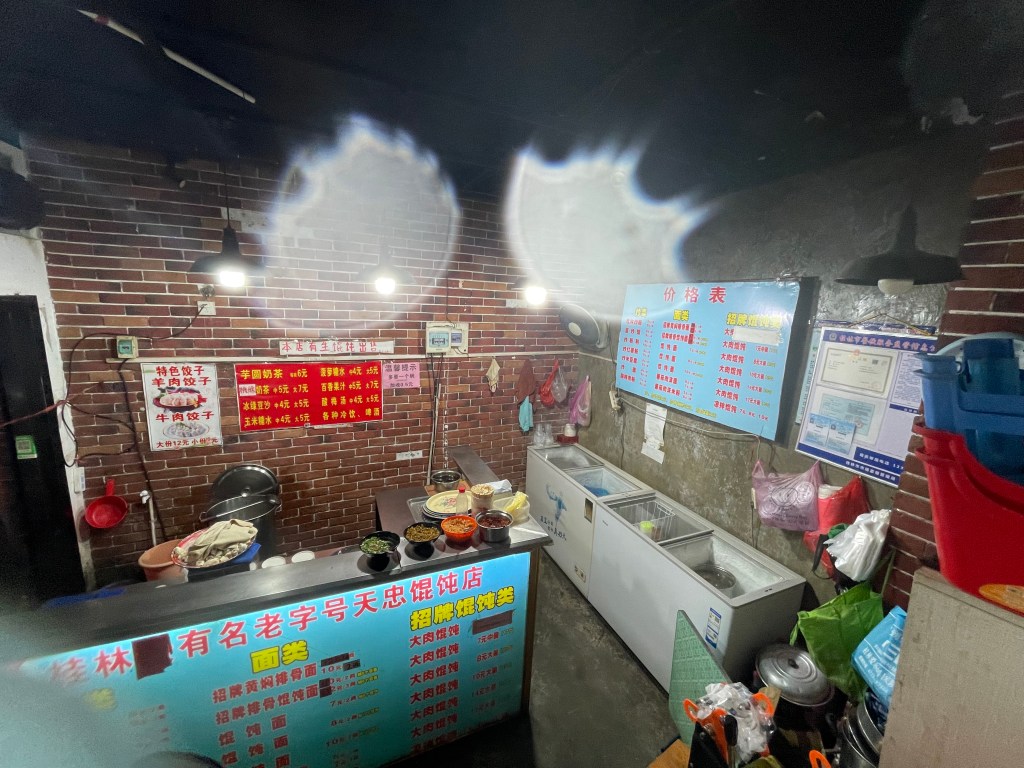
Then, for dinner, Evelyn brought us into a tiny little restaurant that we would never have been able to find on our own. (We’re pretty sure she was friends with the owner – fine with us! A friend of Evelyn’s is a friend of ours!) We told her to order us whatever she liked, we trusted her recommendations. Soon after, we were given a bowl of wonton soup, 桂林米粉 Guilin Mǐfěn (rice noodles that Guilin is famous for), and what was described to us as “green bean soup.” Except that whatever you are picturing when you read “green bean soup” – I can assure you it is not that. 绿豆汤 Lùdòu tāng, or Green Bean Soup, is an incredibly popular sweet, cold, desert soup. Or, smoothie. Slushee. Something. Also known as Sweet Mung Bean Soup, it is a simple recipe made with mung beans, coconut milk, and palm sugar blended up with ice. And it was actually pretty good! Evelyn told us that everyone loves green bean soup – they have it almost every day, especially in the hot summer months. Traditional Chinese medicine has categorized mung beans as having a cooling effect on the body (“yin” energy), so Green Bean Soup is often used as a remedy to help clear toxins, reduce body heat, harmonize organs, nourish the skin, and calm nerves. Check that off as another really cool snack that I would probably never have even known to look for on my own!
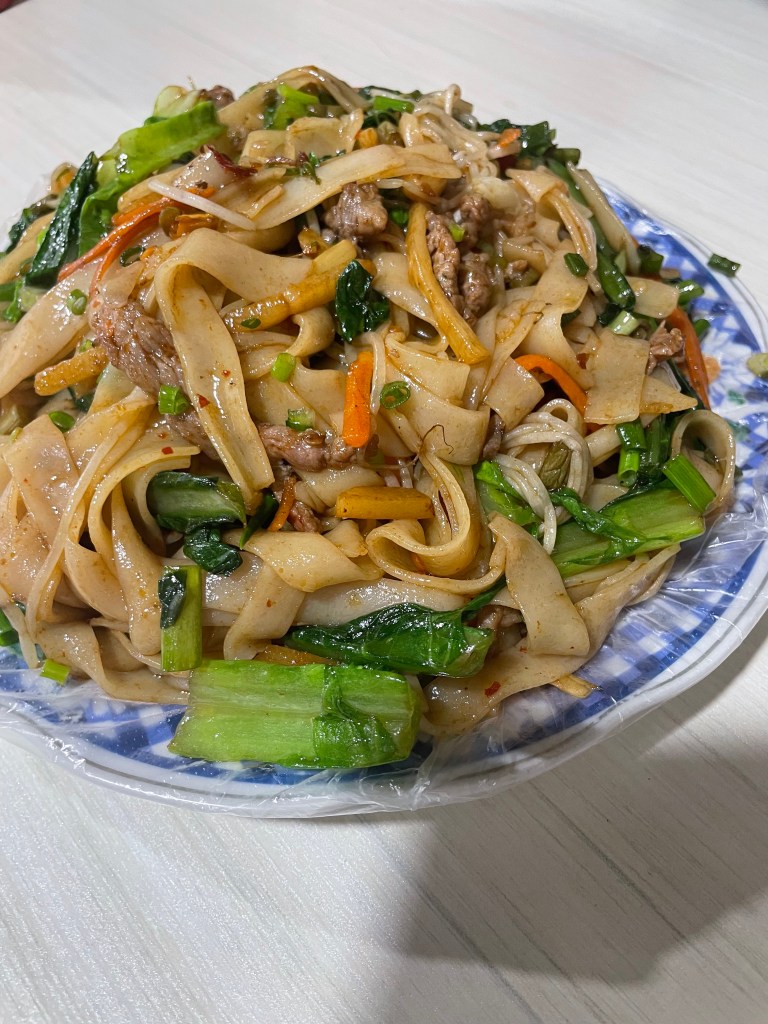
Rice Noodles 
Green Bean Soup!
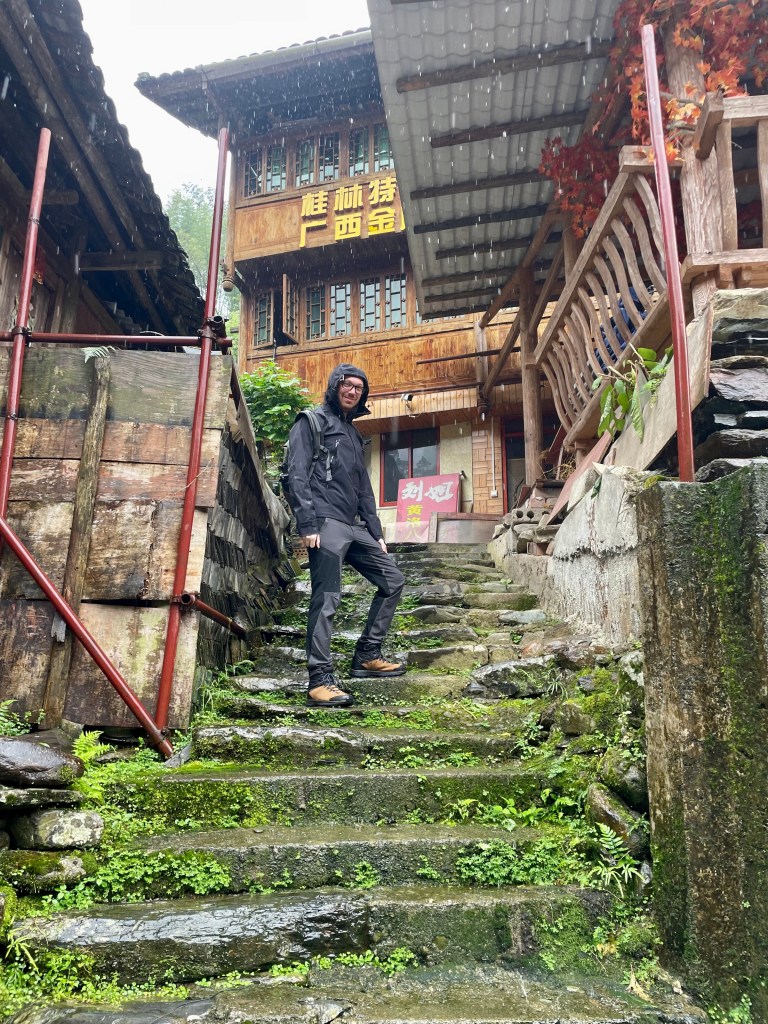
The next day, we were headed off to see another of the famous Guilin attractions: the Longji Rice Terraces. A full day of outdoor fun! There was only one problem: it was raining. And forecasted to rain for the entire day. Ah well — adventure does not wait for a sunny day! We grabbed our raincoats and most rain-friendly clothes, borrowed an umbrella from our hotel’s front desk, and we were off! Our first stop before going in to the rice terraces was the Huangluo Yao Village.

This little dinosaur came out to greet me! 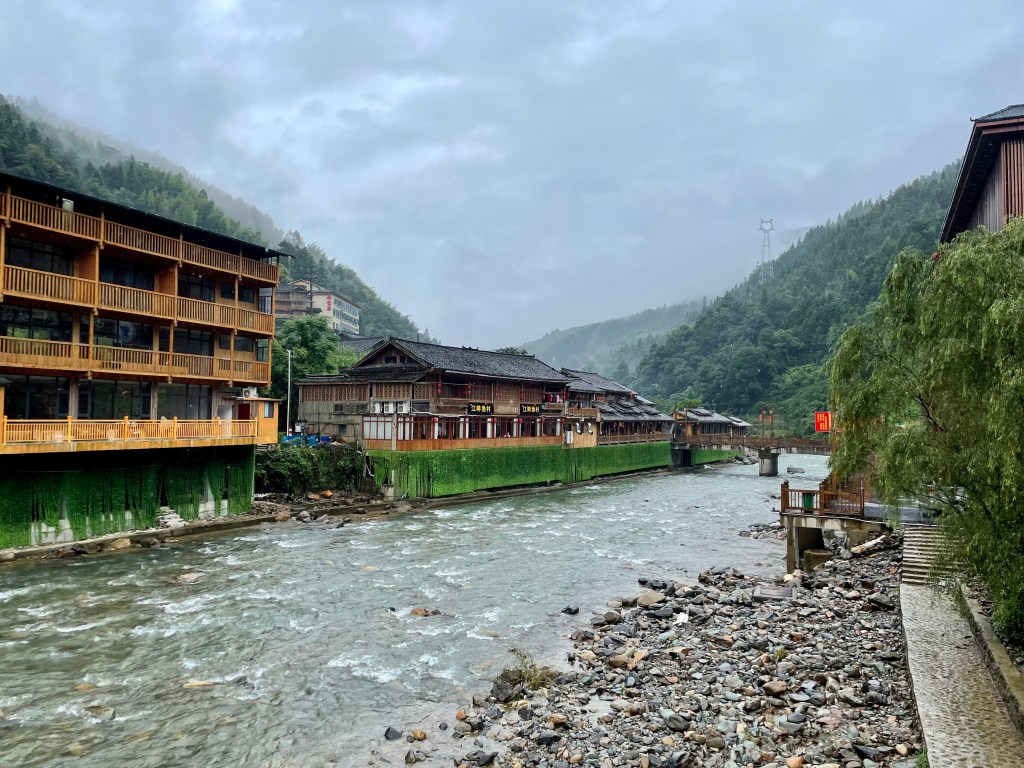


The Huangluo Yao Village has quite the claim to fame: it holds the Guinness World Record for World’s Longest Hair Village. The women in the Red Yao ethnic group cut their hair only twice in their entire life — once at 100 days old, then again on their 18th birthday. Their long hair symbolizes longevity and prosperity and has been measured to be between 1-1.7 meters (3.3-5.6 feet) long! Once they get married and have children, the women wear their hair twisted up on top of their head. Unfortunately, I don’t have any pictures of the women and their hair – it doesn’t feel right to take pictures of people and post them on my blog without their consent – but you can do a quick Google search and see for yourself!


Cooking Bamboo Rice and Bamboo Chicken 
After wandering for a bit, we stopped to eat lunch before hiking up into the rice terraces. Once again, we asked Evelyn to order for us — we always want to try whatever the locals are eating! Sometimes this works in our favor, sometimes we leave a bit hungrier than we intended. For this meal, we were given another famous dish among the Zhuang ethnic people in this part of the country: Bamboo Rice! It’s basically exactly what it sounds like: sticky rice (and a little bit of meat and veggies) cooked inside a bamboo tube. It was excellent! We also ordered the big ticket item the restaurant was selling: Bamboo Chicken. This, I had a harder time with. China doesn’t do all of this “boneless, skinless chicken breast” that I grew accustomed to living in the States. In China, if you order a chicken, you get a whole chicken. Usually one that’s just kind of been chopped up and thrown into the dish, bones, skin, and all. So… I tried to find a few bites of some easy-to-access meat. Then let Michael take care of the rest.

Bamboo Rice 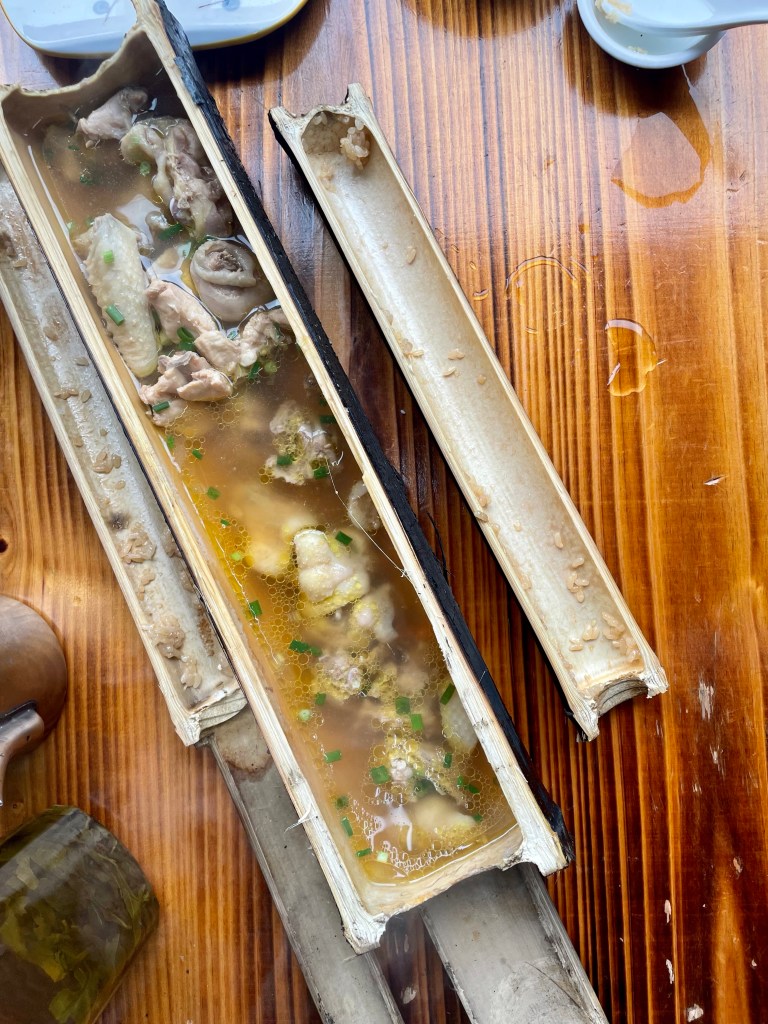
Bamboo Chicken
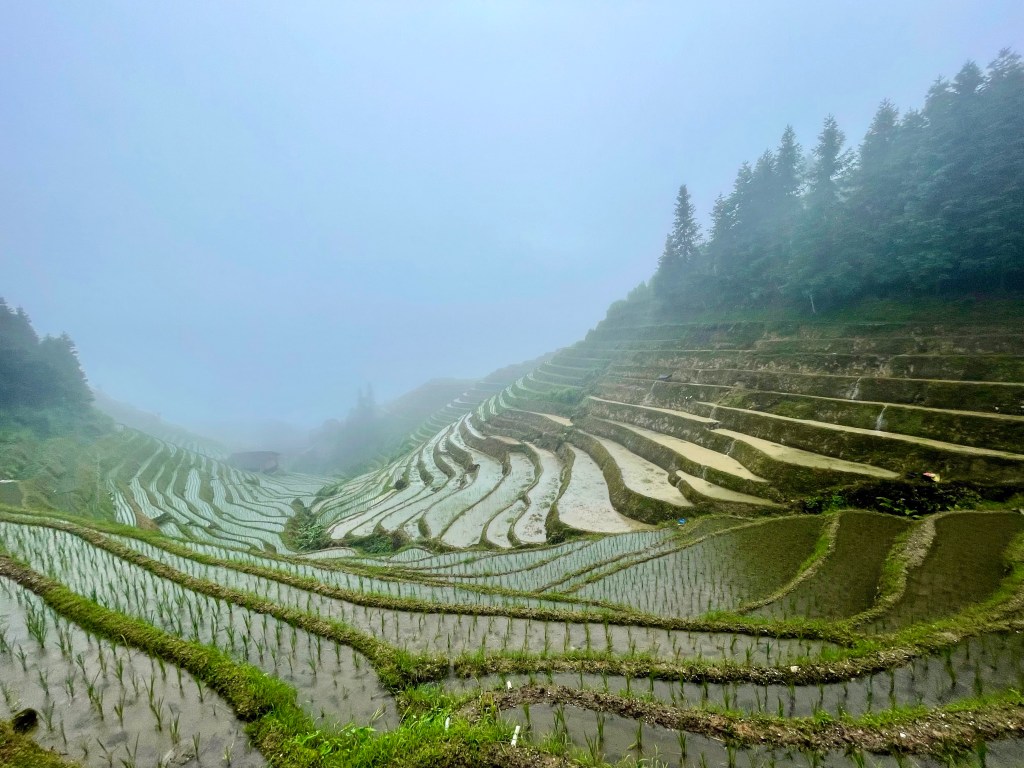
After lunch, it was time for us to head to the terraces. The 龙脊梯田 Longji Rice Terraces, or the Dragon’s Backbone Rice Terraces, have a history of over 650 years. This unique farm engineering method has allowed for people to cultivate and harvest rice on Guilin’s mountains for centuries. They are called Longji/Dragon’s Backbone because, when sunlight sparkles in the water reflections, the terraces look as though they are dragon scales along the “backbone” of the mountain’s summit. The rice terraces are not only famous for this region, but one of those iconic images you think about when thinking of China.
We started our hike up the terraces in the pouring rain and surrounded by clouds. “Normally, you can see all the way down and it is very beautiful,” Evelyn assured us. We had to take her word for it. But we appreciated the little that we could see!
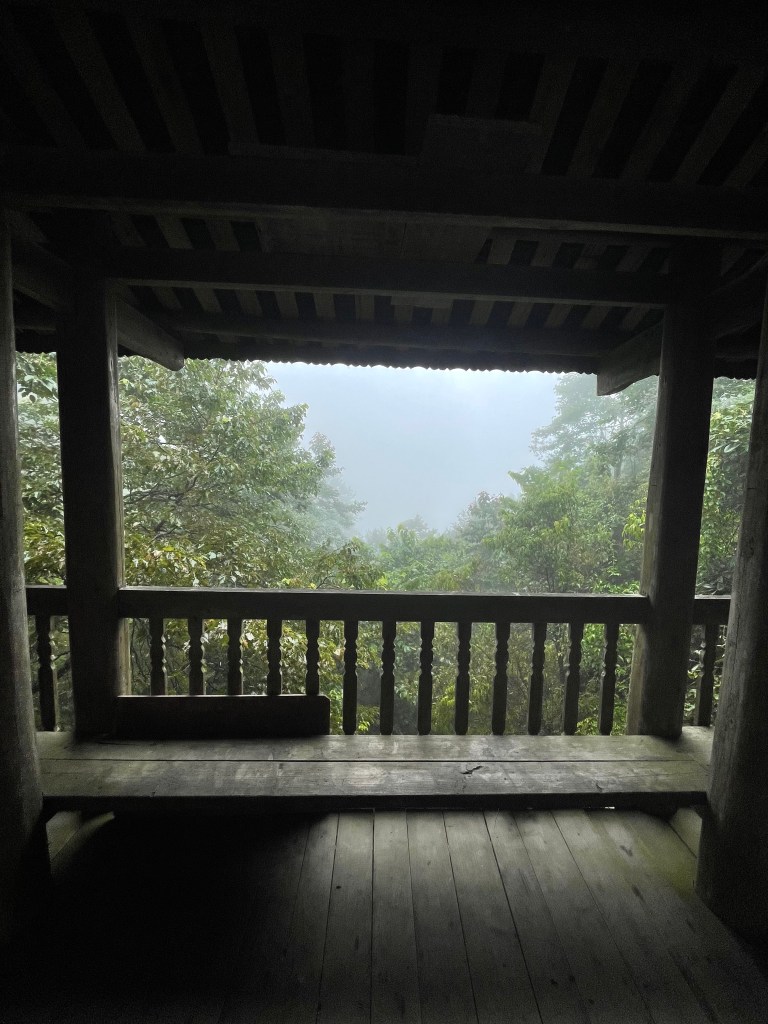
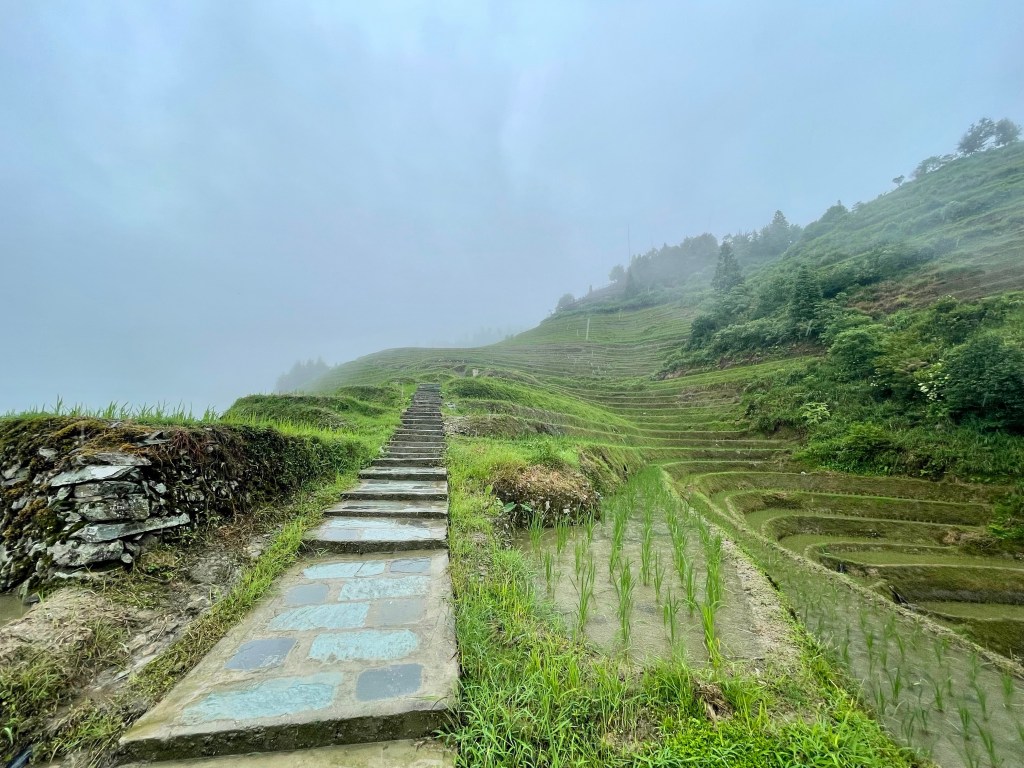

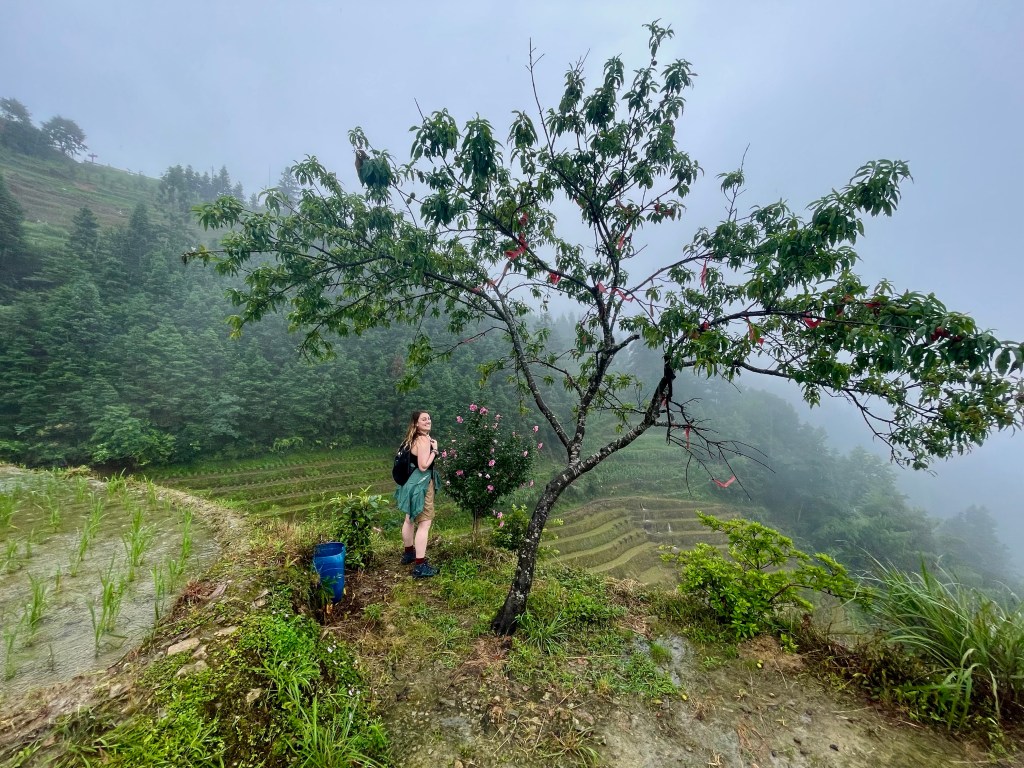

The view from one of the famous lookout spots…
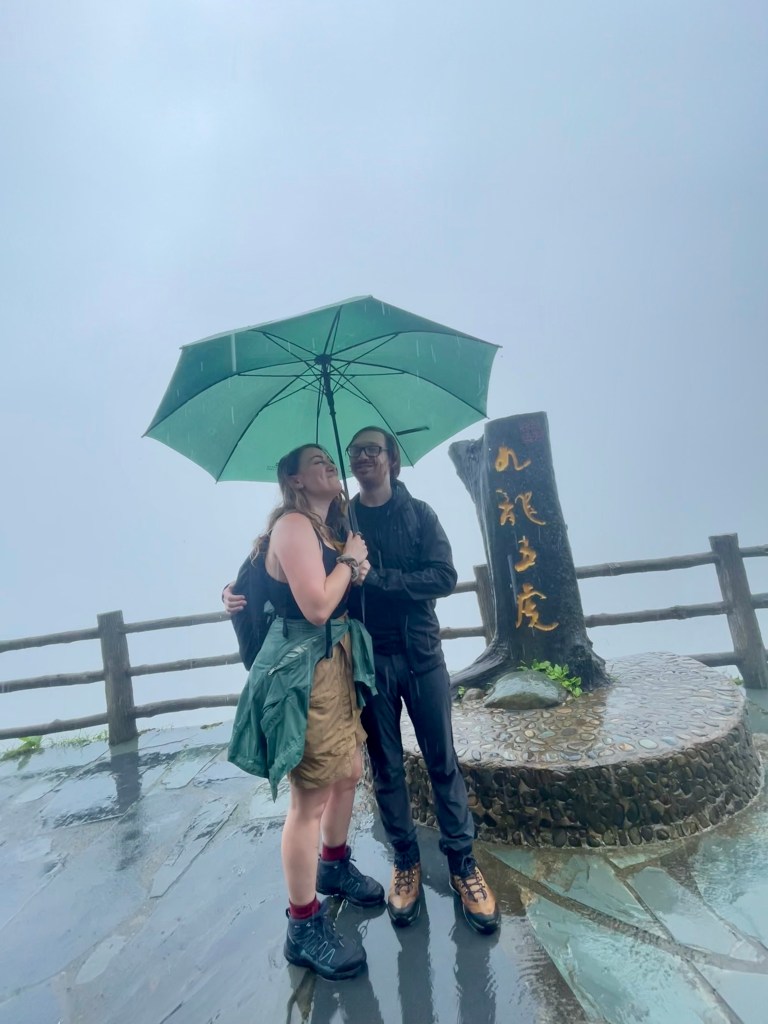
When we reached the top of the mountain, we climbed up to the viewpoint to see… nothing. We were soaking wet and completely stuck in the clouds. (I had a similar experience when reaching the top of Table Mountain in South Africa. You can’t always get the postcard view, I suppose!) Luckily, between Michael, Evelyn, and I, we kept our spirits up and were able to laugh at the situation rather than get frustrated. Nothing you can do to stop the rain, so, might as well just laugh and enjoy it!
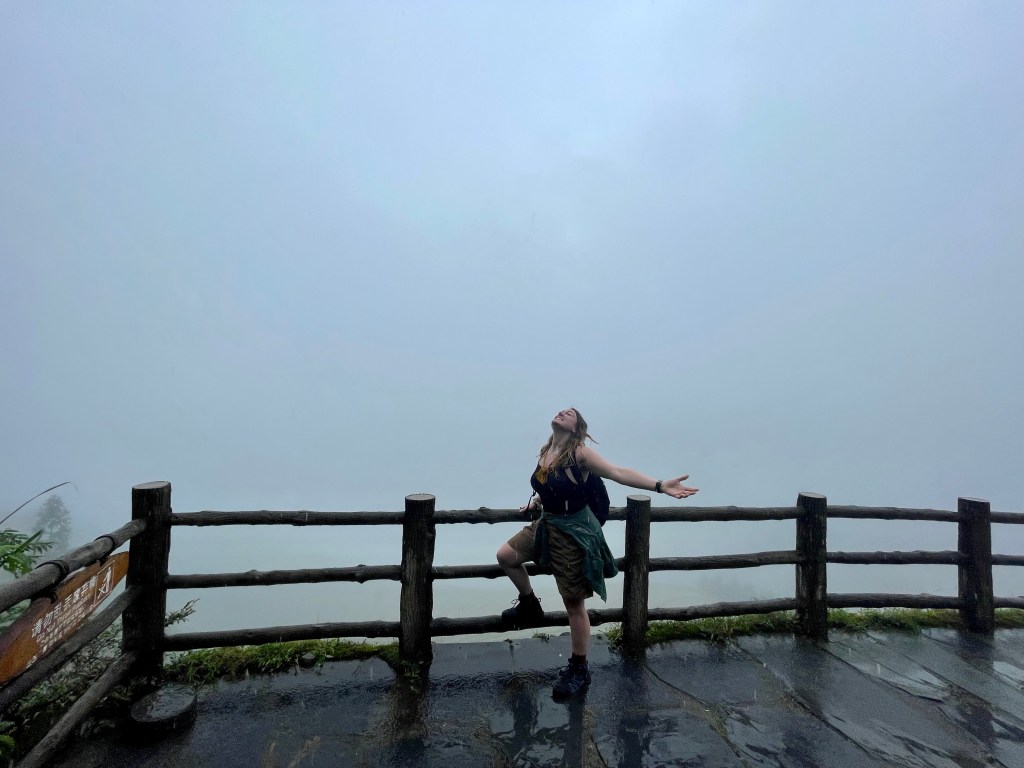
On the walk back down, we were able to get a better view of some of the terraces. It’s incredible to think that these were all built by hand hundreds of years ago!

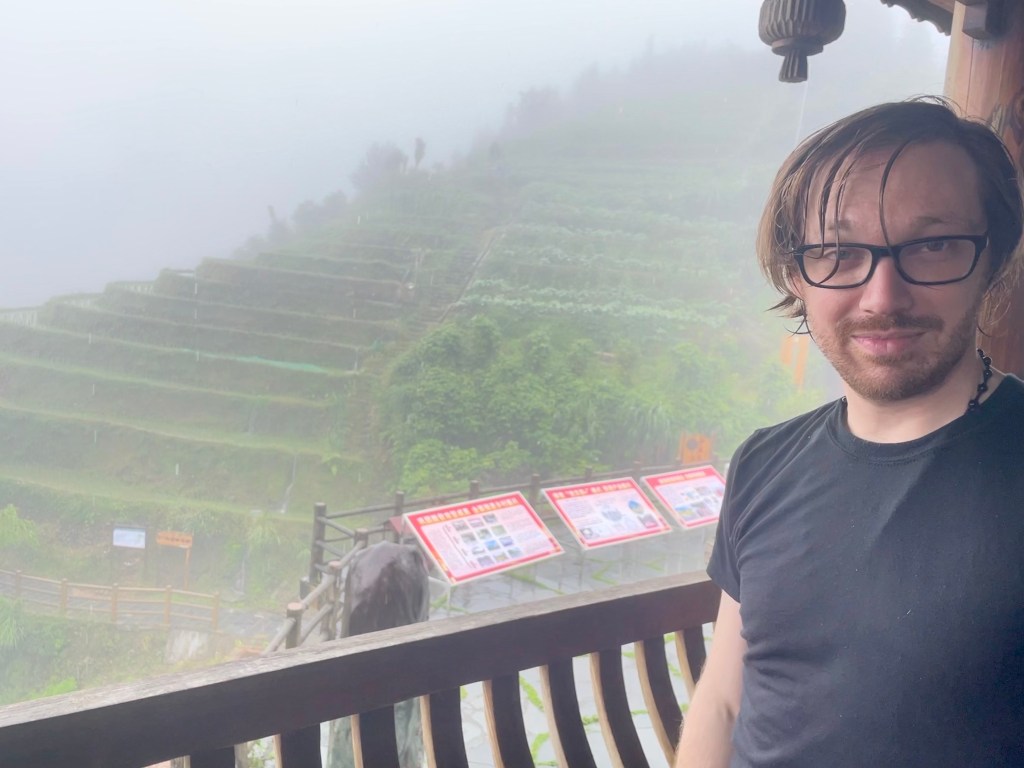
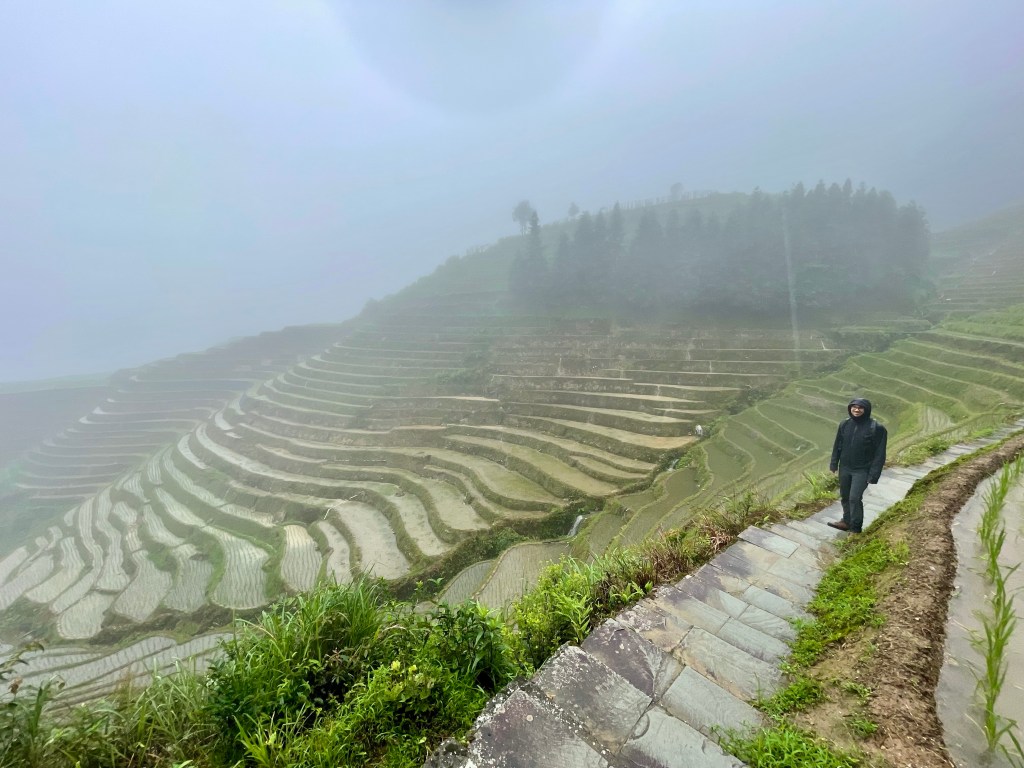
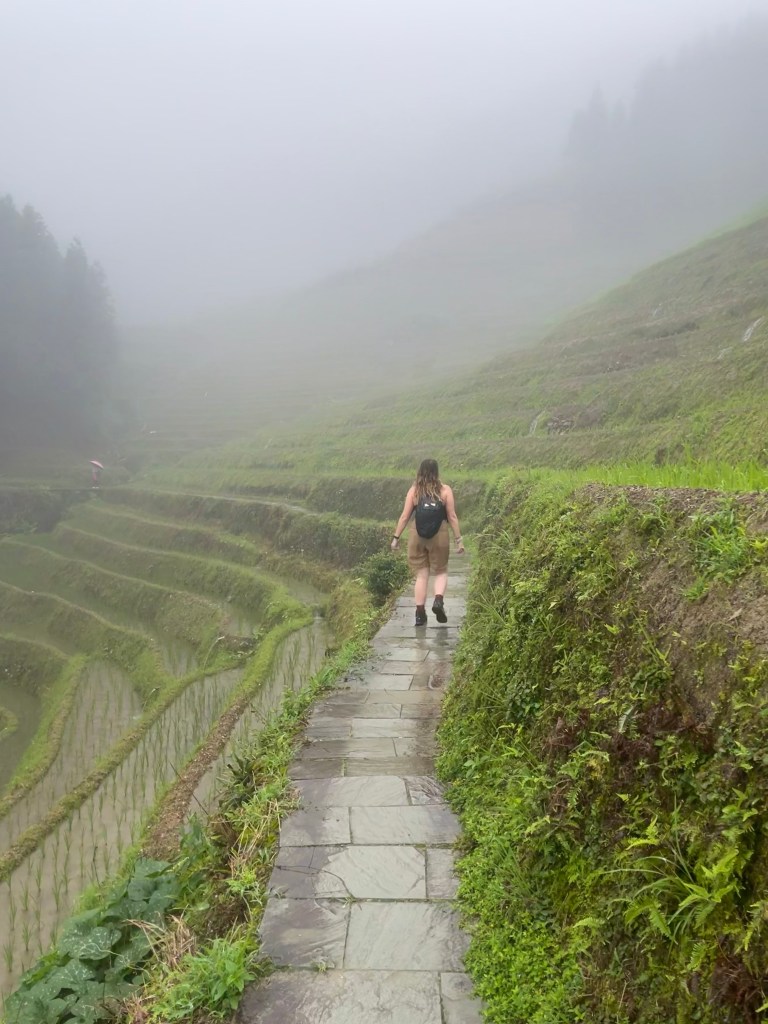
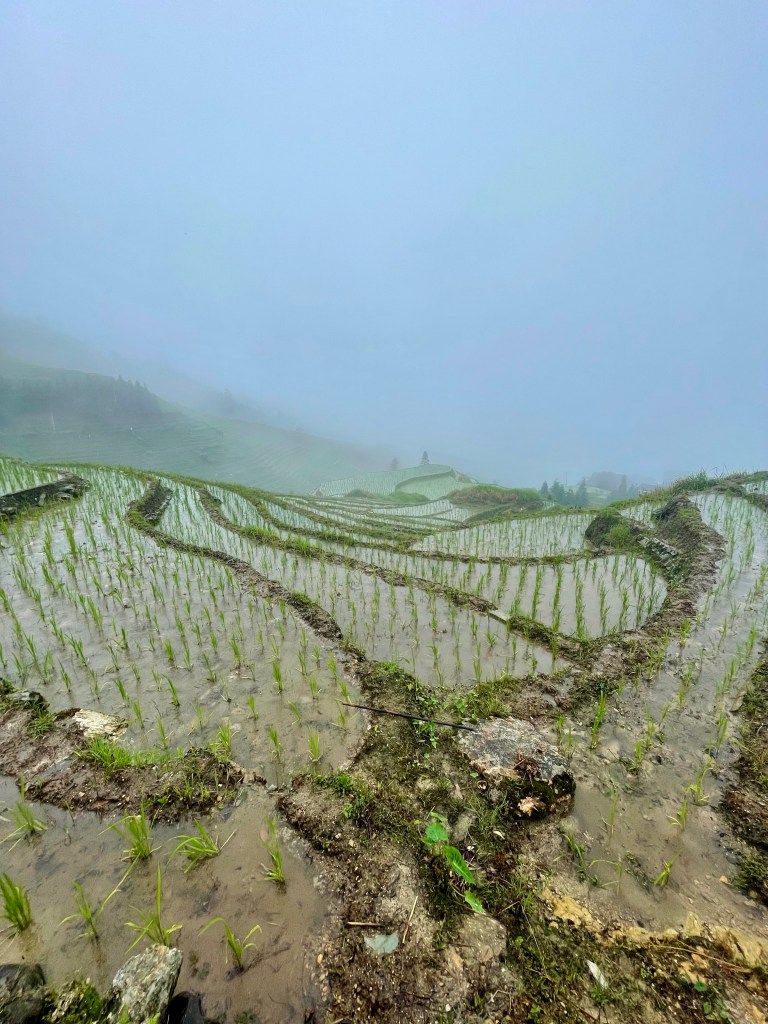
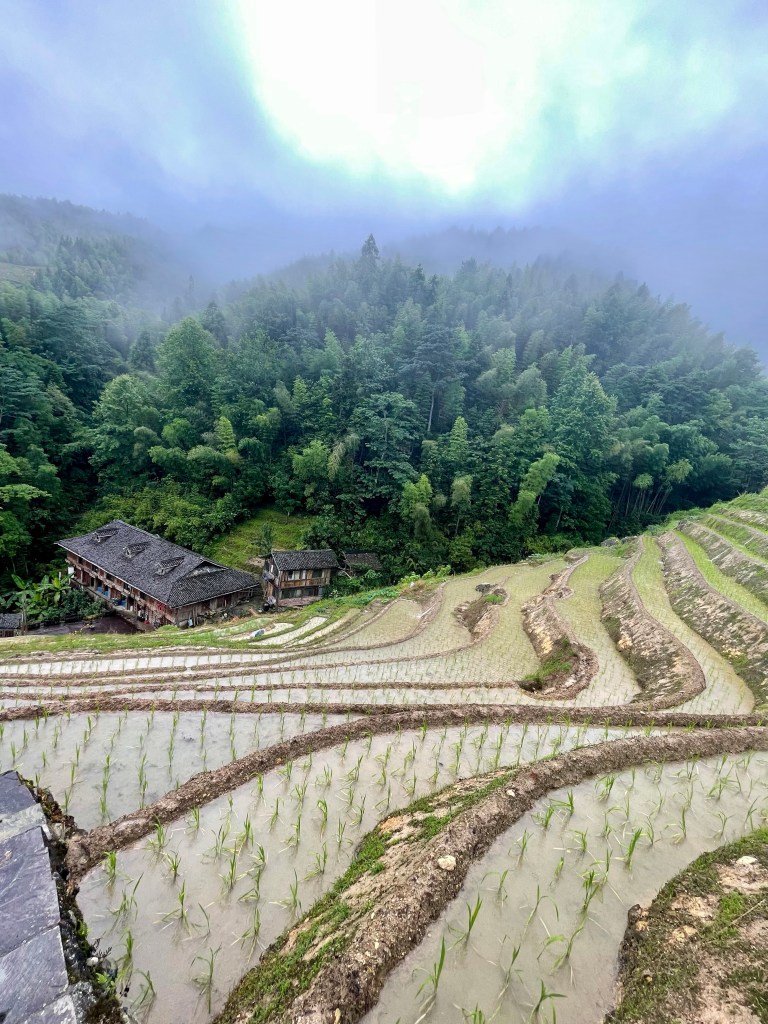
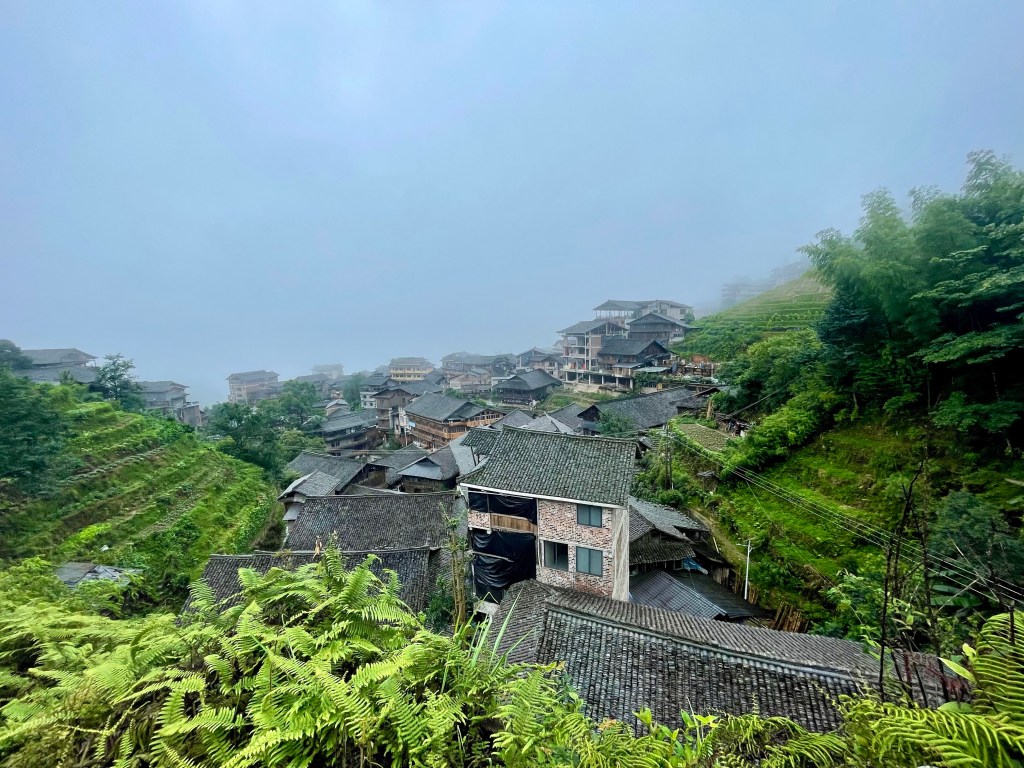
Though certainly not how I had initially wished our day at the Longji Rice Terraces had gone, we certainly had a memorable visit! At the end of the day, we were at least able to see some of the “dragon scales,” and that was worth it in and of itself.
To wrap up our very wet day, Evelyn suggested we go to one of her favorite restaurants – the local Irish Pub. (To be honest, the idea of french fries didn’t sound so bad after having spent a day out in the rain.) But, in typical Madison and Michael fashion, we couldn’t just order Western food… so we ordered another local delicacy: Li River snails! We thought they would just bring out a few. Instead, we got a whole plate. (Luckily, Evelyn helped us with the rest of the snails we didn’t finish. Okay, we each had maybe 2 snails and she ate the rest. We tried.) After an amazing few days in the city of Guilin, we went back to the hotel to pack up our bags and get ready for the next part of the trip…

 Adventure in the Great Wide Somewhere
One thought on “Guilin: By Water, By Mountains, Most Lovely”