
(To read the first part of my trip to Xishuangbanna, click here! To read part two, click here!)
If there’s one thing I’ve learned about traveling, especially traveling in China, and ESPECIALLY especially traveling in China during a pandemic, it is this: you have to be flexible. You have to bounce. If your plans come crashing down to the floor, you can’t let them shatter – bounce, redirect, and keep going. As has been my motto since first trying to get into this country (remember that whole saga?), nothing is certain until it has already happened. Especially in the time of COVID, just being able to travel at all still feels like a blessing, so when things go “wrong” I take them in stride.
On our next day in Xishuangbanna, we were supposed to spend the day on a semi-challenging rainforest hike. Our guides knew of a local trail off the beaten path where there wouldn’t be any other tourists, so we were excited to get to see a bit of the “real” forest. On any trip I go on, I try to make sure there will be at least one day of hiking – it’s one of my favorite things to do and so it’s usually my favorite travel day. When we reached the trailhead, a local man was in the forest and looked uneasy upon seeing us. A few minutes later, a local cop showed up and spoke with our guides. The trail was closed, we couldn’t go hiking there, the community was not comfortable with foreigners using the trail.
Before you get huffy: this is not entirely unusual. First, the rhetoric from many people here has been that foreigners have been responsible for much of the spread of the outbreak. Because the country has been pretty sealed off, there is a belief that we keep bringing it in with us and spreading it. Even though most of the expats here have been here for the entirety of the pandemic and have not been able to leave, it’s always easy to blame the “other.” The States has been doing the same thing. And, unlike in the States, when all media and press is government controlled, if that’s all you are being told and shown, it’s hard to believe otherwise. In a country where it is very important to “save face,” there’s always someone else to blame. Second, I get it. This is a small local village, with an unknown local trail. It’s their trail. If they don’t want a group of 30 strangers hiking up their trail, that’s their prerogative.
At this point, we all had to decide what to do. We were composed of two groups of about 15 people and 2 tour guides. The other local tour guide mentioned that he knew of another entrance up to the trail and that the bus could drive around to use that entrance instead. On our bus, our guide, Yan, mentioned that he did not feel comfortable doing that – especially if the police had already told us we were not allowed to use the trail. Neither Michael nor I wanted to put Yan in a situation he felt uncomfortable with, and we also wanted to honor the wishes of the local community. Though a bummer, our bus turned around to head back into the city. After significant complaining, the rest of our travel group decided they wanted to just go back to the hotel and spend the day there. Michael and I asked if there was anything else in the city we could go see – we were flexible and would be excited for whatever Yan thought was best. Since it was just the two of us still interested in exploring, we let the bus driver go and hopped into our guide’s car for what had now become a private tour day. We were off to see the Mengle Temple!
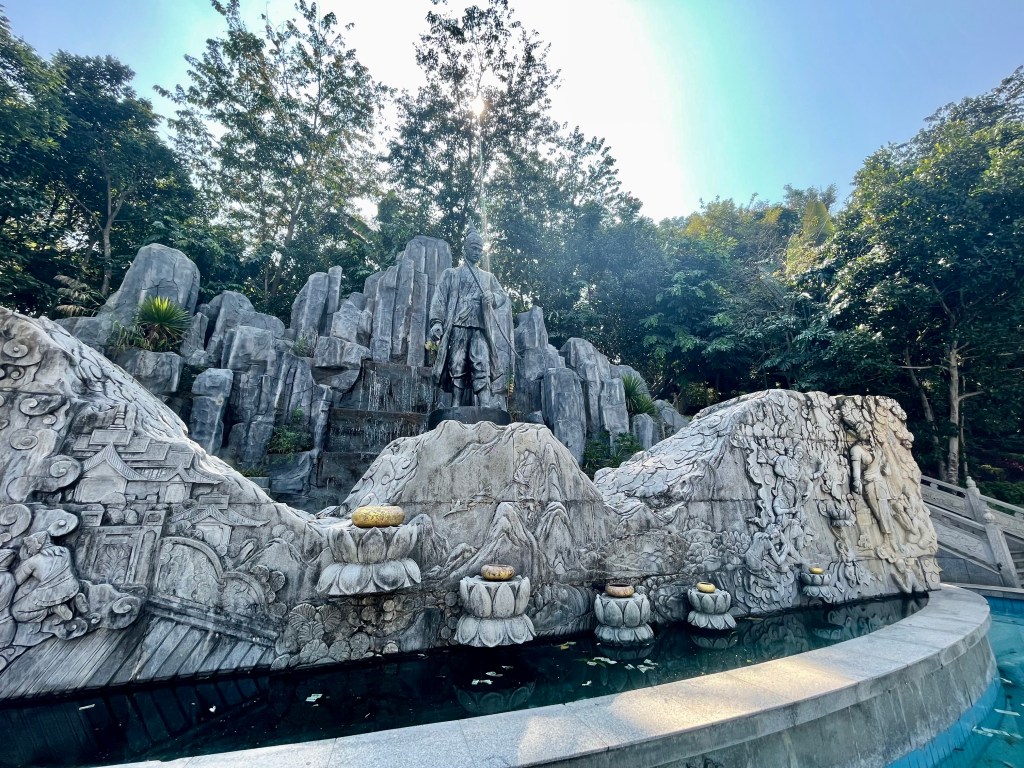
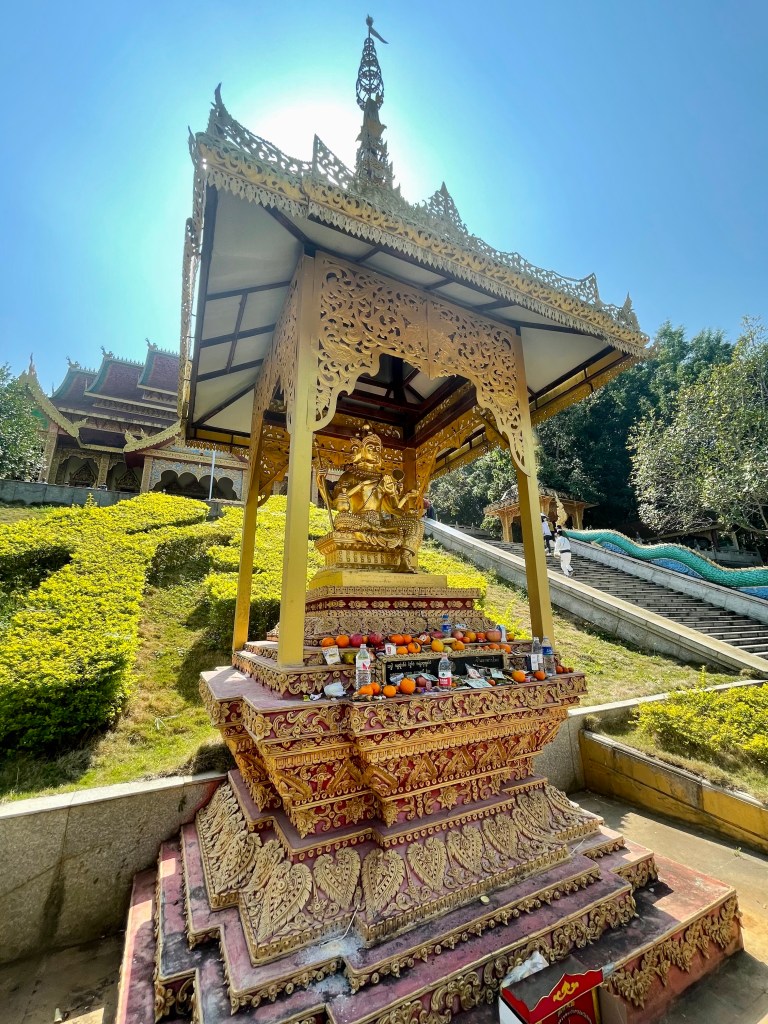
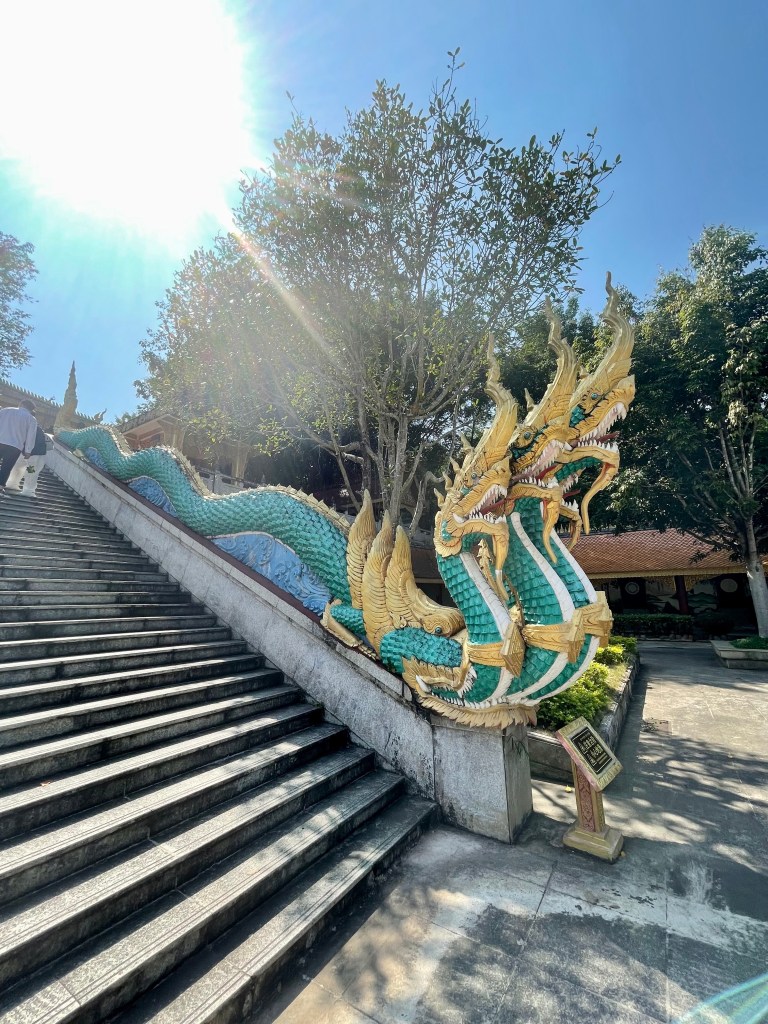
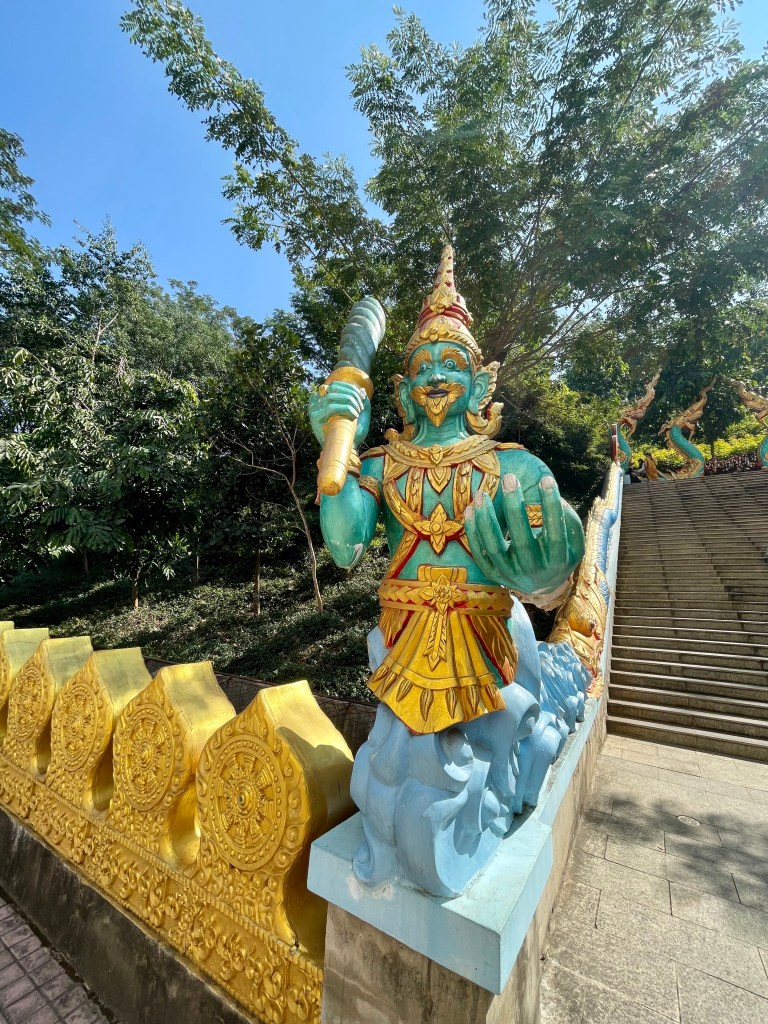
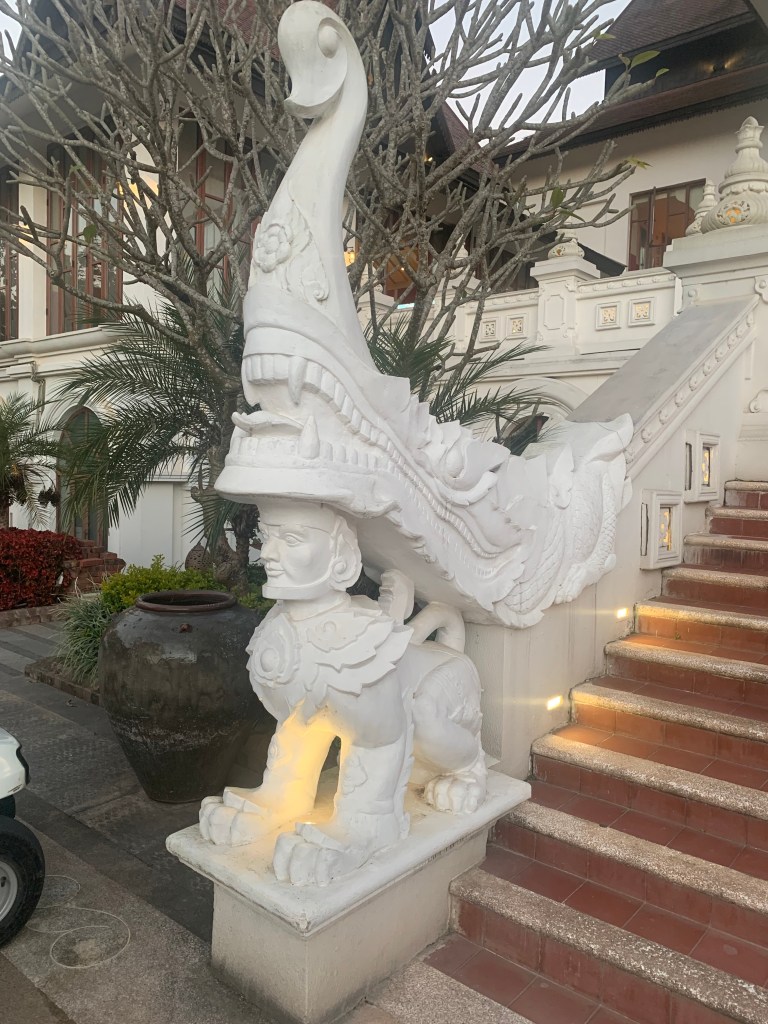
I love these dragon guardians on the stairs. There were dragons on every staircase leading up to the top of the temple! 
The 勐泐佛寺 Mengle Buddhist Temple (which I’ve also seen spelled Mange Temple) is one of the largest and best preserved Theravada Buddhist temples in all of China and is the most sacred religious site of the local Dai people. (Quick tangent: From my limited understanding, there are different sects of Buddhism; three of the main groups are Mahayana Buddhism, Vajrayana/Tibetan Buddhism, and Theravada Buddhism. Theravada Buddhism – which means “Doctrine of the Elders” – is sometimes called “Southern Buddhism” as it is strongest in Sri Lanka, Cambodia, Thailand, Laos, and Myanmar. So, this is all a different sect than the temples I was seeing up in my trip through Sichuan — those would have been Vajrayana temples. So interesting!)
Theravada Buddhism is a very important part of the Dai culture. Traditionally, when they turn eight years old, all Dai boys go to a temple and lead life as a monk for a year; this is where they learn to read and receive an education. With China’s policies on education, it is likely this tradition will not continue.
There are over 500 temples and 200 Buddhist pagodas in Xishuangbanna, but the Mengle Temple is the largest. The temple, originally named the Jingpiao Buddhist Temple, was built in 1477 as a royal temple in the Dai Kingdom (1180-1950). The Dai King at the time, Bolong, built the temple to memorialize Nansha Weibian, a pious Dai princess who suffered an early death from illness. Though the original temple was destroyed in a war 1848, the Mengle Temple we see today is a reconstruction of the original temple.
It was so interesting to get to explore this beautiful temple as Yan shared information and stories with us. I absolutely loved all of the architecture, the colors, the statues, the little details… One of my absolute favorite parts of the temple was all of the dragons. Along nearly every staircase, decorating the roofs of buildings, coming out of the mouths of other dragons – they were everywhere! While in Western mythology dragons are usually depicted as evil beasts for heroes to defeat in battle, in the East and in Buddhism they are seen as guardians; symbols of enlightenment, creativity, change, and positivity. These dragons represent the raw power of nature, the energy that breathes through all of us.
As much as I loved the dragons, Michael had a different favorite mythological temple guardian. As I’ve mentioned before, Xishuangbanna is known for its elephants and its peacocks — they are represented everywhere. Well, at the temple, we kept seeing a depiction of a creature that seemed to be a combination of the two: what looked like the body of a peacock with the head of an elephant. This, of course, immediately raised some questions: is this creature supposed to be peacock-sized, with a cute little miniature elephant head? Or is that a giant colorful peacock body with a normal-sized elephant head? Is the elephant head also colorful? Can this creature fly?! When we asked Yan what this animal was, he answered immediately: a phoenix. Ah yes, of course. Well, okay then. Michael officially found his new favorite animal.

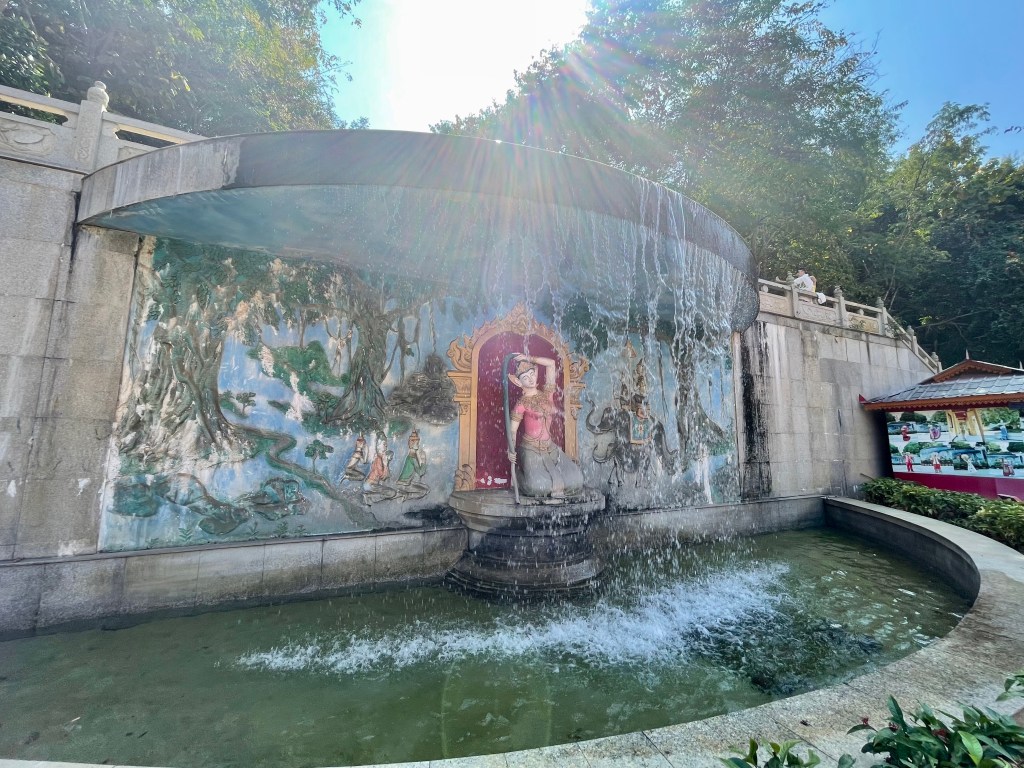

Can you spot the dragon on the roof? 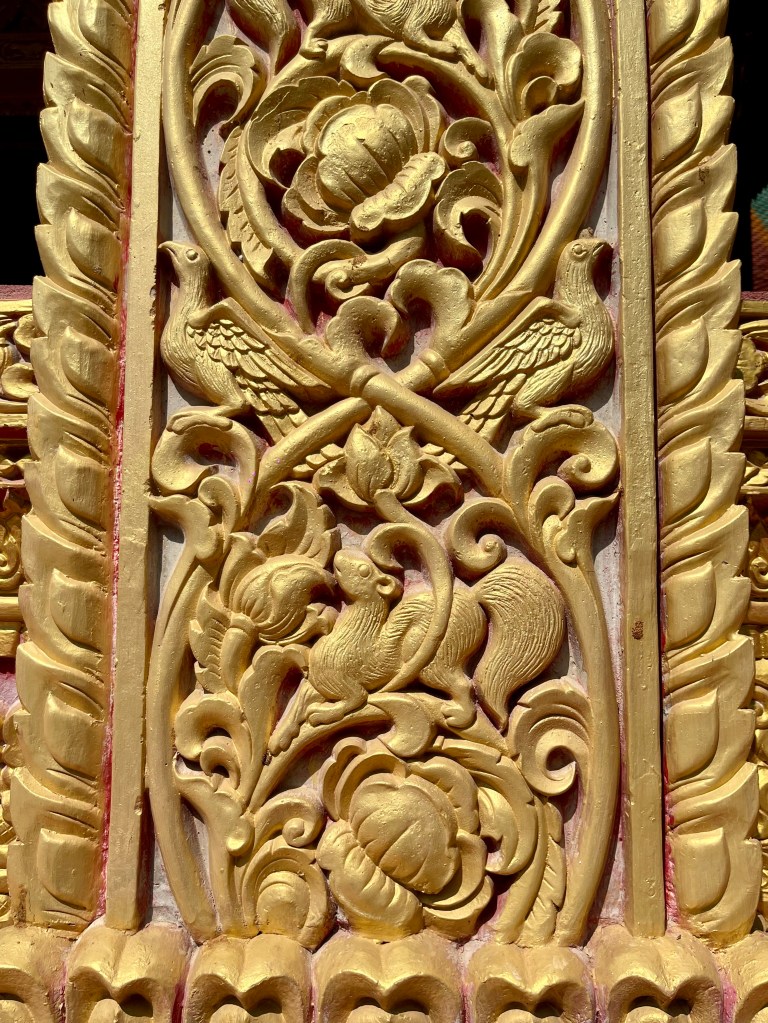

Dragon! 
Dragons on dragons on dragons... 
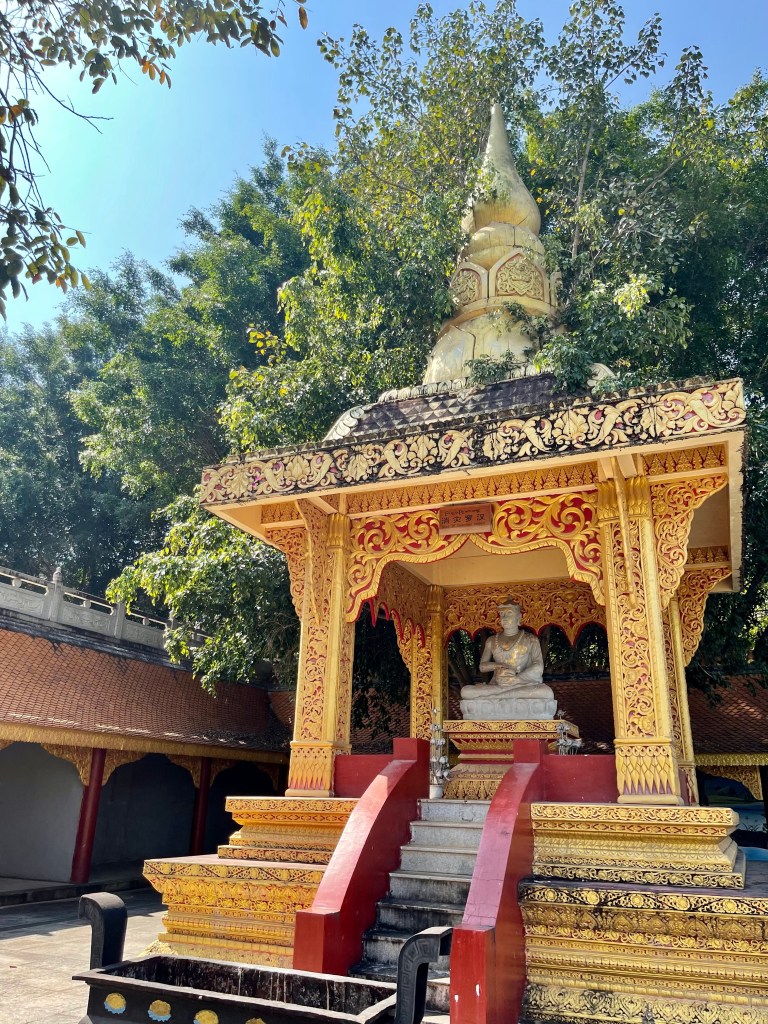

Here it is. The famous… phoenix. 
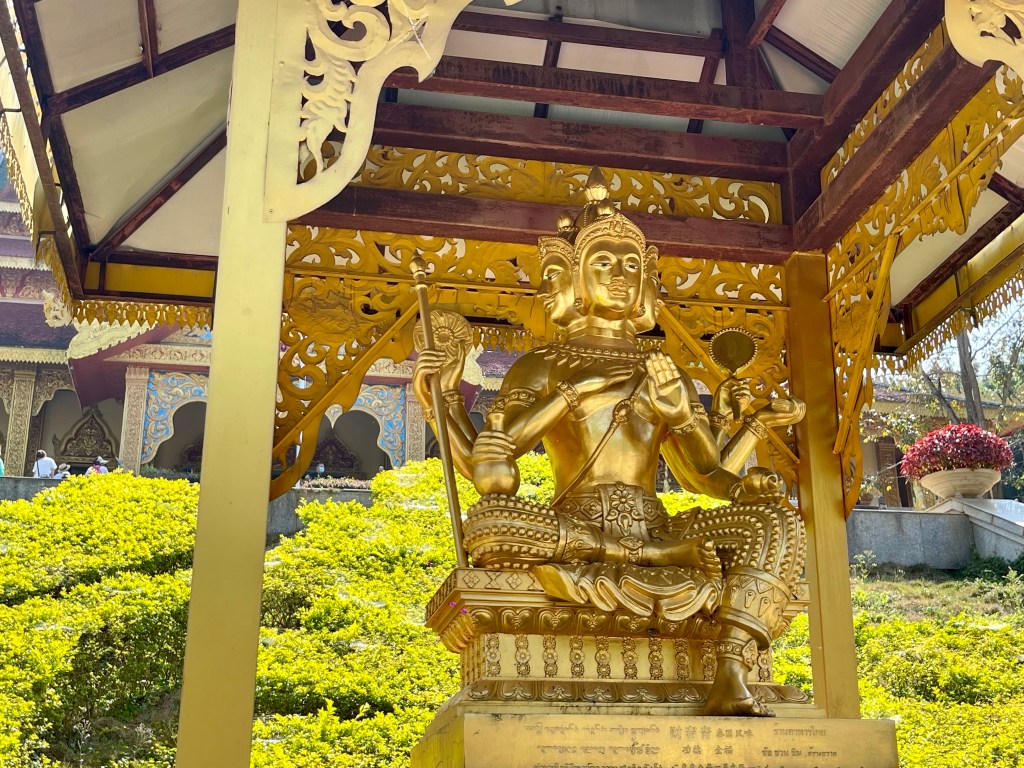
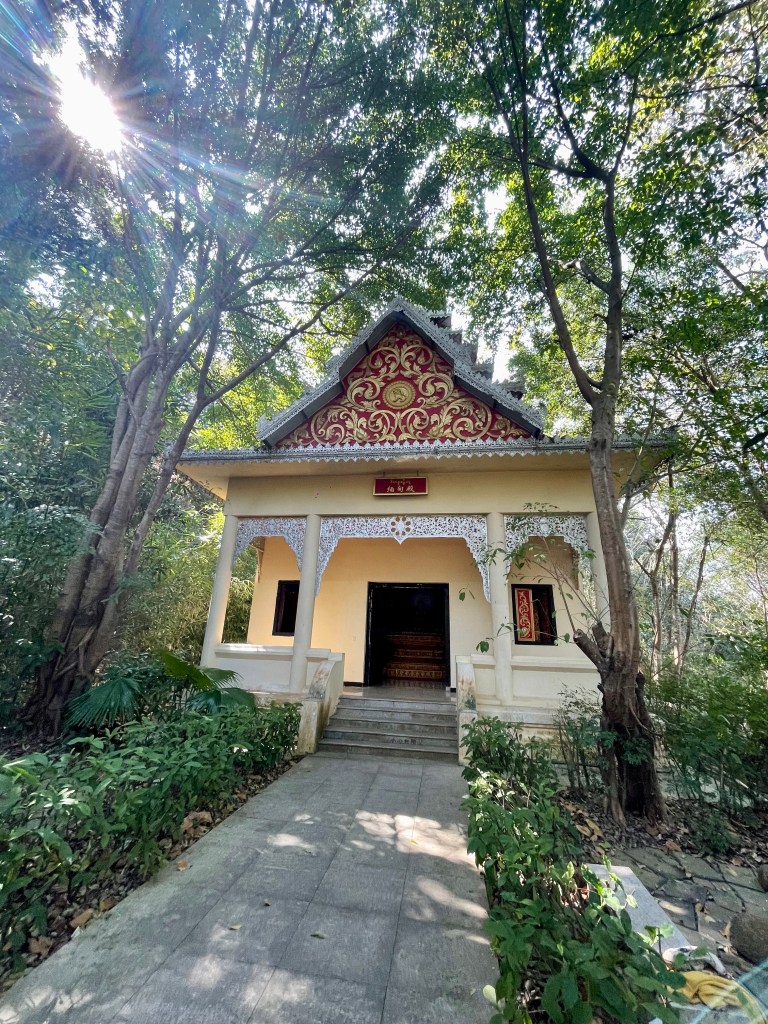
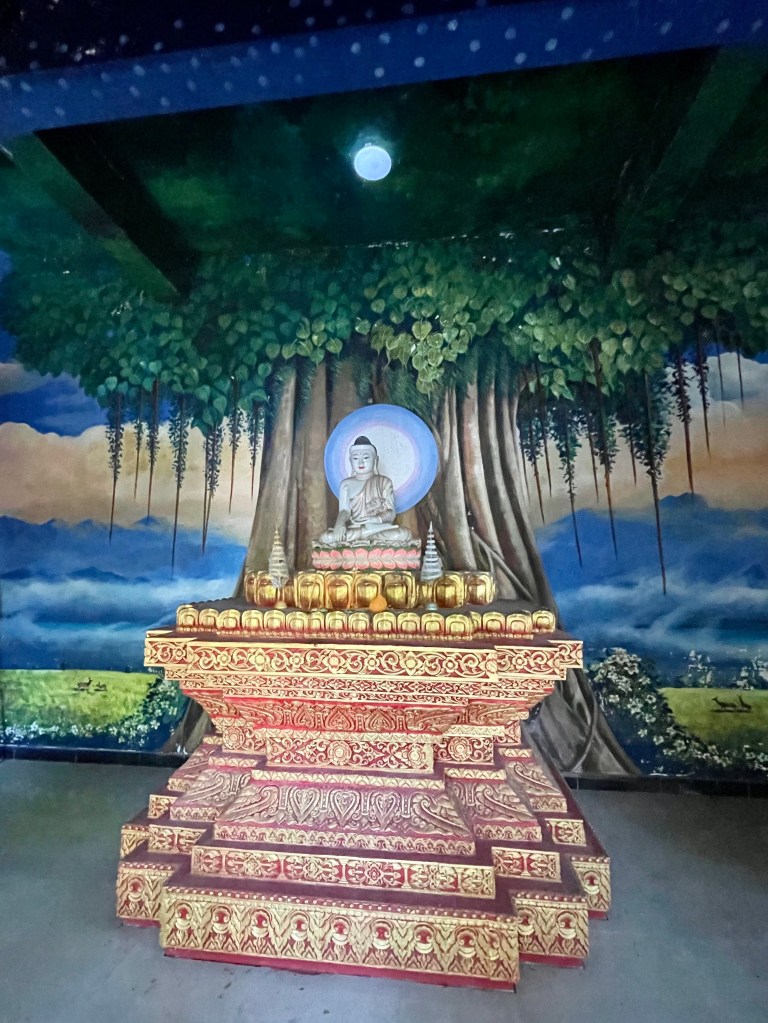
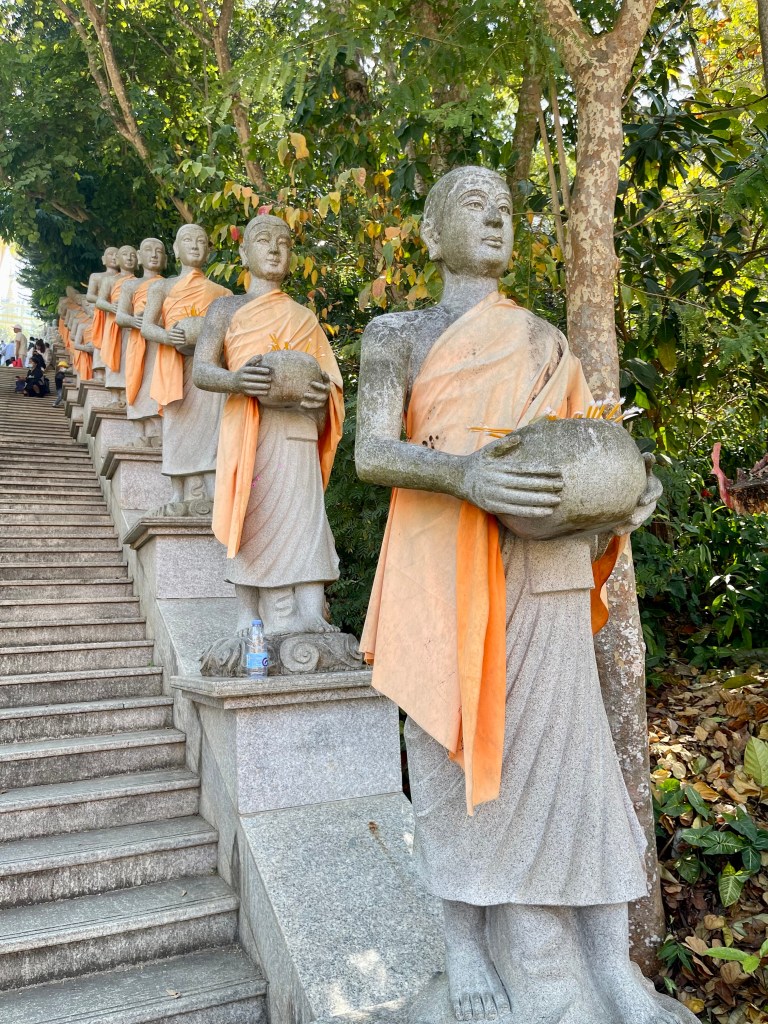
As we were walking up the many (many… many…) stairs to reach the top of the park, there were several smaller little buildings on either side of the walkway. From my understanding (because none of the signs were written in English and I’m struggling to find anything online about it) each of the smaller buildings were built to represent the various art and styles of Therevada Buddhism throughout different countries. So there was one that represented Sri Lanka, one representing Cambodia, one representing Thailand, etc. It was cool to go in and see the different art styles of both the statues and the paintings!
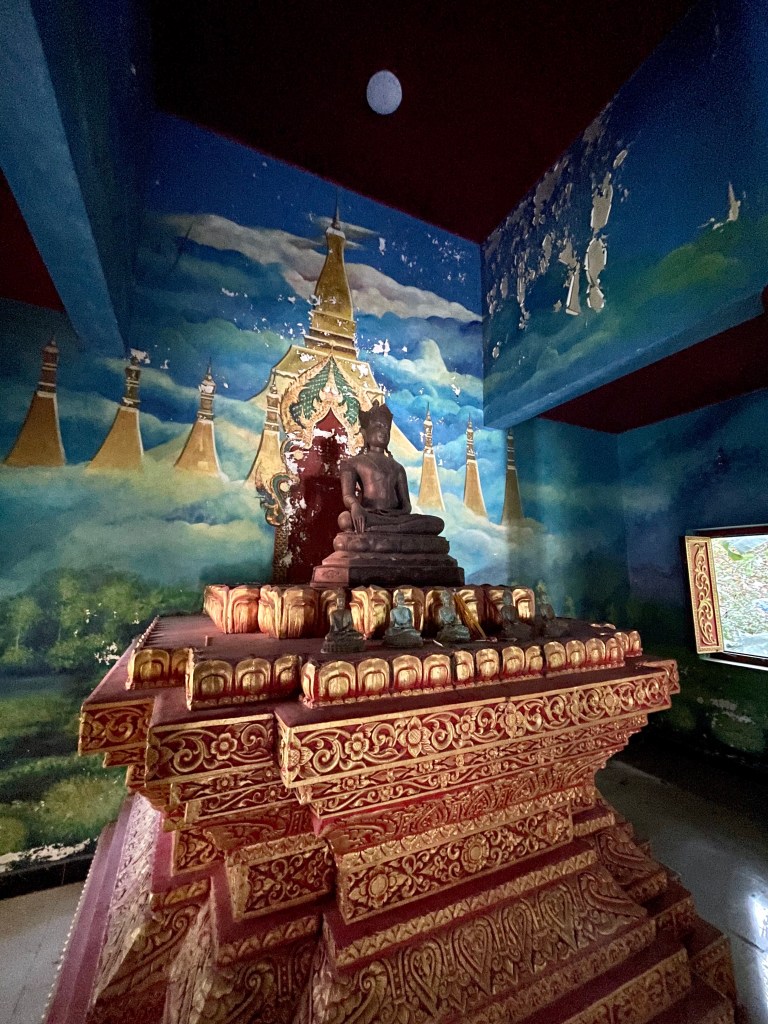
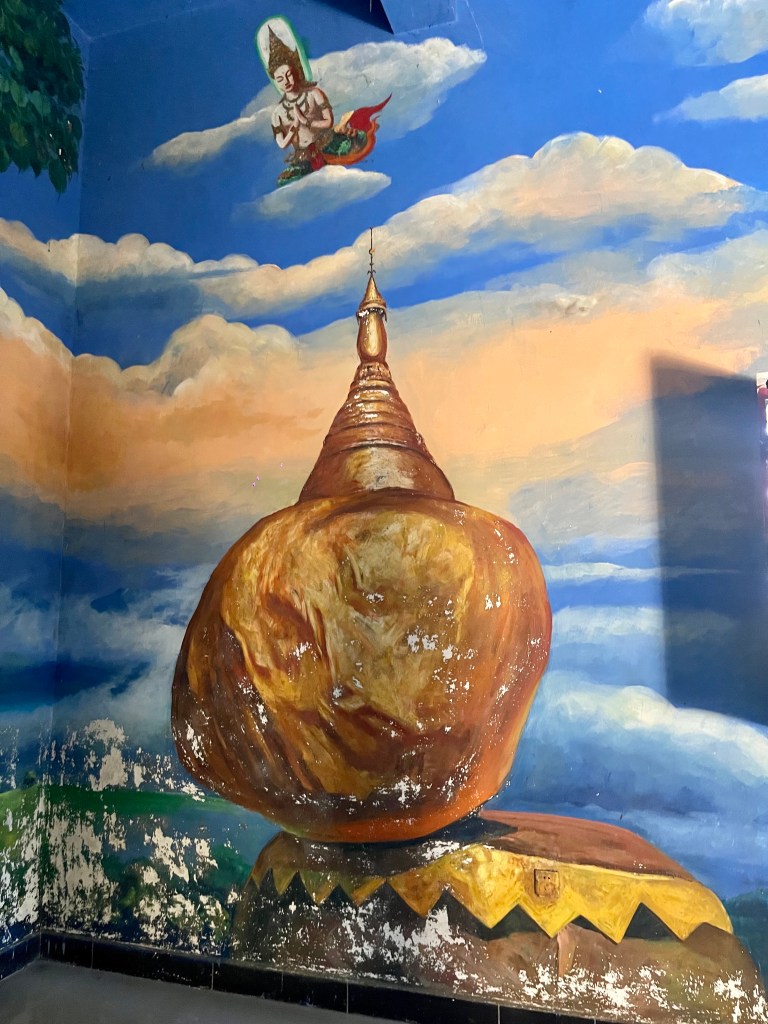
I don’t know what this little holy rock did to become holy, but I am proud of it.
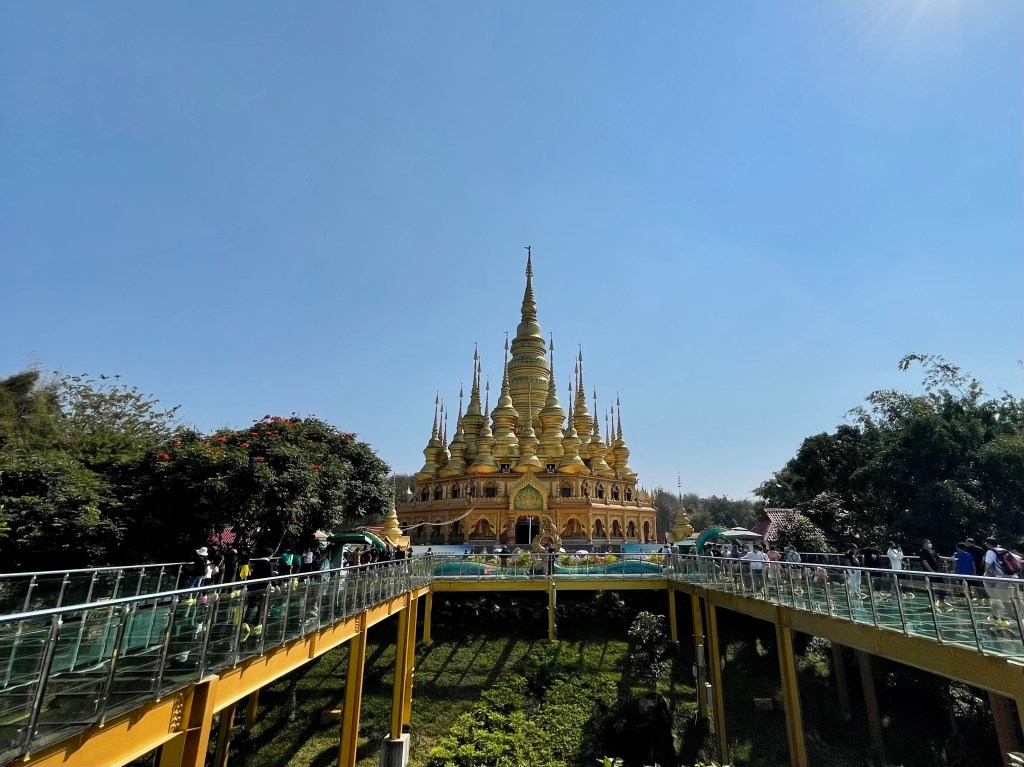
As we continued to climb higher, we were able to get a closer look at one of the highlights of the Mengle temple: the Great Buddha Statue overlooking the city of Jinghong. At 49 meters tall (about 161 feet) and weighing 400 tons, this giant statue is a wonder to behold.

It’s hard to capture in pictures just how epic this statue is, so you’ll just have to believe me. Especially in the sunlight, with the gold shining from the top of the hill… so beautiful. Also, I was really happy that this was a Buddha I could actually take a picture of! You’re not allowed to take pictures of the Buddha statues within the temples themselves, so I’ve seen so many amazing statues I haven’t been able to share pictures of. It’s nice to be able to share this one with all of you.
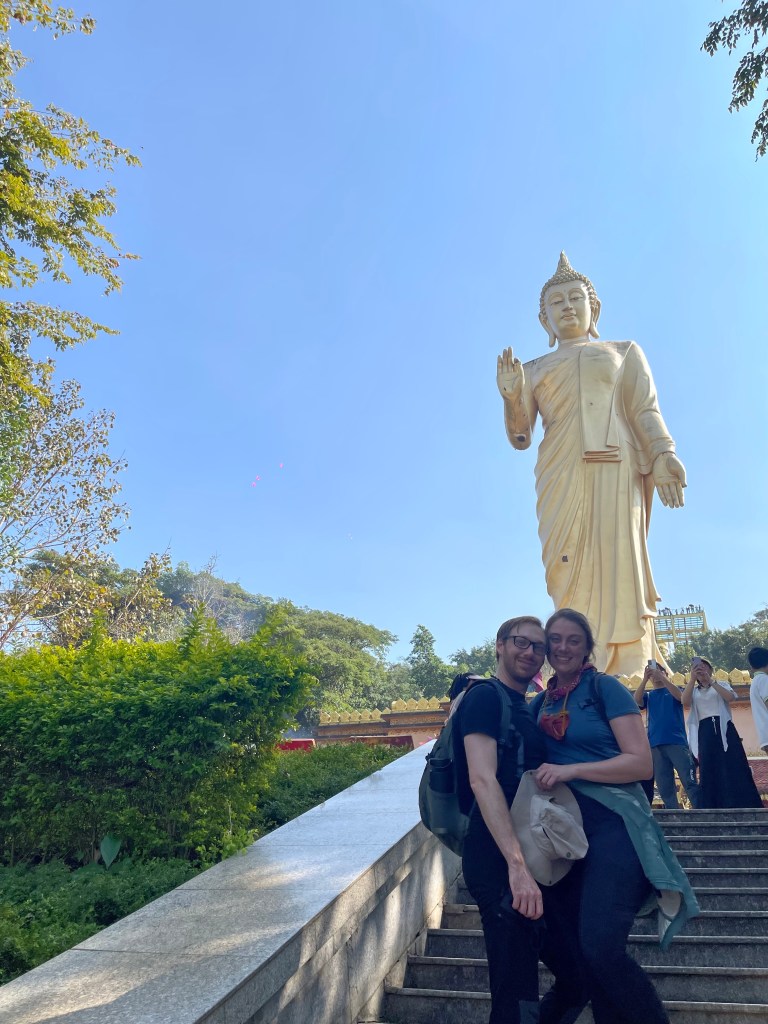
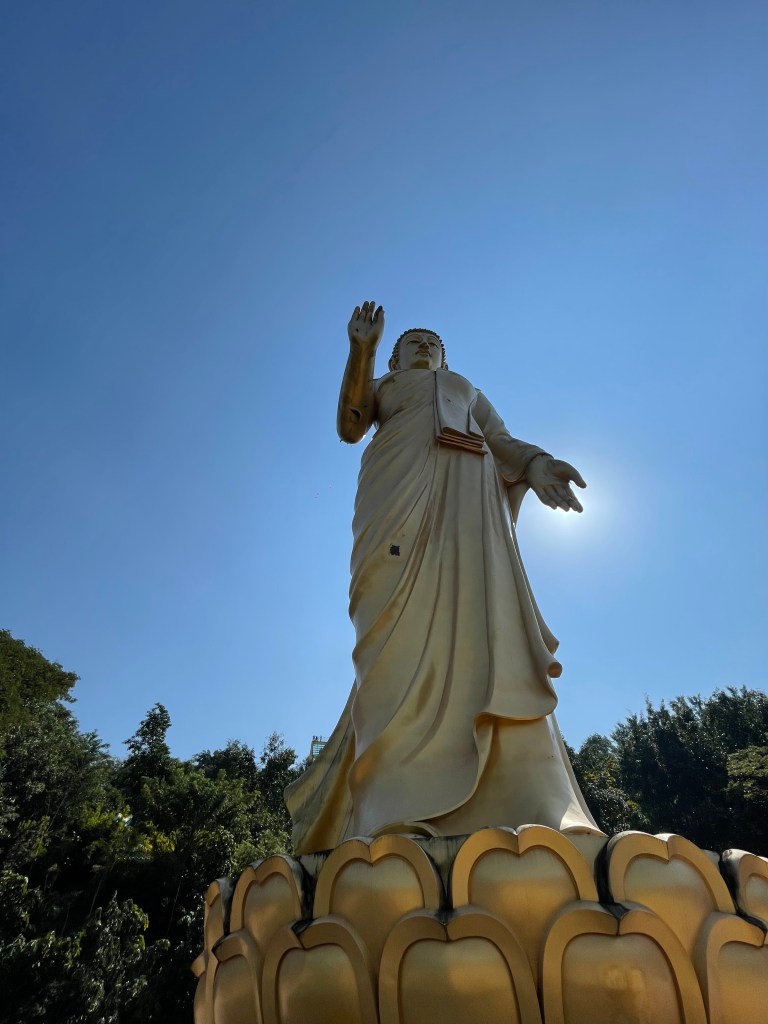
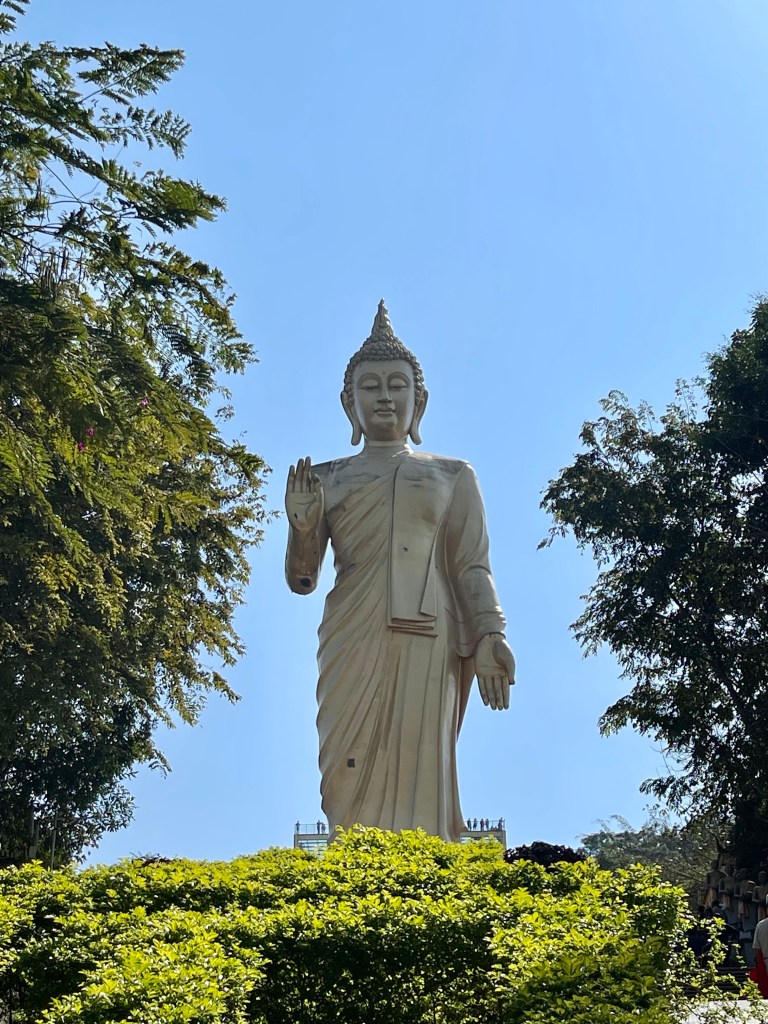
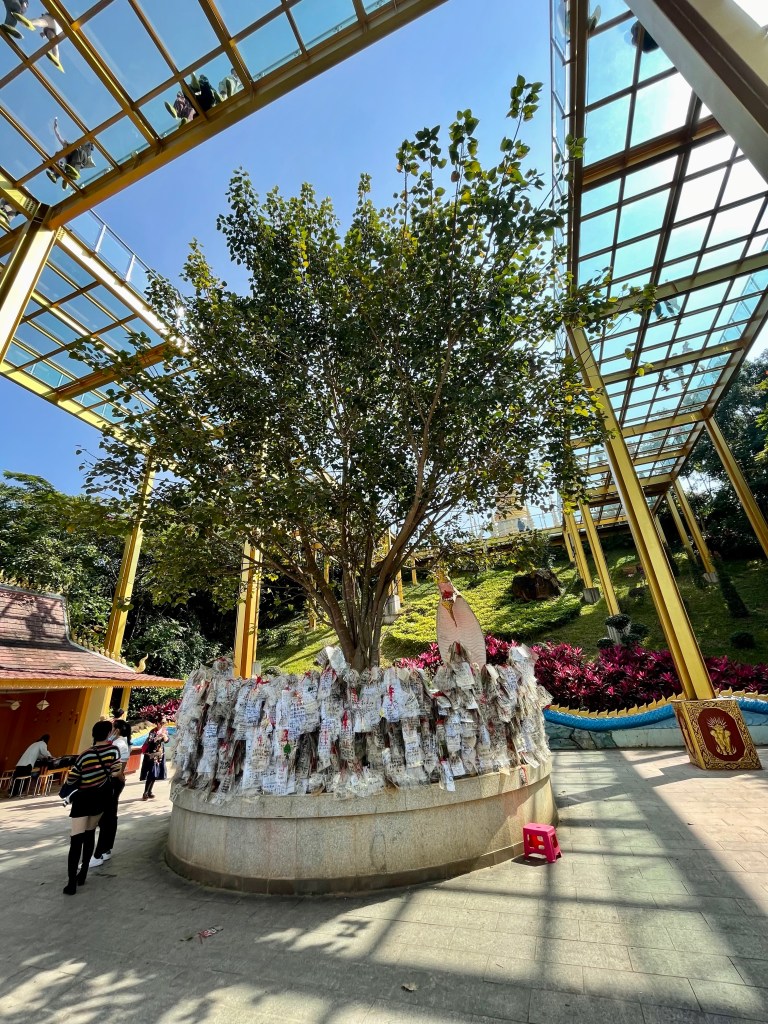
After climbing up the final batch of stairs, we reached the top of the temple complex. Waiting for us was a holy Bodhi tree, grown from a sapling of the same tree that the Shakyamuni Buddha attained Enlightmenment under. Surrounding the tree were wishes and prayers that people had left tied to the gate with red ribbons. The tree was guarded by a final dragon guardian, with a long horn growing from his nose.
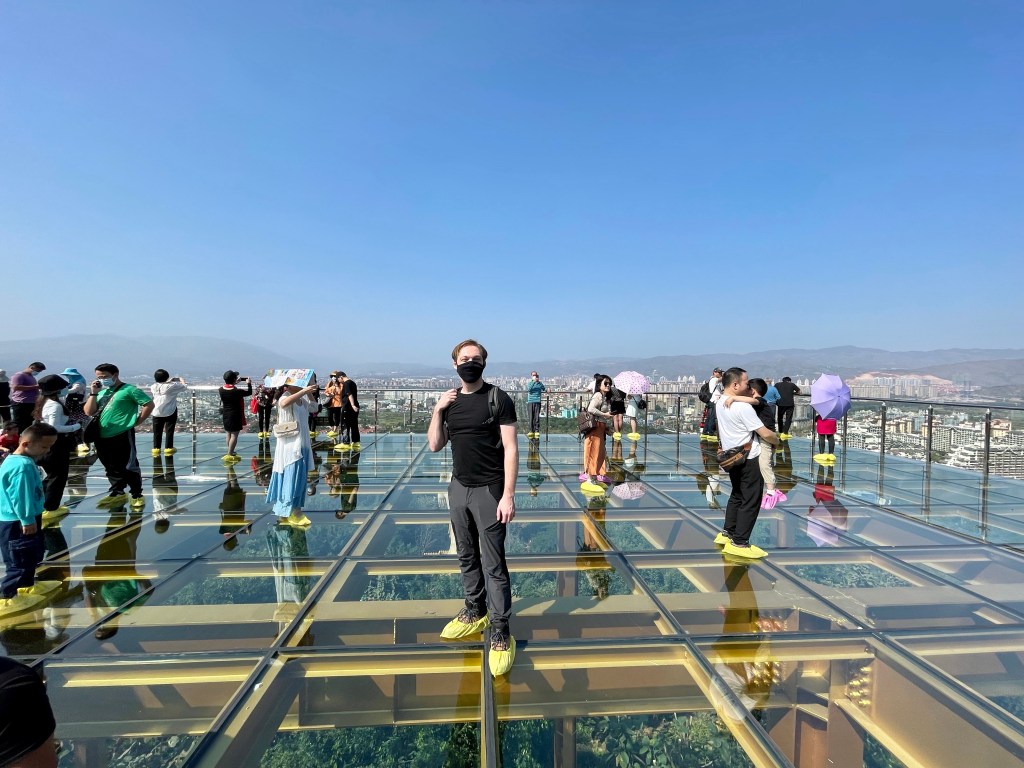
Of course, because China’s gonna China, there was a glass bridge from which we could walk out and look down upon the city. Even though the day had not turned out how we had originally expected, we were so glad that we were able to make a visit to this beautiful and sacred temple.


The next day, we drove out to the famous 南糯茶山 Nannuo Tea Mountain. As one of the oldest tea-producing regions in the world, Yunnan was once a key destination along the ancient Tea Horse road. In ancient times, Nannuo Mountain was inhabited by the Hani people, and each year the village chieftains were to be presented with gifts from each of the local tribes. The Hani people on the mountain were known for making a paste out of the leftover bamboo shoots they had not eaten, so when it came time to present their gift to the chieftains, they gave them some of their bamboo paste. The chieftains enjoyed the taste so much that we named the mountain 南糯 Nannuo, or, “bamboo paste.” (Unfortunately, we did not get a chance to taste test this bamboo paste for ourselves!)
Nowadays, Nannuo is most famous for their traditional cultivation and production of mountain forest 生茶 Pu-erh Tea. With a history of over 1,700 years, pu-erh is one of the oldest types of tea in China and is revered for its many health benefits – aiding in digestion, lowering cholesterol, supporting gut health, enhancing circulation and blood flow, and much more. It is a cold, fermented tea pressed into a cake for storage and delivery. Pu-erh can be cultivated in industrial monocultures on bushes on terraced slopes, but the traditional tea cultivation method requires tea trees to grow wild in a mountain forest ecosystem. However, as forests are being cut down and lost, so too does the ability to continue to cultivate mountain forest pu-erh tea leaves. In fact, in all of the production of pu-erh tea, mountain forest tea accounts for only about 5% of it! Nannuo is one of only three mountains (all in Xishuangbanna) where mountain forest pu-erh tea is still being produced and cultivated in the traditional way: without any synthetic chemicals and harvested only twice a year, picked by hand. During the harvest, farmers will visit the same tree once every 7-10 days, carefully selecting which leaves are fully developed on each visit. Many of the tea trees in this region are between 200-500 years old! When we were given the opportunity to tour the pu-erh tea farms on Nannuo Mountain, we were thrilled to learn more about this famous tea and its cultivation.


You can see the shorter tea trees growing amongst the taller trees of the mountain forest. 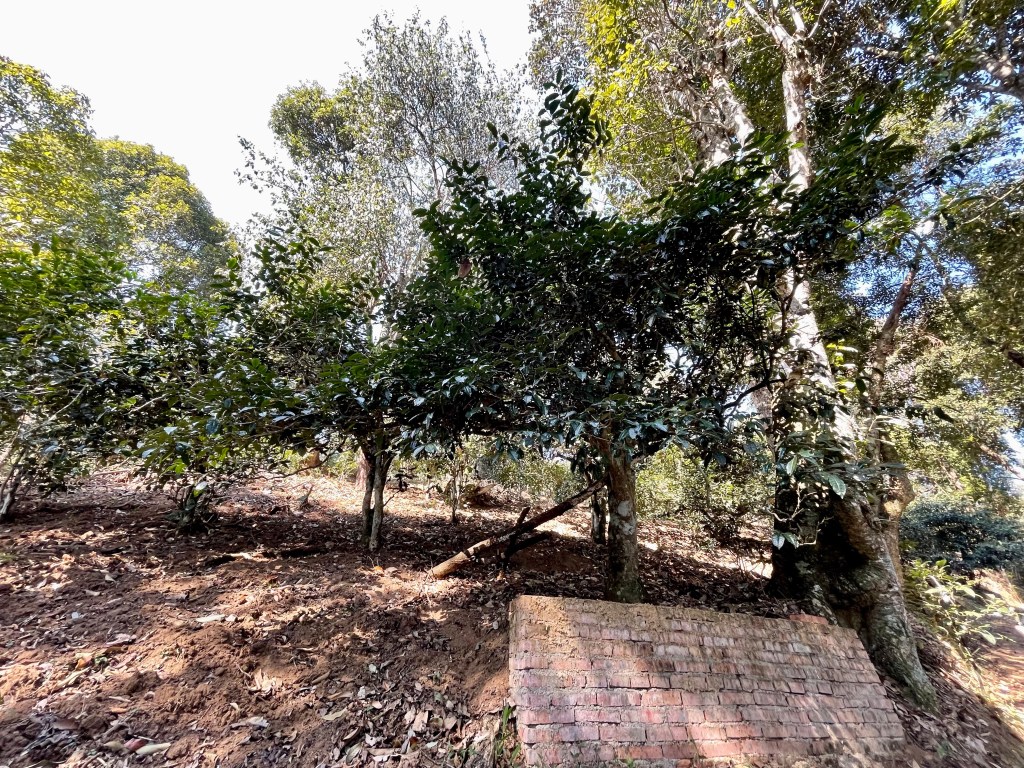
Yan led us on a hike through the mountain forest, teaching us more about the history and process of making pu-erh tea. I had never been on a tea tour before, nor had I ever been to a tea farm, so I found it really interesting! After walking through the tea trees for a while, we stopped at one of the tea houses for a tea tasting experience!
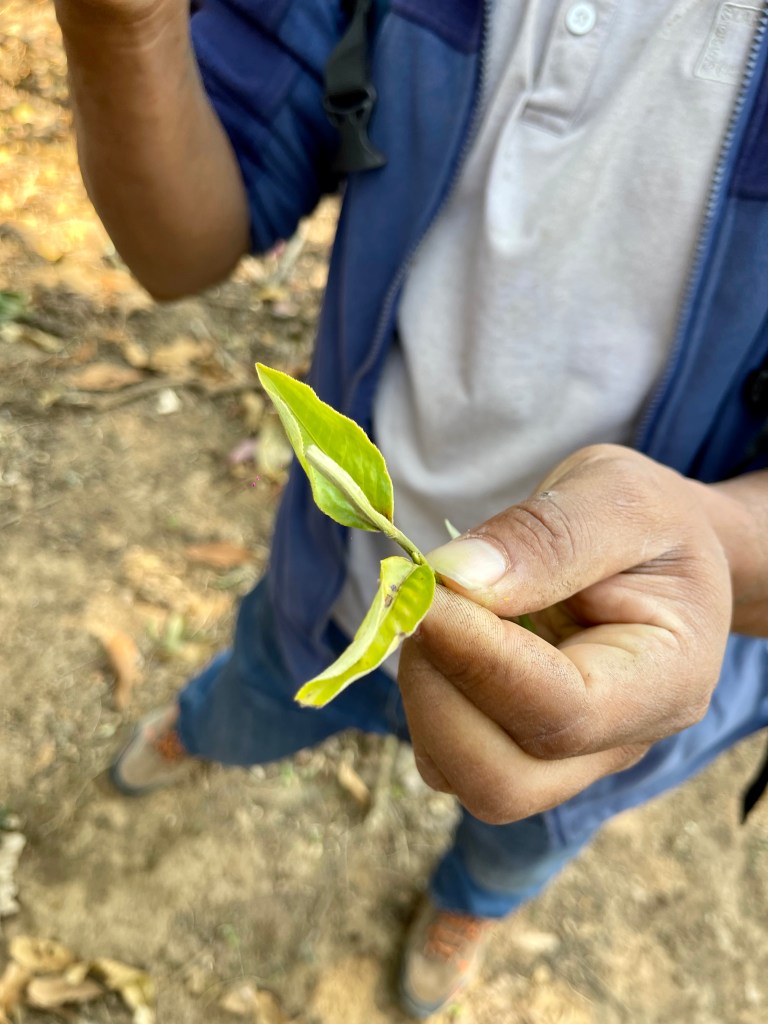

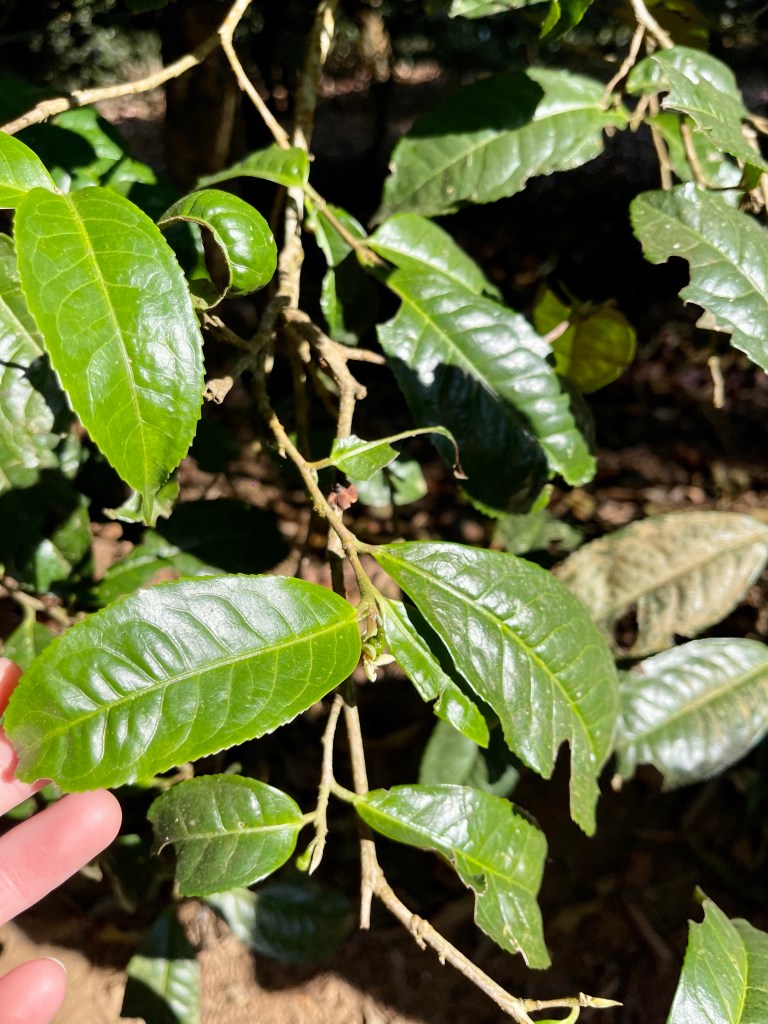

Now, full disclosure, I am not typically a tea drinker. (Or if I am, I load it up with sugar and cream.) So I can’t say that I am the best person to ask to describe the taste or the flavors of the pu-erh tea. (I am equally as useless when it comes to describing wine — I can tell red or white, but that’s about as far as my taste buds can specify.) But, especially as I’d never been to a tea tasting here in China, it was really cool to see all that goes into it! Hot water to warm up the tea cups first, then pouring in some of the tea to prepare the cup (I suppose?), pouring that tea out and THEN filling the cup with the tea you are supposed to taste… We were given three different teas to taste – some of different ages, and different blends. Pu-erh tea’s taste, color, and aroma change as it ages and ferments; according to people who know what they are talking about, as the tea ages it develops a more earthy color and the taste becomes rounder. This process can take decades; similar to wine, pu-erh tea is often classified by region and year of production!
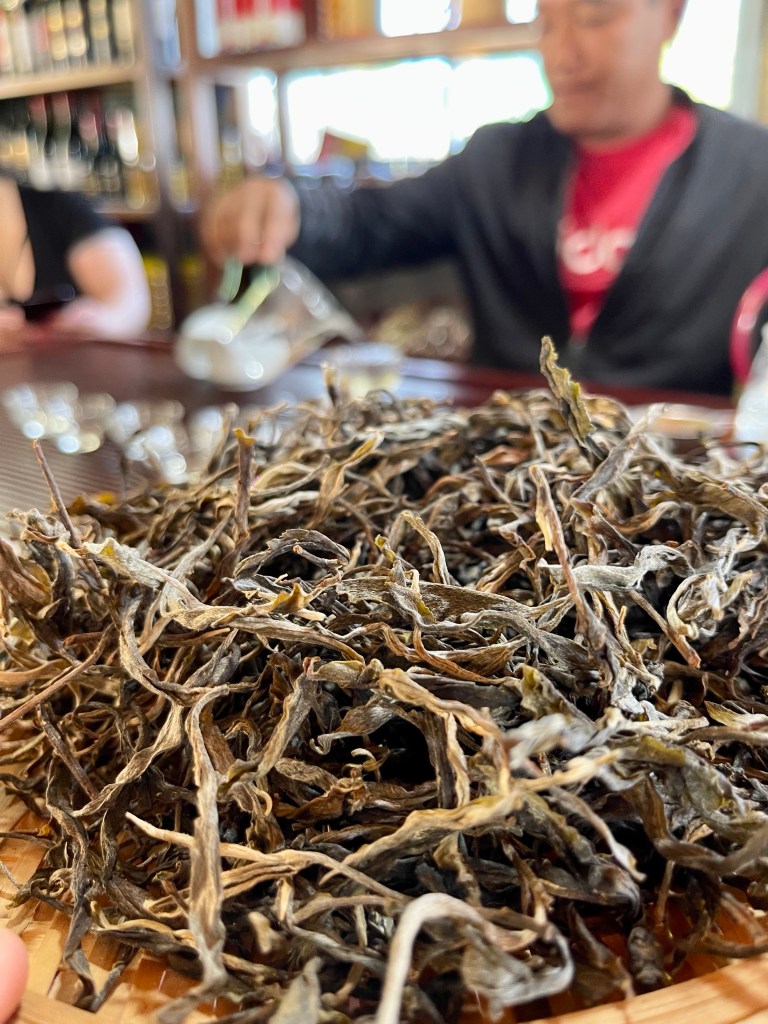

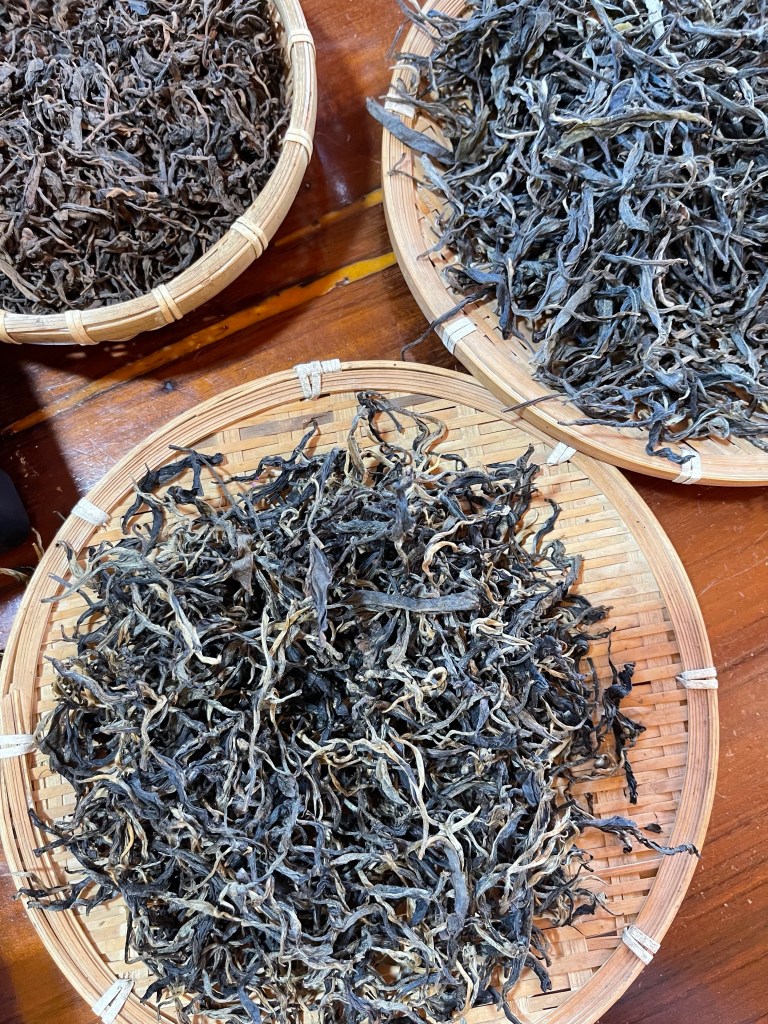


After our tea tasting, we had another short hike through the village on the way to our next destination. On such a beautiful day, it was so lovely to walk through the tea trees and see what life is like for those who live and work on Nannuo Mountain!
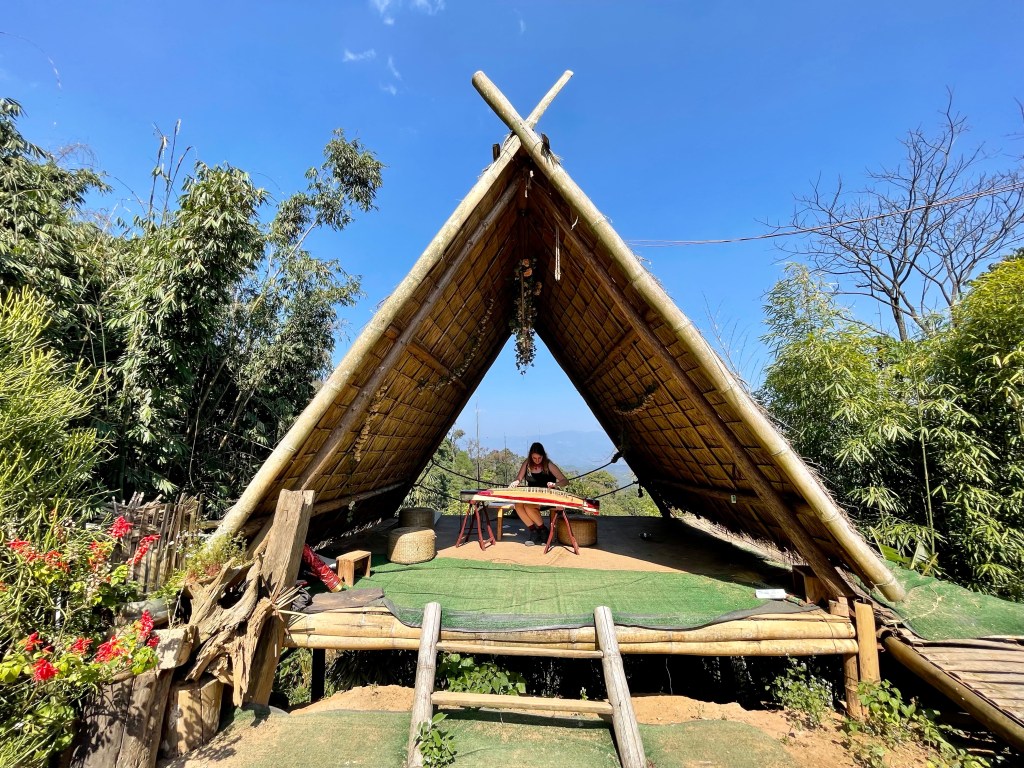
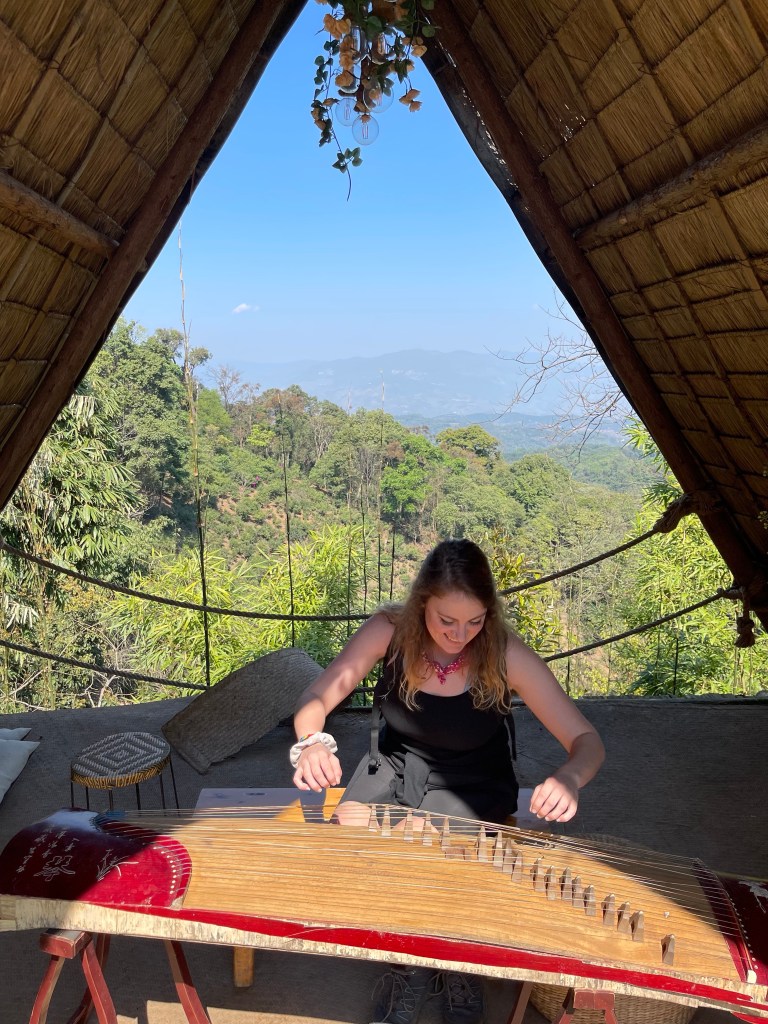
We found a guzheng – a Chinese plucked-string instrument with a history going back 2,500 years! 

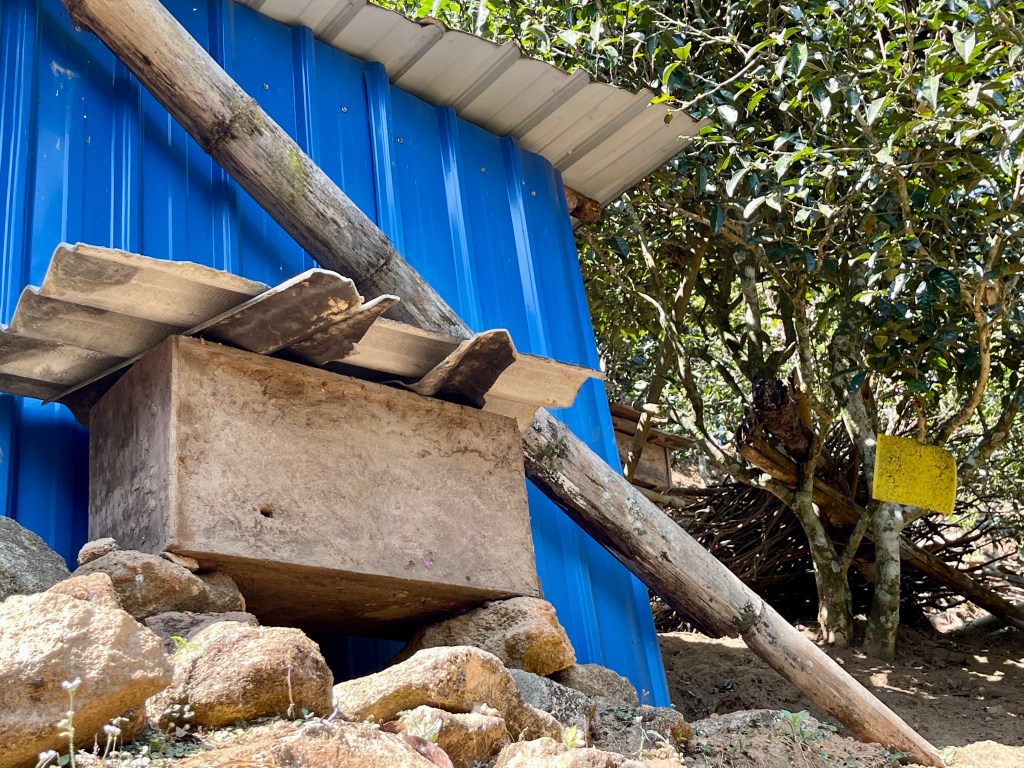
Bees! (Pu-erh tea honey, y’all.) 


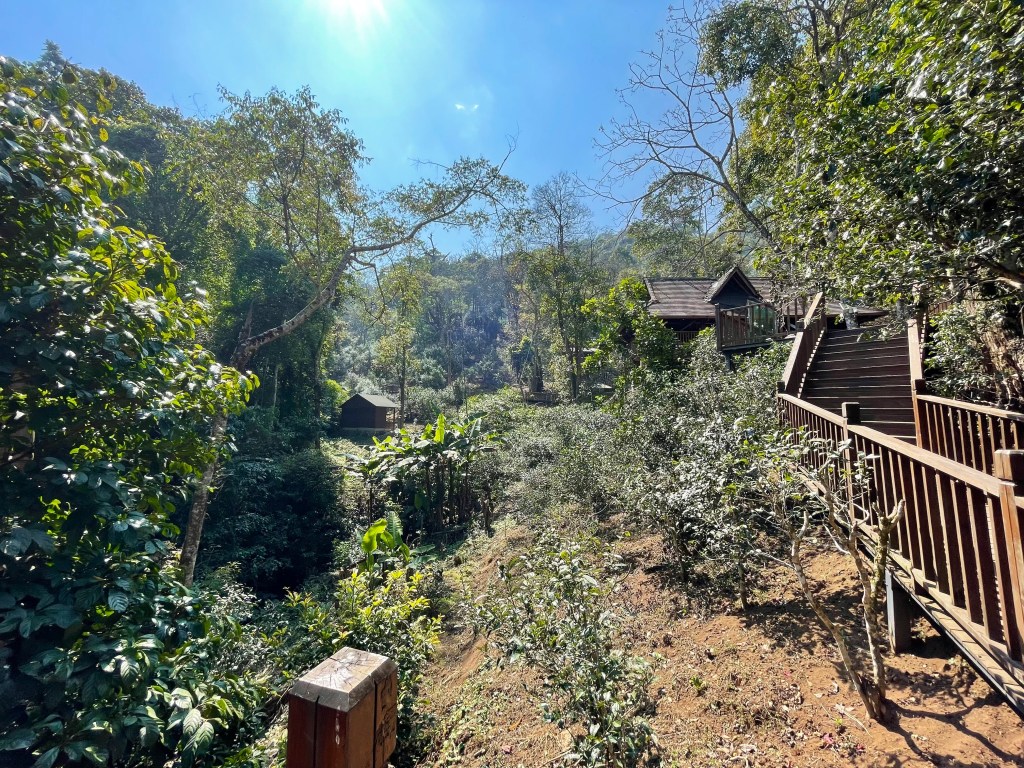

Dinosaur Tree!!!!
Finally, we reached the gem of Nannuo Mountain: the King of Tea Tree. This ancient tree has been human cultivated for more than 800 years! It’s amazing to think that, for centuries, this mountain and its inhabitants have been cultivating this special tea. Before we left, Michael and I bought a small tea cake with tea from one of the ancient trees. We were told it only gets better with age, so maybe in 30-40 years we’ll open it up and give it a taste. For now, it’s a pretty cool talking piece to keep up on the mantle.


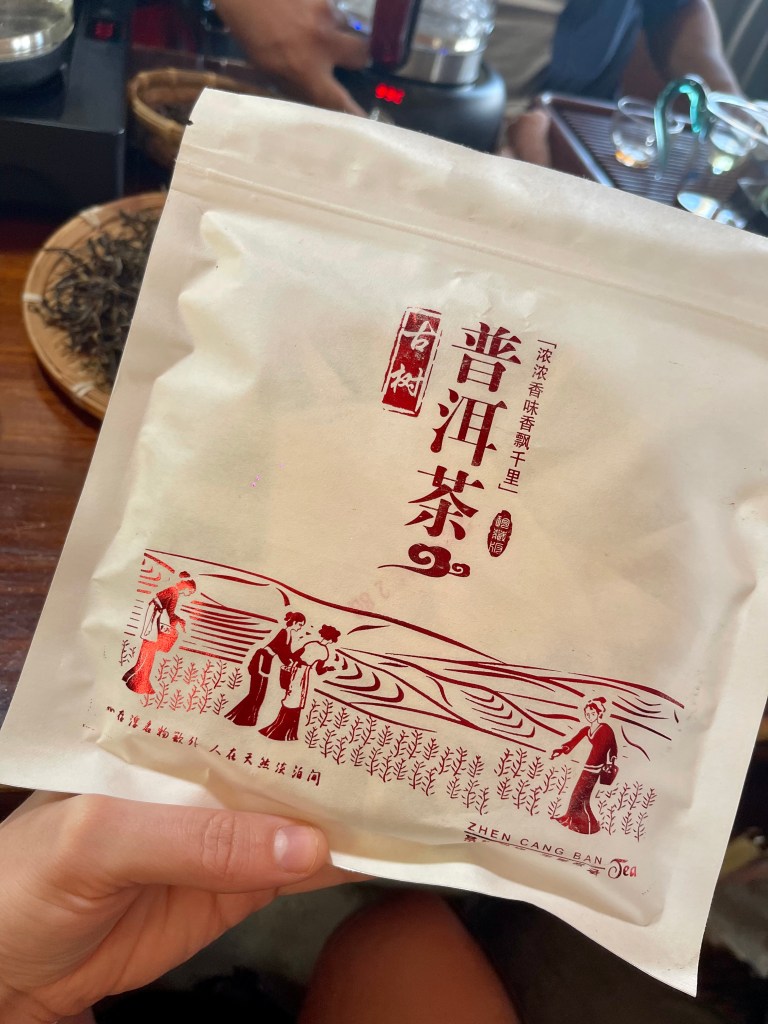
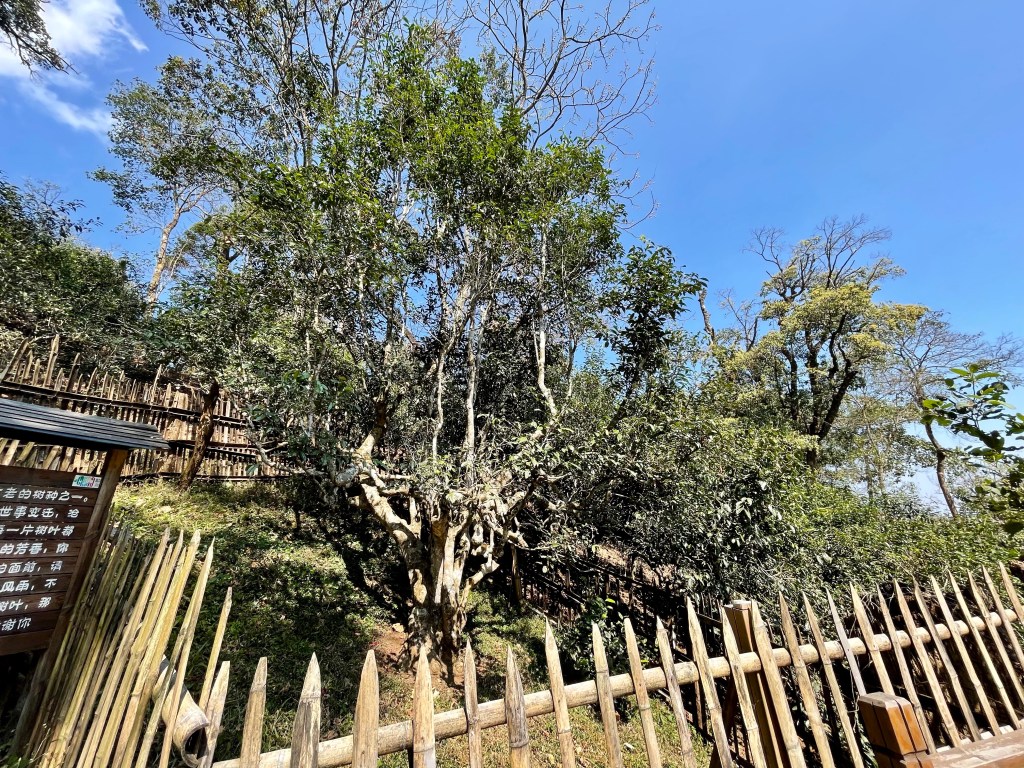
Looking pretty good for an 800-year old, eh?
Though I never would have thought that a tea tour would be a highlight of a trip, I loved getting to explore Nannuo Mountain and learn about pu-erh tea! (If you are interested in trying it yourself, I know you can purchase it online! Have a taste!)

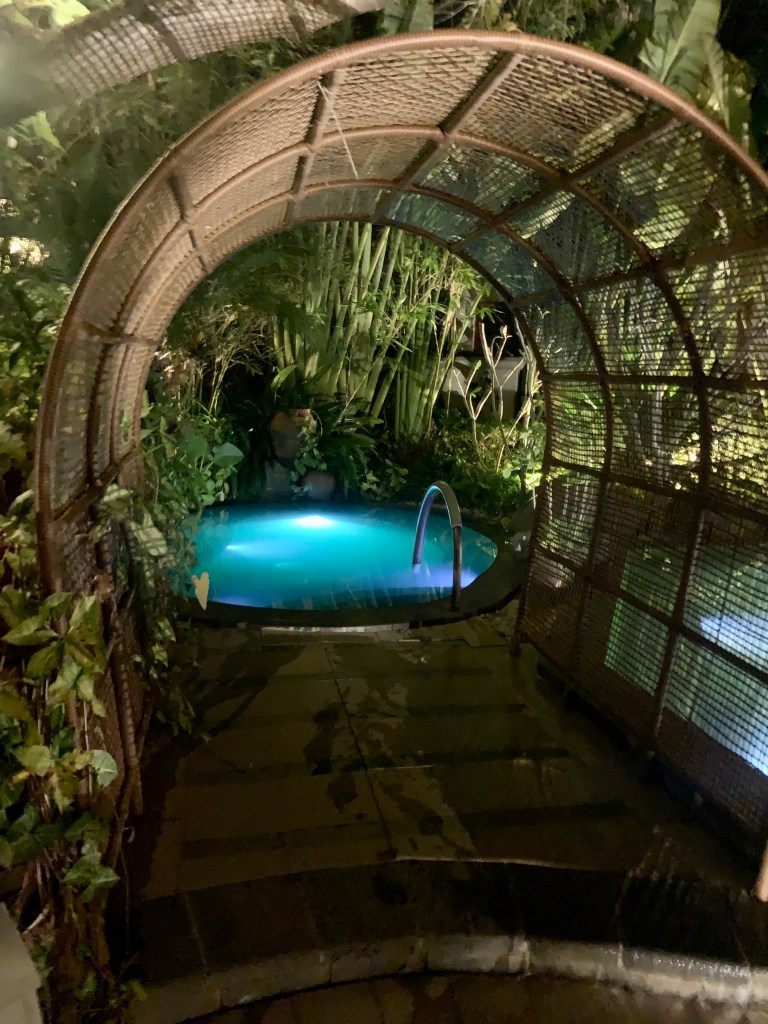
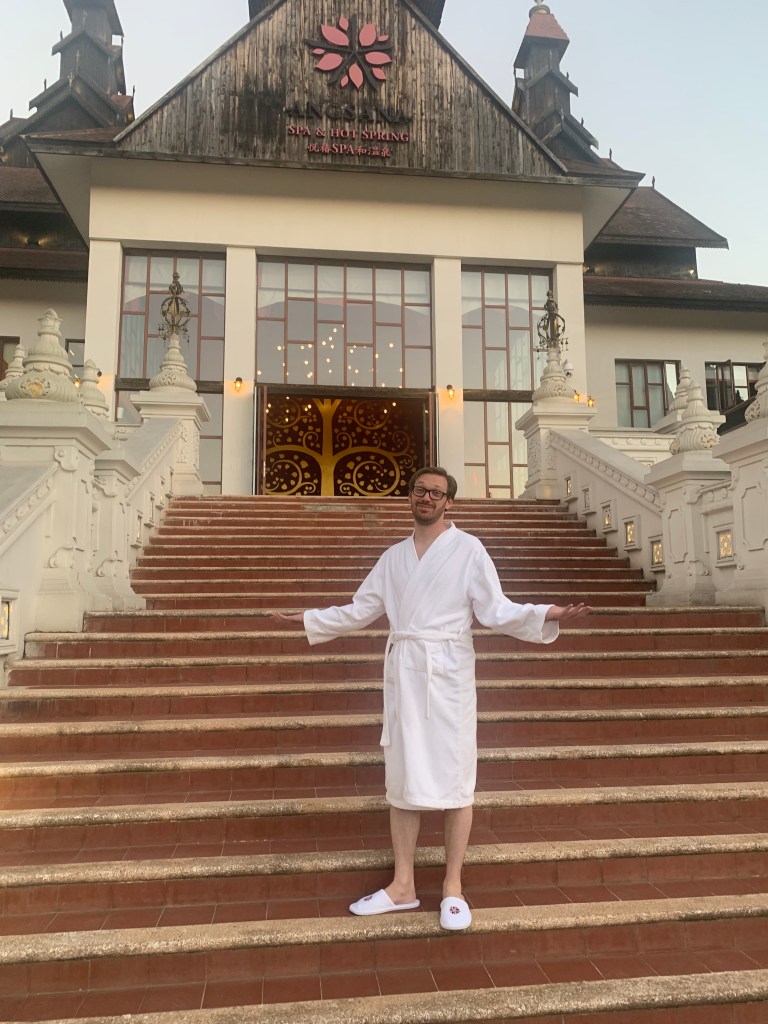
After a long day on the mountain, that evening Michael and I took advantage of the beautiful hotel we were staying at and visited their many hot springs. I am always a big fan of an evening soak.

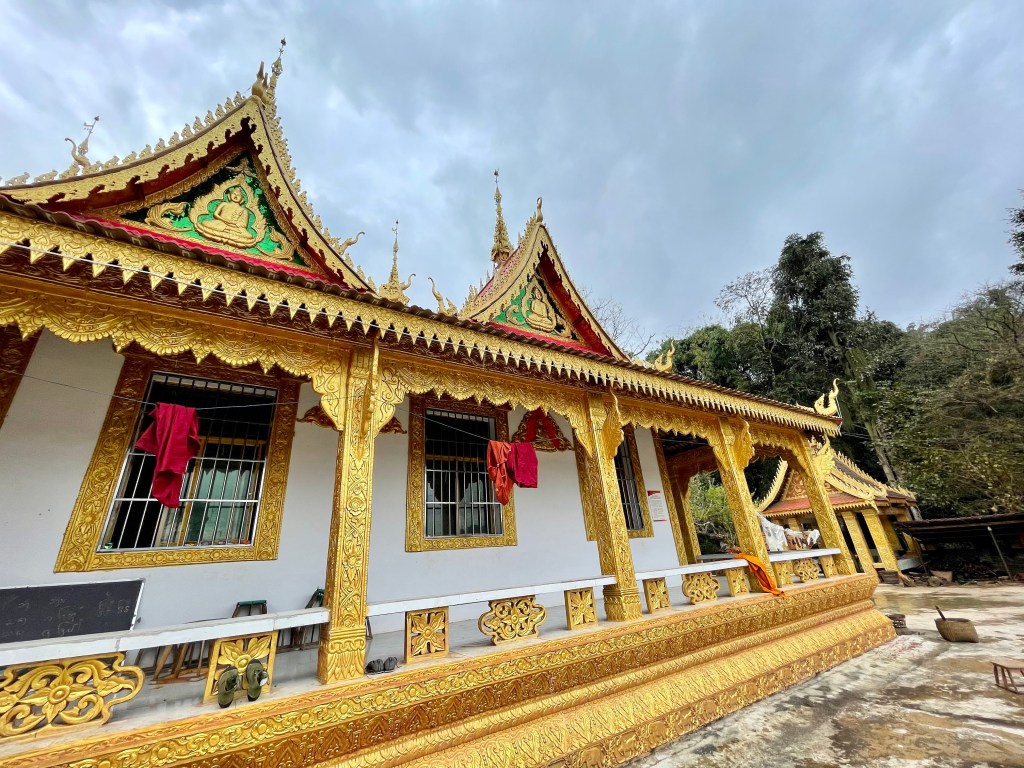
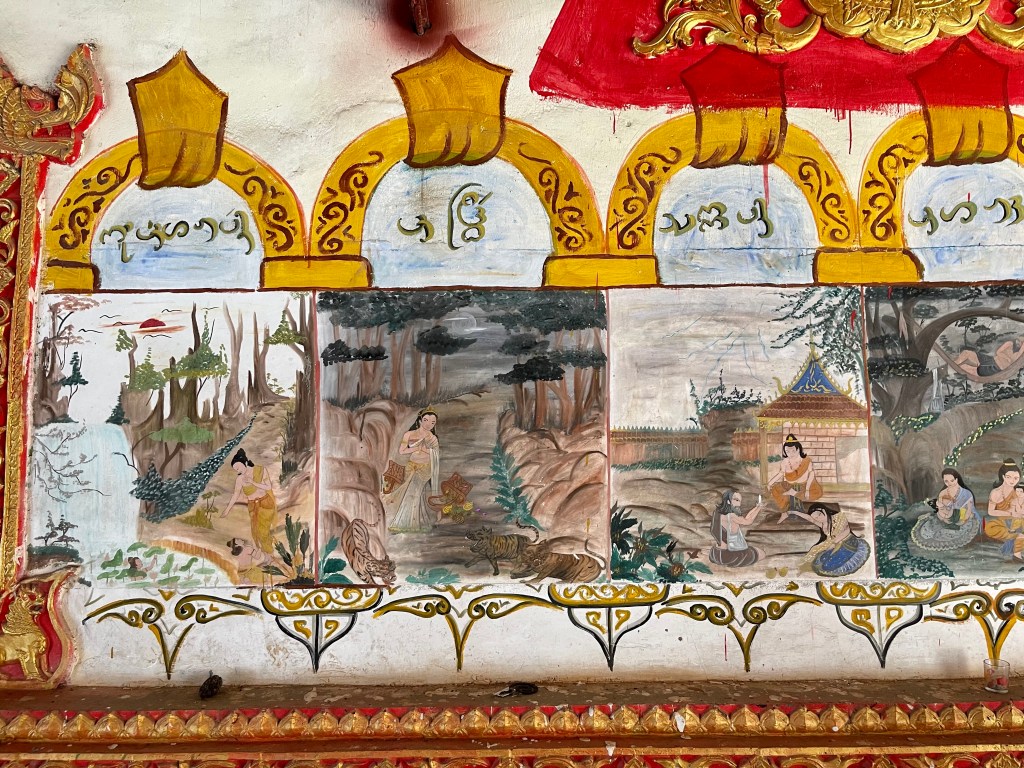
On our last day, we went out for one more small trip to visit another local minority village. We were able to see another smaller Buddhist temple and were given a delicious lunch by a small bed-and-breakfast. (Maybe next time we visit, we’ll stay there instead!)

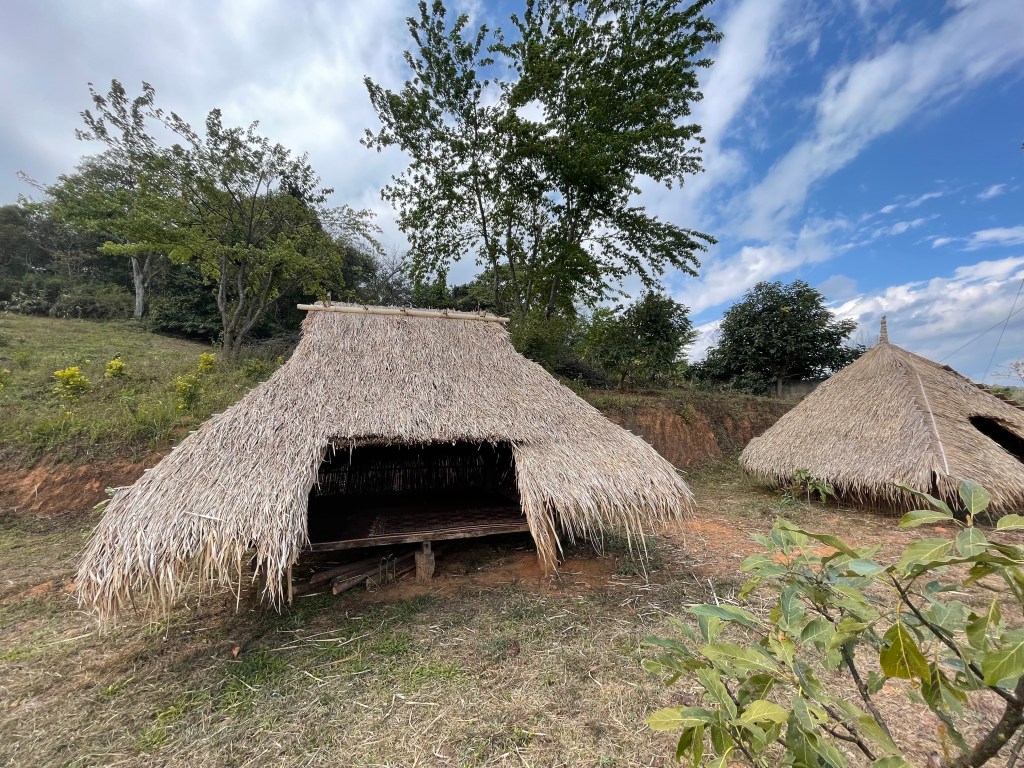
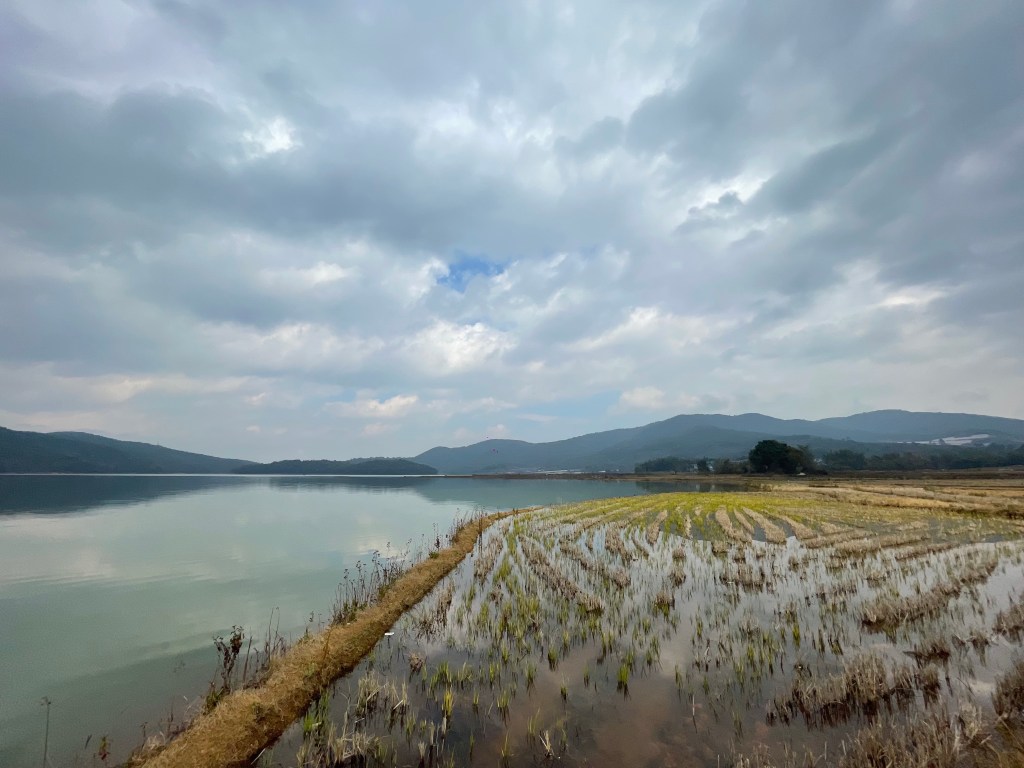

Though we were sad to leave, we had an amazing time touring Xishuangbanna over our Chinese New Year holiday. I’ve seen many different places throughout China, but this is perhaps the region that has felt the most like being in a completely different country. Between the elephants, the peacocks, the dragons, and those majestic phoenixes, we had a magical trip that we will never forget.


 Adventure in the Great Wide Somewhere