Where last I left you, we had just traveled to Wuyi and Gouqi Island in the Zhejiang province for Golden Week – the first week in October. Due to heightened pandemic concerns (are you sensing a theme here?) we were not able to leave Shanghai over any of the next few holidays but, contrary to my and many other expats’ belief, life still goes on even when you can’t travel. So, before I fast-forward to my next big trip, a quick recap of life in Shanghai from October through January. Lots of holidays — dressed up as some Loki variants for Halloween, made our first Thanksgiving turkey when I hosted Friendsgiving (it took nearly 10 hours to cook but it was honestly perfect, we may be holiday master chefs), had people over for latkes (traditional and vegan!) for Hanukkah, ALL of the Christmas traditions both here and virtually with family, and various other adventures in this cool city we call home.

Halloween Lokis 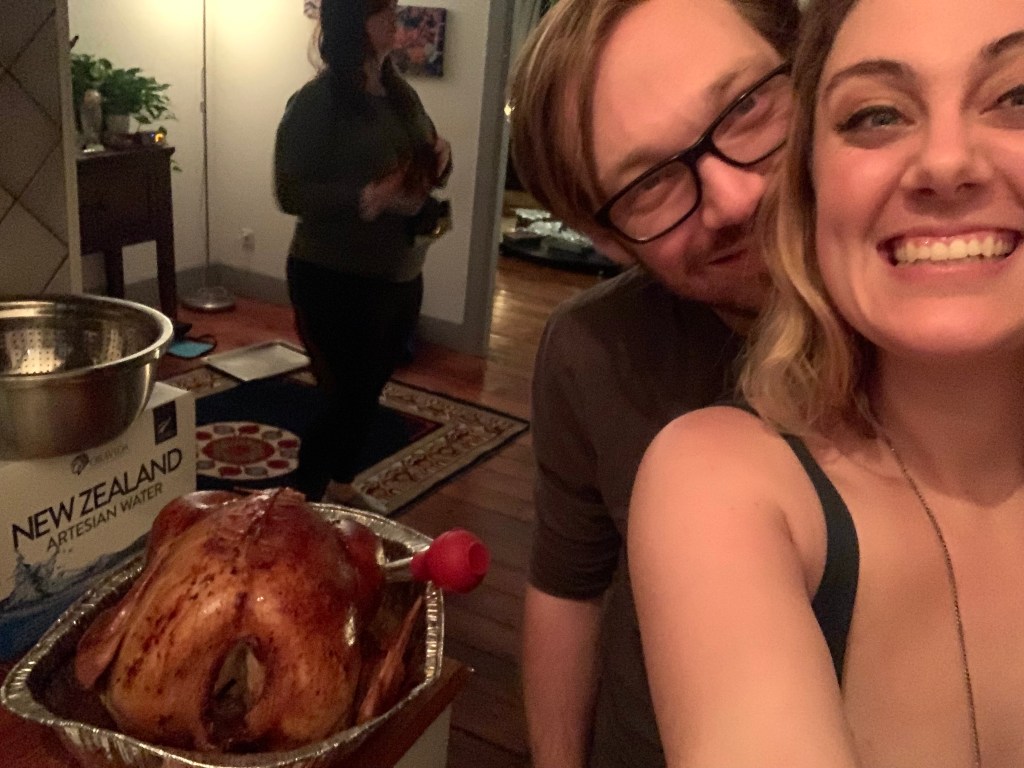
Made the turkey for Friendsgiving! 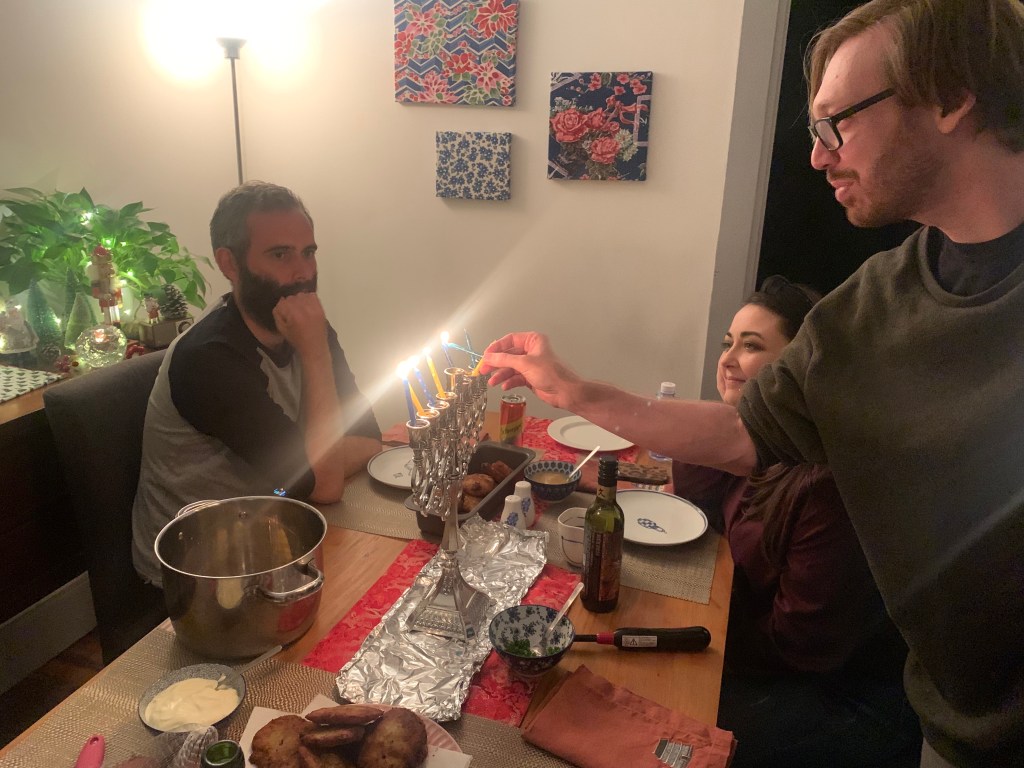
Hanukkah (featuring birthday candles…) 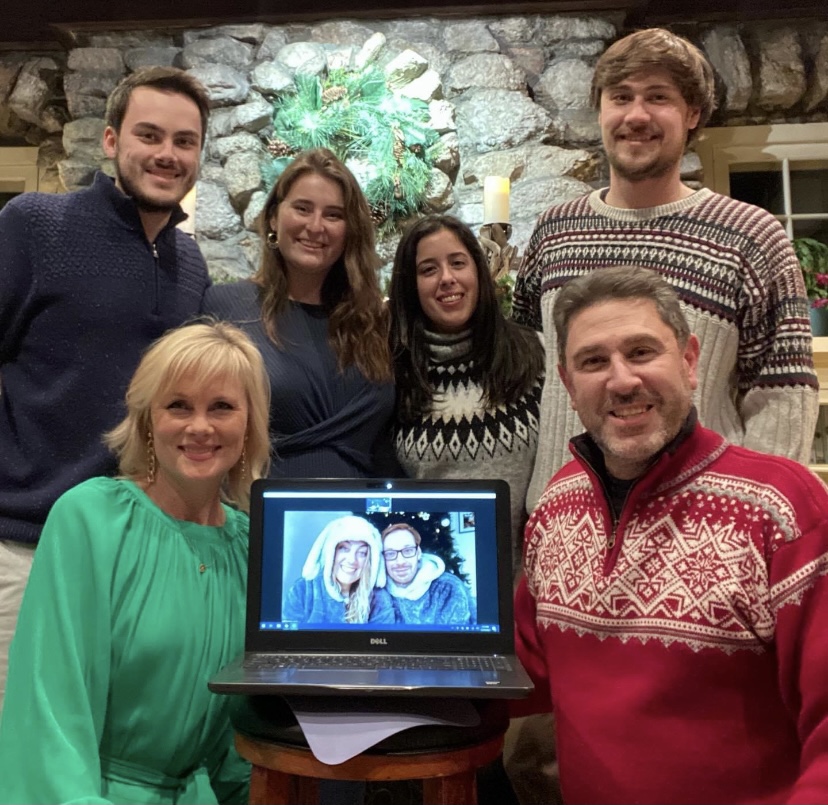
Virtual Christmas with my family 
Christmas! 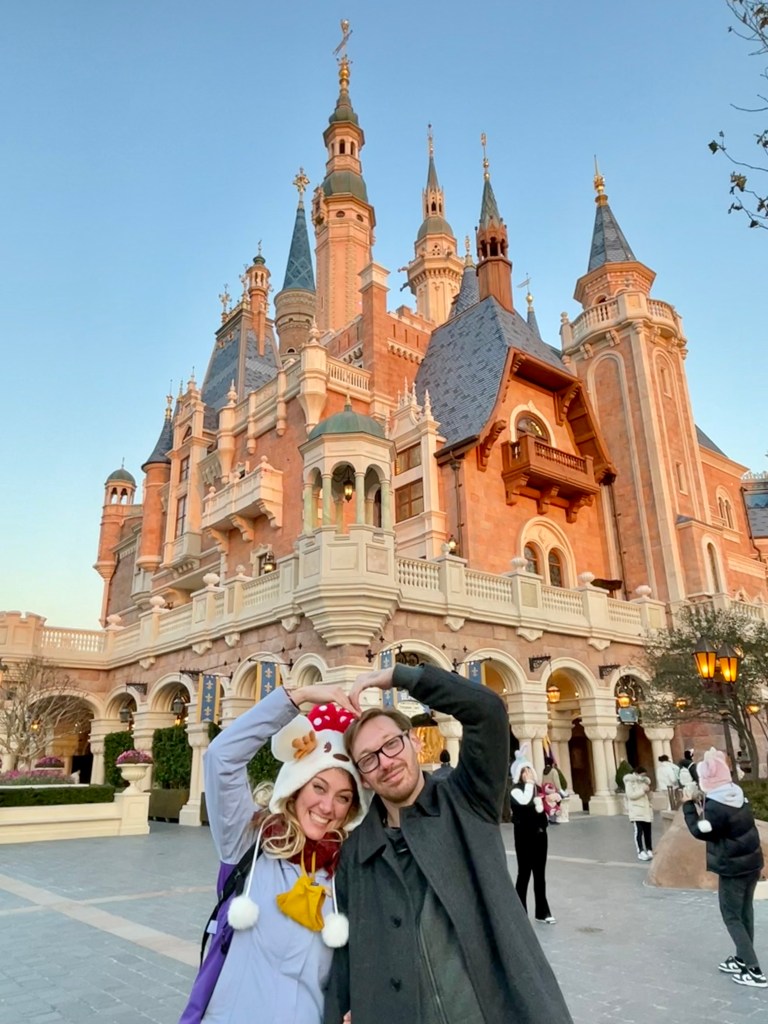
Disneyland 
The Grand Expedition 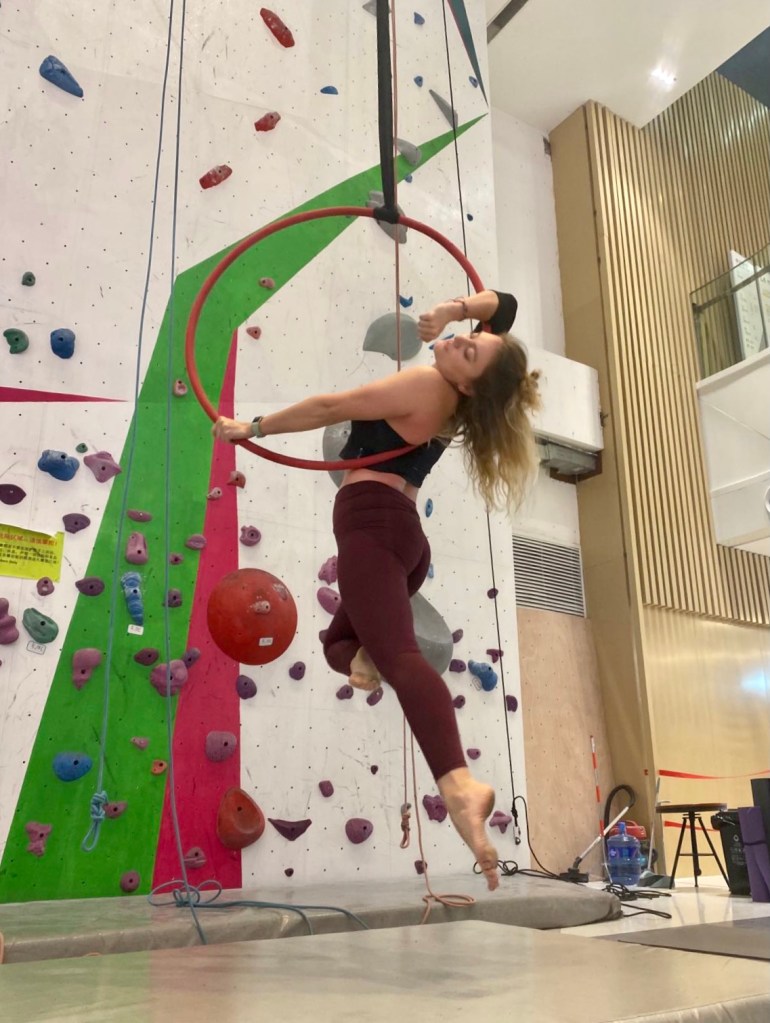
Circus classes 
Homemade pasta night
What’s great about living in China (and teaching at a school that acknowledges both international and Chinese holidays) is that only a few weeks after getting some time off for Christmas/New Years, we get a two full weeks of holiday for Chinese New Year. Though there was still some risk involved with traveling — the pandemic continues to make things complicated over here — we decided to take the chance and go out for a weeklong adventure somewhere. (And OH BOY am I glad we traveled while we still could. But more on that in a blog to come…) We packed up our backpacks and hopped on a plane down south to… Xishuangbanna.

᧑᧒ ᦗᧃ ᦓᦱ ᩈᩥ᩠ᨷᩈᩬᨦᨻᩢ᩠ᨶᨶᩣ Xīshuāngbannà 西双版纳 can be found on the very southern edge of the 云南 Yunnan province, near the borders to Myanmar, Laos, Thailand, and Vietnam. Often referenced as the “Thailand of China,” Xishuangbanna (pronounced “tsih-shuang-bah-NAH,” sort of…) is the home of China’s Dai ethnic minority and is known for its lush rainforests, tropical fruits, and wildlife. Xishuangbanna is especially famous for its peacocks and elephants; in fact, this is the only place where wild Asian elephants can be found anywhere in China – you may have even heard of them before! Remember in March of 2020 when a herd of elephants decided to try out the nomad life and wandered around for 17 months, marching through villages and munching on people’s farms, before finally heading home? They’re from here!!
Xishuangbanna is much more similar to Southeast Asia than it is to the rest of the country, so it is a really fun way to experience something new while living in China – especially when you’re not able to leave the country! Michael and I were excited to head down south and discover a culture completely different to the one we’re living in. When we were greeted by peacocks upon checking in to our (gorgeous!!) hotel in 景洪 Jinghong (the capital of Xishuangbanna), we knew we were in for an amazing week.
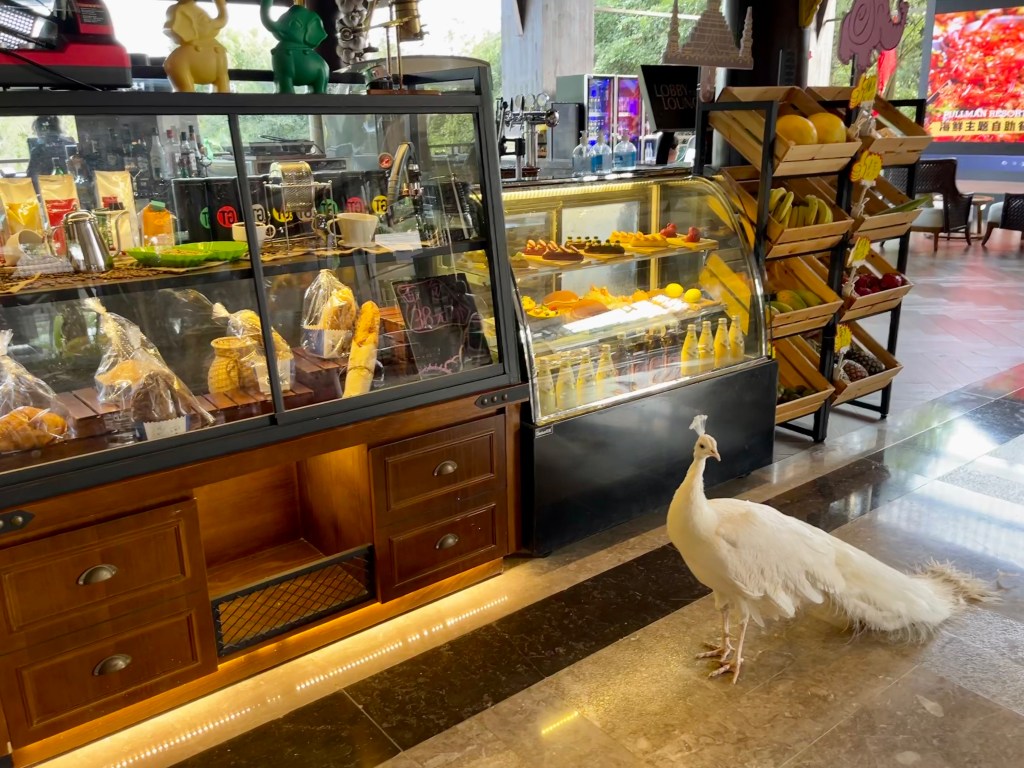


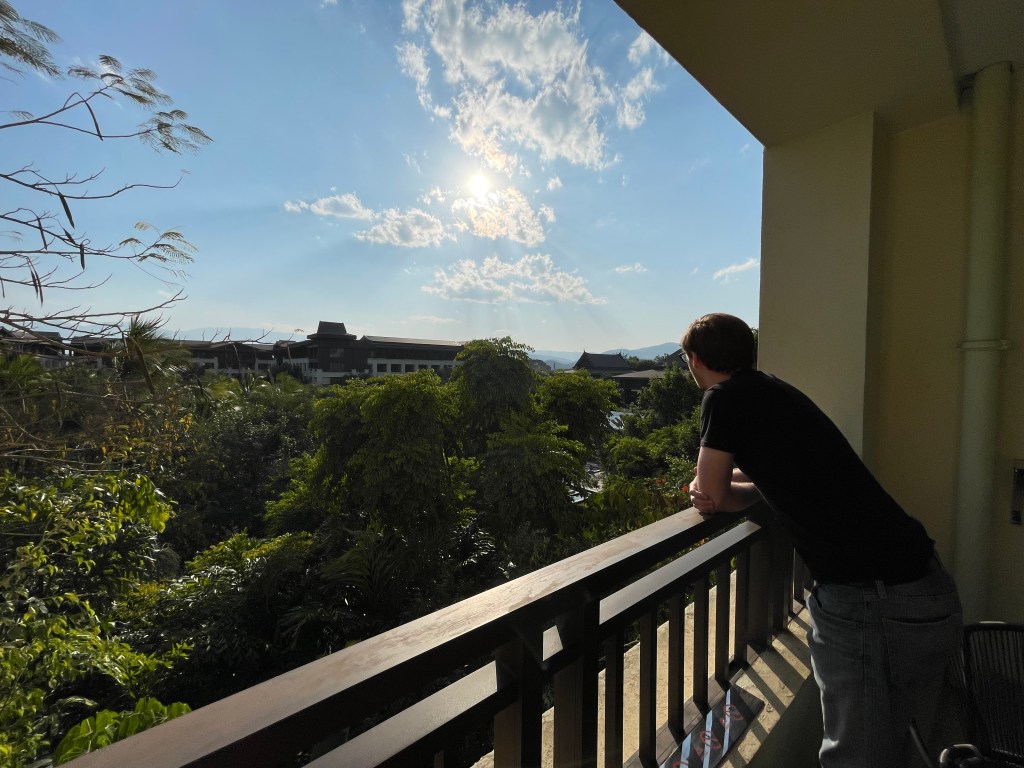
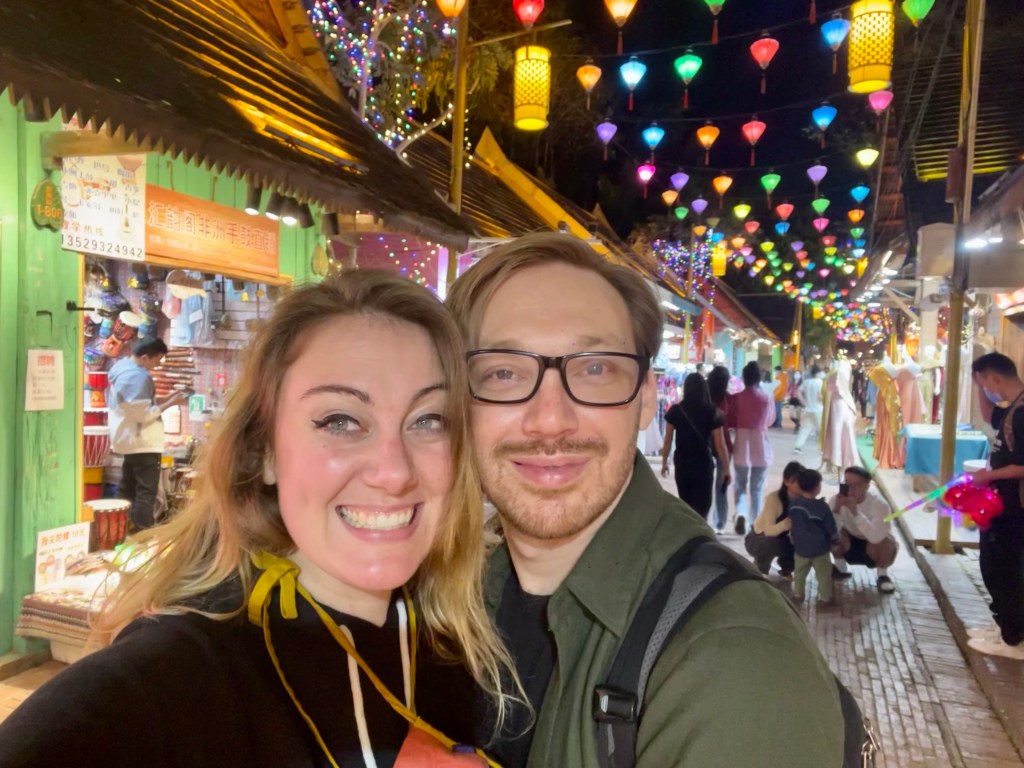
After checking out our BEAUTIFUL hotel (seriously, like, it felt like we were on a honeymoon) we headed out that evening to the 星光夜市 Starlight Night Market. Located just behind the 大金塔 Dajin Pagoda (Big Golden Pagoda), the market is full of rows and rows of small stands selling food and gifts; though there are other night markets in the area, Starlight is the most popular – and for good reason. Just look at it!


I love the little boy gazing up at Michael in this picture… 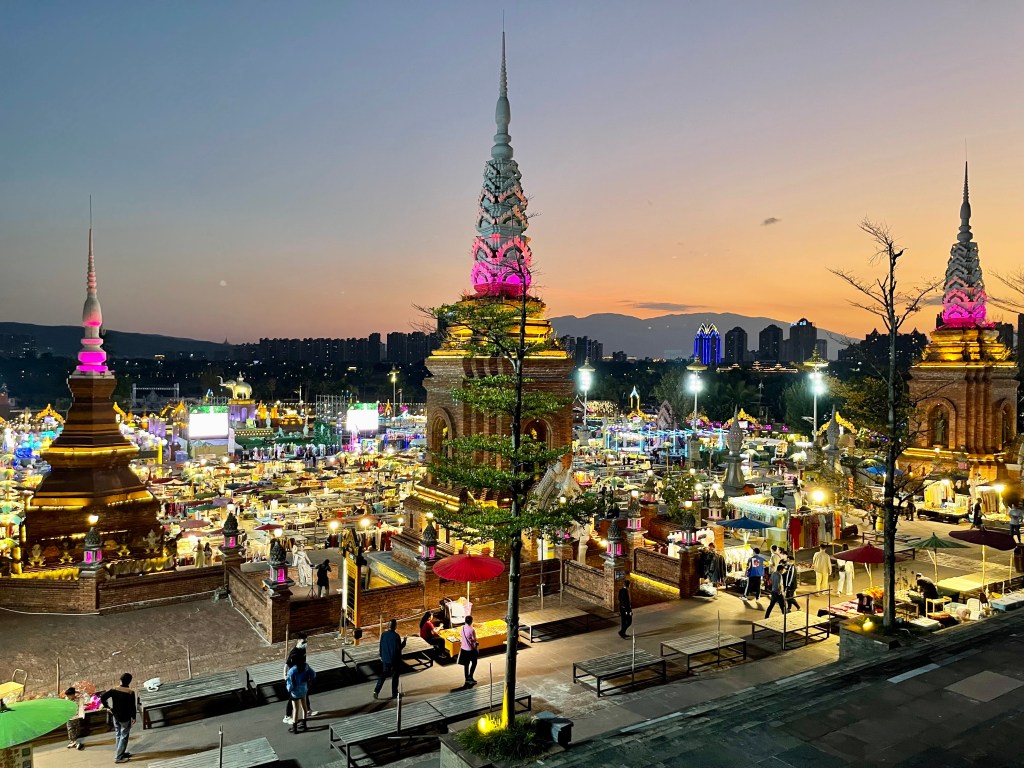

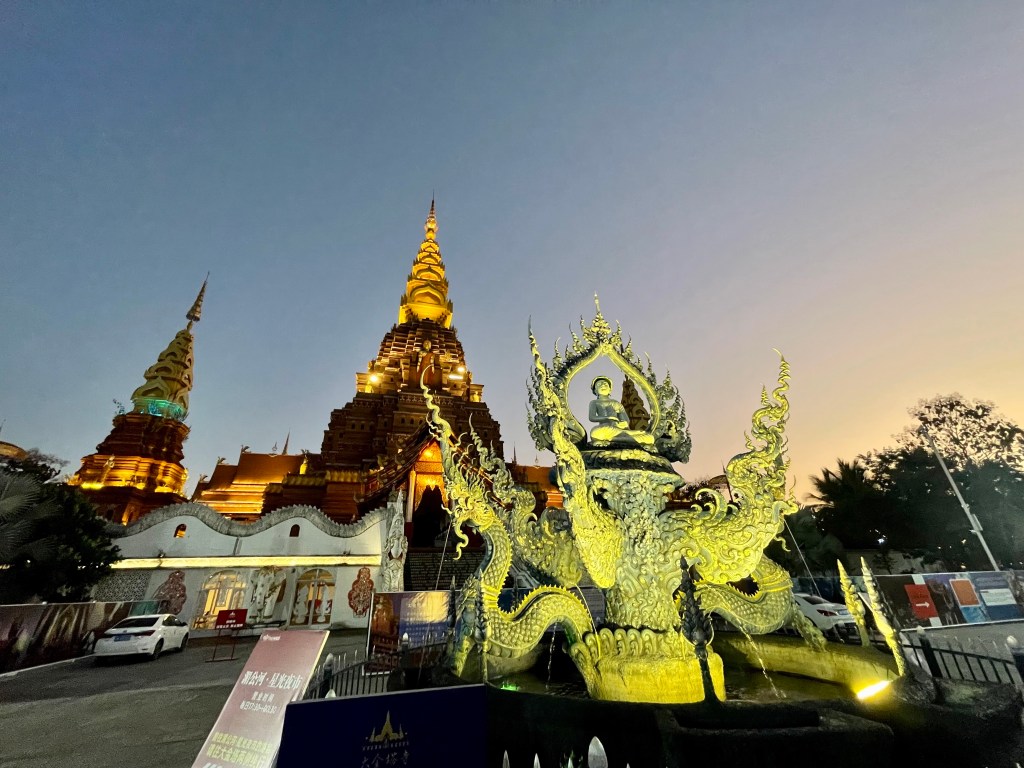
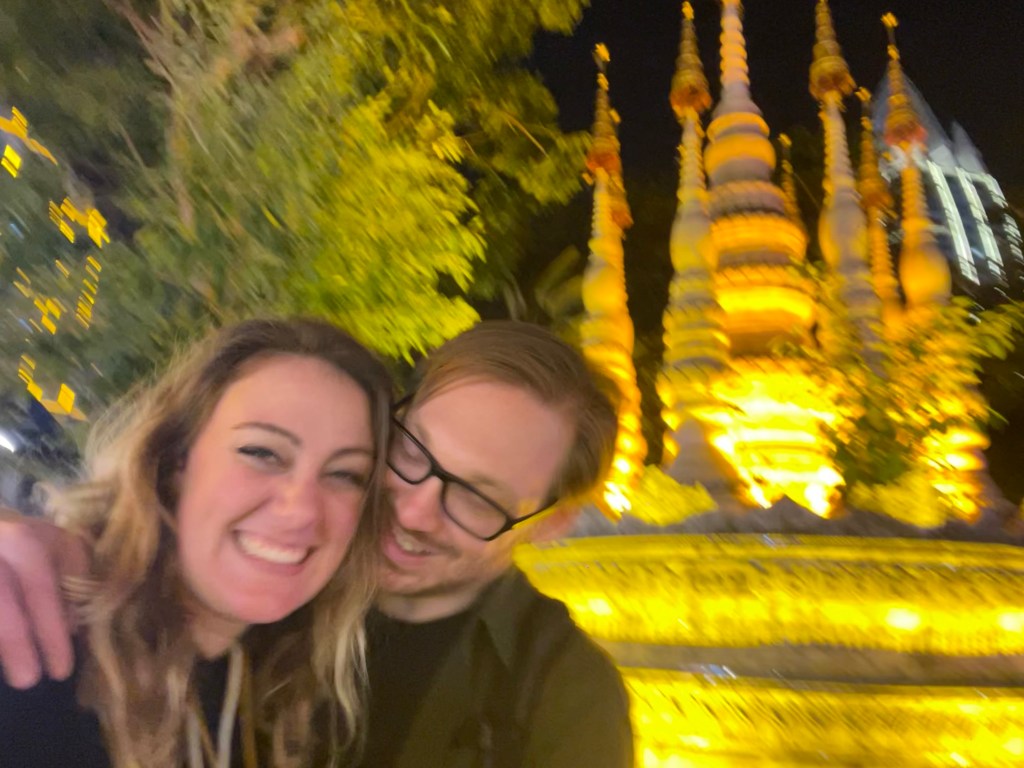
The Dajin Pagoda
As we wandered up and down the little streets and alleyways, it was fun to see all of the various gifts and souvenirs being sold. Jewelry, bags, clothing, textiles, small figurines… My favorite part of it all was seeing the styles and flavors from the local minorities; there were all sorts of traditional dresses and costumes available for you to pay to dress up in and get a picture taken. I love the beautiful colors and textures on the dresses!
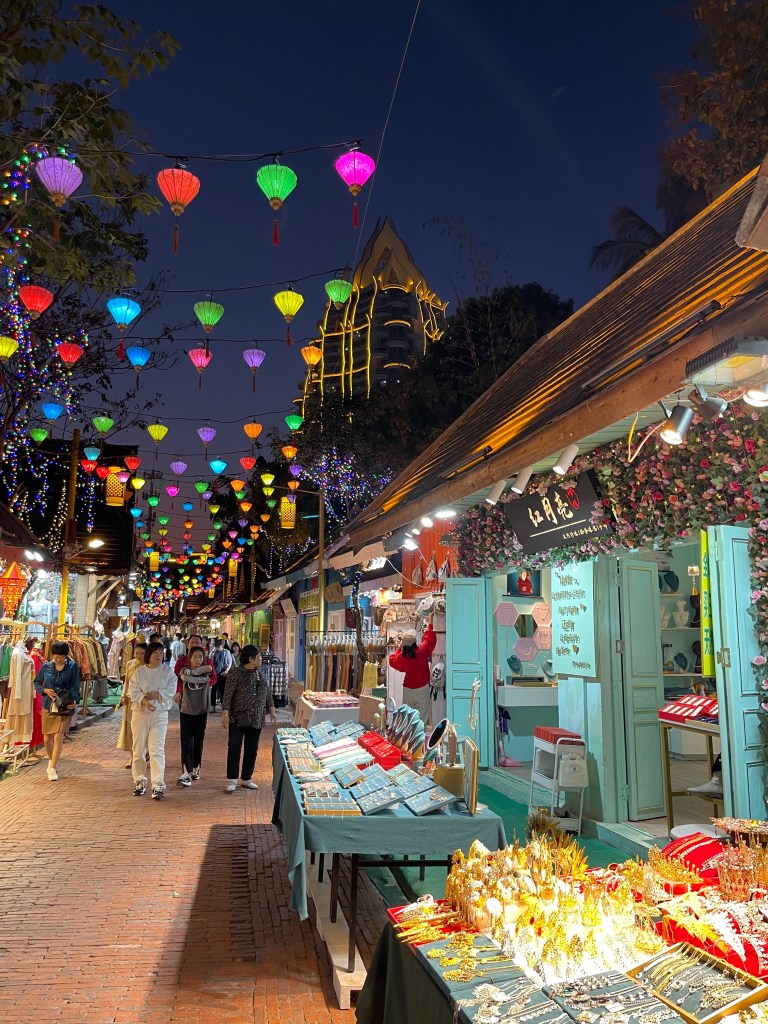
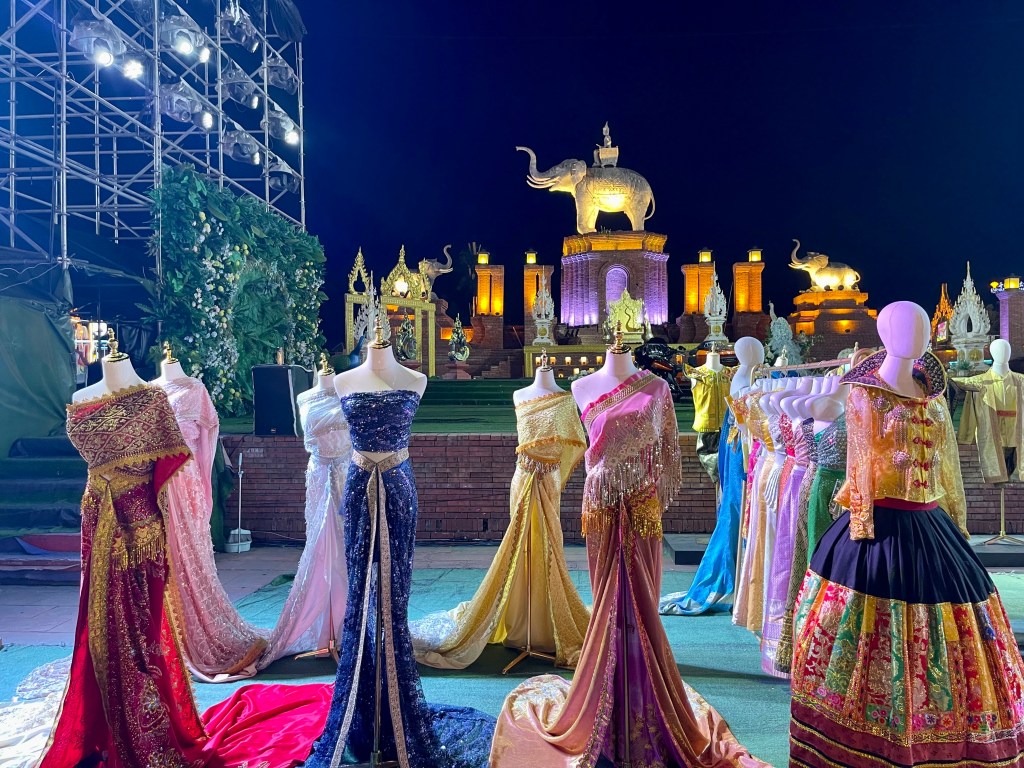
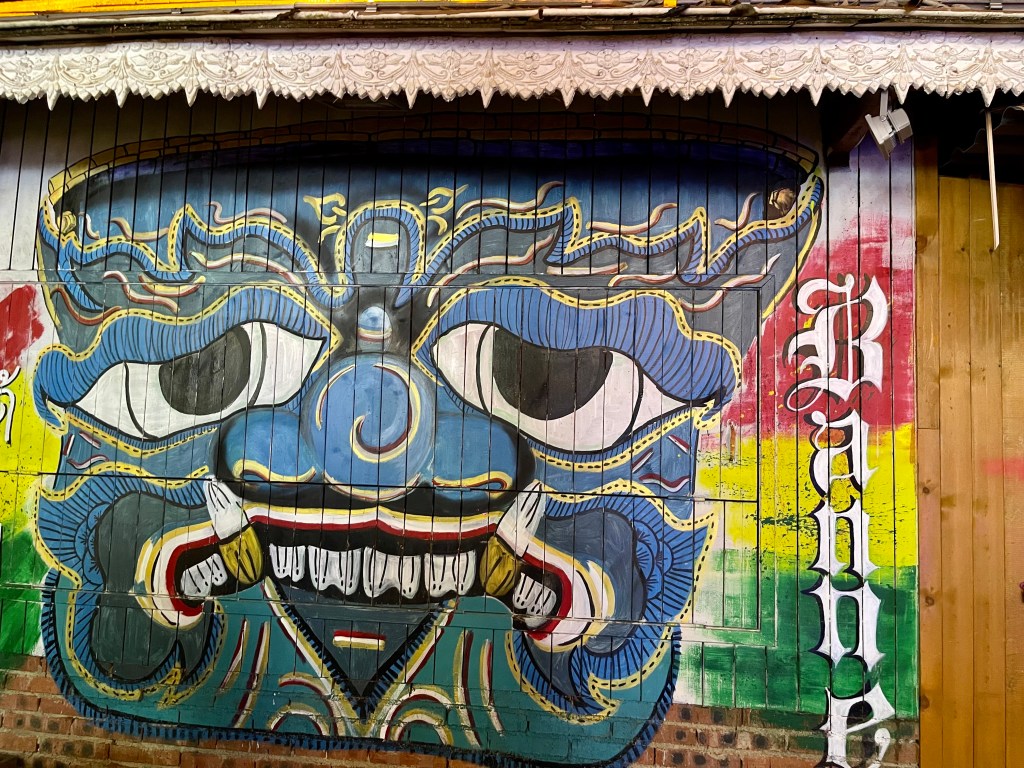


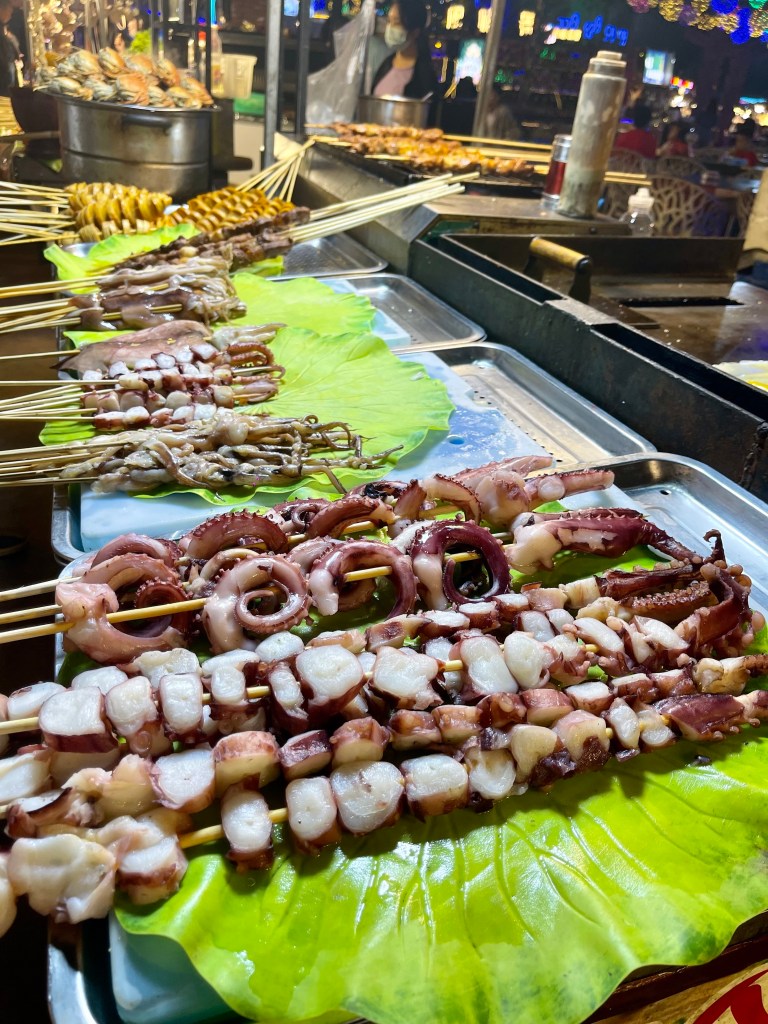
Now, no post about the Starlight Night Market would be complete without mentioning one of the most prominent parts of the market: the street food! Featuring an assortment of dishes and treats, the night market was an ideal place for walking around and taste-testing our way through the local cuisine. While, I will admit, there were a few snacks that I just couldn’t work myself up to this time around (the pig tails were… a lot…), we had fun walking up to booths and randomly pointing to things that looked tasty! (And not as tasty. Check out the video below to see the moment that Michael learned roasted durian may be his least favorite food. We just saw other people lining up for something, assumed it must be good, and got in line as well. Ah, well.)



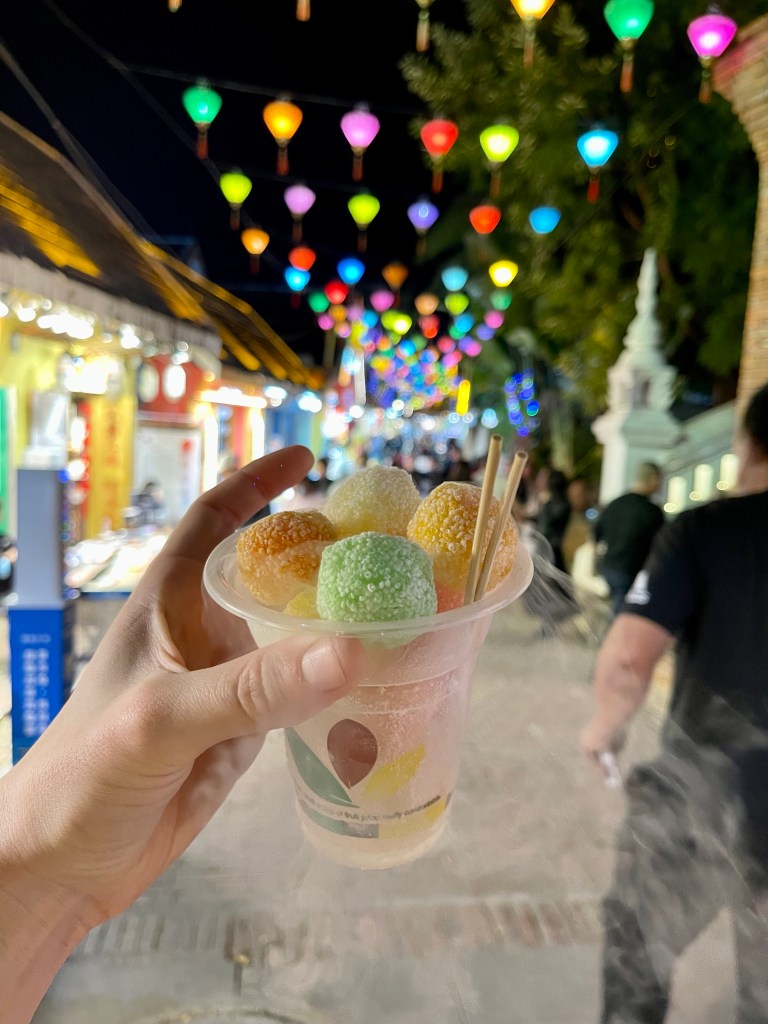

With all of the colors, the sounds, the smells, and the tastes, the Starlight Night Market was a vivid introduction to the culture of Xishuangbanna and a magical way to spend our first night.
The next morning, we made our way out to the Xishuangbanna Tropical Flowers and Plants Garden. Originally used as an experimental field for research into various tropical crops, the garden was opened to the public in 1999 and features over 1,000 species of trees, palms, aquatic plants, flowers, herbs, and fruits.
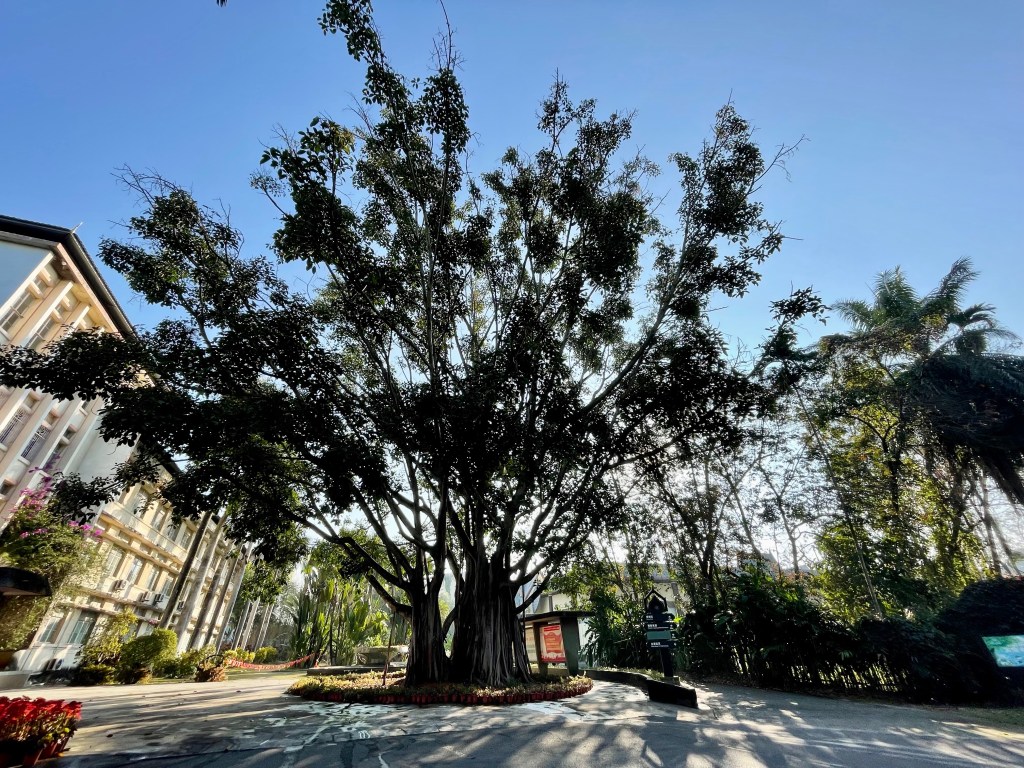
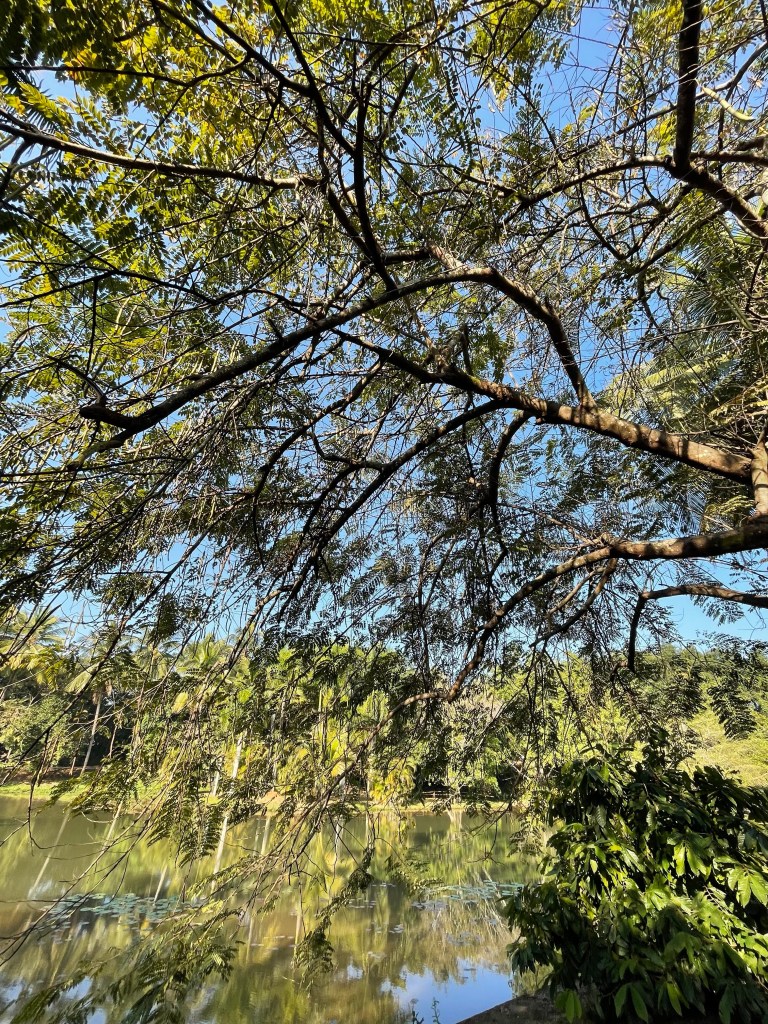

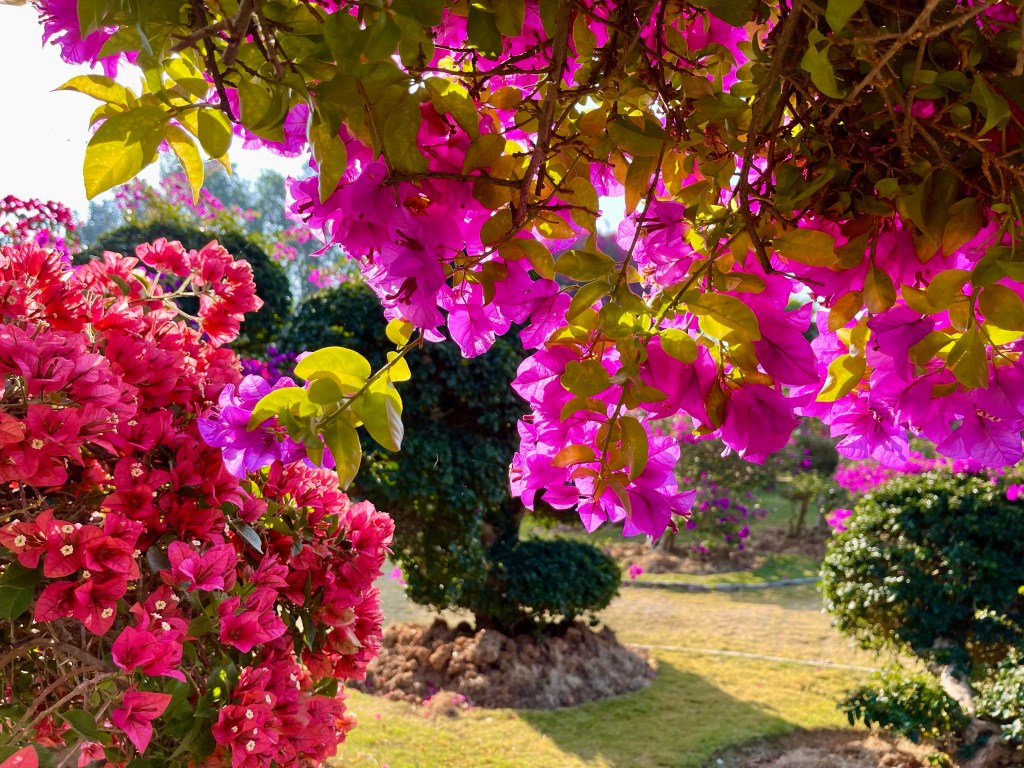
As we walked through the park, our guide was able to stop by certain trees or plants and tell us more information about how they grow, what they are used for, etc. That may not be all that exciting to everyone, but I found it fascinating!
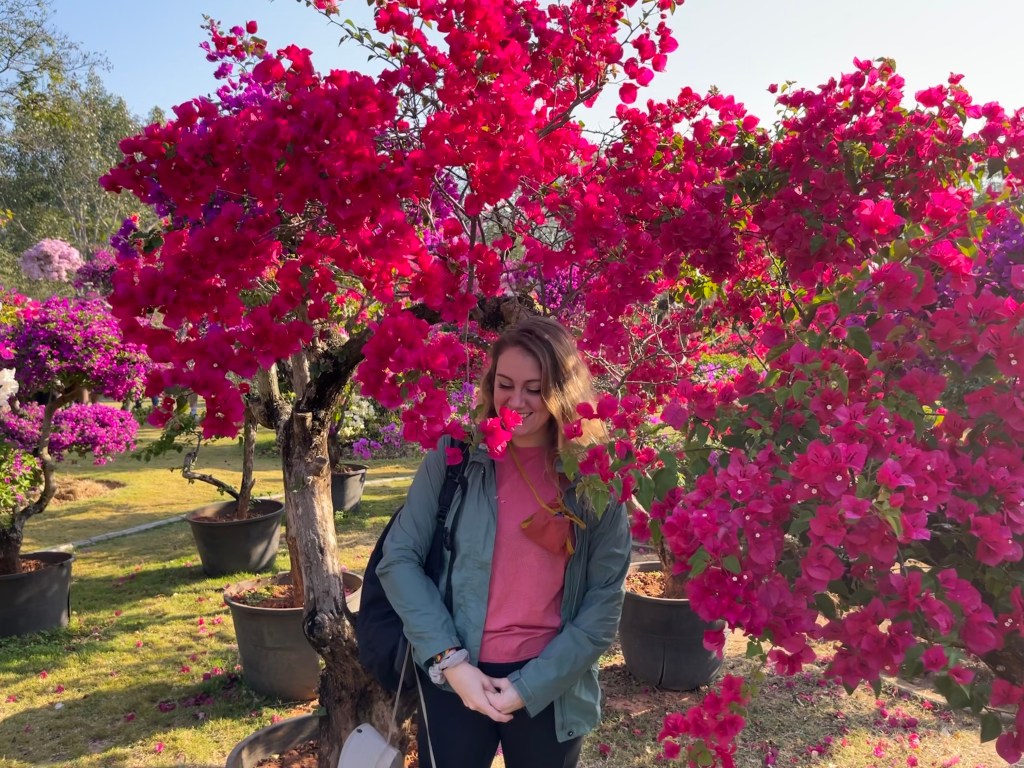
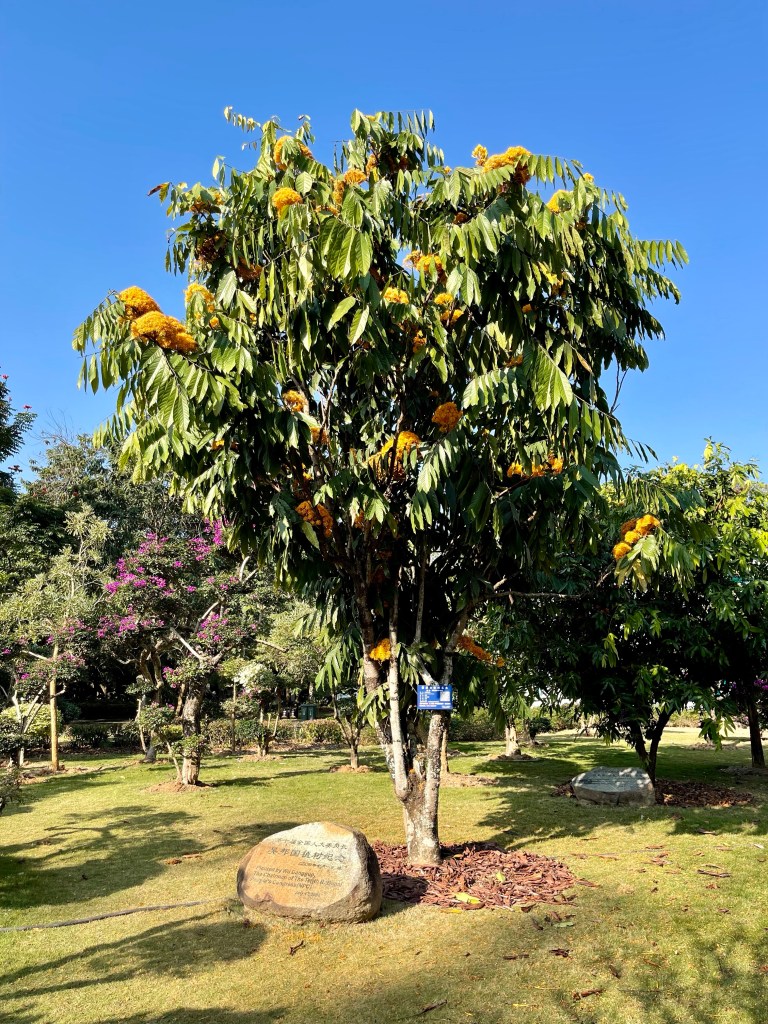
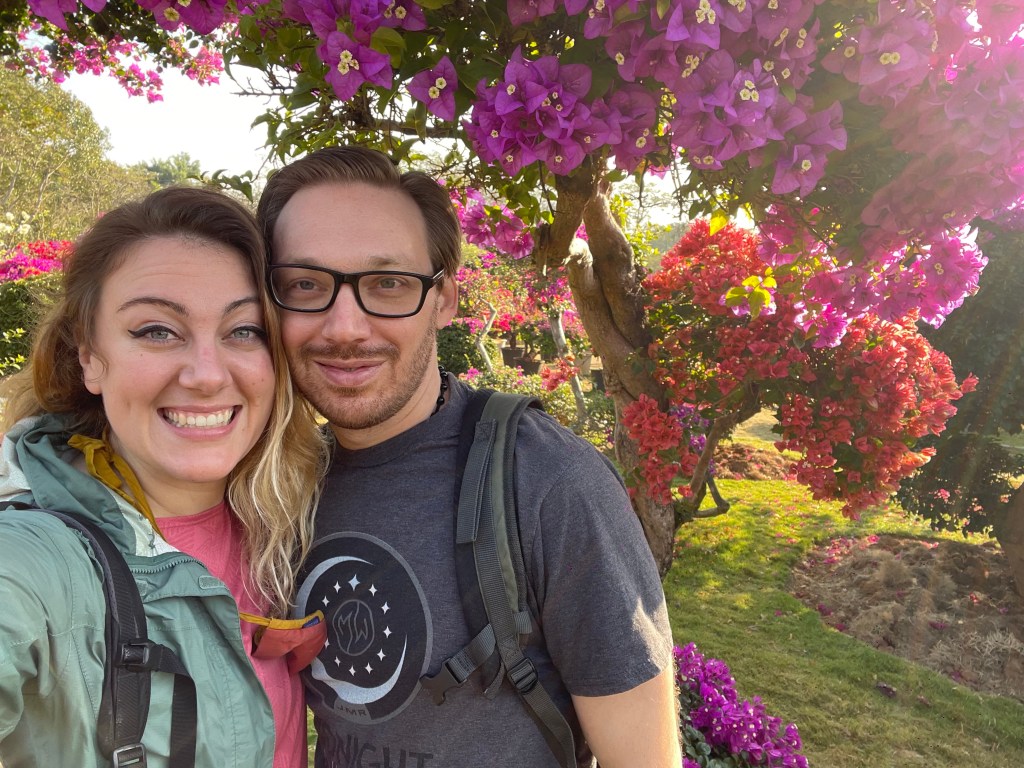


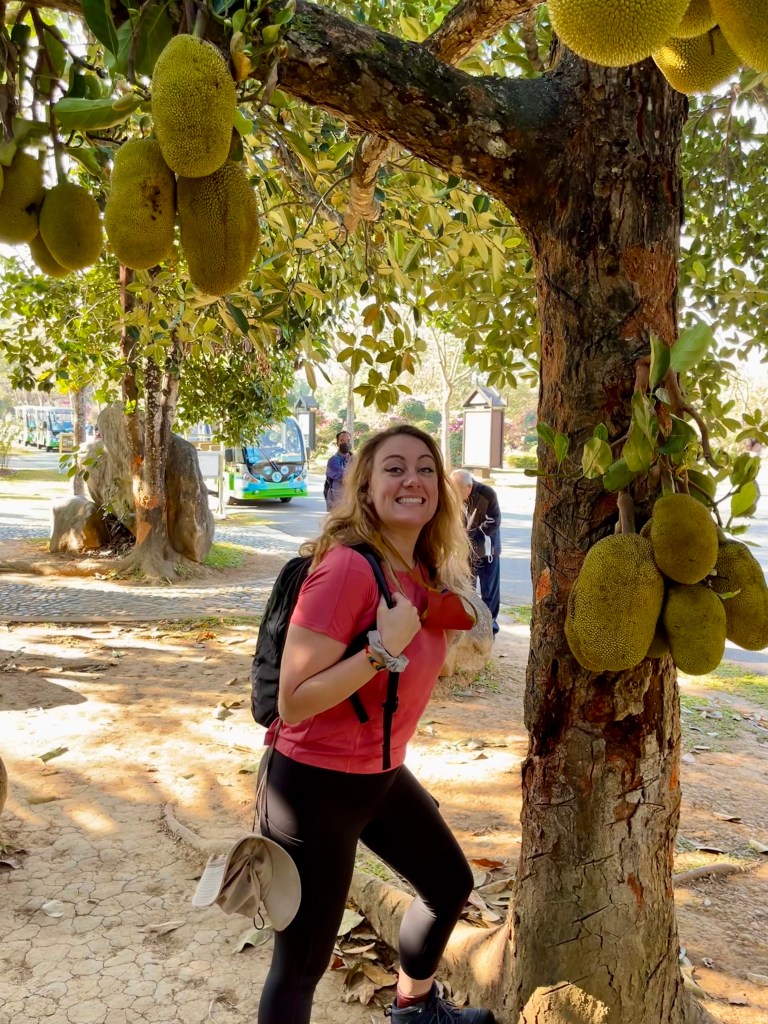
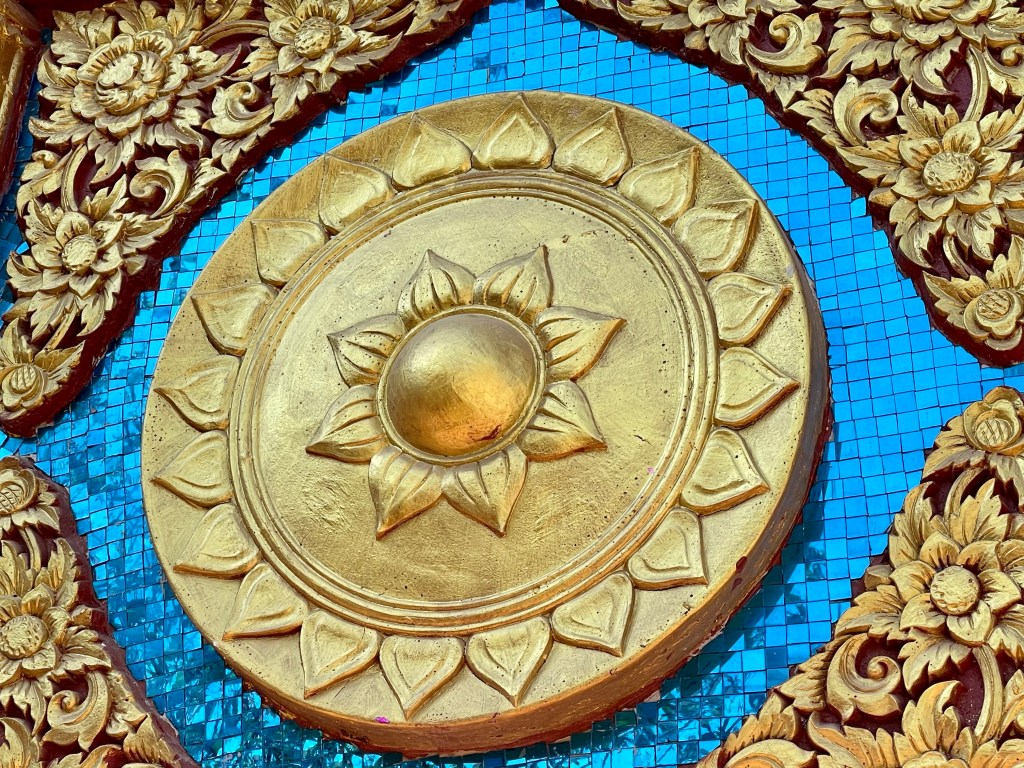
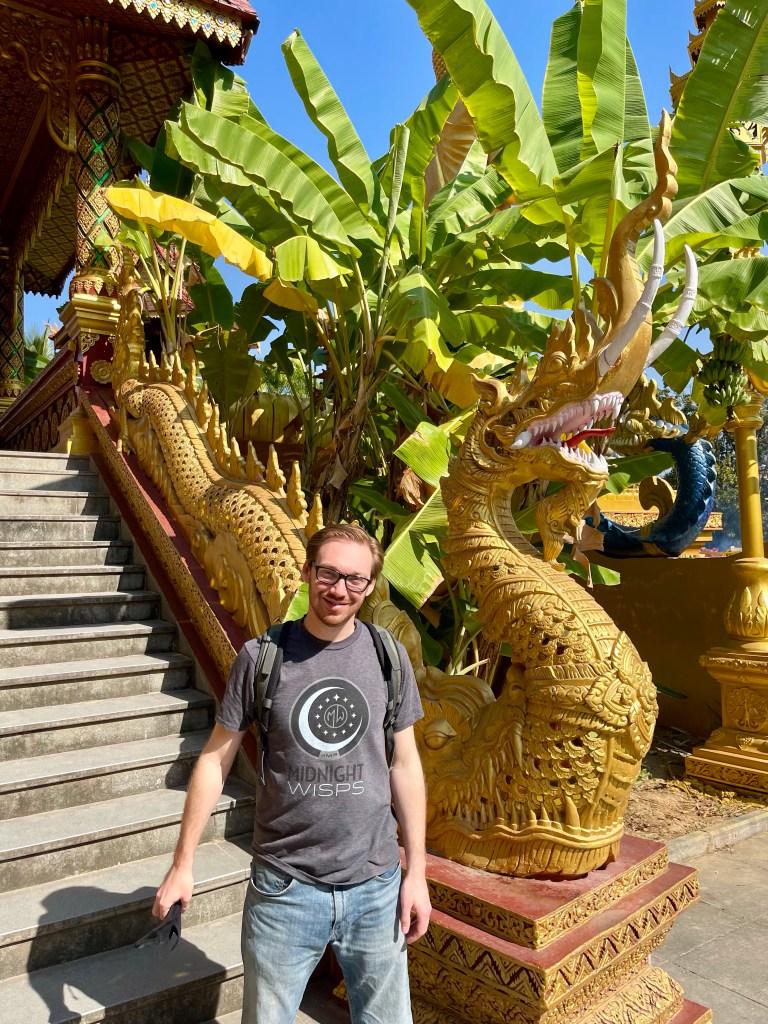
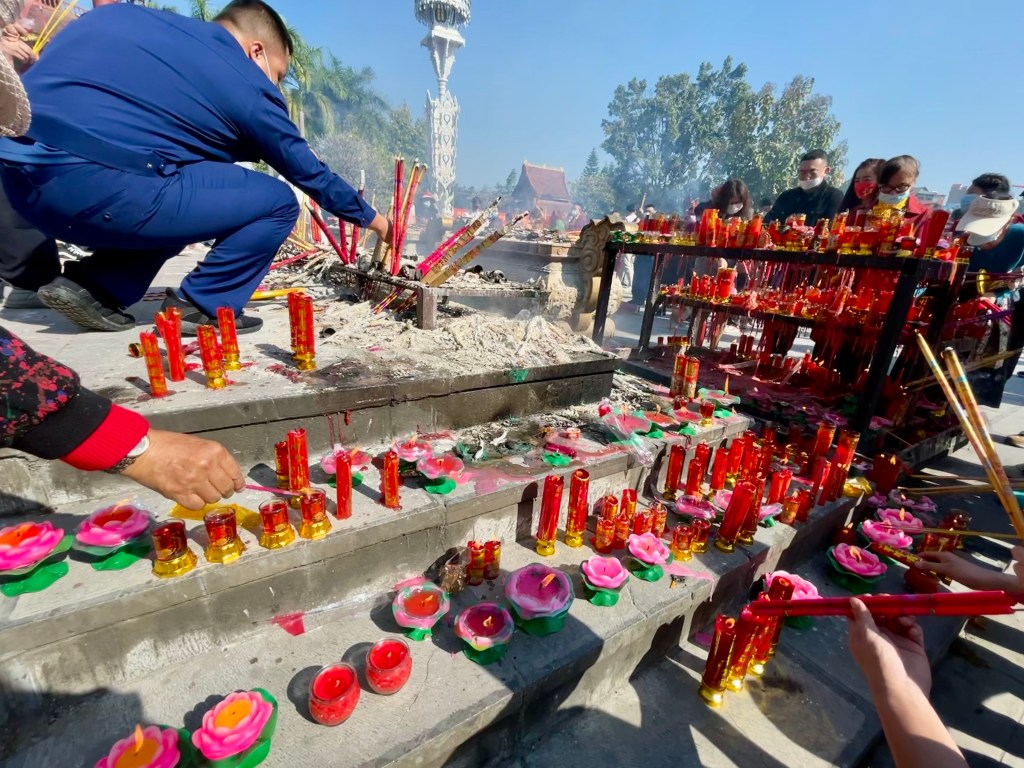
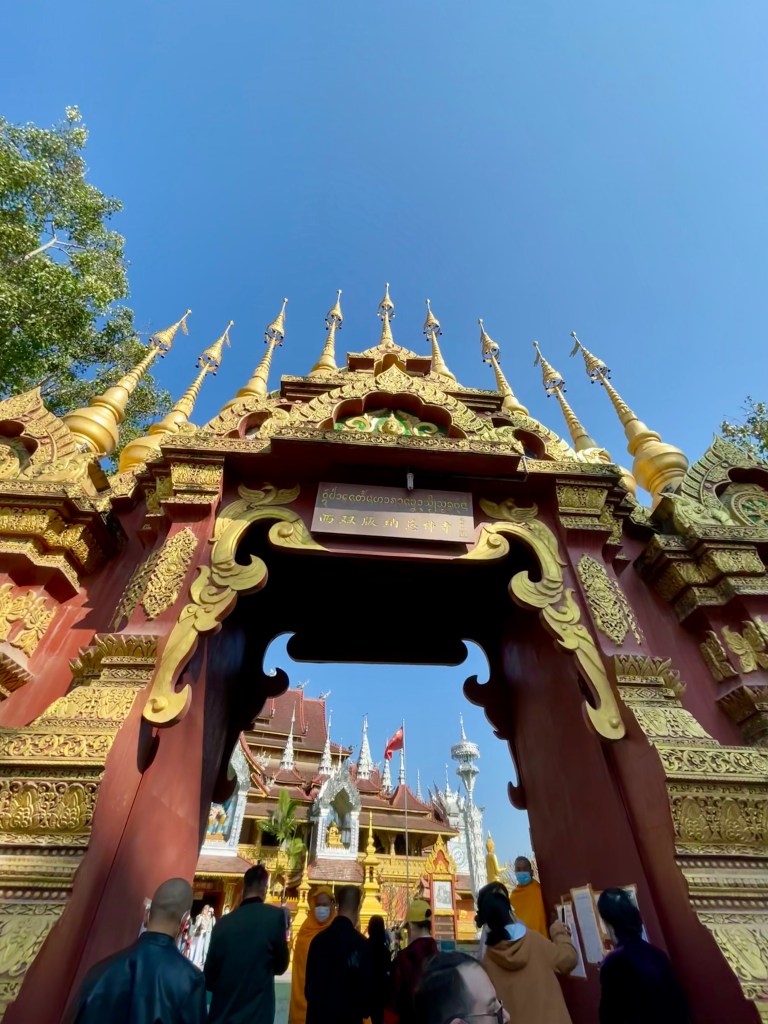
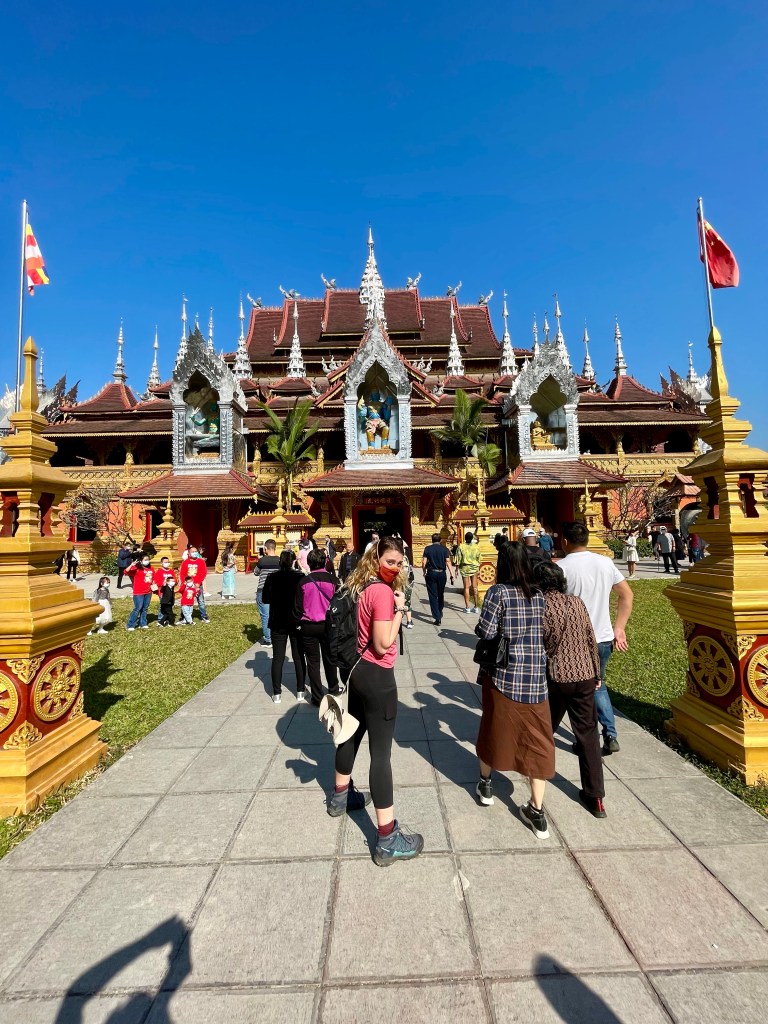
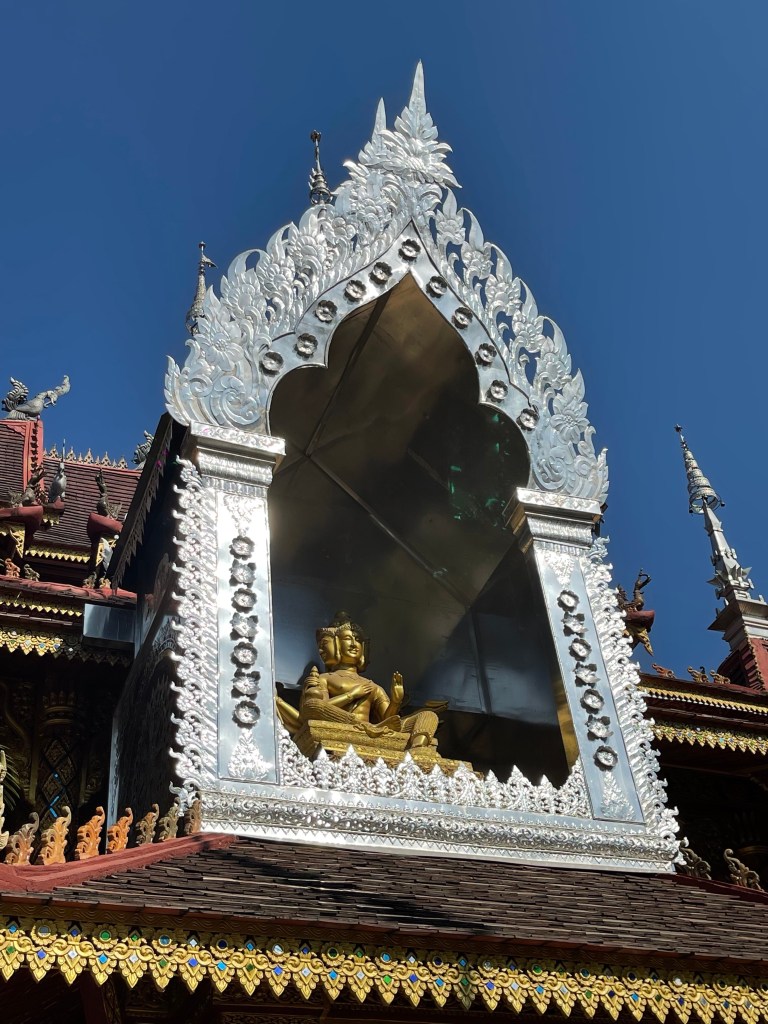
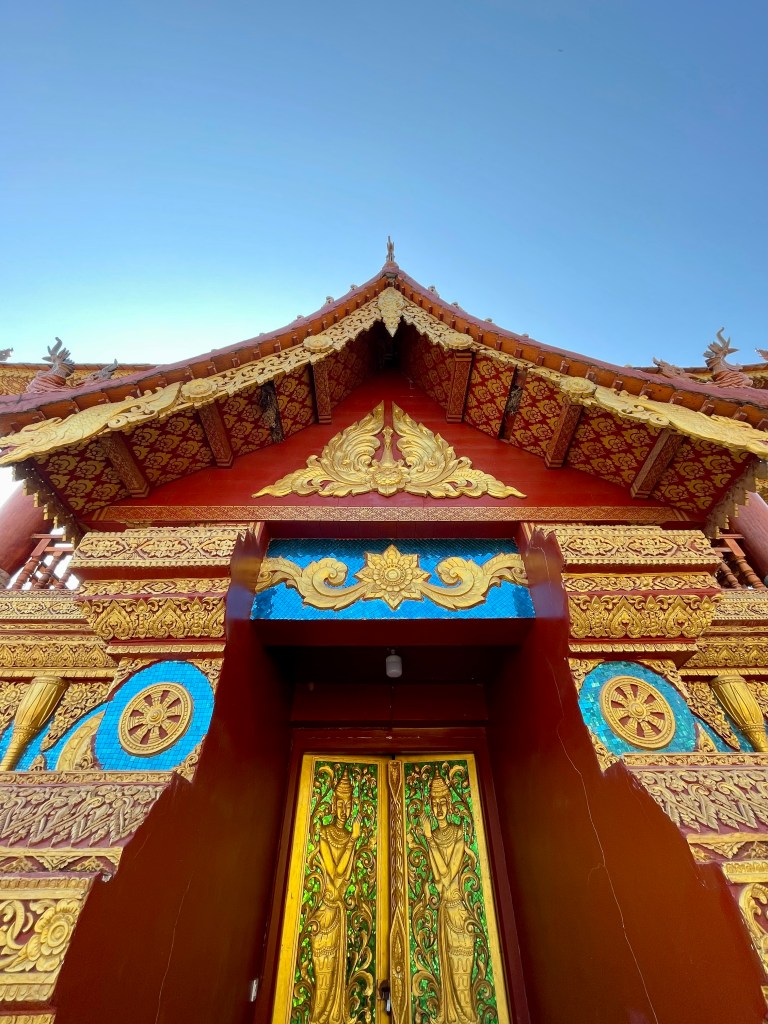
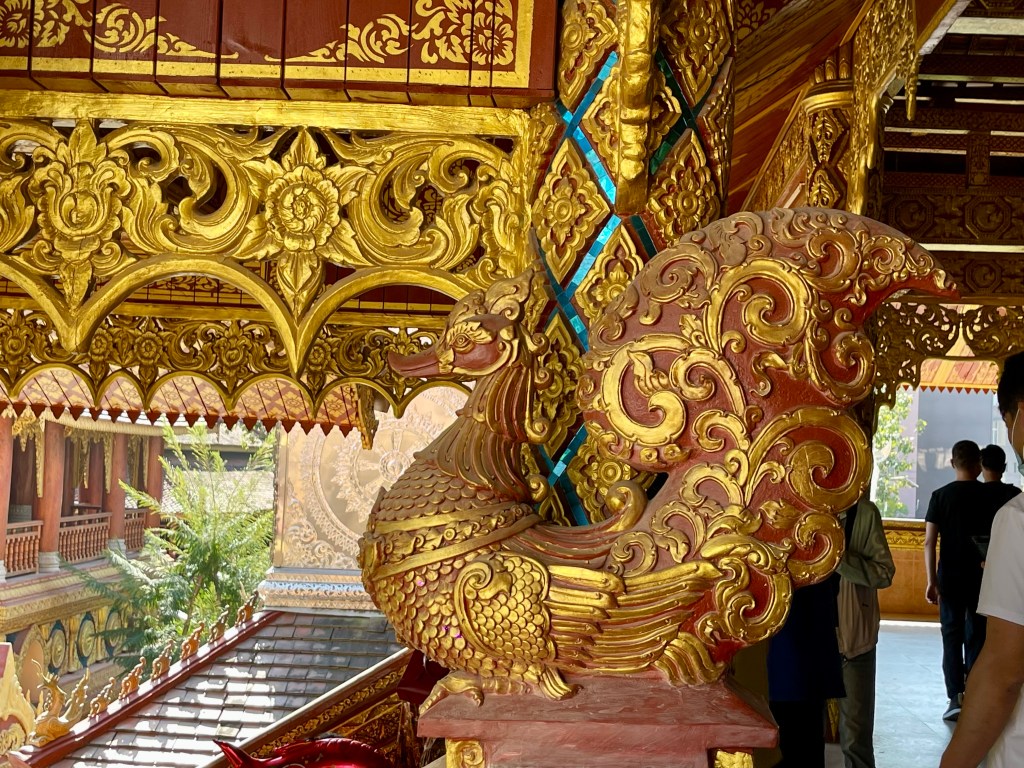
After enjoying the beauty of the plants and flowers all morning, it was time to move on to the beauty of the statues and architecture of the 总佛寺 Zongfo Temple.
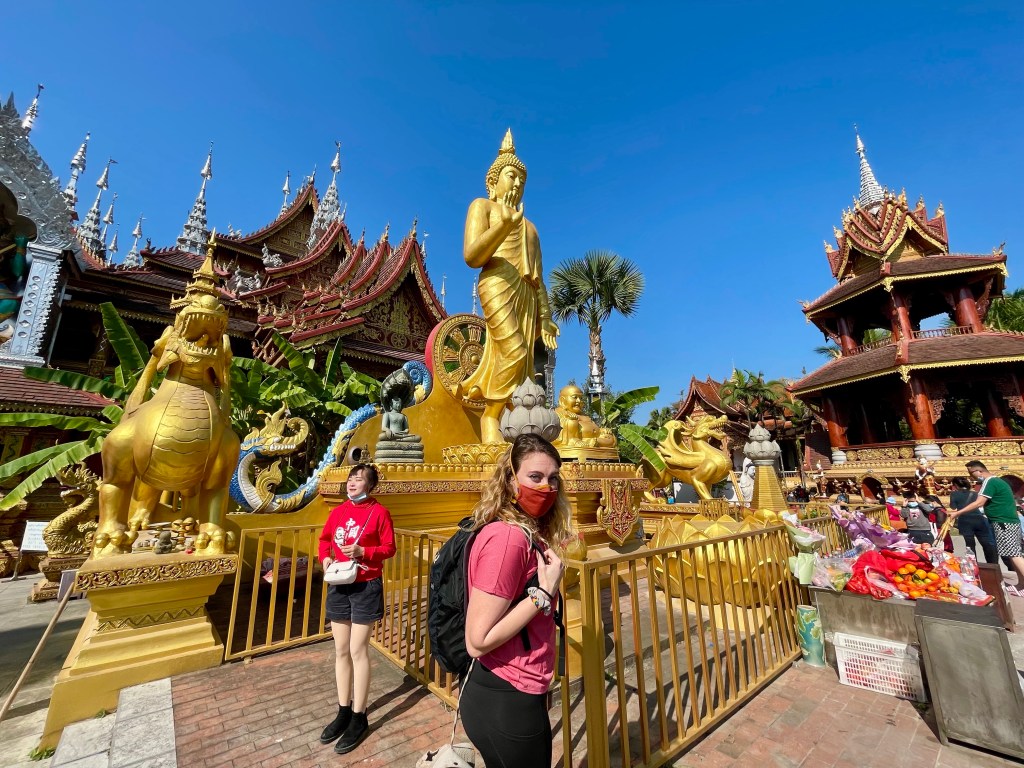
Originally built in the year 615 by two monks from Burma, Zongfo is the oldest and grandest Buddhist temple in Xishuangbanna. Legend has it that when the temple was first being built, the local people wanted to build Buddha statues out of diverse materials and discovered there had been no bamboo statue made. Their most skilled craftsmen worked to weave and form the bamboo statue, but they could not seem to capture the mercy and kindness of the Buddha in his face. One night, an old man passing through claimed he could finish the statue’s head as they desired; doubtful, they left him to his work. The next morning, they awoke to find the statue had been completed exactly as they had hoped – many believed that it was the Buddha who made their wishes come true. (Not allowed to take pictures inside of the temple, but can confirm: the bamboo statue was beautiful.)





Though we’d only been in Xishuangbanna for a day, I’d already been completely overwhelmed by the beauty of the culture and just how different it was from anything else I’d seen in China thus far. And we hadn’t even made it out to the rainforest yet… Stay tuned!
 Adventure in the Great Wide Somewhere
2 thoughts on “Xishuangbanna: The Land of Peacocks and Elephants”