
Living in Shanghai, sometimes it is easy to forget that we are so near to the ocean. (Shanghai is most definitely not a beach city… though we do have palm trees!) Luckily, being this close to the coast, there are a variety of islands only a few hours away!
After one night to rest up and repack, we headed back down to the Zhejiang province — this time, rather than going in further on the mainland, we took a bus southeast to the 沈家湾 Shenjiawan Passenger Transport Terminal, where we purchased ferry tickets. Luckily, we had assigned seats on the ferry so once aboard we were able to settle in for the ride. (This was not a small little ferry boat. This was a hundreds-of-people-at-a-time, cars-parked-on-the-lower-deck, multi-tiered ferry boat. Not having assigned seats would have been a mad dash to find somewhere to sit.) After 2 hours, the ferry reached its first stop – an island where many of the passengers got off. After another two hours of walking around the deck and enjoying the sunshine (Michael immediately burned…), we reached our stop: 枸杞岛 Gouqi Island.
Gouqi Island is one of the most well known of the 泗列岛 Shengsi Islands, a group of about 400 islands that make up the Zhoushan Archipelago. Of the 400, only 18 of the islands are habitable. Deriving its name from the gouqi, or, goji berries (wolfberries!) that are found in abundance during the late summer, Gouqi Island is sometimes referred to as the “Little Greece of China” and is a popular tourist getaway. With a reputation as a fishing island, Gouqi is especially known for its mussel farms. (I’m warning you now, there will be a LOT of seafood pictures in this blog. So, depending on how you feel about seafood: you’re welcome, or, alternatively, I’m sorry.)

Unlike many of the other trips I’ve been on, this was more of a “here, welcome to a cool place, walk around and have fun” rather than a trip that follows a planned itinerary. We were brought to a small hotel (or, bed and breakfast? Bed and dinner? The owner of the hotel had her kitchen just underneath it, and she would cook us breakfast and dinner each day…) where we dropped off our things, then headed out to walk around the island and see what we could find. We were staying in 大王村 Dawang Village, which is the primary tourist area of the island, so within 15 minutes we found ourselves with a view of the beach. (Note: this is not really a swimming beach. It’s an “oh look, there’s some water” beach, but… I was never tempted to try and put on a swimsuit.) There is one main street facing the beach where basically all of the restaurants are, each with people standing out front trying to get your attention to go and sit at one of their tables. Michael and I are notoriously indecisive when it comes to restaurant decisions, so, luckily, a woman from one of the restaurants came over and gently dragged us to a table outside of her place. Problem solved!
Now, I am not the biggest seafood fan. In fact, I generally avoid it in my normal life, both for environmental reasons and because I don’t especially enjoy it, but: when traveling, I’ll try anything once. (And Michael will eat whatever’s leftover. It works out well for us.)


Crab and Rice Cakes 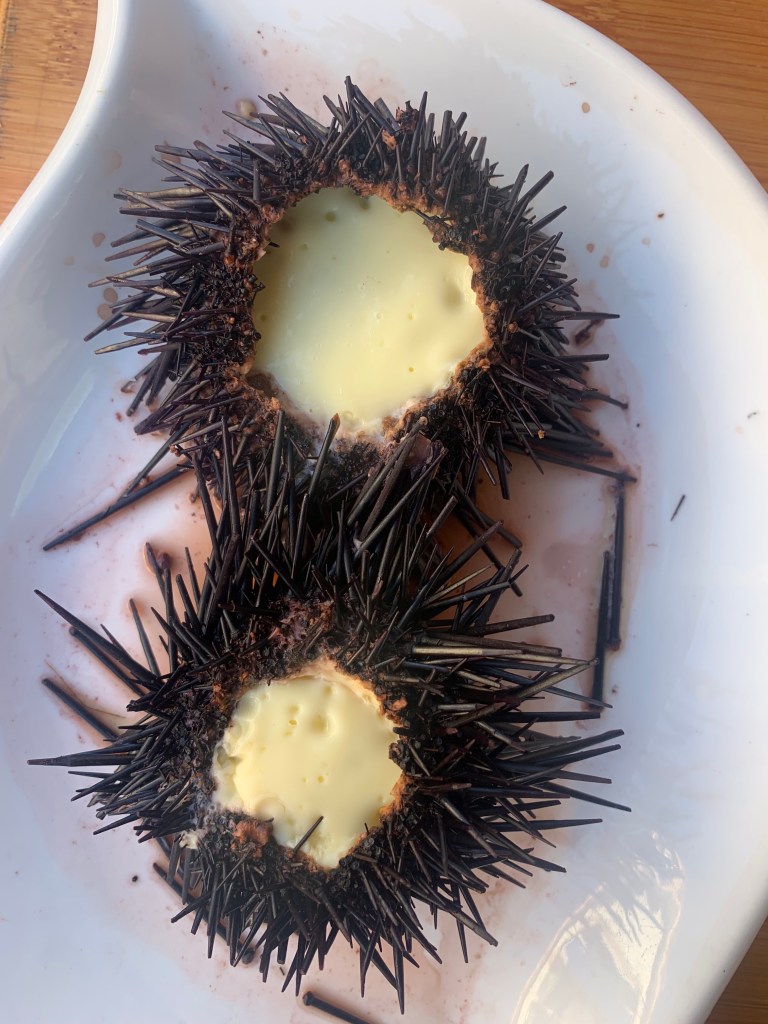
Sea Urchin 
Gouqi’s famous Mussels 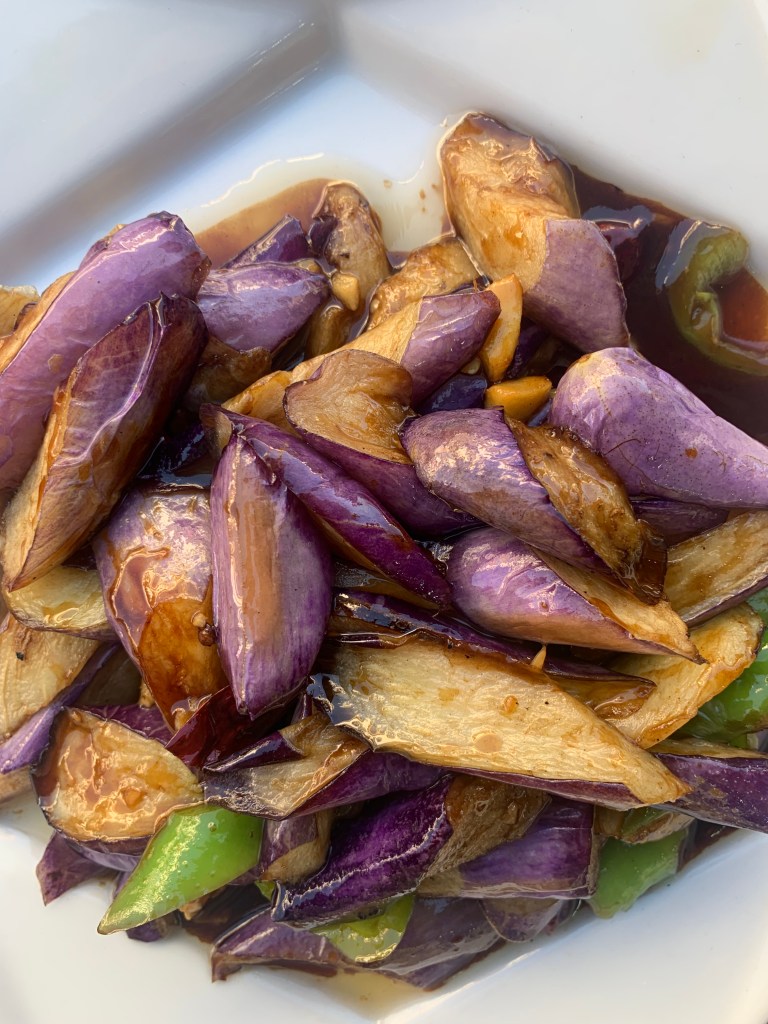
Okay, not seafood, but China has the best way of preparing eggplant –
I just love it!!
That evening, our group walked out to Xiyang Bay to see the sunset – a very popular thing to do on Gouqi. As we walked, it was cool to see all of the mussel farms dotted out in their grids in the bay. When we reached the viewing point, nearly an hour before sunset, it was nearly packed already. It seemed everyone on the island was coming out for the view. There was a marigold-colored wall with a staircase that everyone and their mother were stopping to take pictures on, but I didn’t feel like waiting around in line for a picture in front of a wall, so you’ll just have to imagine the influencer version of me in front of a yellow wall.
Rather than dawdle around until the last minute, Michael and I scoped out the various viewing points and eventually found some prime real estate — a temporarily empty bench. We sat until things started filling up around us, and eventually stood up on top of the bench so we could see without being pushed. Sometimes, in China, you need to play by Bear Rules — make yourself as big as possible. We widened our stances, trying to claim the bench as our own, but we still got pushed to the corner in the far edge by 3 more people who climbed up as soon as there was room that hadn’t been there when we were sitting. Ah well. All things considered, it was a truly gorgeous sunset.


After discovering our group had already left without us to walk back to the hotel (womp womp), we managed to navigate our way back just in time for the home-cooked dinner provided by the owner of the hotel. All seafood, all day. (Michael was delighted. I… made due.)
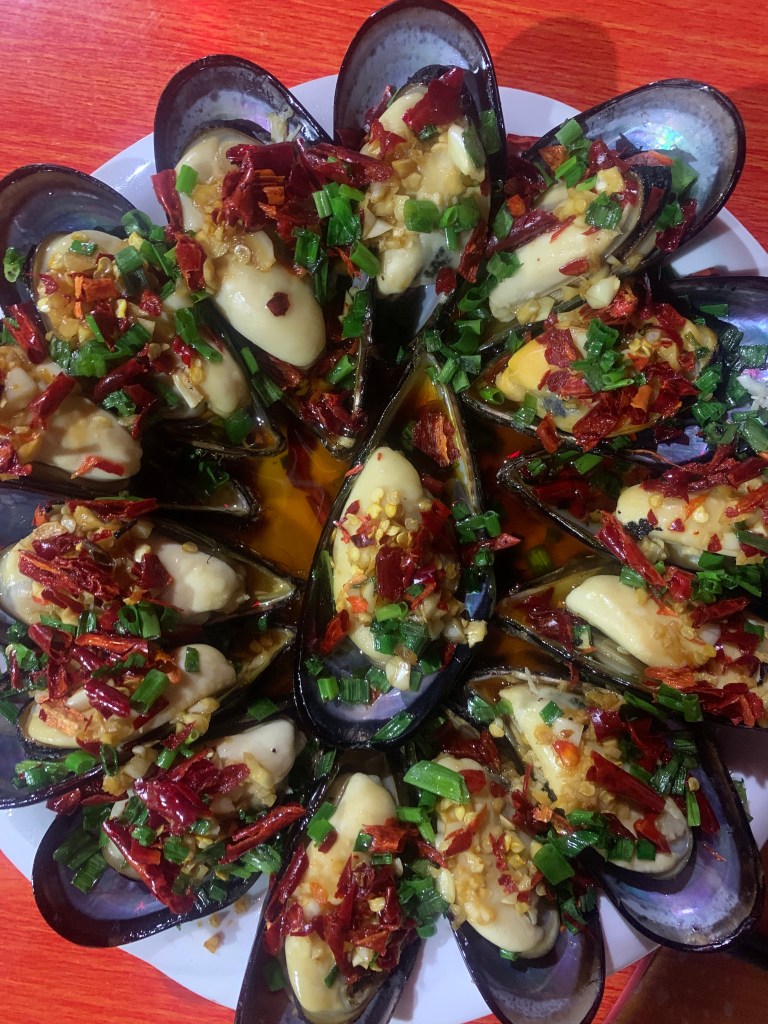
Mussels 
Seafood & Egg Pancake 
Fish… Some kind of fish… 
Shrimp 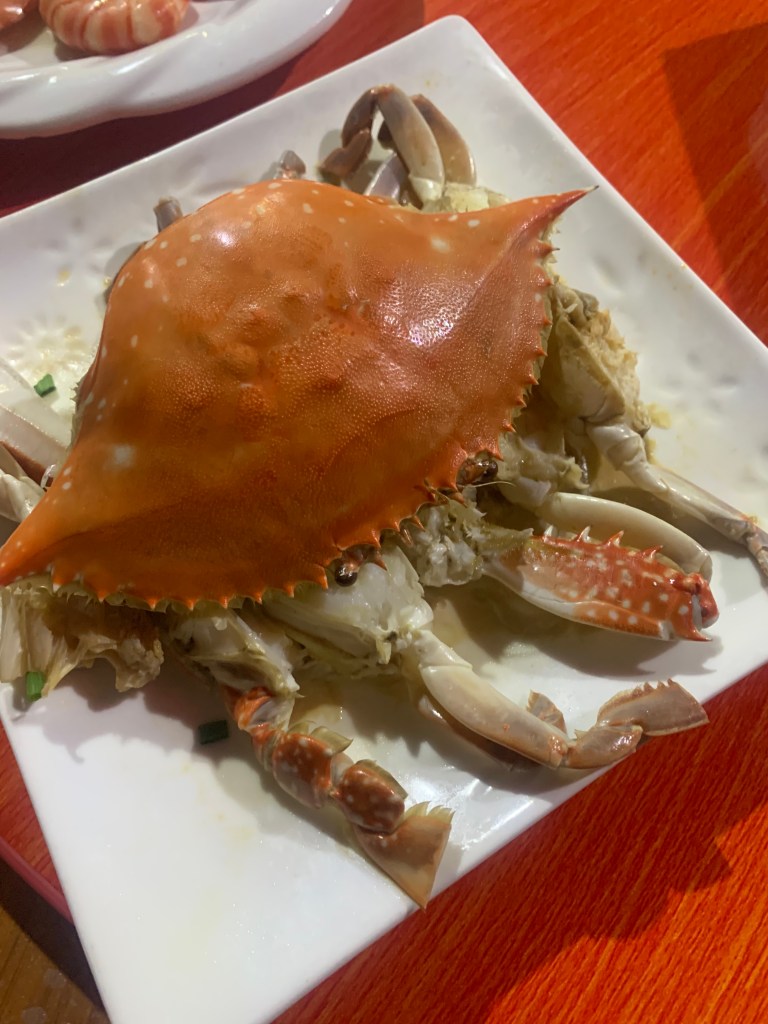
Crab 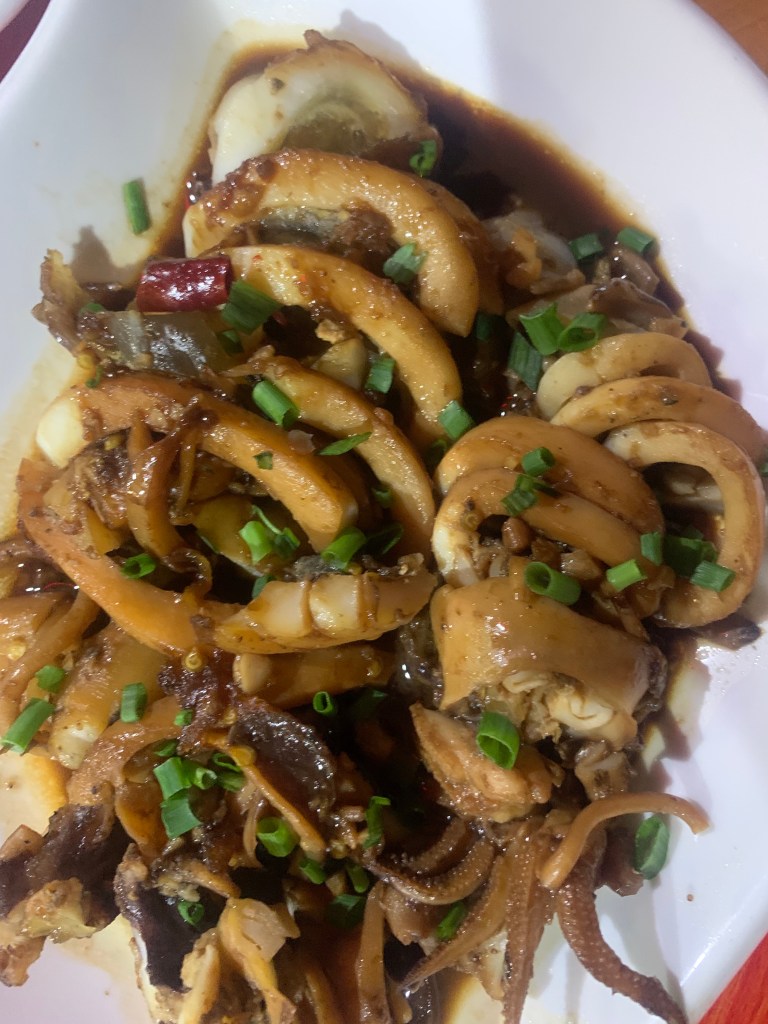
Something with tentacles
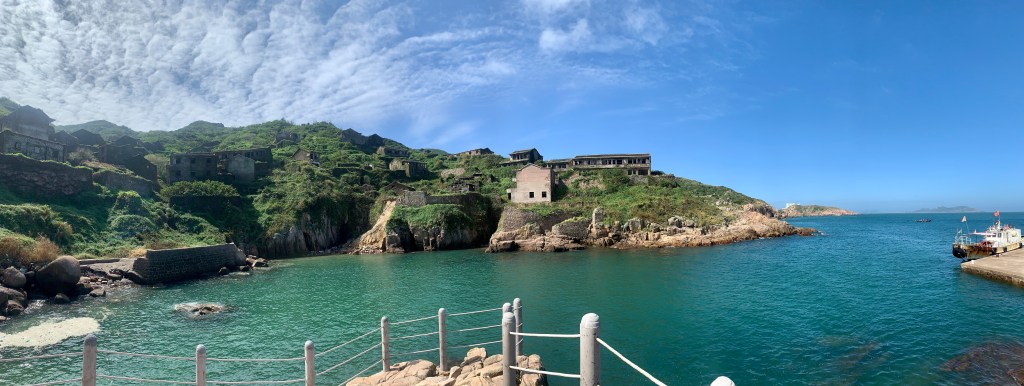
The next day, we took a trip over to 嵊山 Shengshan Island (connected to Gouqi Island by a bridge!) to see what is probably the biggest tourist attraction: the abandoned “ghost village” of 后头湾 Houtouwan. Once a thriving fishing village, this “miniature Taiwan” was home to more than 3,000 people at its peak in the 1980s. But now, ivy climbs up the walls and through the windows of the empty buildings, nature slowly taking over the village and making everything feel otherworldly. So, what happened to Houtouwan?

Well, it’s not nearly as dramatic as it could have been. No mysterious illness or true crime mystery, just… life. The fishing ports became too crowded, living area grew limited, difficulties getting food delivered, lack of access to good education, etc. In the early 1990s, the residents of Houtouwan packed up and left, moving either to another area of the islands or to nearby Ningbo or Shanghai. By 2002, the village was completely abandoned.
Then Mama Nature proceeded to do her thing, and now Houtouwan is known as the “green ghost village” due to all of the plants that have begun growing over, under, around, and though the abandoned buildings. The effect is eerily beautiful.


Walking through the stone pathways, it’s a very strange experience. I’ve seen “ghost cities” before, but never so modern. These are not the faded stone walls from ancient civilizations; looking into the houses we can see bathtubs, bed frames, faded posters on the walls. These homes have been empty only as long as I’ve been alive. It’s a weird but cool experience.
Exploring Houtouwan, there are very clear paths for you to walk on, and a few where you can’t get through because of the plants growing there. A few buildings are open for you to peep into, but by and large most of the houses are off-limits if there is not a guarantee that they are structurally sound. Makes sense. I may have feigned ignorance on one or two signs — in my defense, my Mandarin reading skills are not the best. How was I to know? (Don’t worry, it was only one sign. On the ground floor of a building. The other building didn’t have a sign. I don’t think.)


(Silly tangent: While exploring Houtouwan, our tour guide offered to take pictures of Michael and I. Keep in mind, this is like the first week after we first kissed – we were still trying to figure out what exactly we were to each other, were we dating or just friends, it was a whole thing. She posed us in these prom-like positions and took what may be the most cringe-y photos I’ve ever seen in my life. We had no idea how to take pictures together. I didn’t save the pictures at the time, and oh boy do I regret it now. They were hilariously awful. Luckily, we’ve gotten better at taking pictures together in more recent trips.)
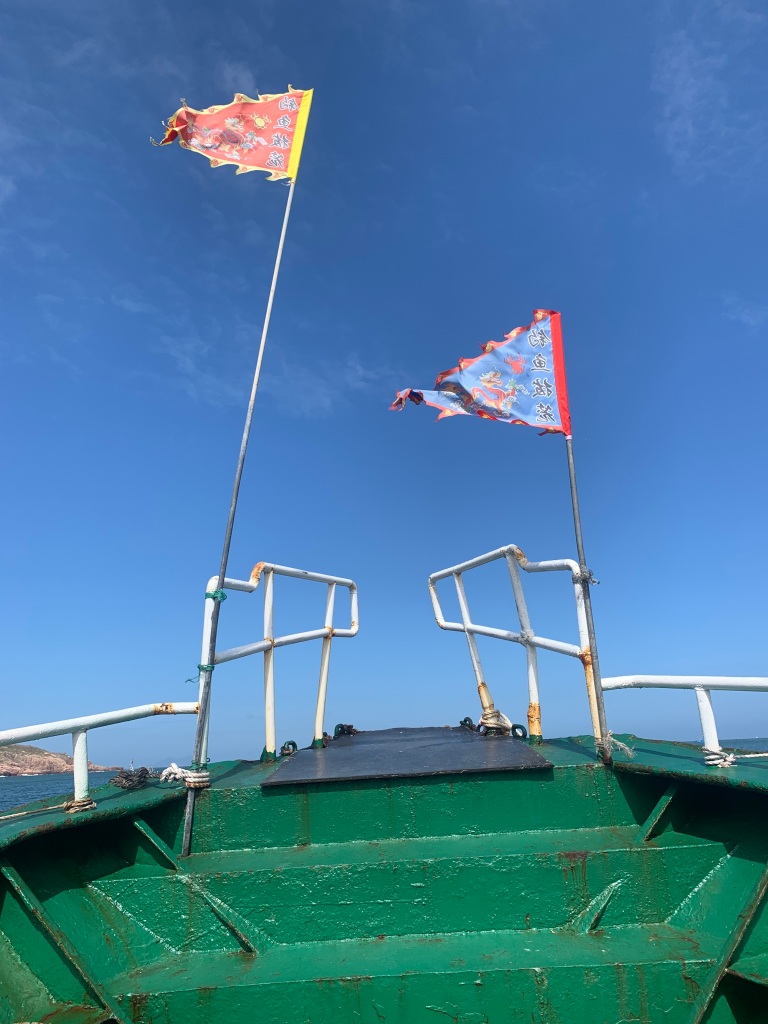
When we reached the bay, a few of us in the group decided to get back via boat rather than in a taxi. We crammed in, put on our life vests, and set off for a quick little speedboat ride back into town.


After getting back to the hostel, Michael and I headed back to the little restaurant street in Dawang to grab food. Any guesses as to what was on the menu??
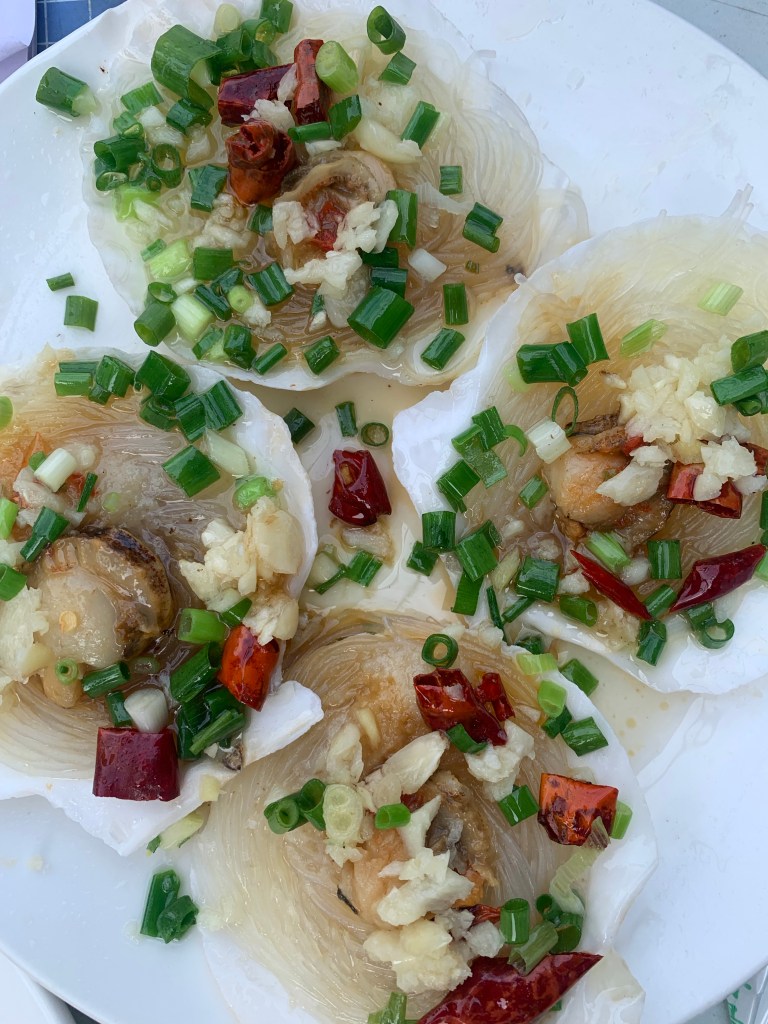
Scallops 
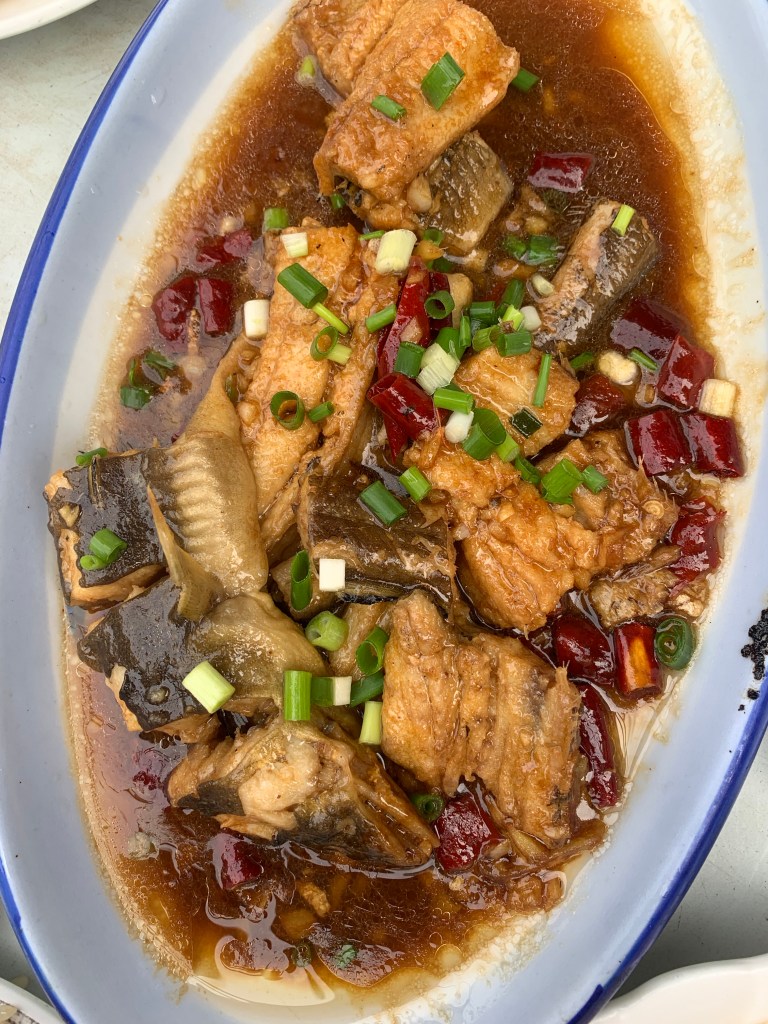
Eel 

On our last morning, we headed back out to Shenghshan Island out to see the 东崖绝壁 Dongya Cliff. Located at the eastern end of the island, the Dongya Cliff is supposed to be the best place to see a sunrise on the island. (As you can see from some of the pictures, the weather was pretty cloudy and rainy for most of our time there, so we didn’t have the opportunity to go out for a sunrise.) We spent about an hour walking along the paths near the cliff’s edge, listening to the waves crashing against the rocks.


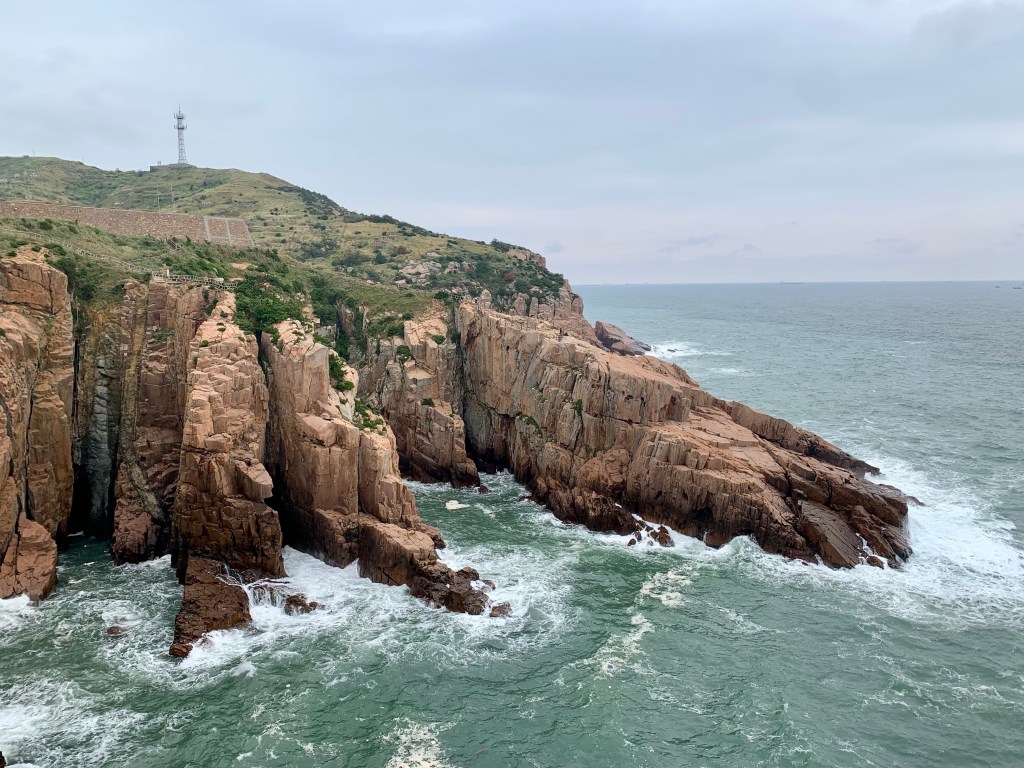
When the rain came, we headed back for one final meal at our hotel, then back the 5-6 hours (taxi to ferry to bus) to get back home to Shanghai. Though I may not yet be able to leisurely country hop the way I thought I would be able to when moving internationally, I am continually thankful to have so many wonderful places to explore within my own country. Now, having seen China’s Little Greece, I’ll just have to someday try some island hopping in Greece itself and see how it compares.
 Adventure in the Great Wide Somewhere