One of the (many) perks I’ve discovered since jumping in to the world of international teaching is the celebration of new holidays (and the time off from school to do so…); if you’ve been with me from the beginning, you may remember that I moved to China and was in my 14-day quarantine during my first Chinese holiday: Mid-Autumn Festival & National Day/Golden Week! (You can read my blog about it here!) Well, one year later, I’d once again reached the annual holiday and the week-long break that accompanies it! And this time, rather than being cooped up in a small hotel room pacing the floor, I wanted to spend the holiday doing one of my favorite things: getting outside and traveling somewhere new!
Since I’d spent quite a bit of money on all of my cross-country summer travel, for this trip I decided to go somewhere a bit closer to home that I could reach by bus rather than plane; where better to go than back to neighboring province of 浙江 Zhejiang? (Click here to read about my previous trip to Zhejiang, hiking through bamboo forests!) (I promise this whole blog post isn’t going to just be call-backs to my other posts. I just don’t want to have to reintroduce and explain things I’ve already written about – my posts are long enough as it is!)
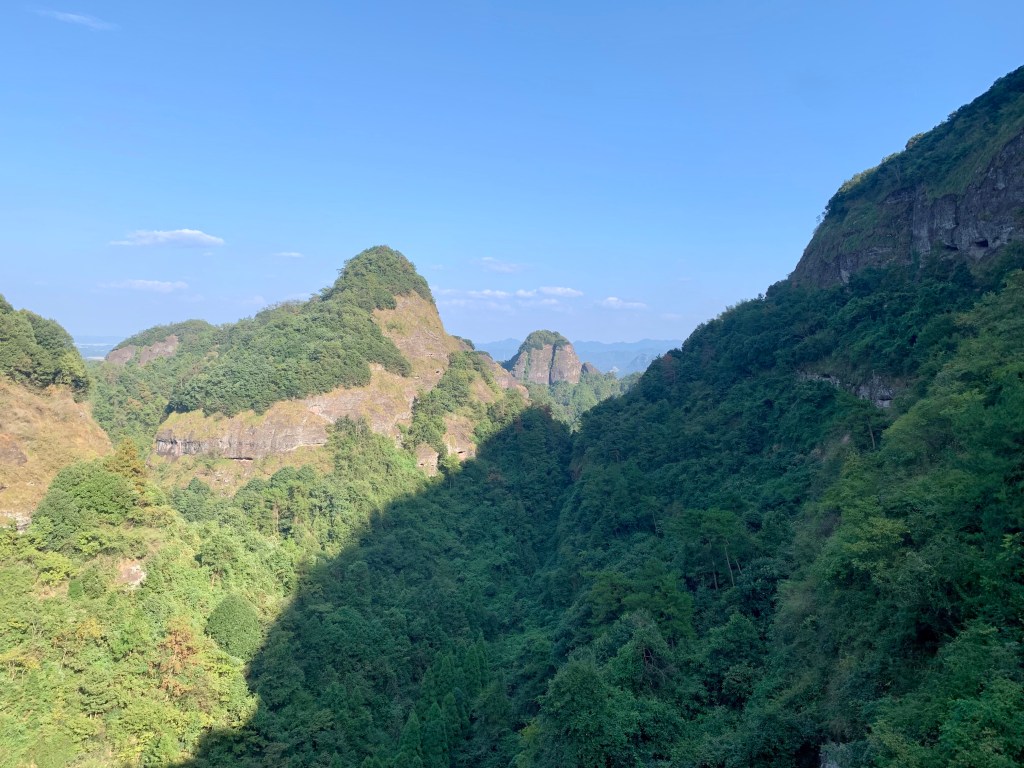
武义县 Wuyi County can be found pretty much right in the center of Zhejiang. Surrounded by mountains to the north and the west and known for it’s beautiful scenic areas and natural hot springs, Wuyi was the perfect place to spend a few days hiking and relaxing. We started our first day exploring the 大红岩 Dahongyan (Grand Red Rock) Mountain Scenic Spot, a well-loved nature reserve featuring canyons, caves, karst cliffs, peaceful lakes, and the famous Hongtuo Rock.
We were given a few hours of free time to explore, and so we made our way up the (many) stairs to explore the park.
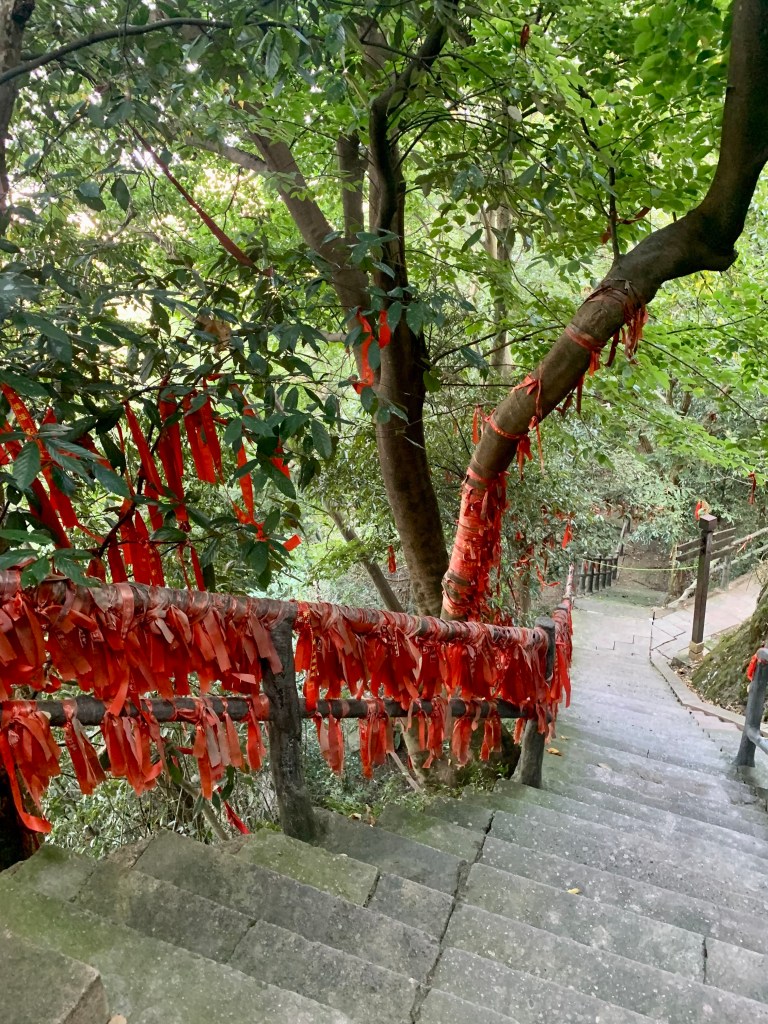

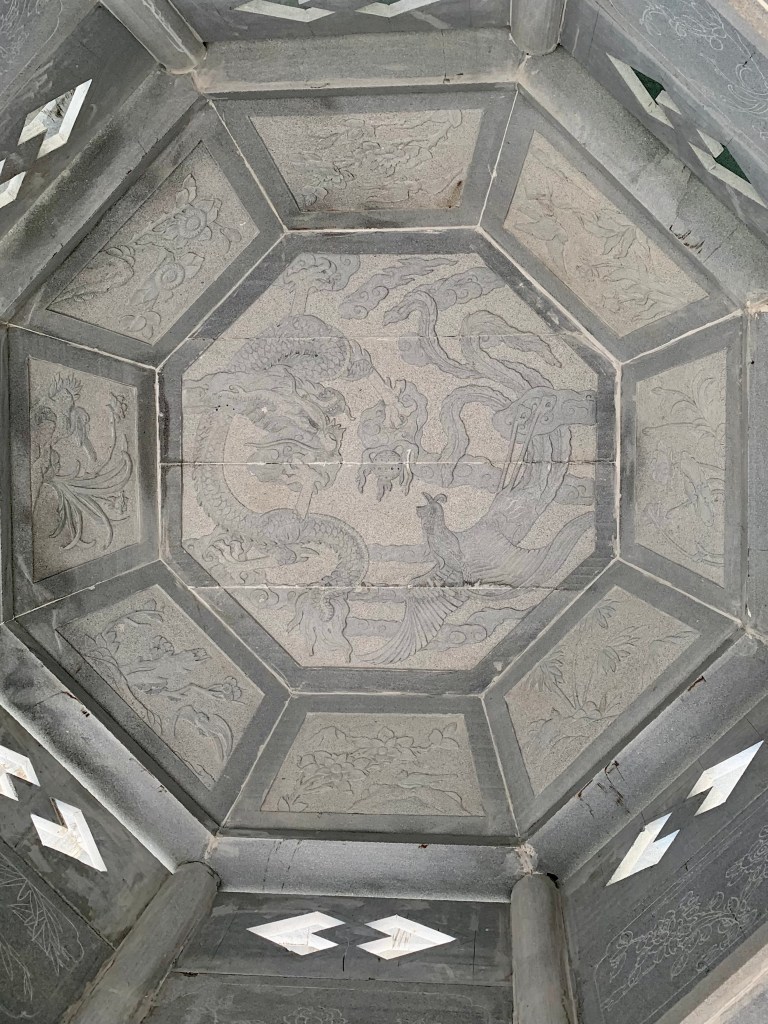
According to the locals of Wuyi County, there were once many snakes, worms, monsters, and evil spirits who wreaked havoc and terror upon the people. But then, during the Yuan Dynasty (1271-1368) Xu Yuanji built a Buddhist hall upon the mountain in addition to the Platform of Welcoming Immortals – from then on, there was peace. Our guide told us that the reason the air is so fresh and clean is because of the fairies living in the mountains; we are breathing in “fairy gas.” Look, I’ll take fairy gas over city pollution any day…
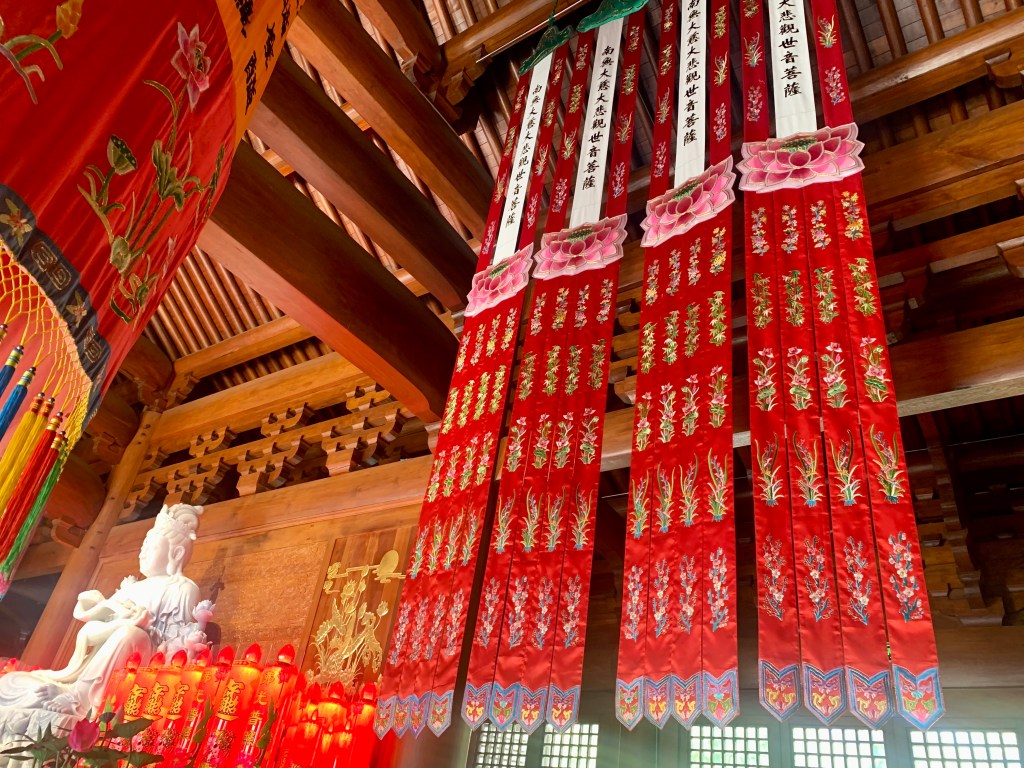
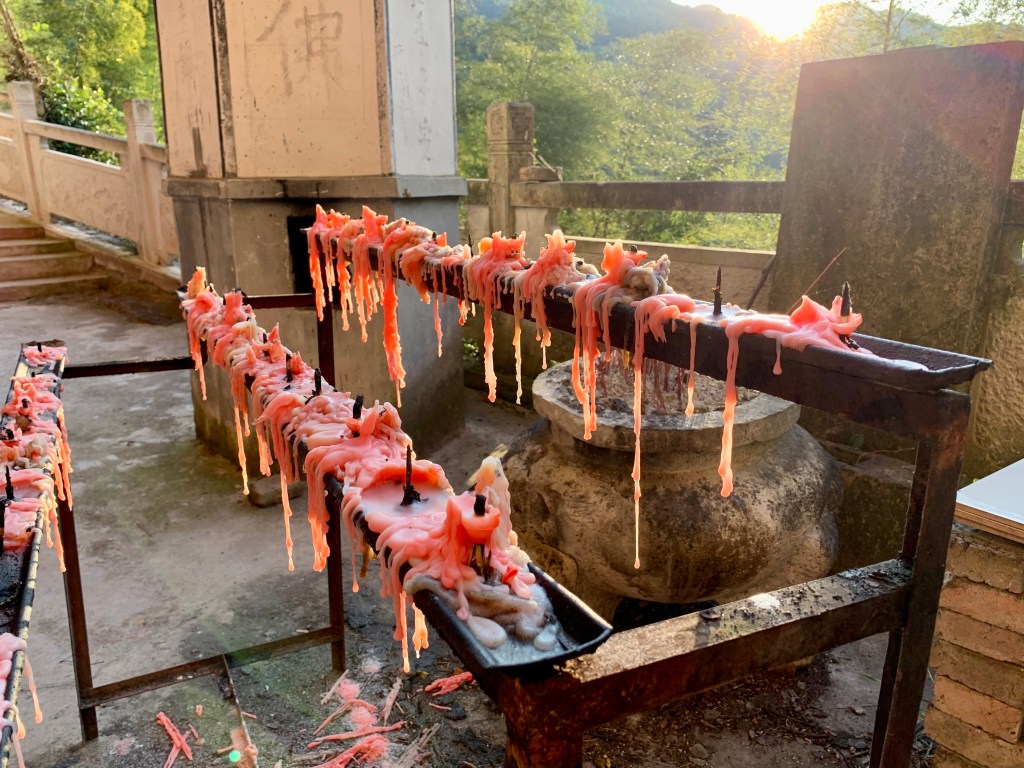
As we walked up and through the mountain paths, we were able to explore the many caves — used as places of study and devotion, there were many statues and candles in front of various shrines, meant to signify both respect and impermanence or change. I always enjoy getting to witness and experience art from other cultures and religions, so it was fun to be able to walk through and see the beauty from both the scenery and the Buddhist statues and shrines.
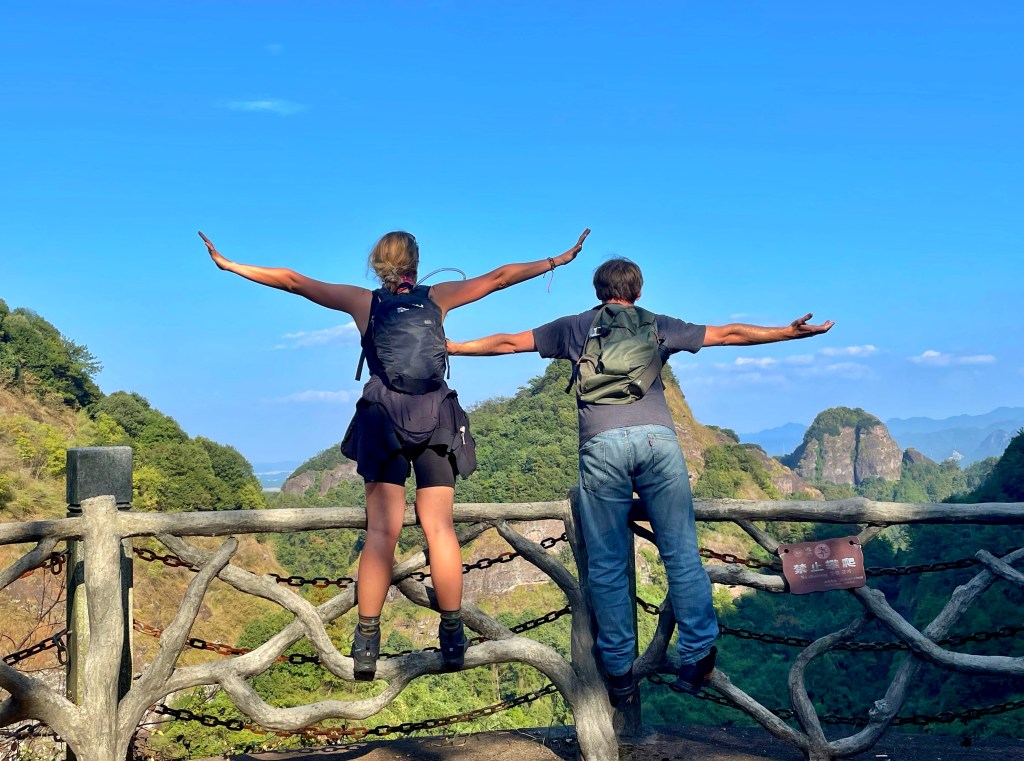
Just across from the Platform of Welcoming Immortals 


Though many others in our tour group seemed to walk through very quickly (and sat waiting for us in the bus for 30-45 minutes while we enjoyed looking around and taking it all in… we were given until a certain time to explore and we intended on spending the entire time out actually exploring) we enjoyed being able to wander through the pathways, breathe in the fairy gas, and feel the peace that comes with being in nature.
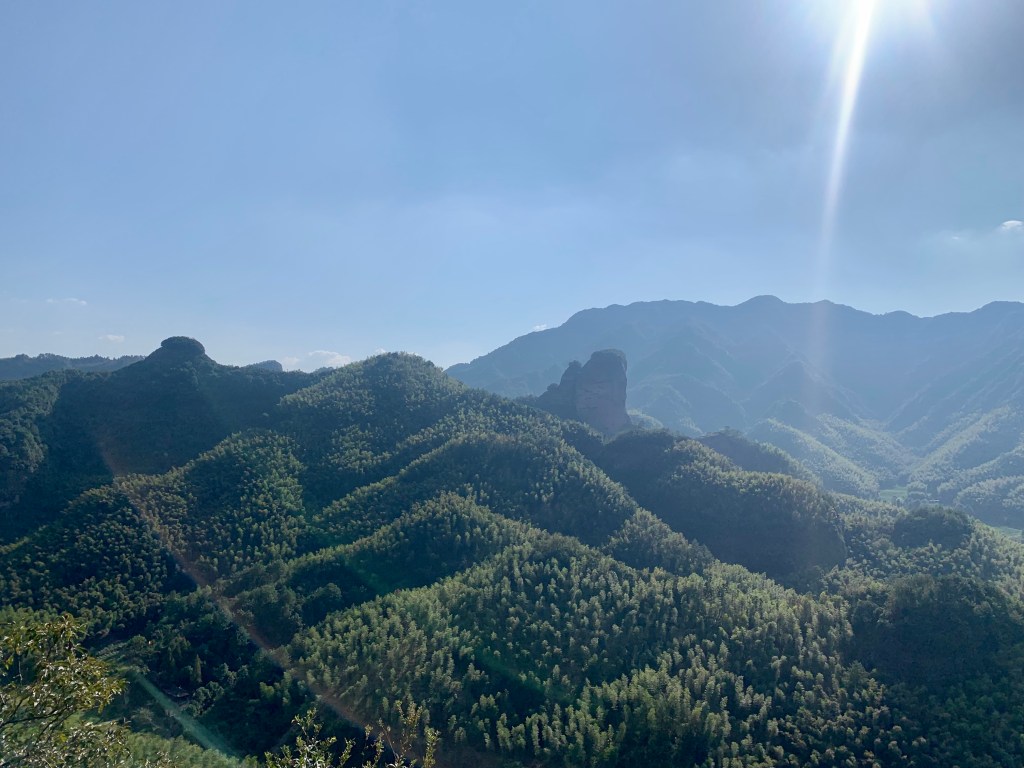
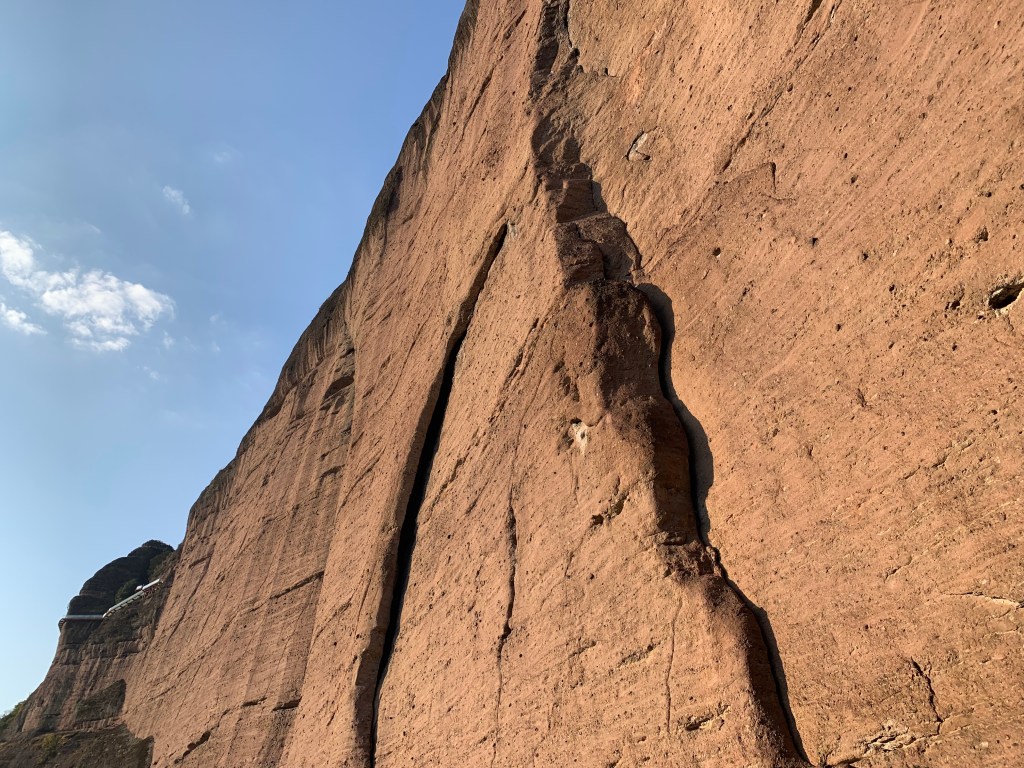
Hongtuo Rock

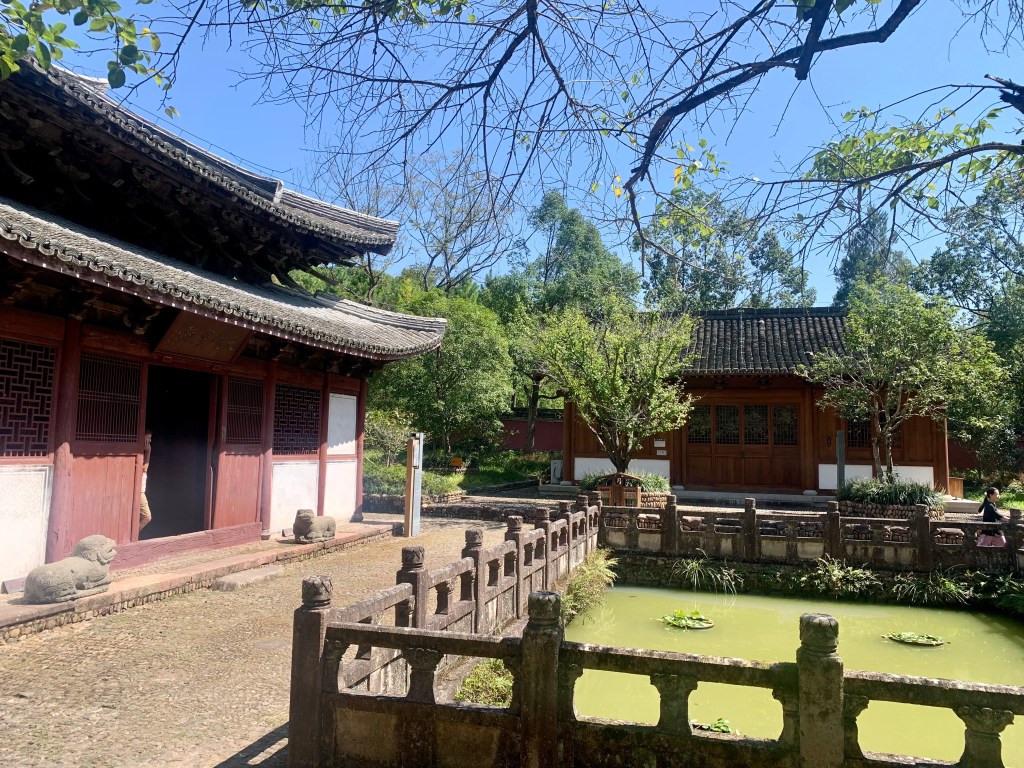
After leaving the Dahongyan Mountain Scene Spot, we were able to walk through a 1,000+ year old Buddhist temple. (This is the wild part about living in China – there are just places like this that are casually 1,000 years old hanging out everywhere. The history here goes back so far, it can be a brain strain just trying to comprehend what was going on in the rest of the world at the same time.) It reminded me a bit of walking through a stave church in Norway; buildings made entirely from wood that just feel ancient and significant.


We then went back to our hotel for the night to enjoy the hot springs. Wuyi was the first Zhejiang “Chinese hot springs city” named by the Ministry of Natural Resources, and produces 2,415 tons of hot water daily. Though I don’t have any pictures from inside the hot springs to share (because…. well…. I was enjoying the hot springs…), here is the giant painting from the lobby of the building. I don’t remember a specific story, but I’m sure there was some famous “most beautiful woman in the world” who bathed in the hot springs and probably someone important fell in love with her. For the record, I was not able to enjoy the hot springs sans bathing suit like the woman in the painting – these were co-ed, suited hot springs. (Though I did get a chance to visit some nude-y Turkish bath hot springs when I was in Budapest. Loved it, would do it again in a heartbeat.)

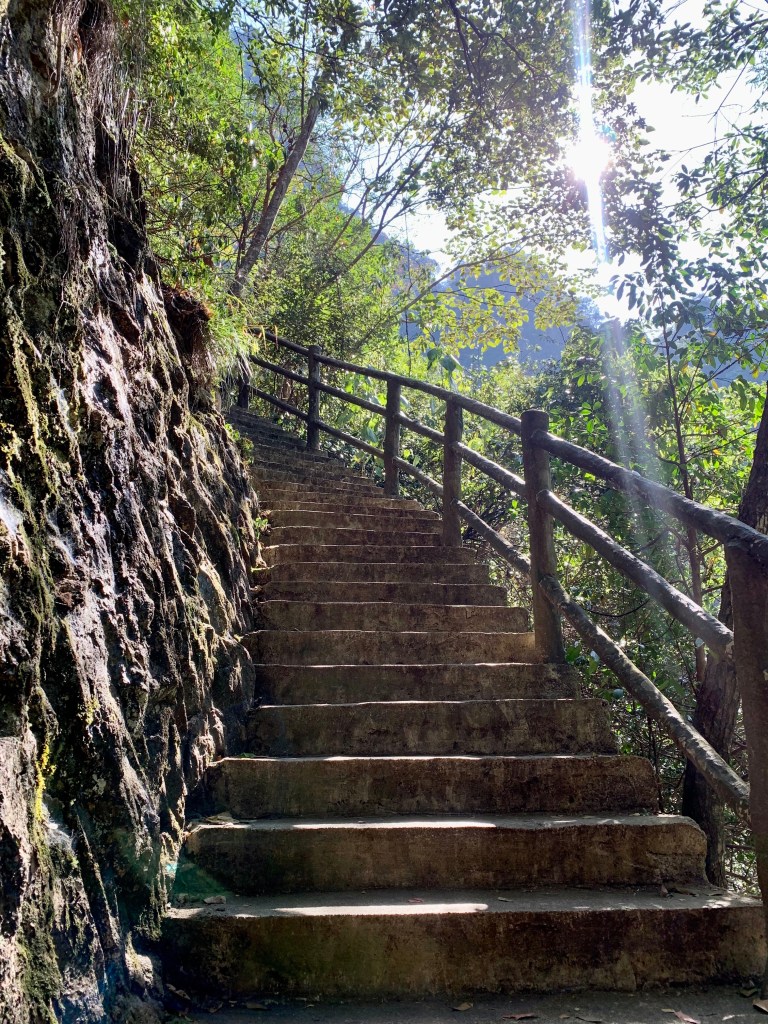
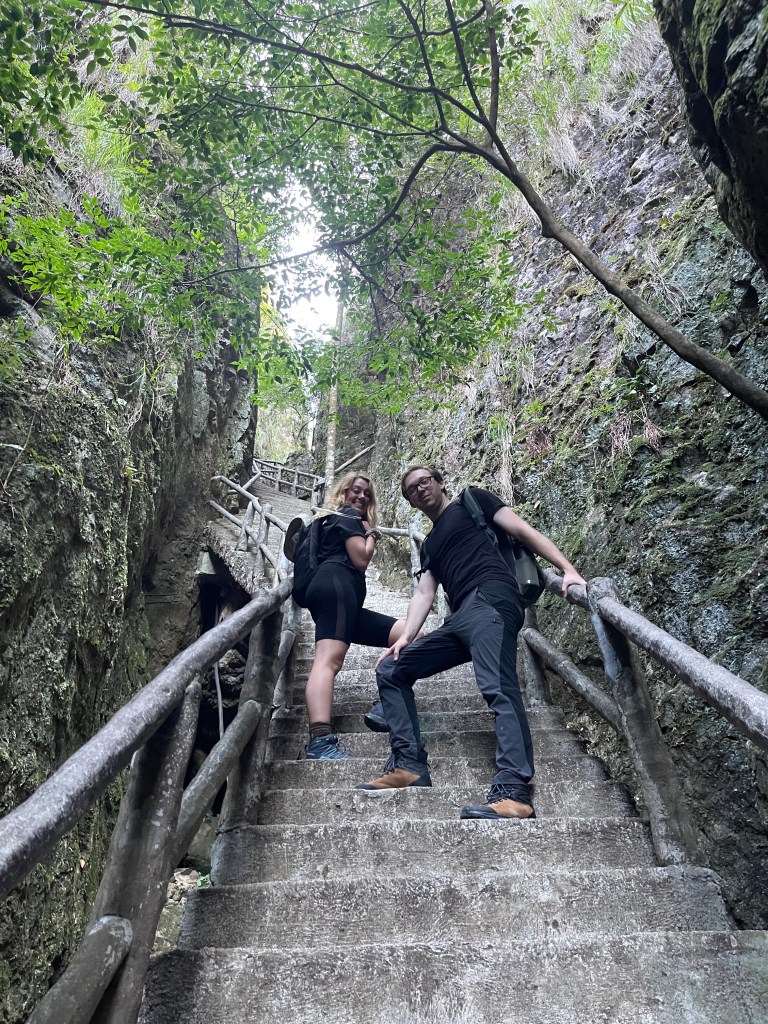
The next morning, we set out for the highlight of the trip: hiking 牛头山 Niu Tou Shan, or, Ox Head Mountain. A revered Taoist pilgrimage site and a stunning national forest park, Niu Tou Shan is somehow both tranquil and exhilarating at the same time. At 1,560 meters (5,118 feet) above sea level, Niu Tou Shan’s peak is the highest in central Zhejiang — but to reach the peak, you must first hike past flowing rivers, across wiggly bridges, and up up up up up endless stairs. (So. Many. Stairs. The ultimate lower body workout.)
“Hey Madison… Ox Head? There’s GOT to be some Chinese myth that helped name this mountain, right?!”
Ah, Dear Anonymous Reader, I see you are starting to catch on. Yes, of course, there IS a famous Chinese myth associated with Niu Tou Shan:
There was once a Fairy and a Cowherd who met and fell in love. (Apparently he saw her bathing in the lake and stole her clothes, so when all of the other fairies flew away she had to stay behind and look for her clothes. Then they… fell in love… I don’t know y’all, a lot of these love stories have questionable beginnings…) They were soon married and lived happily together. However, when the goddess 西王母 Xi Wang Mu, the Queen Mother of the West, found out that one of her fairies had fallen in love with a mortal, she furiously came down and brought the Fairy back up to the heavens. The Cowherd’s beloved ox, seeing how distraught he was, told the Cowherd to kill him and wear his skin as a disguise so he could go up to the heavens and bring back his wife. When Xi Wang Mu found him, she banished him to live on a star far away, and removed her hairpin which created an uncrossable river separating the two lovers – the Milky Way. Once a year, on July 7th – the Qixi Festival (also known as Chinese Valentine’s Day) – one thousand magpies fly up to the heavens and form a bridge so the lovers can reach each other again. Niu Tou Shan is said to be the mountain where the Cowherd buried his ox before going up to the heavens!

Now, a brief tangent: you know when you plan a trip with one of your friends, but then you and your friend accidentally start kissing like a week and a half before you leave for the trip, and so then you spend much of the trip trying to figure out what you want together, if you are comfortable holding hands in public, what your relationship with each other actually is, etc etc etc? No? Just me? Well anyways, 9 months into the relationship now, we’ve figured it all out, but this first trip together will certainly go down as a memorable one. (And I’m not afraid to hold Michael’s hand in public anymore, so, nailed it!)
When we started the hike up Niu Tou Shan there were two paths available, creating a loop up to the peak and back down again. The rest of our tour group started down one of the paths so we, naturally, decided to take the other for a bit more peace and quiet. (See? It’s not just me.) (I am not intentionally contrary, I promise.) (Mostly.)
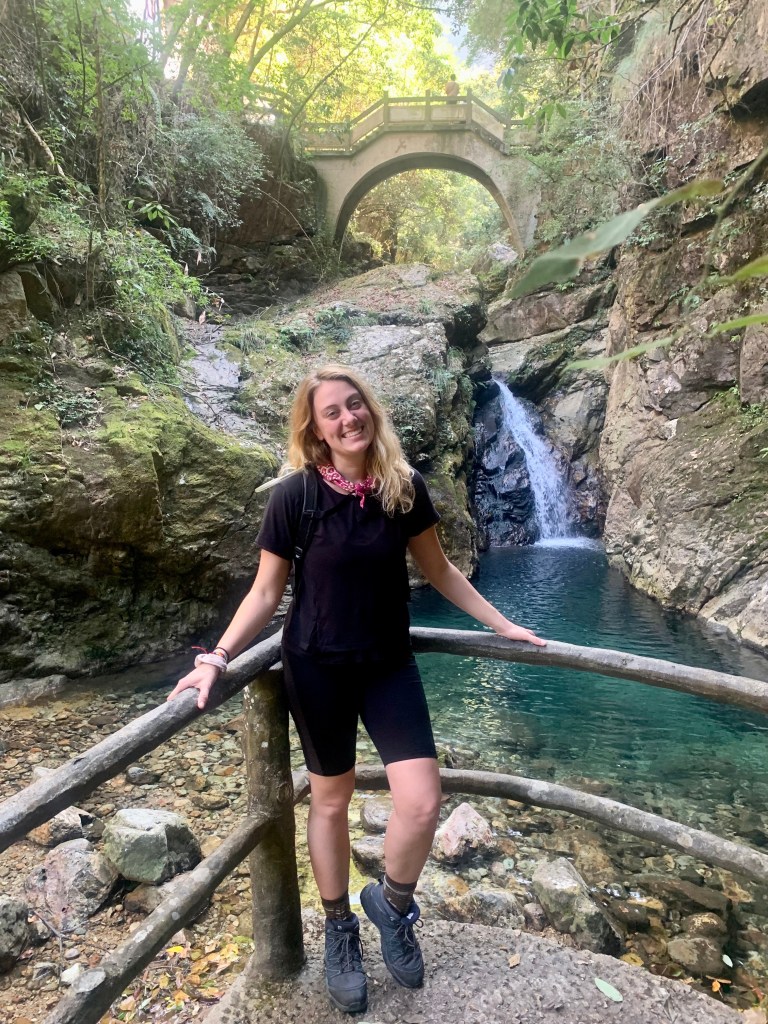
Now, this is the point in the trip where I was able to start appreciating and utilizing a tried-and-true boyfriend perk. I got a great picture of him in front of a small waterfall streaming out from under a bridge — something nice he can send back to his family and friends, a nice memory from the day. And he, well, he also took a photo of me for my family and friends… and, well… I mean, it is technically a photo of me.
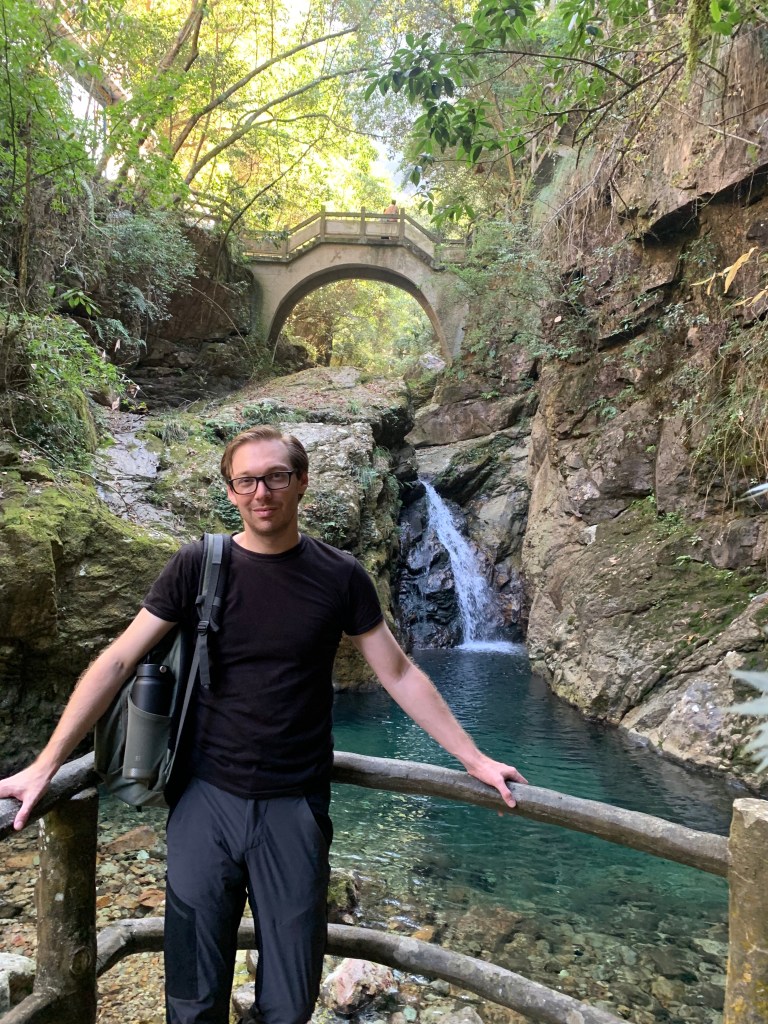
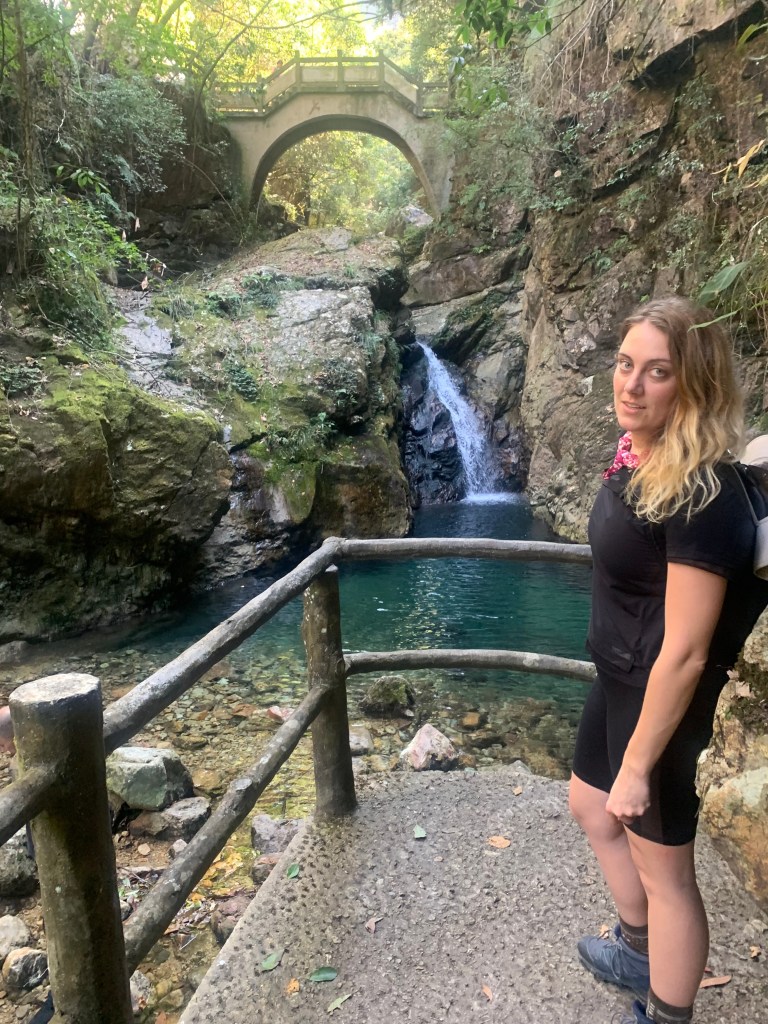
(Just kidding, I got a good picture too…)
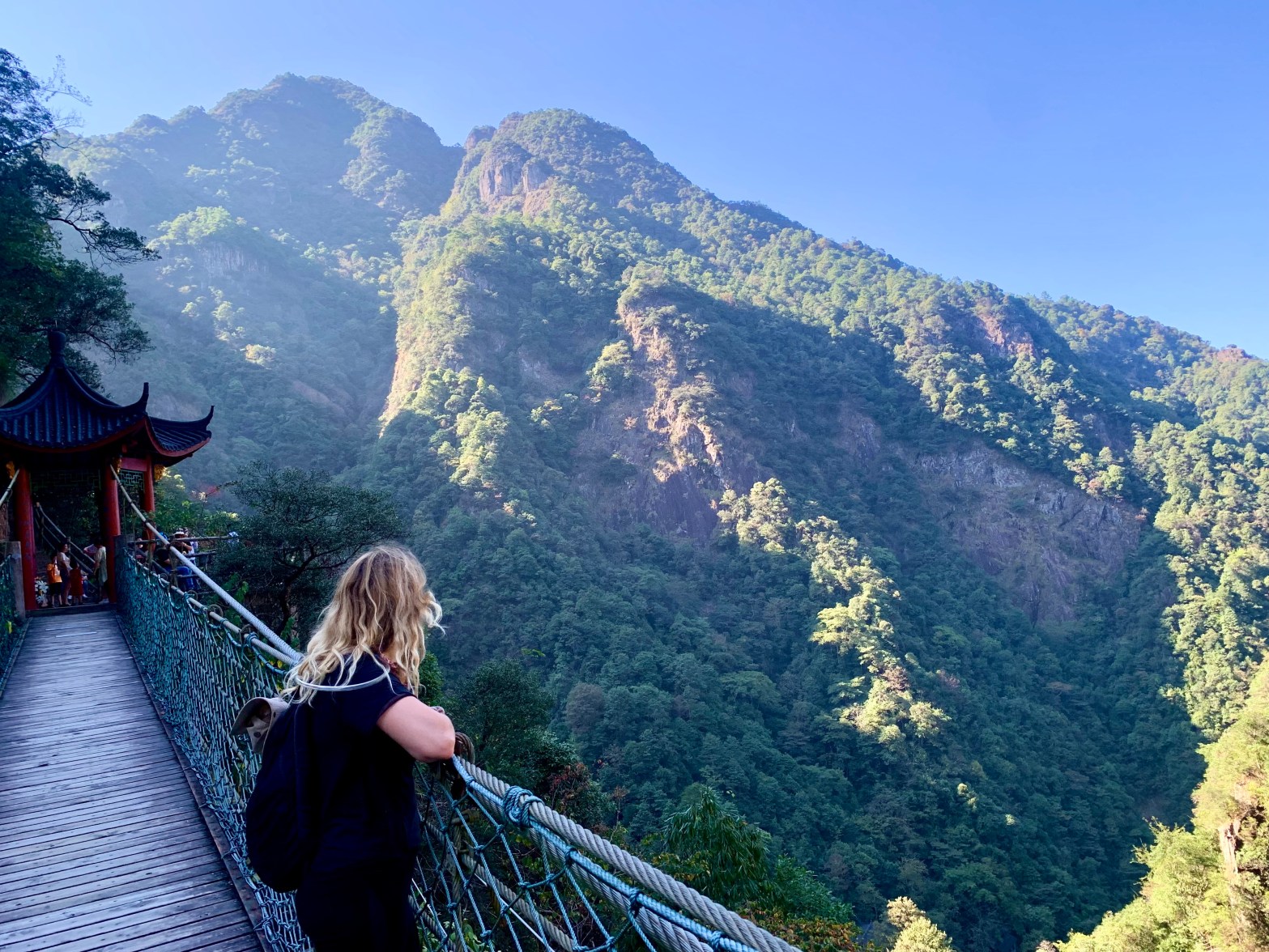
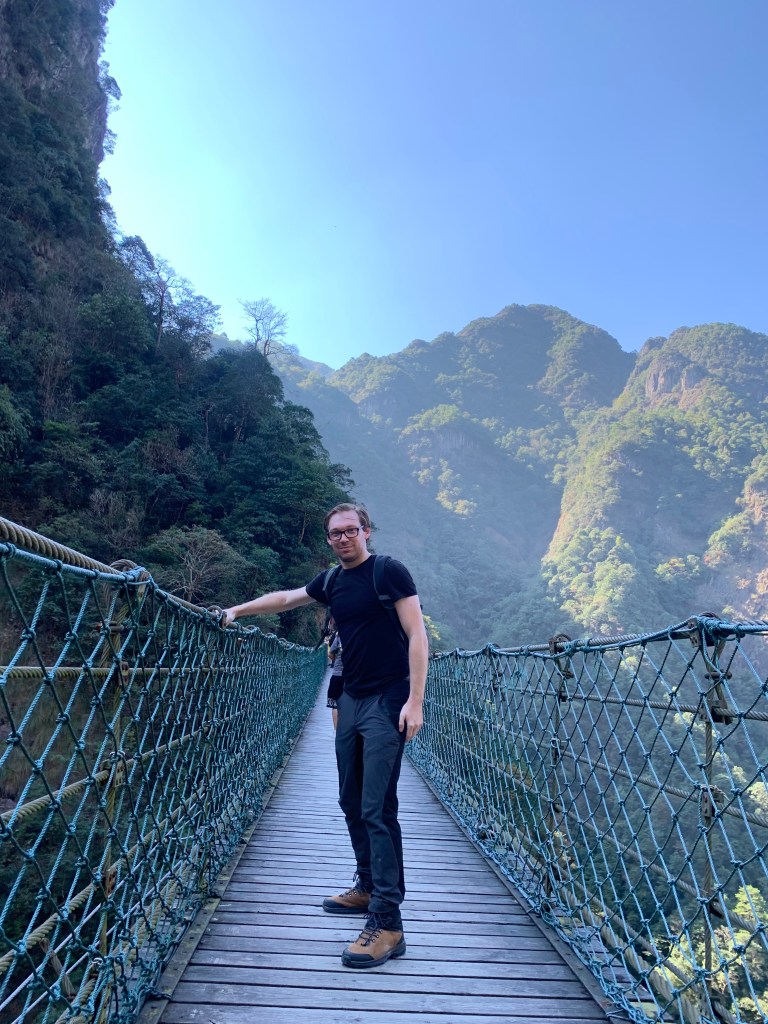
After continuing onwards and upwards (quite literally… more and more and more stairs, always stairs, forever stairs) we eventually made our way along the side of the mountain until we reached a wibbly, wobbly suspension bridge. If you’ve ever traveled around China, you will know that it is common to find at least one adrenaline-pumping bonus on your hike – usually an epic glass bridge, a zip line, a giant swing, something of that nature. On this hike, it happened to be a shaky bridge across a deep canyon way down below.
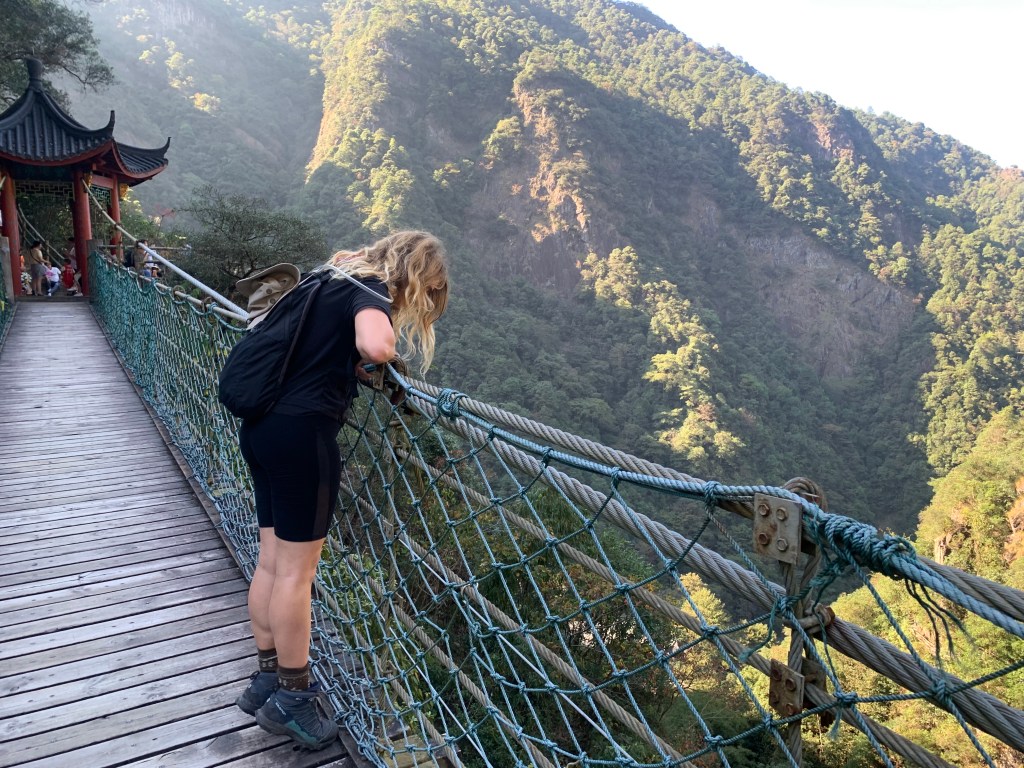
Now, here’s the thing: I love bridges, heights don’t really bother me, and I will always appreciate an opportunity to lean over out of something and look down at the ground way below me. Michael feels differently. After debating if there was any other way to continue the hike, sitting down for a few minutes, and attempting to wait until there was no one else to shake the bridge as we went on it, we began to make our way across. Oh, how I wish I could demonstrate the hunched over, death-gripped clutching along either side, old man walk that Michael used to get across the bridge; at some point, I think he aged 50 years as he grumbled about “these damn kids shaking the bridge.” It was glorious.
It’s not easy to be confronted with one of your greatest mind-numbing fears within the first few weeks of dating someone; I know what it is to be paralyzed with fear. (Damn you, Busch Gardens’ Escape from Pompeii ride. Shooting FIRE over our HEADS?! Never again…) It’s a vulnerable thing, and hard to share with a new partner. Rather than shut down or try to push away his feelings, Michael acknowledged his fear and we worked through it together. I grabbed his hand and we made our way, one slow step at a time, across the bridge.
(For the record: Michael has given me complete permission to share this story, he is not ashamed. He is of the firm belief that not wanting to fall to your death is a strong survival skill, and he’s not wrong… It was hard to capture in pictures just how far the drop beneath us was, but the video below gives a bit more of an idea what we were crossing.)

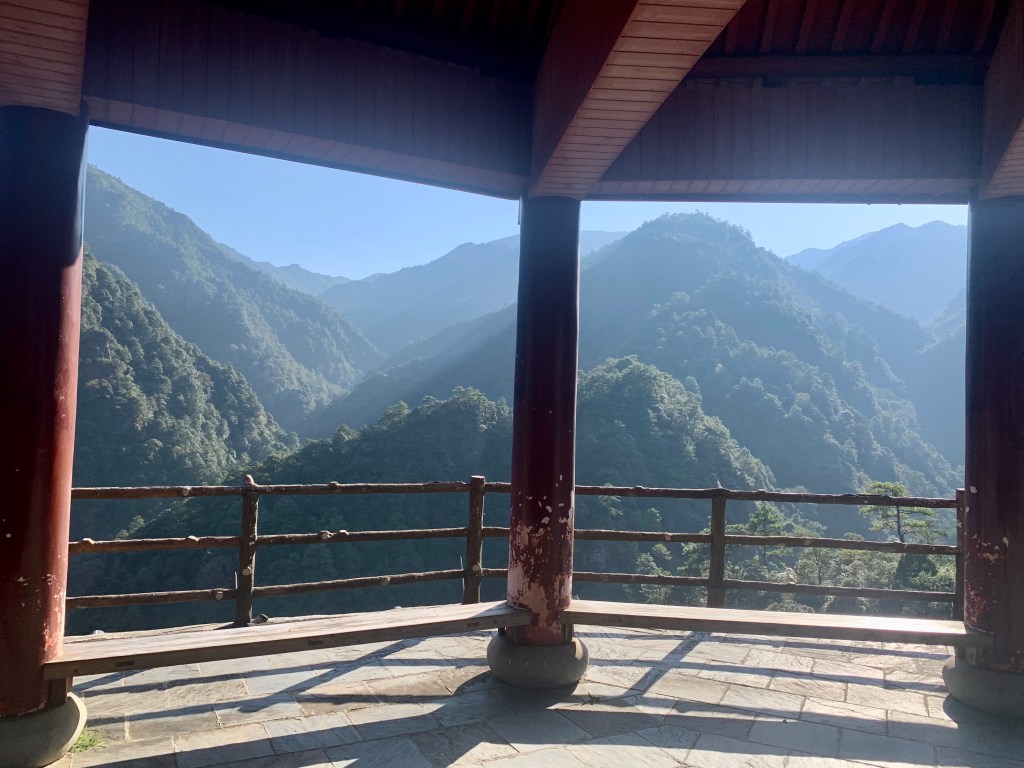
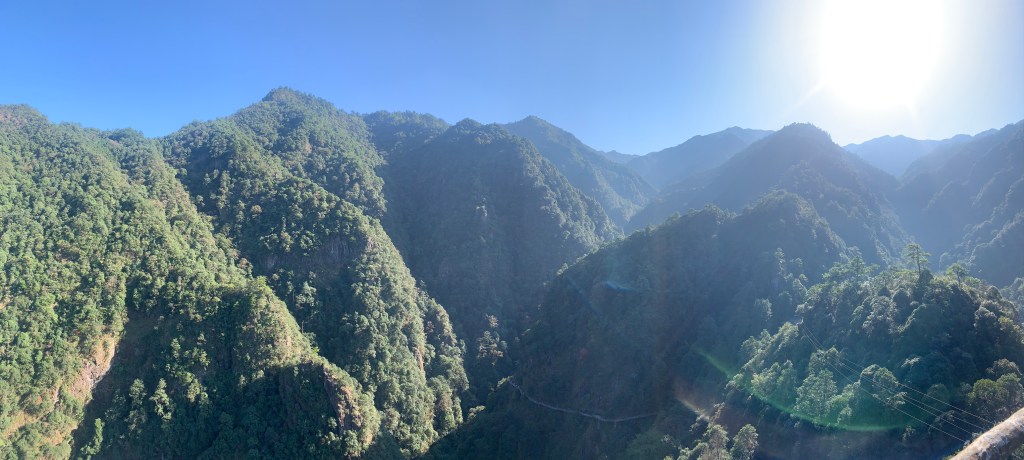
As we got nearer to the top of the mountain, the stairs just got steeper and steeper. Like, push through the pain to maybe make it 6 steps before needing to stop for another breather lever of steep. Preemptively know that you are not going to be able to walk the next day level of steep. It was… intense. But we finally, eventually, made it to the top and could enjoy the incredible view.

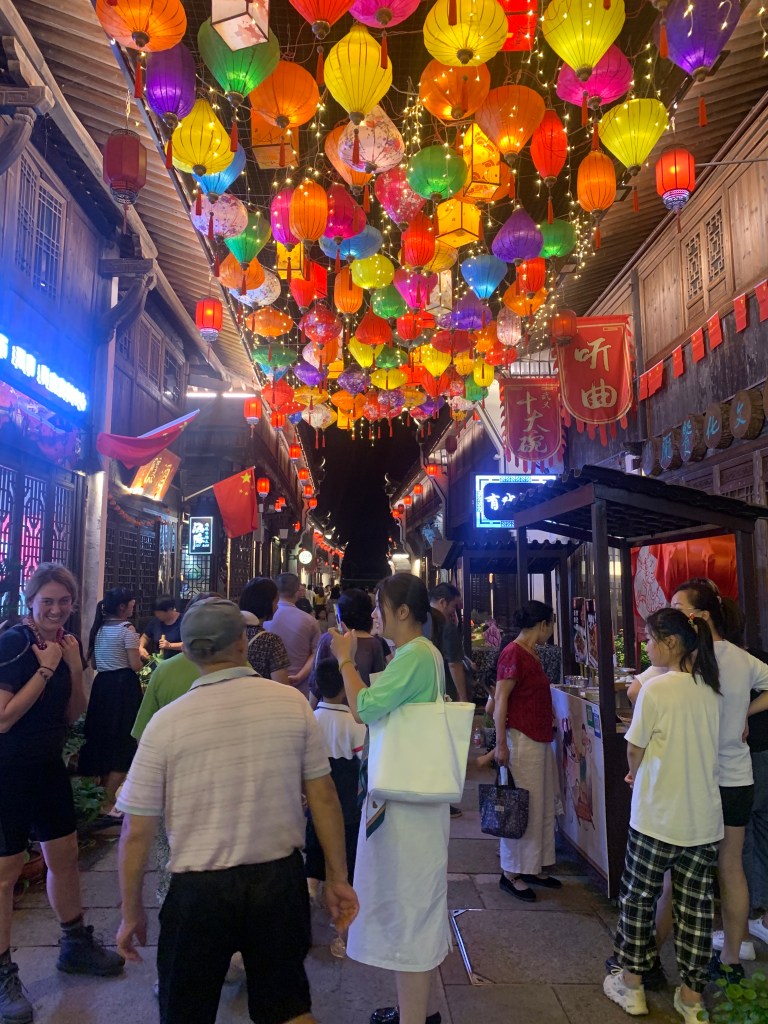
After the hike, we went into a small village nearby to grab some dinner. Marketed towards tourists, the main street had a pathway covered with colorful lanterns and twinkly lights to create a magical ambience. (I tried to get a picture under the lanterns but, well, someone else decided that they, instead, wanted to get a picture of me. See the woman in the green shirt, and my awkward gremlin smile? Ah well.)
After another long (and well deserved) soak in the hot springs, we went to sleep to rest up after the leg workout that was the day. The next morning, we went on one final excursion to wander through the Guodong Ancient Village.
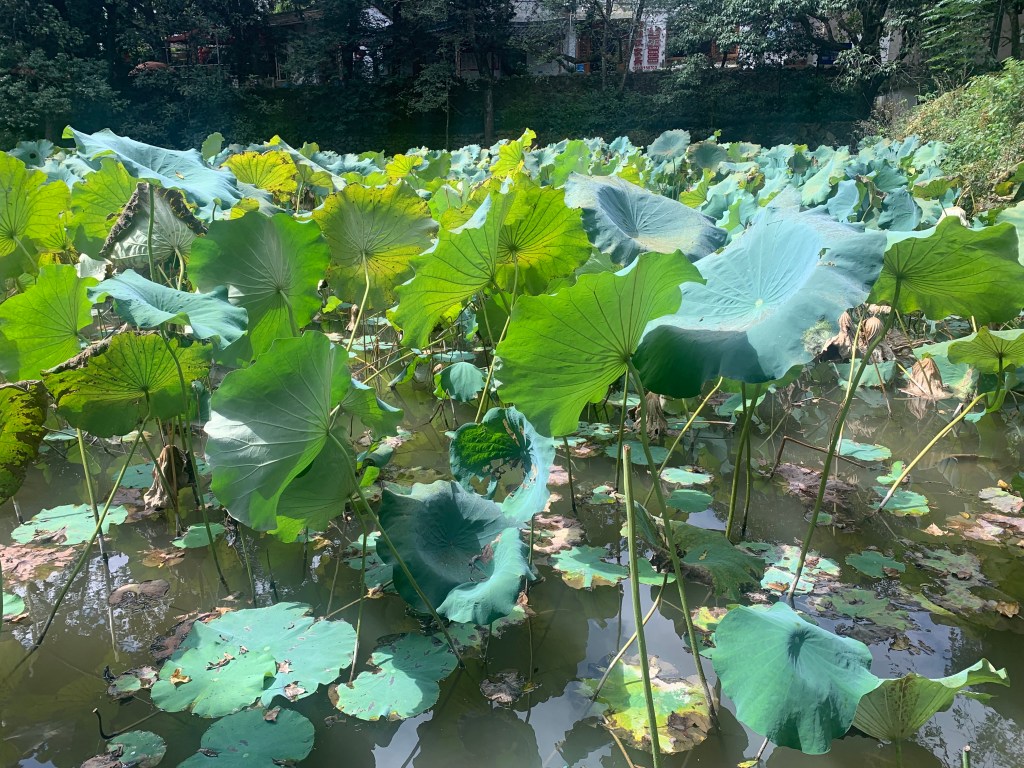
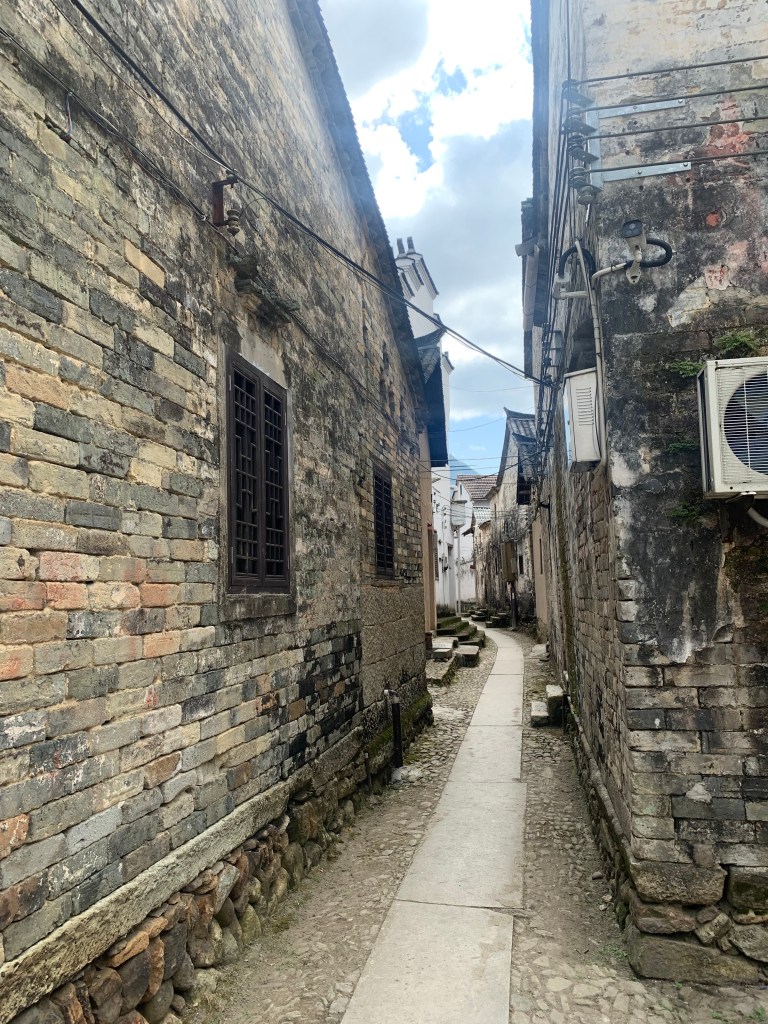

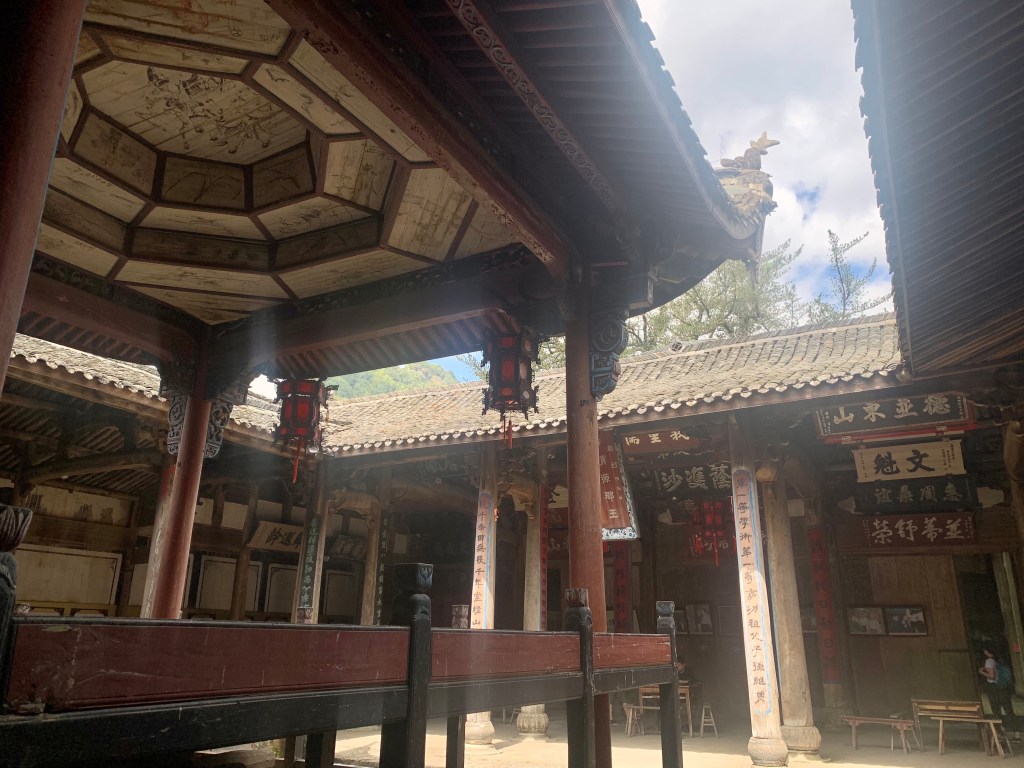
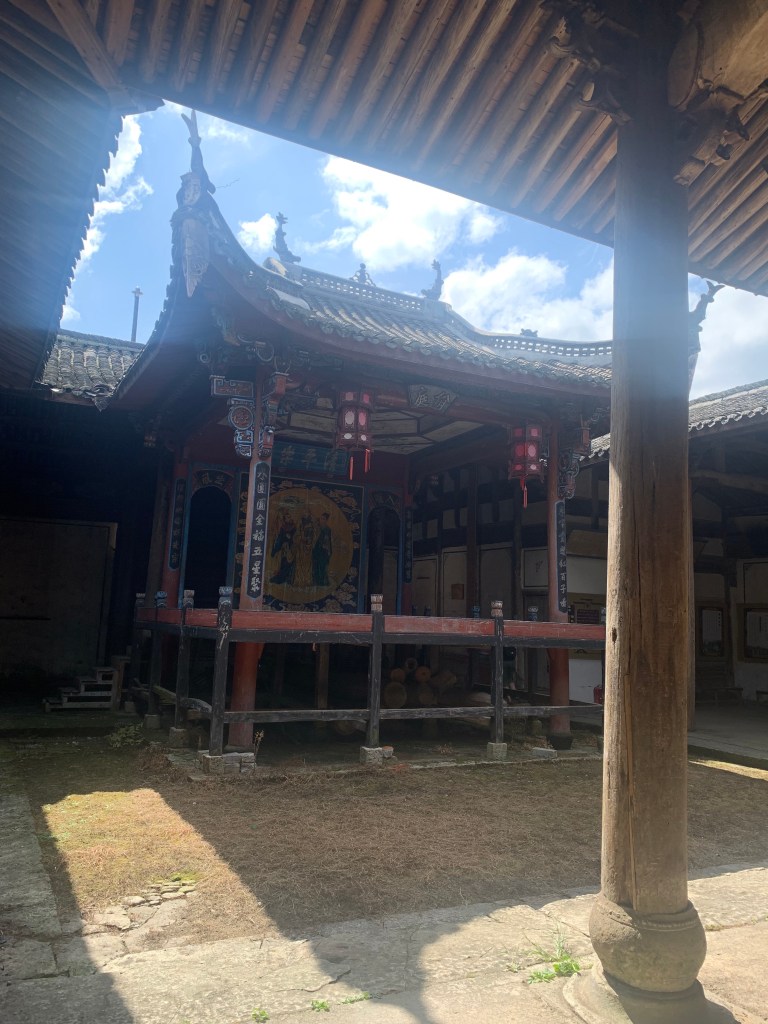
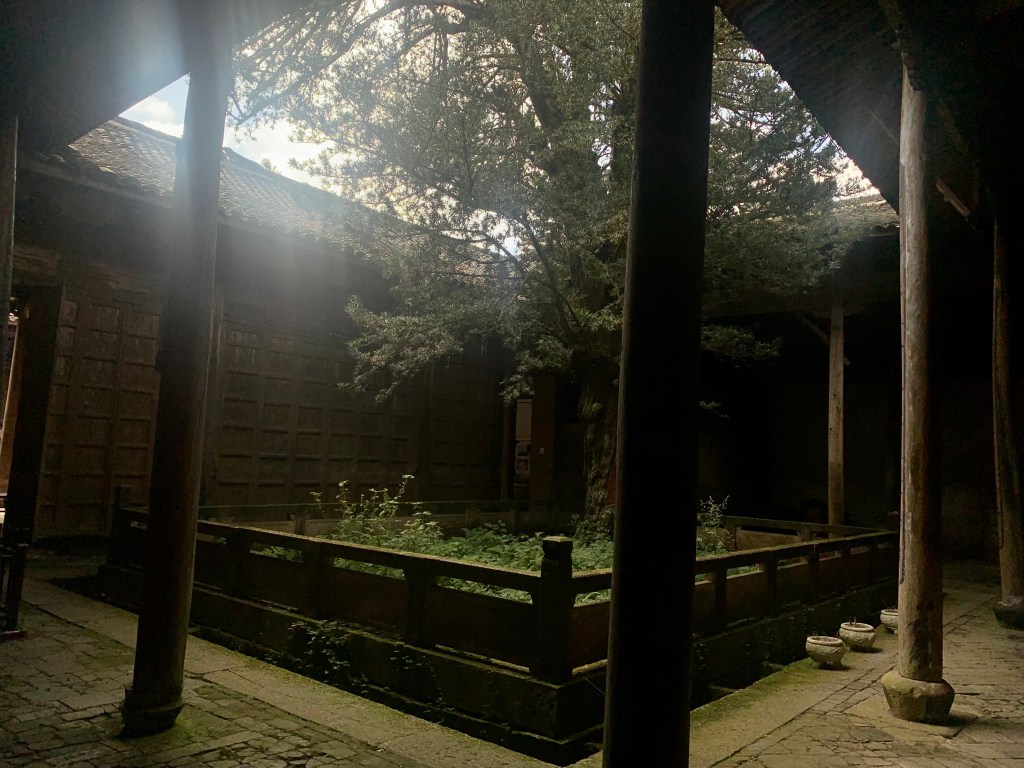
With an hour of free time, we strolled through the village admiring the peaceful atmosphere and the rustic, traditional Chinese architecture. In Shanghai, there isn’t much of an opportunity to explore areas like this – everything is so new and shiny – and so I always enjoy getting to experience a different side of China.
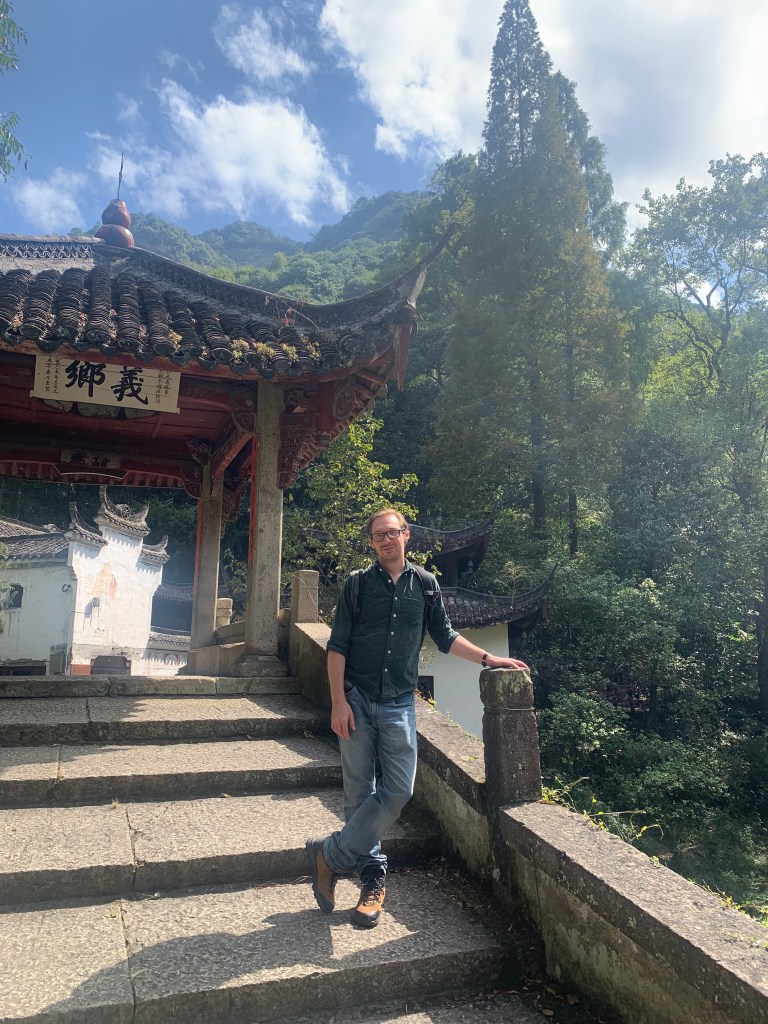
My picture of Michael. 
Michael’s picture of me. It’s going well.
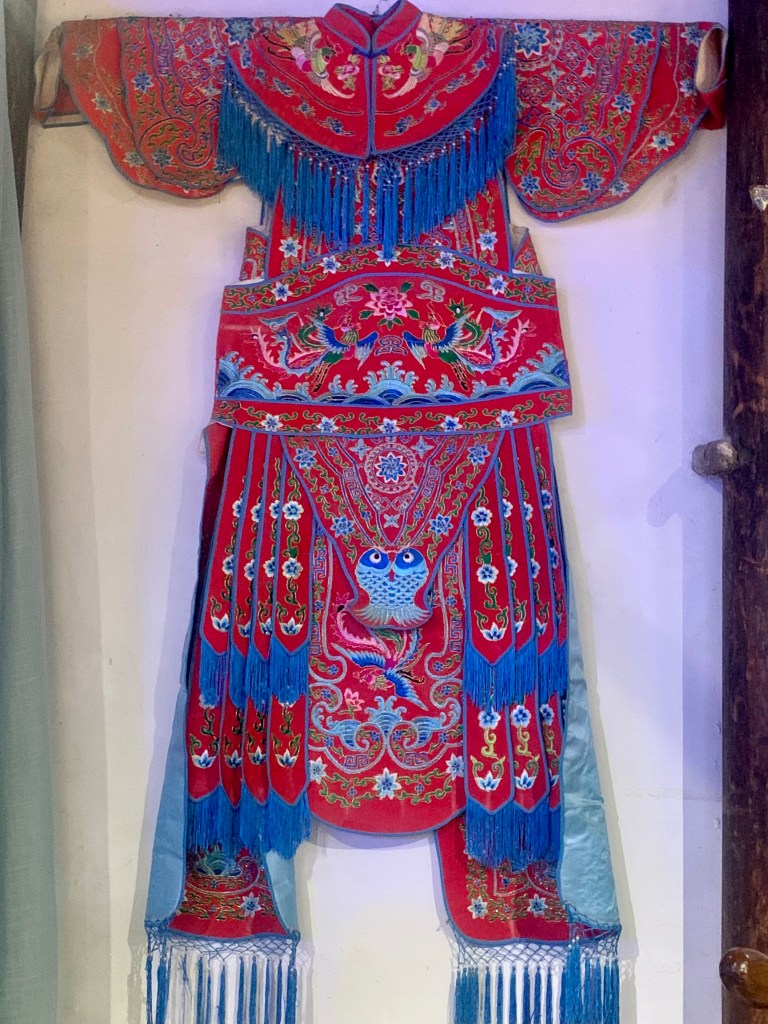
Strolling through the narrow alleyways, discovering courtyards and an ancient stage within the family ancestral hall — it was wonderful to have some time to enjoy this well-preserved and tranquil piece of history.

I got a good picture too, don’t worry. 

Though we were headed back to Shanghai after our village visit, we wouldn’t be there long. After one night back home, we would be off to another area of Zhejiang – this one that boasted a bit more seafood… Stay tuned!

 Adventure in the Great Wide Somewhere