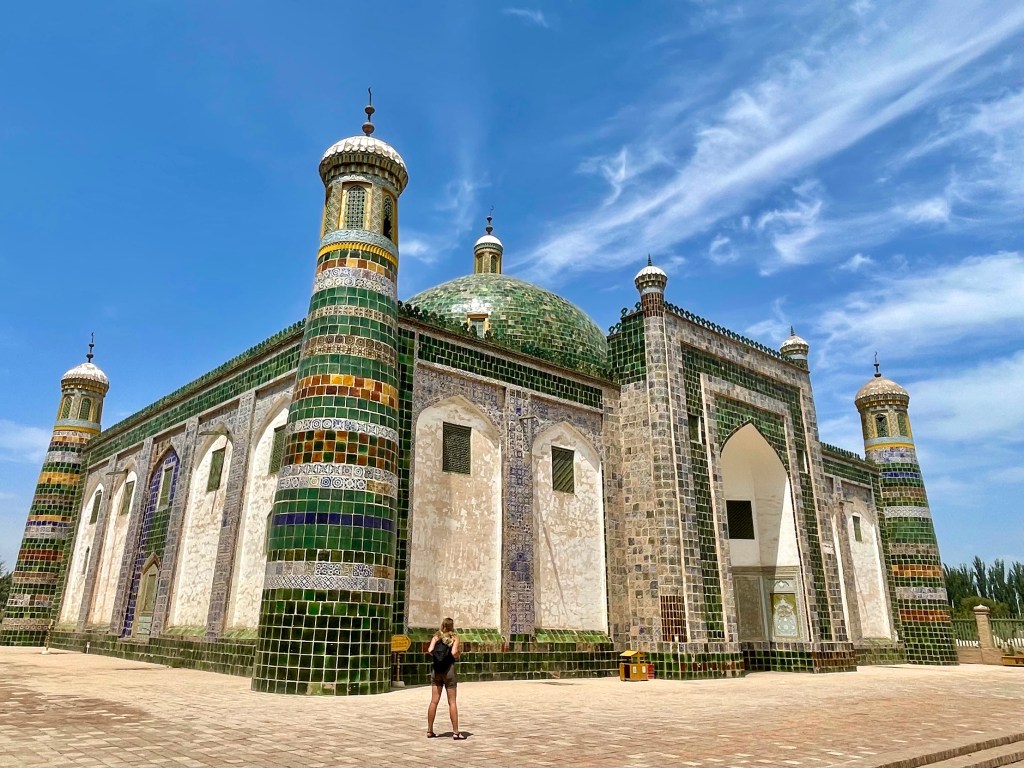
After exploring the Old City, we were able to drive out to see one of the most famous Kashgar landmarks: the Apakh Khoja Mausoleum! The آفاق خواجه مزار Apakh Khoja Mausoleum 阿帕克霍加麻扎 (or: Apak Khoja/Afaq Khoja/Aba Khoja/Abajo Khoja/Abakh Hoja… translations are hard) is considered the holiest Muslim site in all of Xinjiang, and many devoted followers make the pilgrimage to visit it.
This beautiful mausoleum was originally built in 1640 as the final resting place for Yusuf Khoja, a respected teacher of the Qur’an and supposed descendent of the Prophet Muhammad. A year after the building was completed, his son Apakh Khoja – a well known and well loved leader in Kashgar – was poisoned and buried here as well in 1693. The mausoleum was renamed after him, and now holds tombs for 5 generations of their family.
Nowadays, visiting the Apakh Khoja Mausoleum, you can walk through not just the famous resting place of the 72 family members, but many other exhibits showing what a beautiful Uyghur home may have looked like at the time for a newly married couple. Why the focus on the newly wedded bliss? Well, there’s another legend that is (somewhat conveniently, and more recently) wrapped up in this mausoleum as well…
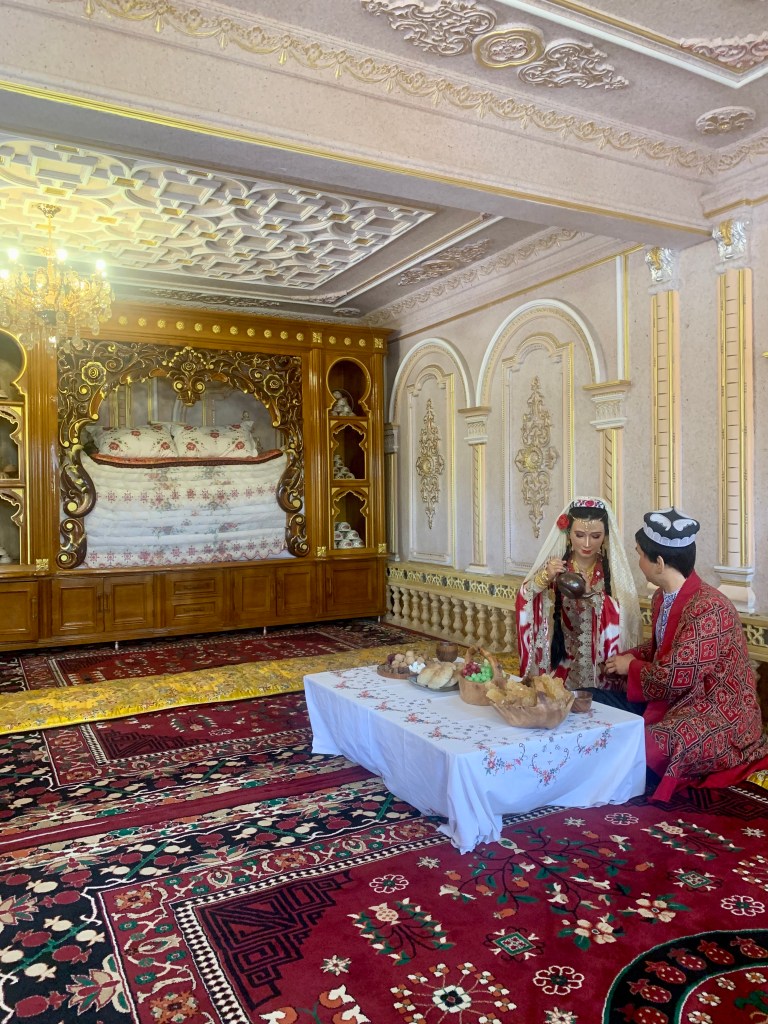


According to the “official” story, Apakh Khoja had a granddaughter, Iparhan (or Xiang Fei, in Mandarin) who was known for being educated, beautiful, but most of all…fragrant. She was said to naturally give off an alluring scent without using any oils or perfumes. (Having been in China for a few summers now, I find that highly unlikely. Especially pre-air conditioning. Just saying. Things get real sweaty.) Though she had been briefly married, during Emperor Qianlong’s conquest of Kashgar in 1758 her husband was killed and the Emperor, taken with her intoxicating scent and beauty, brought her back to Beijing to be his concubine. The Fragrant Concubine, as Iparhan came to be known, was beloved by the Emperor and soon they fell…in love? Or at least that is what the story is really trying to sell us on.
Anyways, in Beijing, Iparhan grew homesick and Emperor Qianlong, desperate to please her, built her a personal oasis outside of the Forbidden City – a palace built in the Uyghur style to remind her of home. Upon her death, the heartbroken emperor is said to have sent her body back to Kashgar by royal caravan in a funeral procession that lasted about 3 years before finally laying her to rest in the Apakh Khoja Mausoleum. For many, the story of the Fragrant Concubine is one that symbolizes national unity between China and their new territory of Xinjiang (which translates to “New Frontier”) – an epic love story for the ages.
Of course, not everyone feels that way. To many others, Iparhan was captured in an invasion, brought to the capital against her will, and spent her remaining years depressed and miserable. Some say she was threatened by the emperor’s mother to either accept her new fate or end her life. Though there are many accounts of how she died — of grief, death by suicide, or even killed by a rival or the emperor’s mother herself — it is clear that her life was an unhappy one, separated from her home and her loved ones. What’s more: our guide was telling us that it is unlikely that she was even buried here in the mausoleum. More evidence seems to suggest that she was actually buried near Beijing in the Eastern Qing Tombs. You wouldn’t know it walking around here today, though — this whole place feels like an ode to a timeless love story. Gardens, halls recreating the palace he built for her, sculptures and artwork depicting her journey… and hardly any mention of Apakh Khoja or his family at all. Huh.
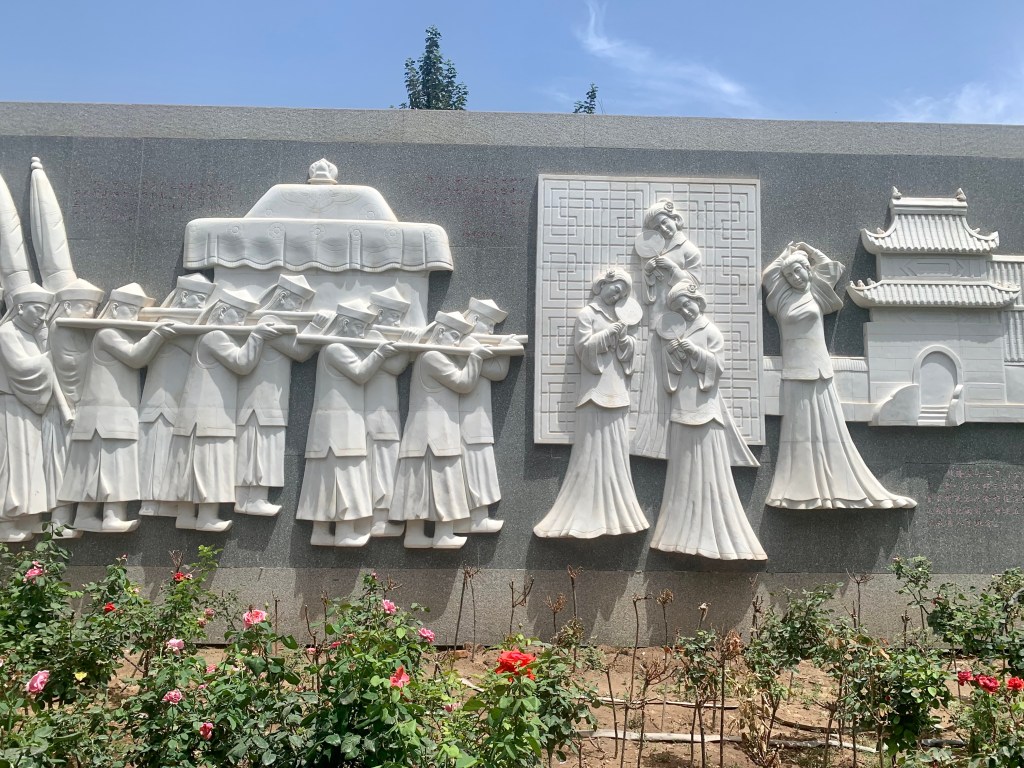

The Fragrant Concubine, dancing. And smelling good, I suppose. 
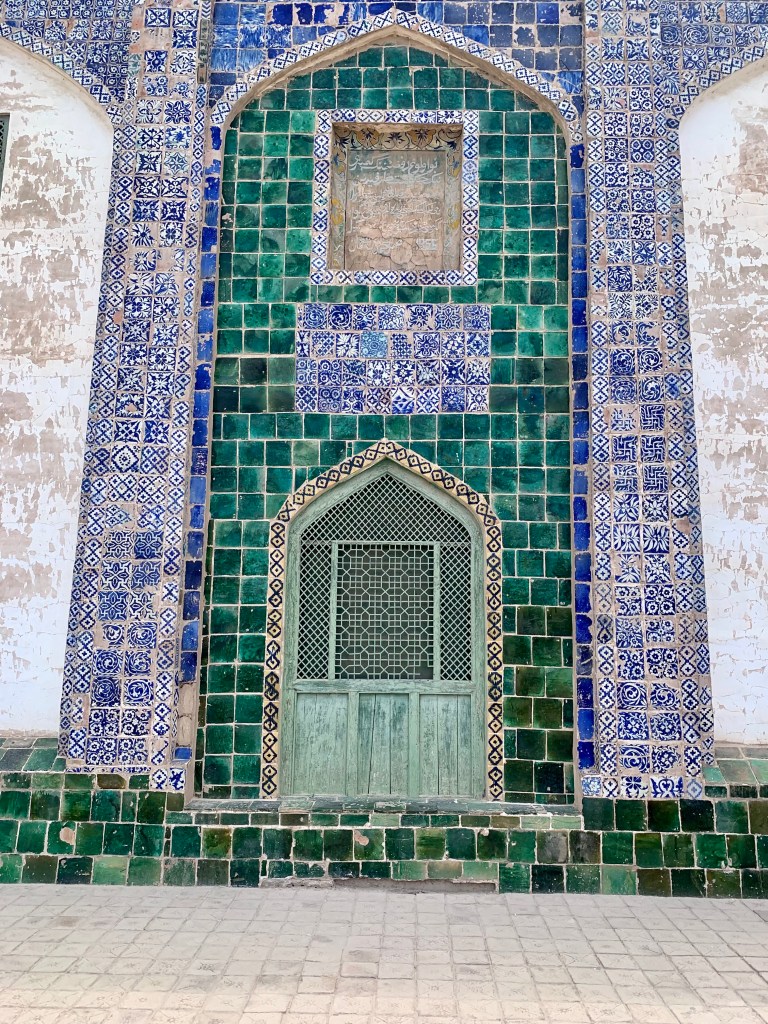
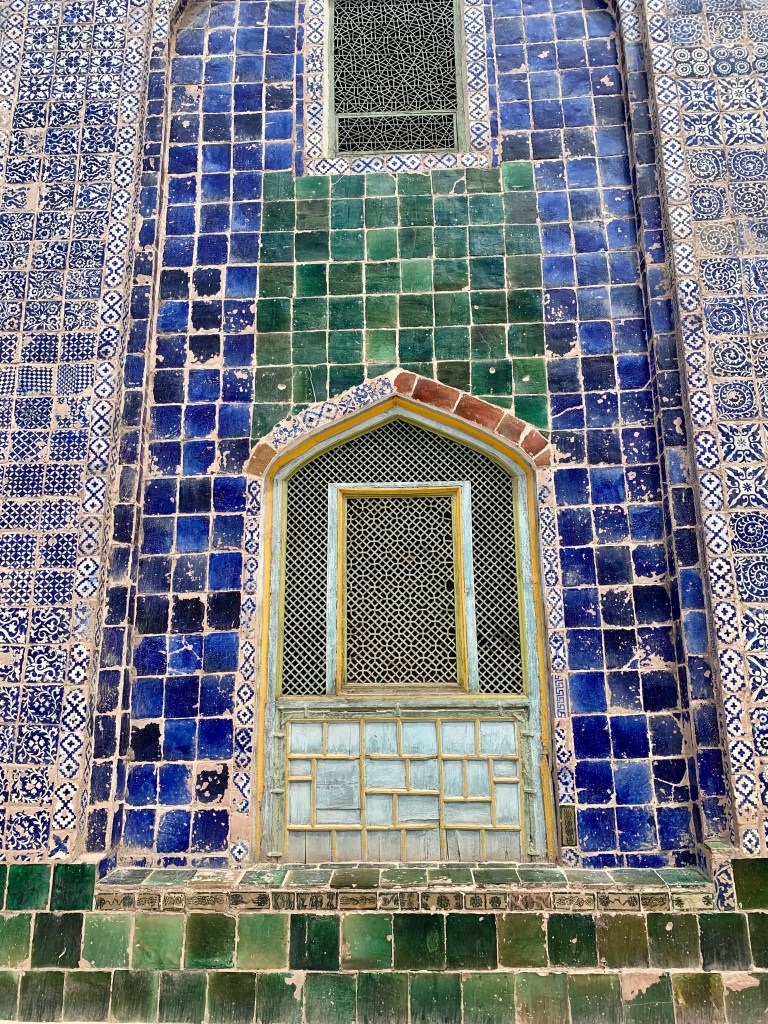
The mausoleum tomb chamber itself is a stunning example of ancient Uyghur Islamic architecture. The dome and the walls are all covered in beautiful glazed ceramic tiles, some mismatched from years of repairs here and there. We were asked not to take pictures inside the tomb chamber; each of the tombs was covered in a colorful, decorative sheet. The tombs were many different sizes and at different heights, representing different genders, ages, and social statuses. Off in the corner was a small wooden cart said to be the cart that carried the Fragrant Concubine back to Kashgar, but, mysteriously, no tomb was labeled as hers. I’ve not been able to see a lot of architecture in this style, and with this much significance, so it was fascinating to spend some time with it.
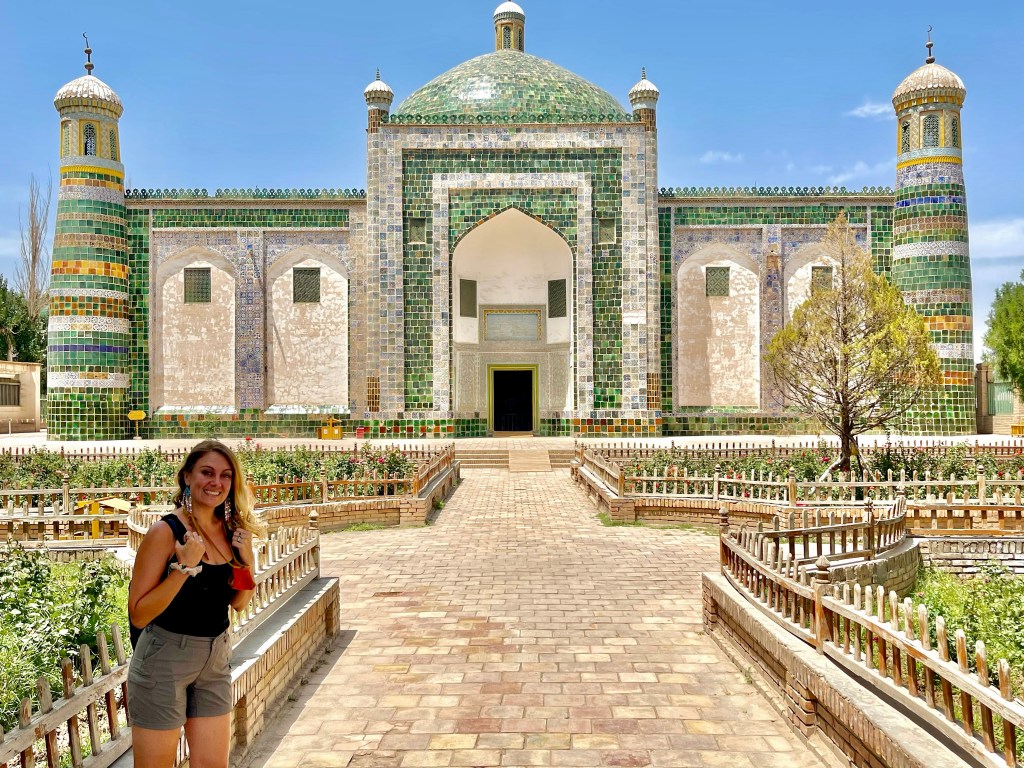


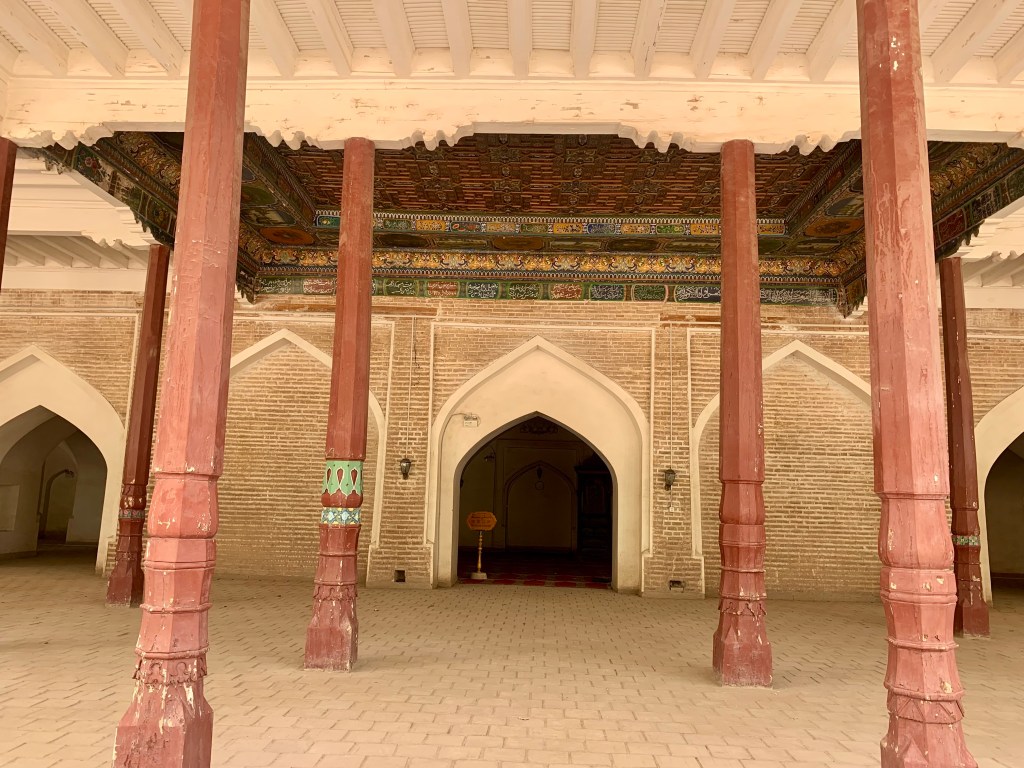
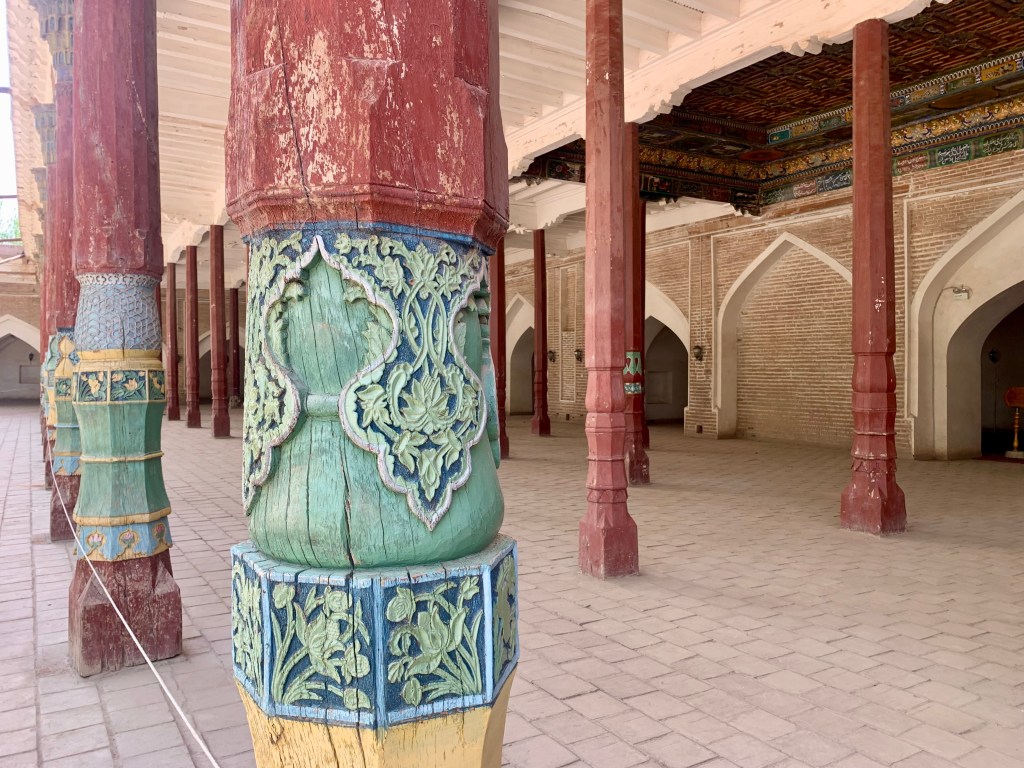
We then continued out through the cemetery and made our way over to take a look at the Juma Mosque (or, the Friday Mosque – people come here for liturgy before they go to pray at the Apakh Khoja Tomb each Friday) and the upper and lower prayer halls. Though we weren’t able to go inside on the day we were visiting, we were able to walk by and see the beautiful architecture. The Joma Mosque is known for its 62 red pillars designed in the Uyghur style; each pillar was hand-carved and painted by a different artisan. Though much of the paint was fading, it was wonderful to see the intricate designs.


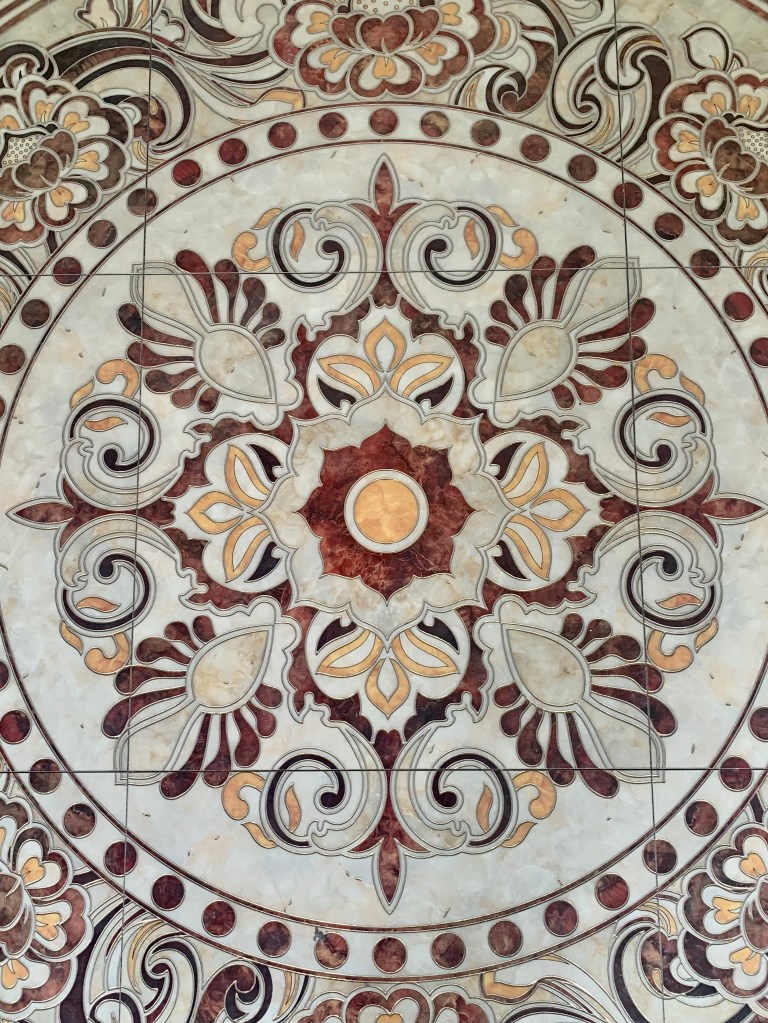
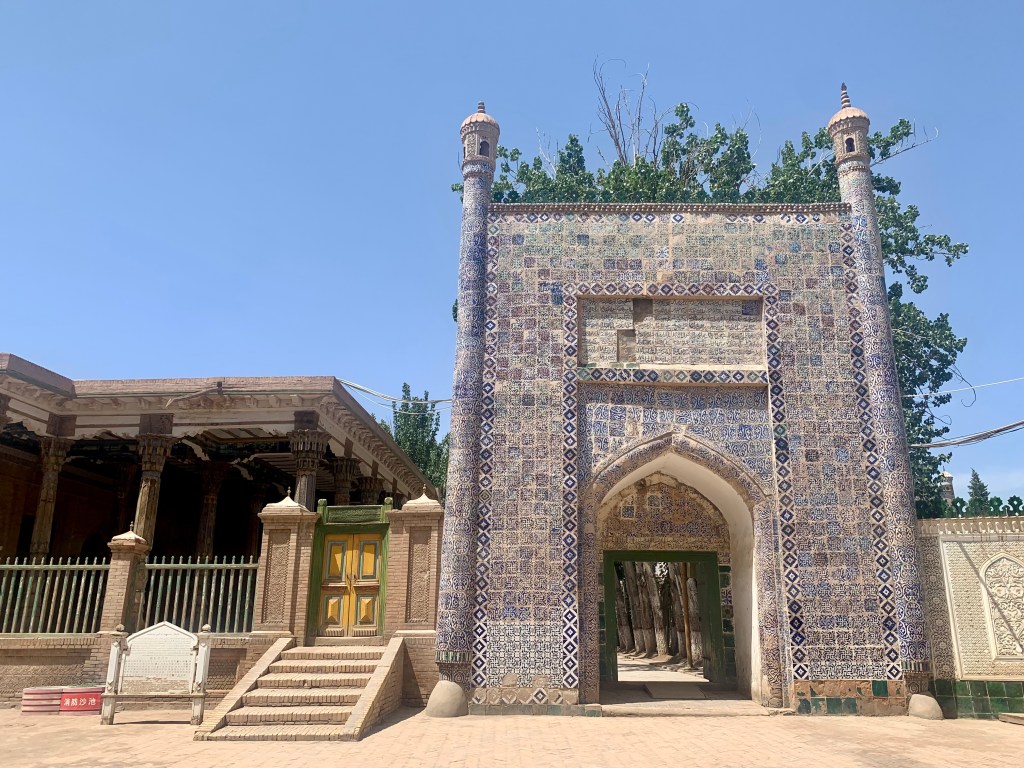
Visiting the Apakh Khoja Mausoleum was a fascinating way to learn more about the history of Kashgar and the Uyghur culture. Hearing of these families, these stories, these histories — there’s always more to learn out there.
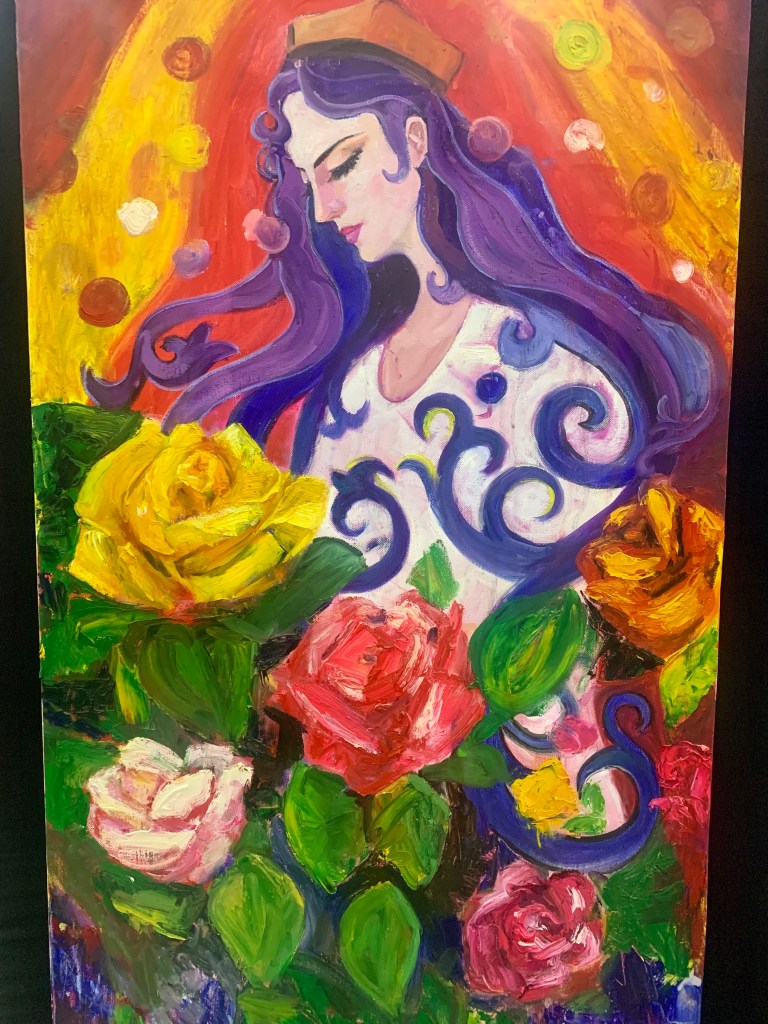
No trip to Kashgar would be complete without a trip to the Kashgar Sunday Bazaar. For more than 2,000 years, this market has been a pivotal trading point along the Silk Road; it is said to be the biggest market of its kind in Central Asia! Though it is now open every day of the week rather than just Sundays, the Sunday Bazaar is a place where you can buy just about anything: scarves, dried fruit, textiles, shoes, carpets, medicines, musical instruments, home goods, musical instruments, hats… even livestock! You can visit the Sunday Livestock Bazaar (in a slightly different area) to find sheep, cattle, goats, horses, donkeys, camels, and yaks for sale. (I couldn’t bring myself to visit that one.) There is a common saying that you can buy anything in the Kashgar Sunday Bazaar except chicken milk and a cow’s egg, and, walking through the market, I’d say they are right!
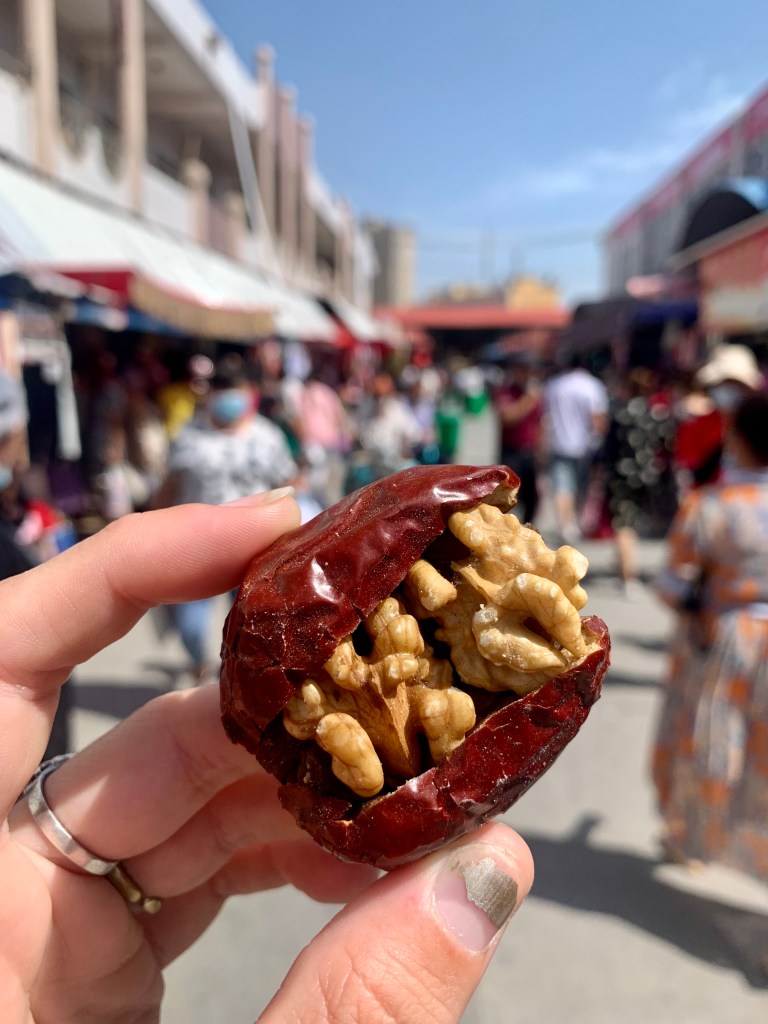
We were given some time to wander around the market on our own and it was easy to get lost walking through the aisles and aisles of goods. The bazaar seemed to be organized in sections based on what was being sold, so we made our way in and out, turning corners and coming upon something completely new. Some of my favorite things were the dried fruits and candies we found!
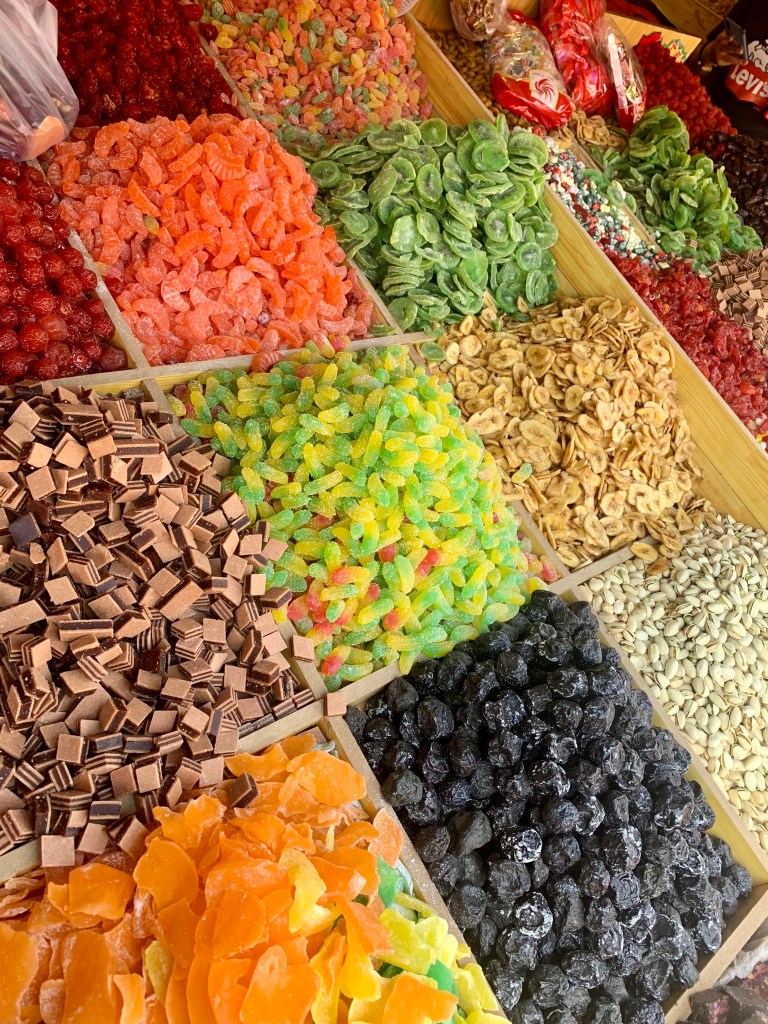
After the quiet reverence of the Apakh Khoja Mausoleum and the hustle and bustle of the Kashgar Sunday Bazaar, we went back to our hotel for the evening. With only two days left in Xinjiang, there was a lot to rest up for…
 Adventure in the Great Wide Somewhere