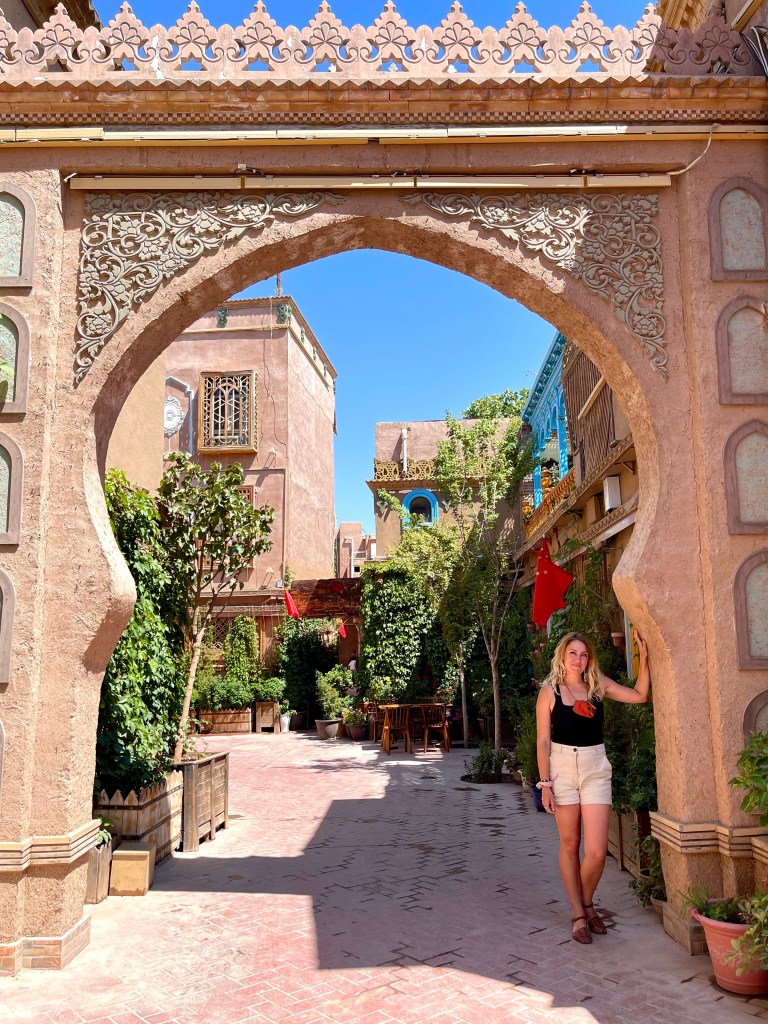
This entire blog post will be dedicated to just one stop, in just one location. I know that isn’t usually my style but in this specific case, I can’t help it. This ranks up there in my Top 5 Travel Destinations of All-Time, and I took a billion pictures, and I couldn’t narrow them down to the usual 10-15 I post from each stop on my trip because everything was perfect and beautiful and I could not live with myself if I did not share many, many, many pictures from this place. Friends, I’d like to introduce you to: Kashgar.
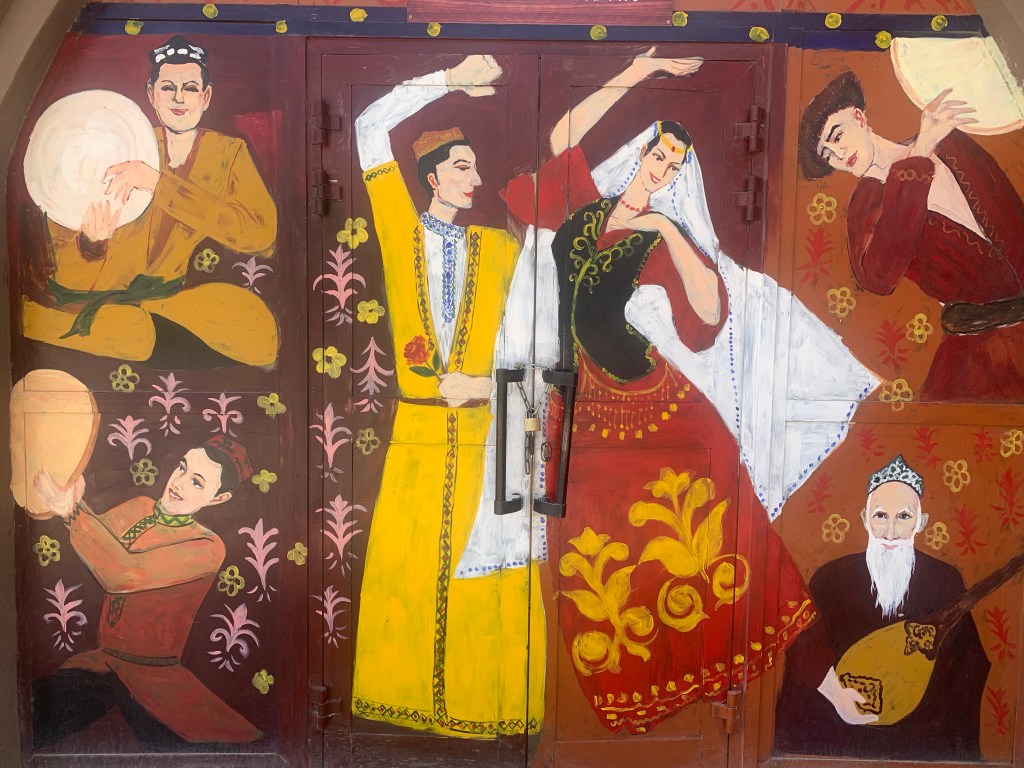
قەشقەر Kashgar 喀什 (or Kashi, in Mandarin) is one of the oldest continuously inhabited cities in the world; as an oasis city right near the border of Afghanistan, Kyrgyzstan, Tajikistan, and Pakistan, Kashgar has a history going back 2,000 years and was a key trading post on the ancient Silk Road. Often called the “City of Bazaars,” Kashgar is famous for its markets where you can buy all sorts of traditional Uyghur handicrafts, musical instruments, fruit, bronze, hats, pottery, fabric, and the famous Kashgar carpets. In the center of Kashgar, you will find Kashgar Old City (or Kashgar Ancient City) – thought to be the soul of Kashgar, the Old City covers an area slightly larger than 4 square kilometers and is home to more than 630 Uyghur households. Though many of the traditional homes in Old City have been renovated in the past 15 years (again, something I encourage you to do more reading on, or we can chat about in person), the spirit of Kashgar lives on in the bustling streets, artisan folk markets, street-side snacks, vibrant colors, and lively music.


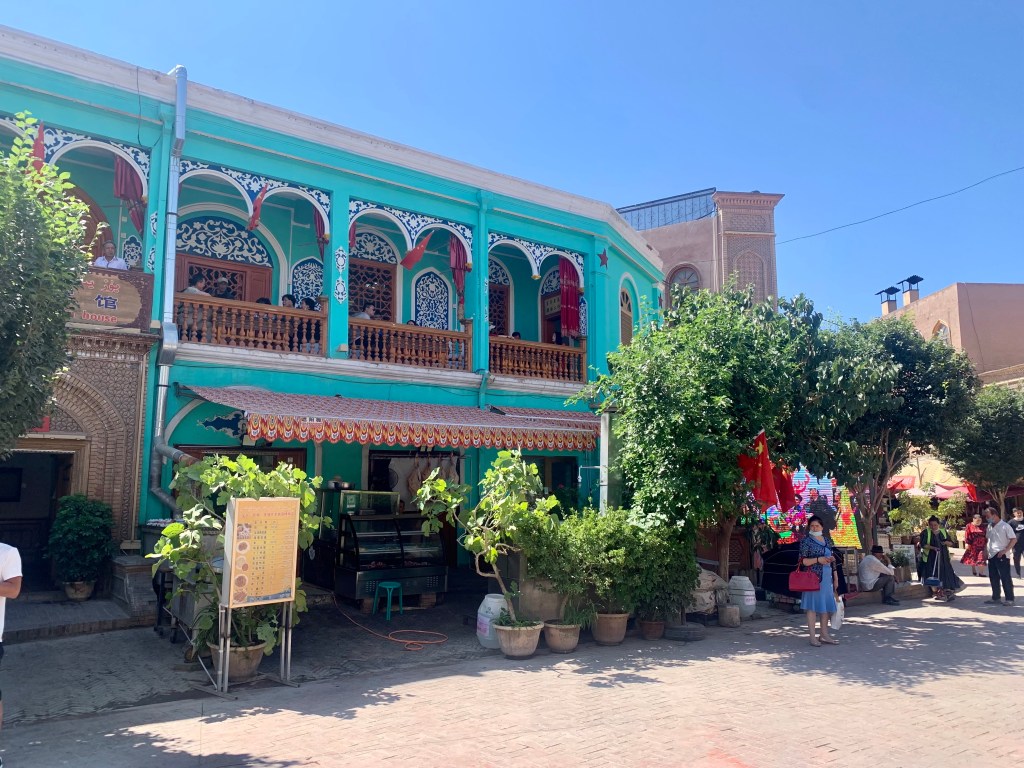
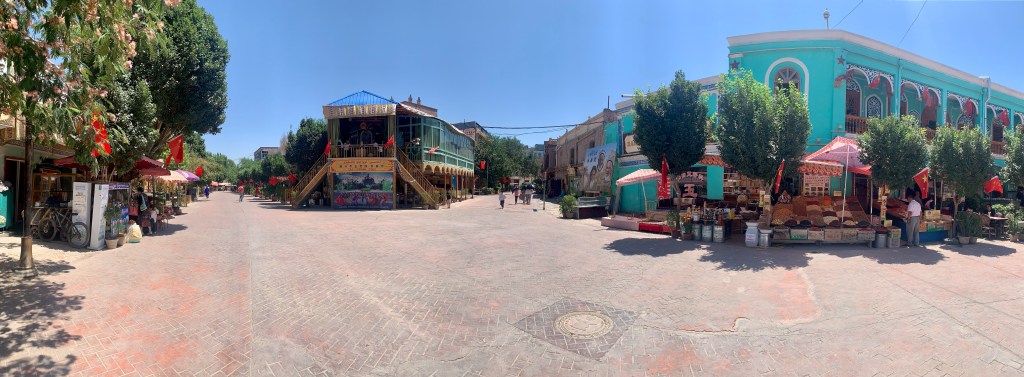
As we had just finished our Northern Xinjiang tour and didn’t have as long of a flight to get to Kashgar, we were able to spend our first day exploring on our own before the rest of our tour group arrived. After getting situated at our hotel, we walked about an hour into the center of the city to explore the Old City. (Yes, the rest of Kashgar outside of Old City has skyscrapers and cars and looks like a regular city. I just don’t have any pictures of that part of the city. Because….well, LOOK at these pictures!! How could it compare?!) What awaited us was a maze of small lanes and alleyways, each more colorful than the last and each selling even more beautiful crafts and goods.
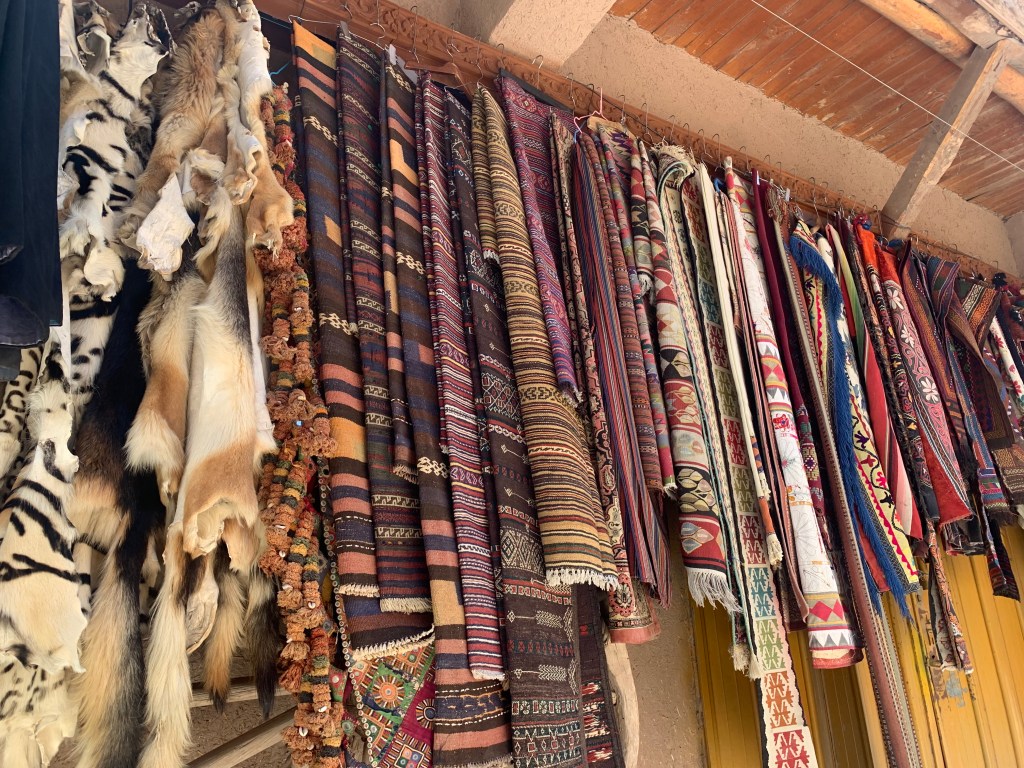
It was a good thing this was the last big stop that we’d use as a home base on this trip – there was no way I would make it out without picking up some gifts and souvenirs. One, in particular, that I couldn’t leave without: a Kashgar carpet. Since ancient times, Kashgar has been known throughout the world for its beautiful Uyghur rugs and carpets. Made by hand on a loom using wool, wool and cotton, or silk, Kashgar carpets are famous for their vibrant colors and geometric patterns. When we stumbled upon a building where we saw beautiful carpets draped out over the balconies and lining the staircase up to the second floor, we decided to go in and take a look.
Immediately we were met by an elder shopkeeper, his son (who was able to speak some English) and hundreds of carpets: hanging from the walls, rolled up in stacks, draped over furniture… As we looked through the various designs and patterns, I knew I had to bring one home with me. Yes, the carpets were expensive (but for good reason: look at them!! Made by hand!! Are you kidding me?!) but they would be something that I will be able to treasure forever, to proudly display in my home, to someday pass down to my kids along with my stories of visiting Xinjiang. One of my favorite things is being able to look around my house at all of the pictures and souvenirs I have been able to pick up on my travels, all of the stories and cultures and people that accompany them. If someday my house just looks like a mish-mash of memories collected from around the world, I will be a very happy Madie indeed.
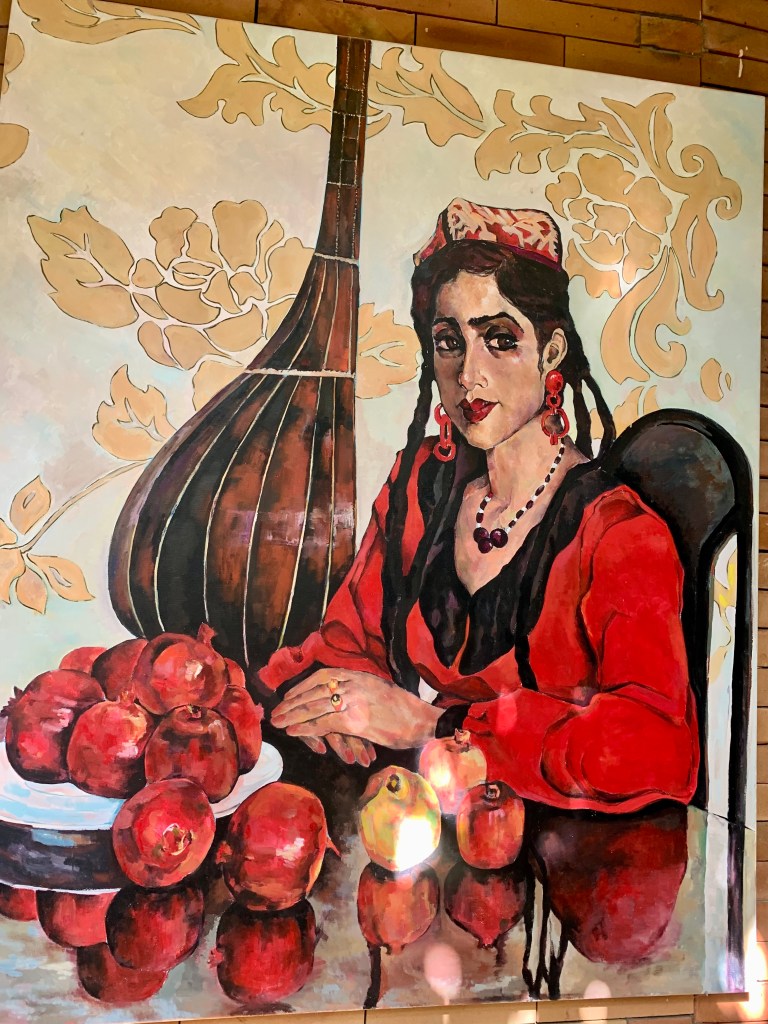
Ultimately, I decided on two carpets to take home with me: a smaller multi-colored rug made with a wool and cotton blend, and a larger deep blue wool rug with a design featuring pomegranates in the center. Pomegranates are synonymous with Kashgar; the fruit from this region is said to be the sweetest in the world, and they are often incorporated into designs for art, architecture, clothing, and carpets. I was overwhelmed with joy and gratitude to be able to bring home these little pieces of Kashgar with me.
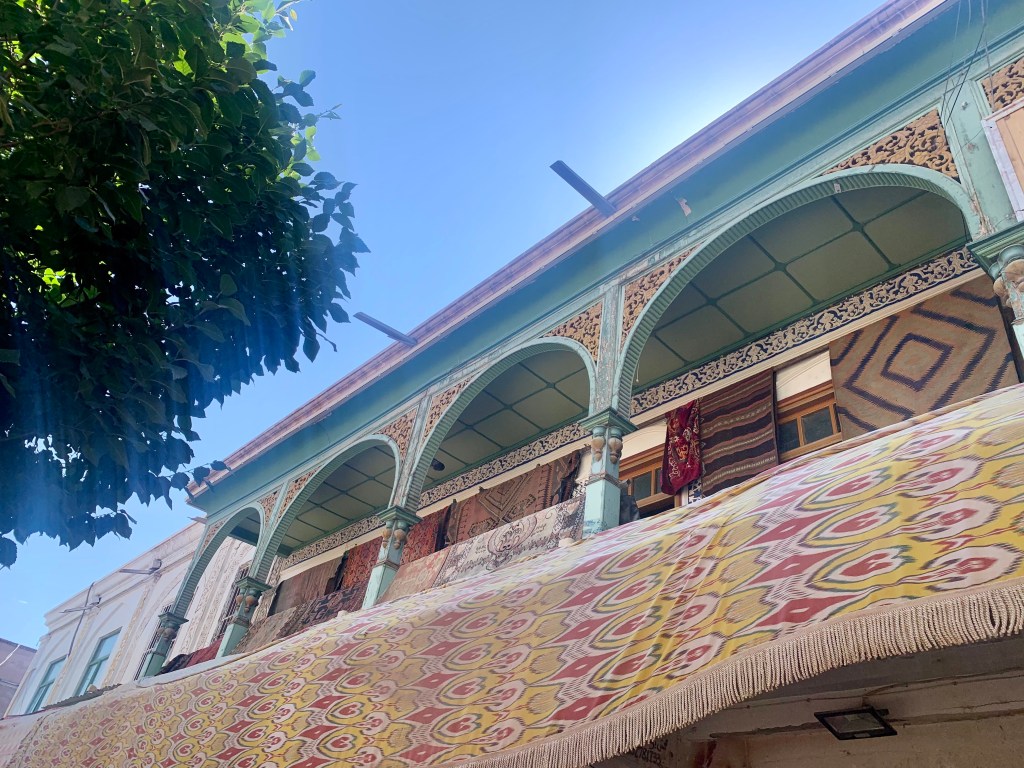

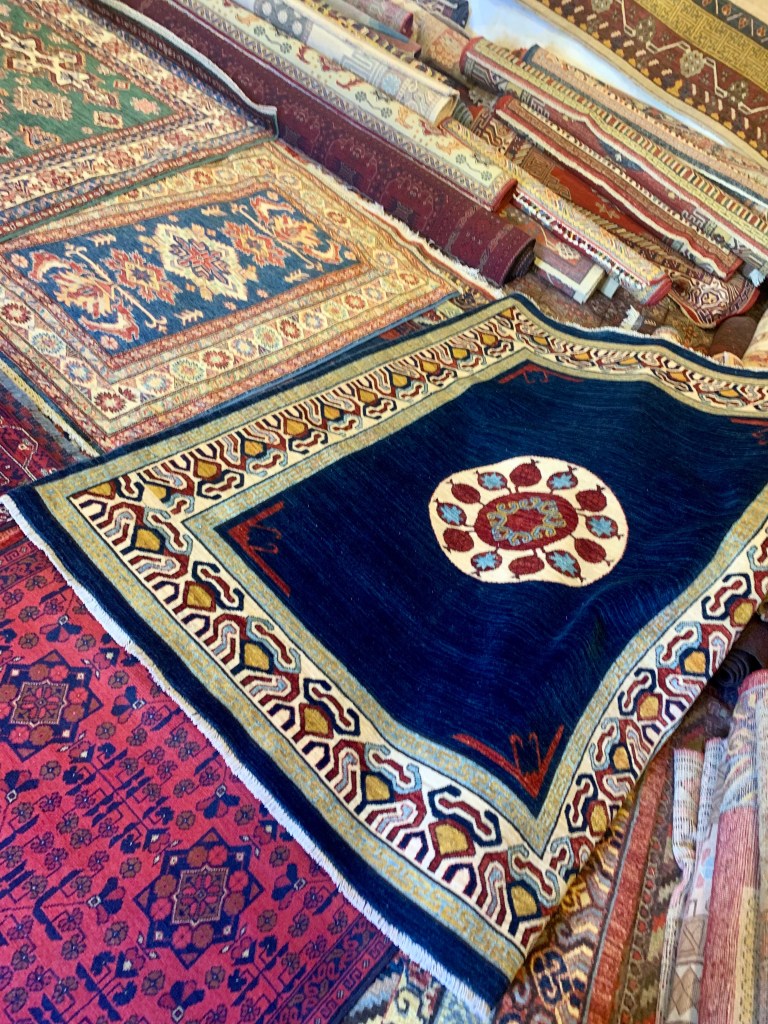
My two carpets! 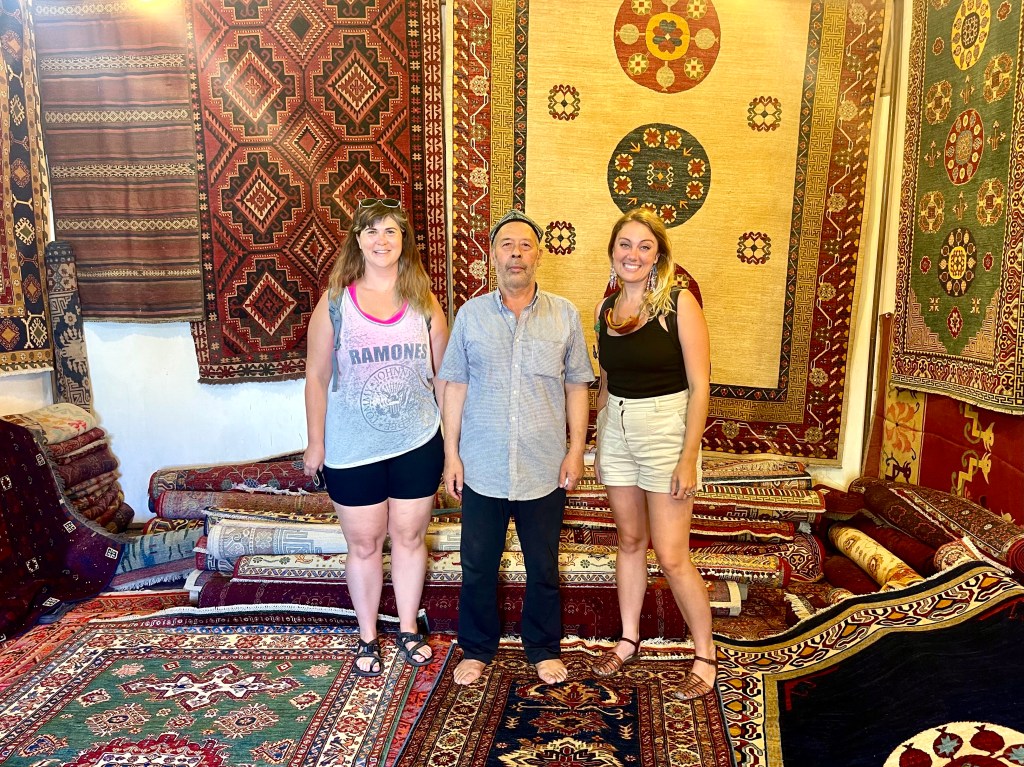
The kind shopkeeper and his collection of rugs
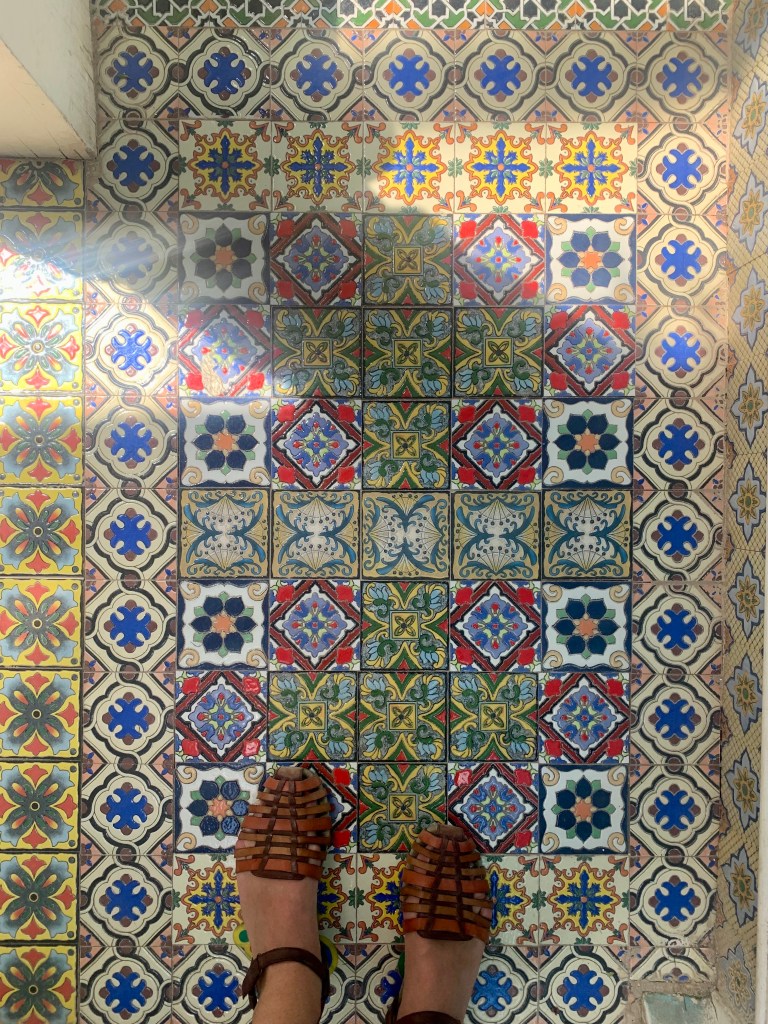
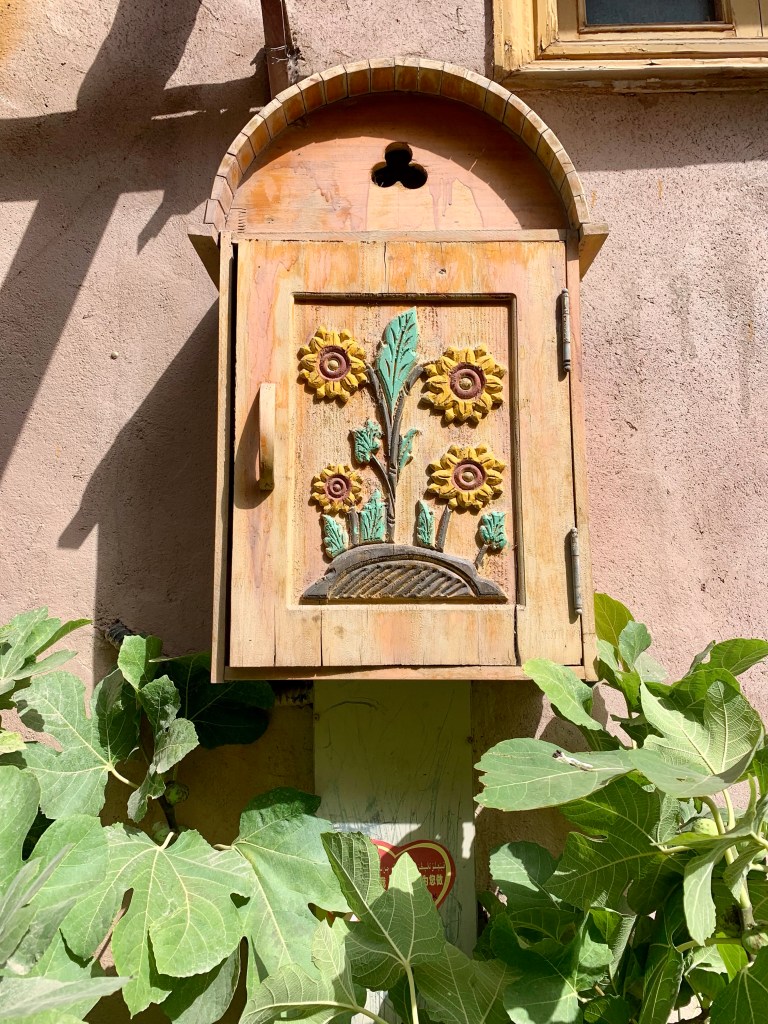
After buying our carpets, we continued wandering through the maze of little streets, marveling at what awaited us around each new corner. We’ve now reached the portion of the blog where I stop even pretending to write about it and instead just say: LOOK! LOOK AT THESE PICTURES! LOOK HOW BEAUTIFUL!


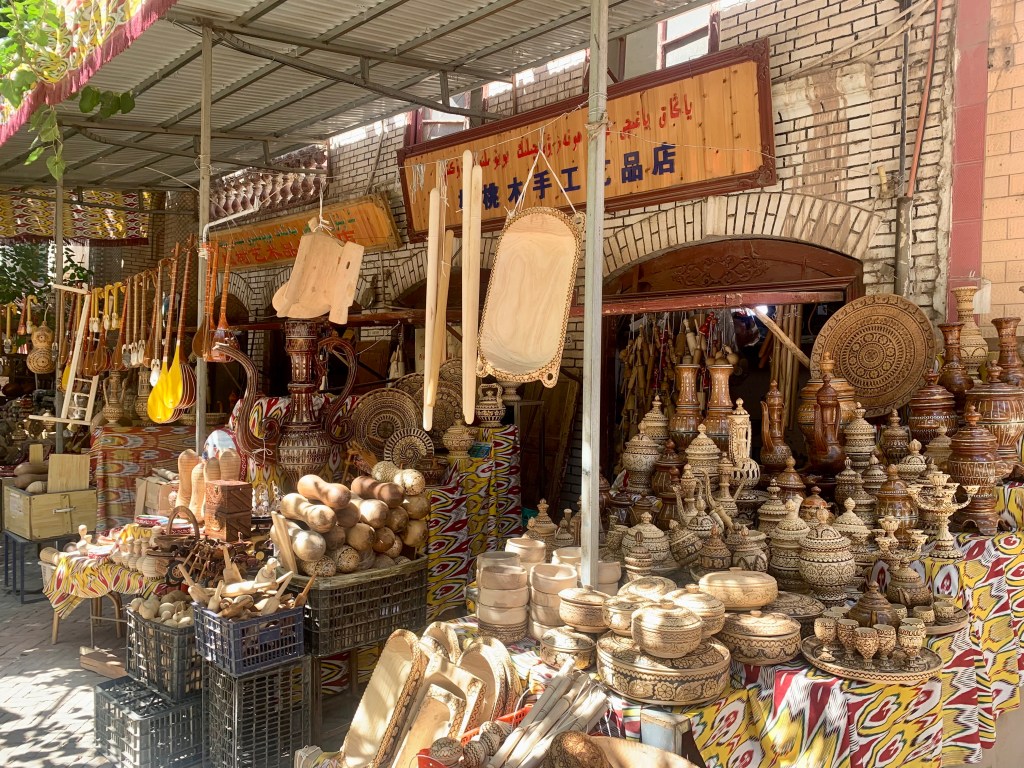
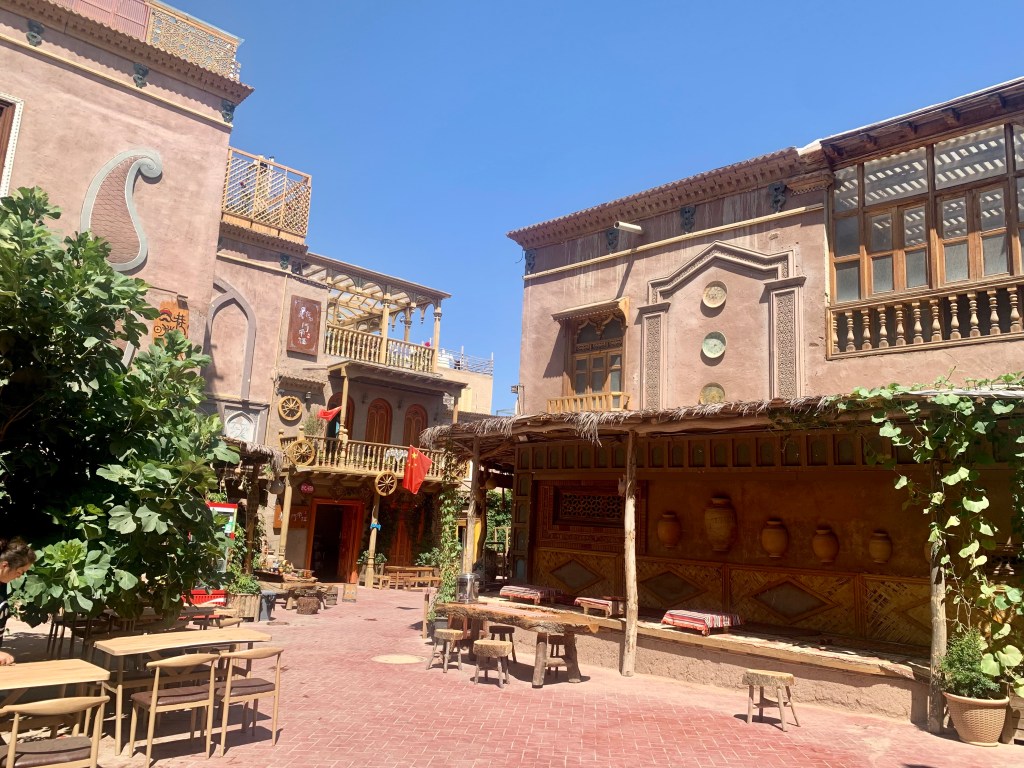

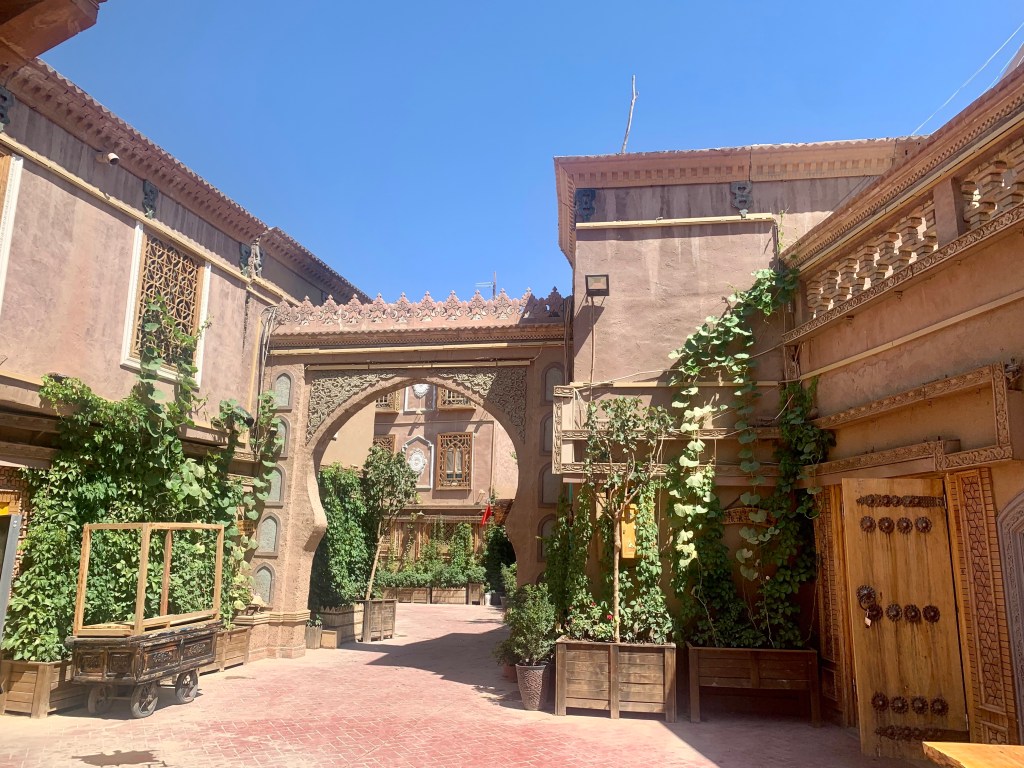

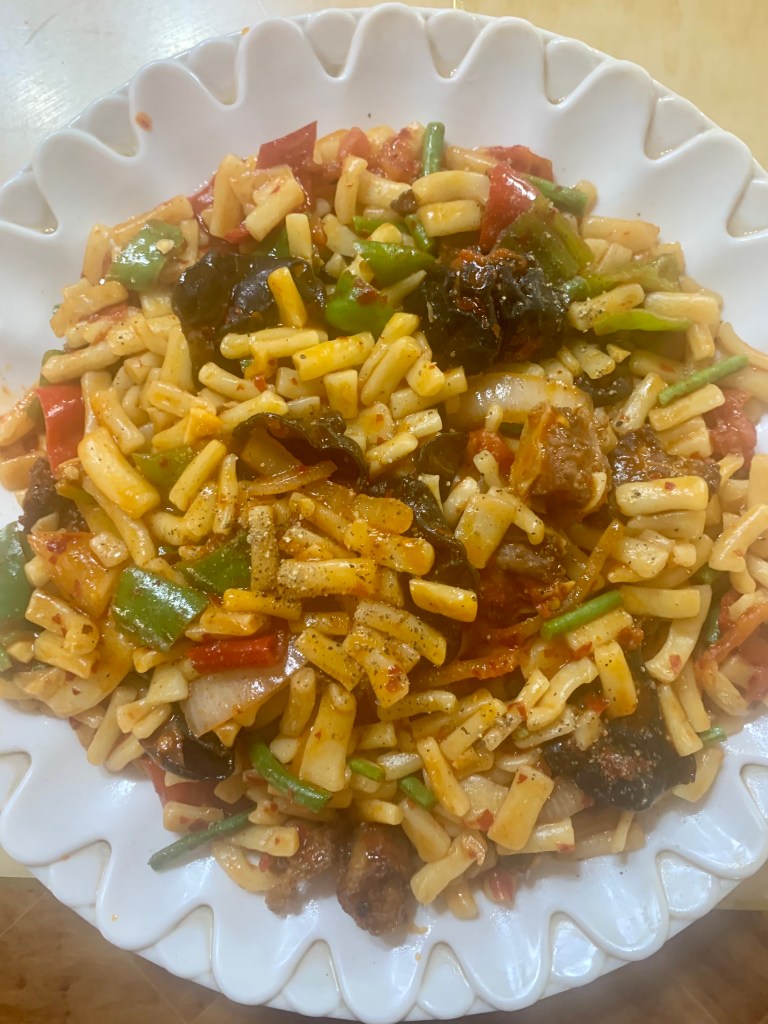
For dinner, we found a small restaurant that seemed busy (always a good sign) and were able to translate the menu enough to order my favorite dish once again: laghman! (I’m telling you, I never got sick of it. I have a tendency to do this when I’m traveling — if I find a dish I like, I will eat it as often as possible. I think I ordered Swedish meatballs 4 times in 3 days while I was in Stockholm? I can’t help it!) And what meal would be complete without another glass of kawas??

The next morning we met up with our new guide and tour group and he took us on a walking tour of Old City. Though we’d done some exploring of our own the day before, I always appreciate having a guide to take us around, especially someone local who has grown up in the area! (Full disclosure: I am absolutely the person in the group who walks in the very front, right next to the guide, and asks a billion questions. About everything. Call me annoying, but why would I NOT want to get as much information as I can, and from a direct source rather than just Googling it later?!) (Side note: I will also, still, Google everything later. This is what you get when you have a Ravenclaw who loves to travel.)
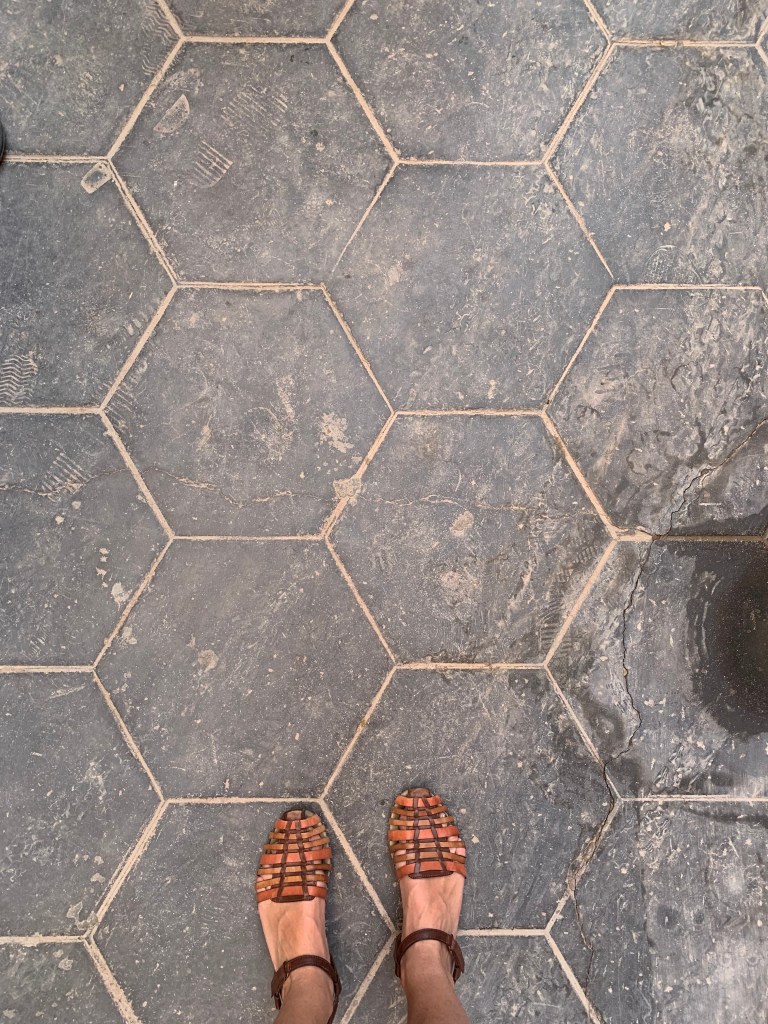
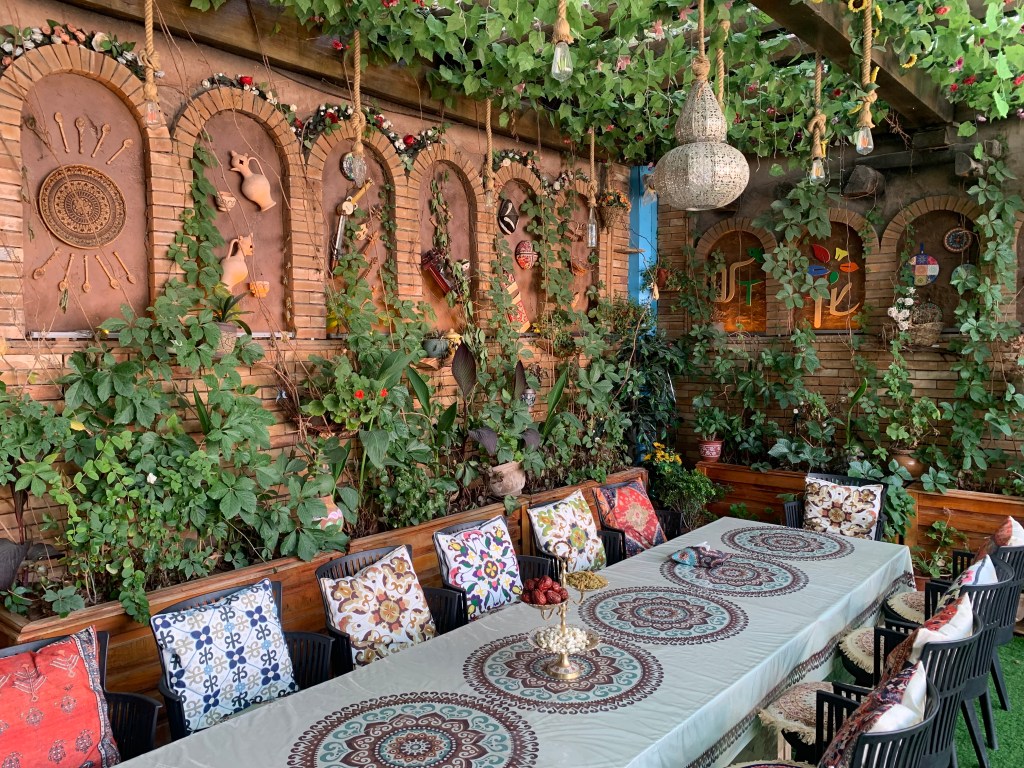
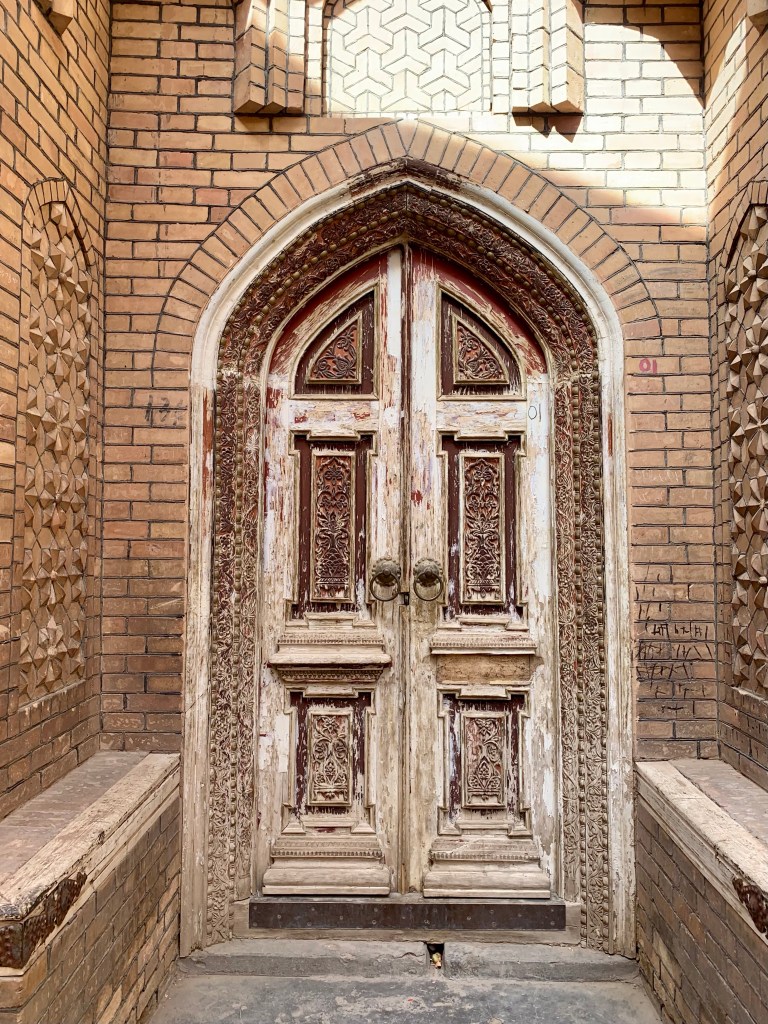
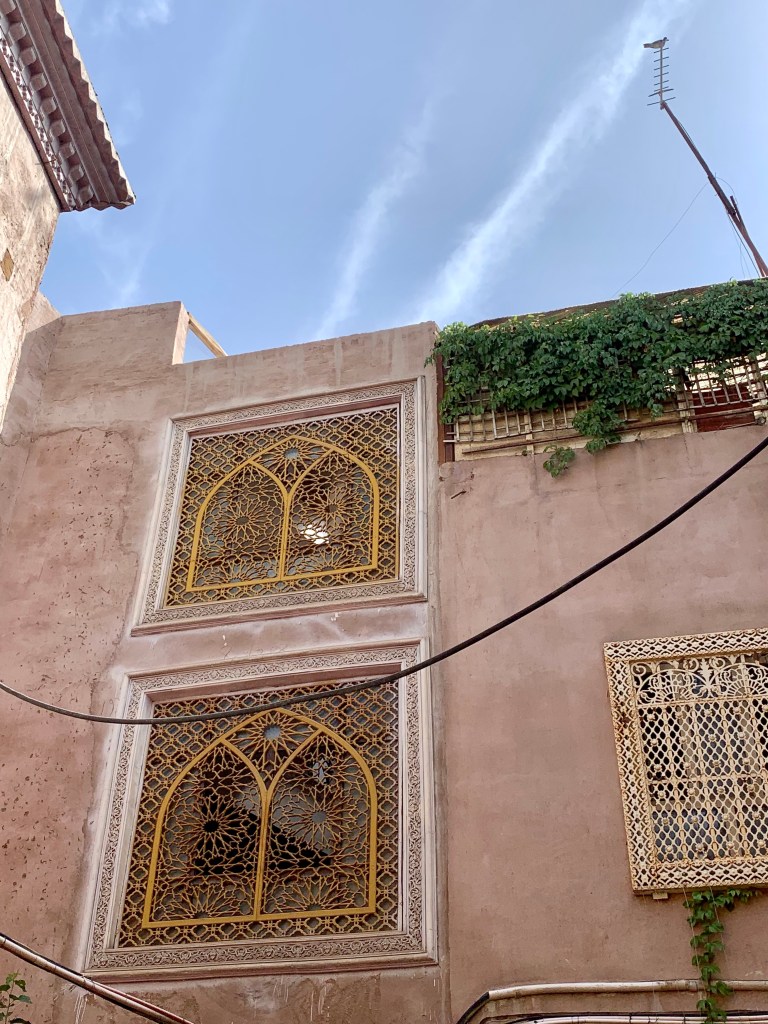
Our guide spoke to us a bit more about the traditional Uyghur architecture that we can (almost) see here in the Old City. As I mentioned before, for various reasons of varying believability that I won’t get into on here, most of the buildings in Old City were redone in the past decade or so. However, other than adding things such as electricity, running water, and plumbing, many of the buildings were reconstructed in the traditional style. Uyghur homes are typically 2-4 stories tall, built from mud bricks, with an interior courtyard where figs, pomegranates, almonds, roses, grapes, and other trees and plants can be grown. Something I found especially interesting was the patterns of the bricks on the paths themselves: in what can feel like an absolute maze, they’ve built a way to help you find your way — square tiles mean the path you are on eventually hits a dead end, and hexagonal tiles mean the path connects to others!
Fun fact: For anyone who has seen the film The Kite Runner, most of the movie was actually shot here in Old City! Though the film is primarily set in Afghanistan, it was too dangerous to film there at the time, and so, due to the similarities in style, those scenes were filmed here in Kashgar!
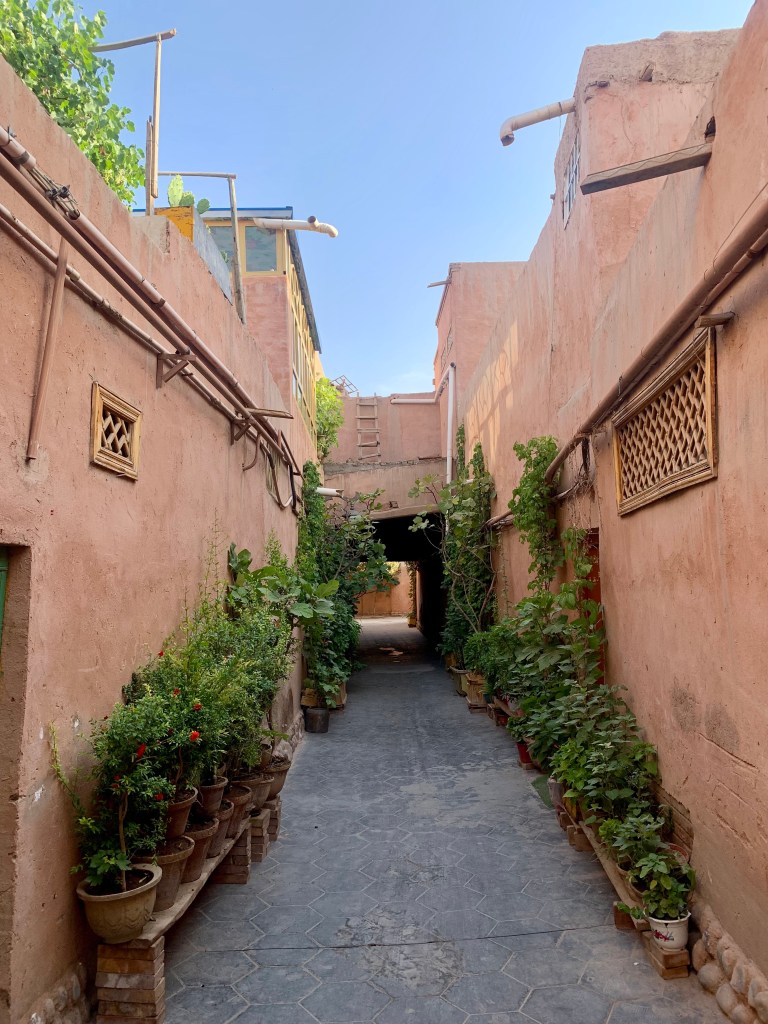
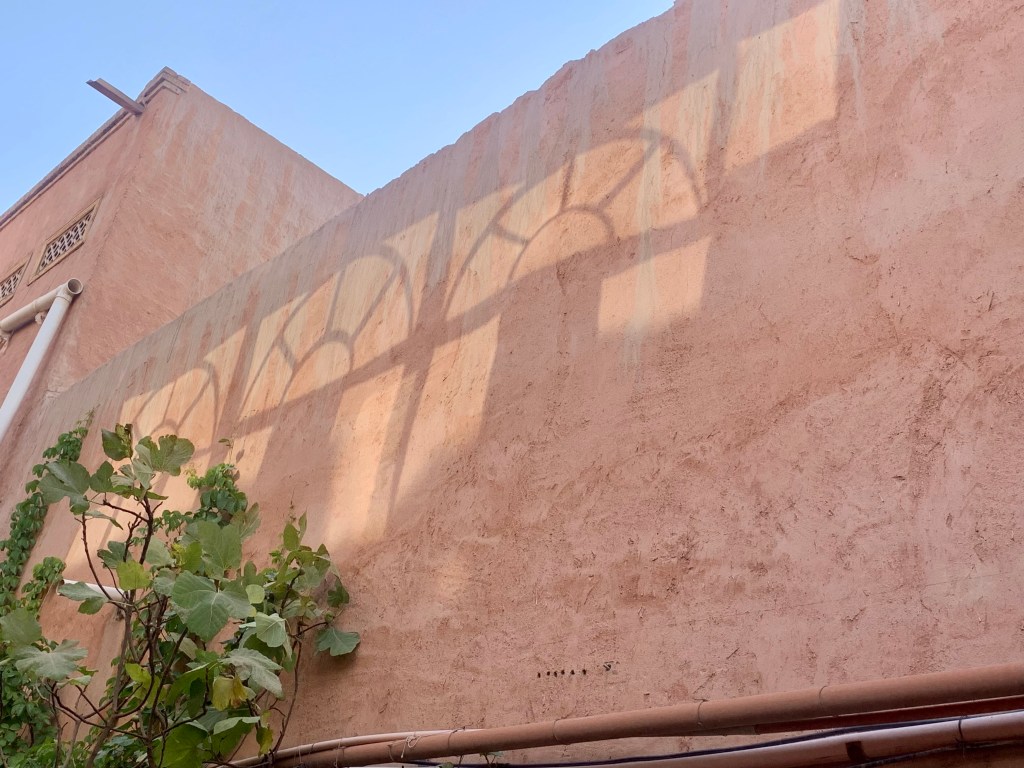


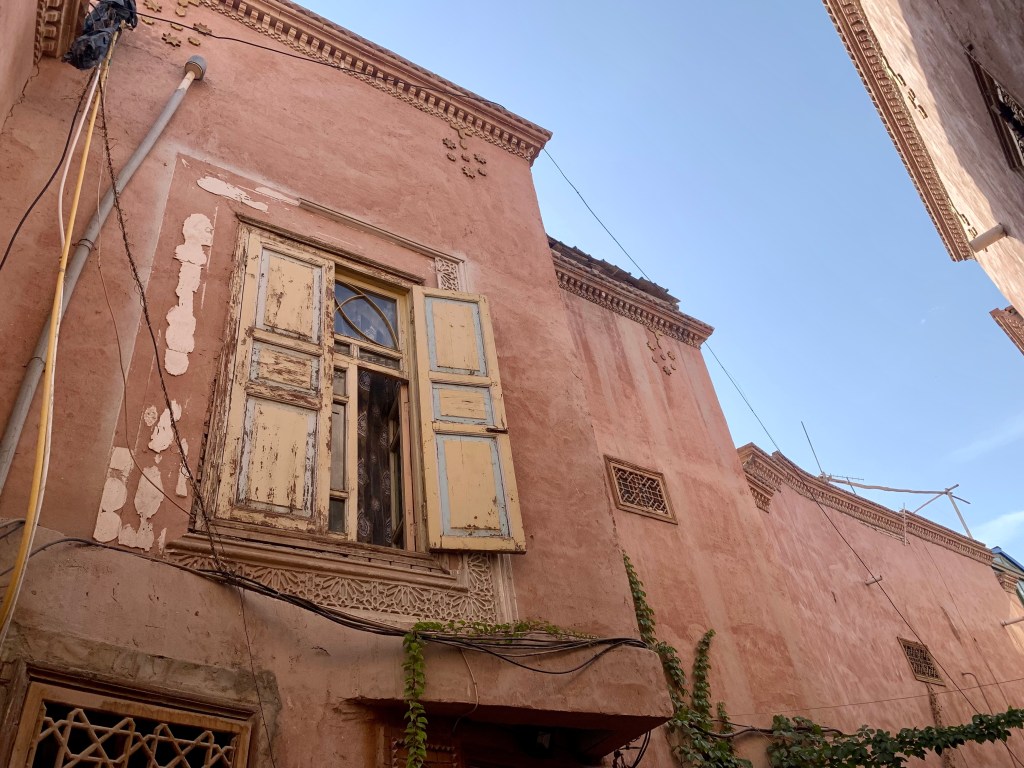
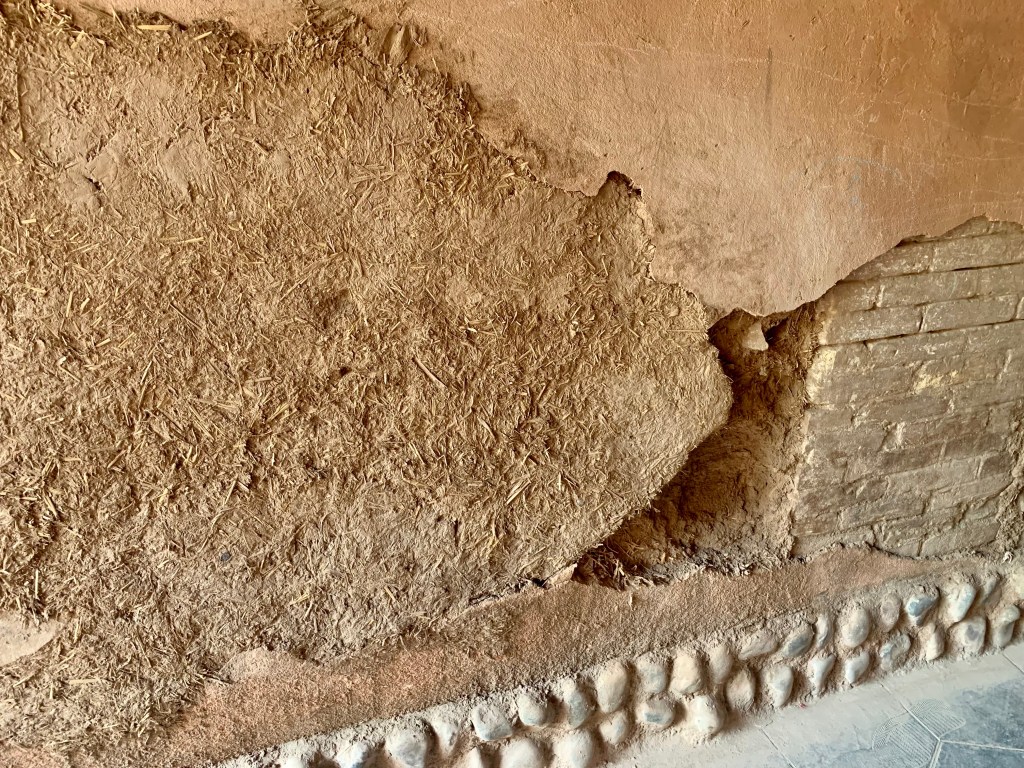
Here you can see the difference in the structure of the old construction versus the new — mud and straw, and brick. 


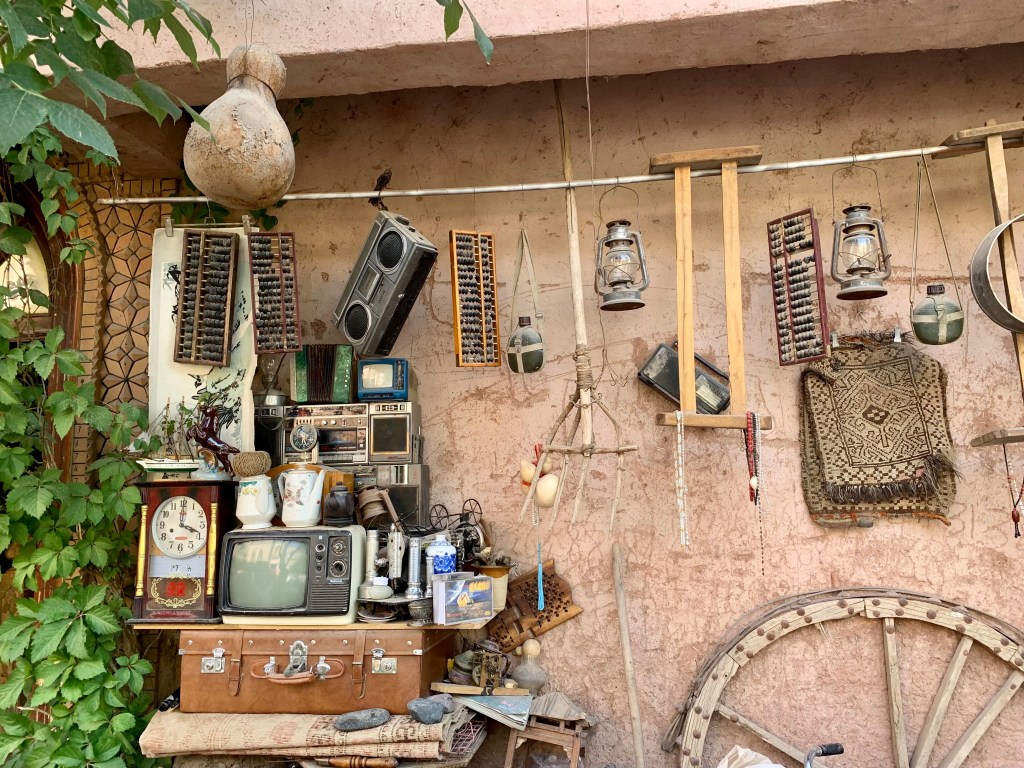
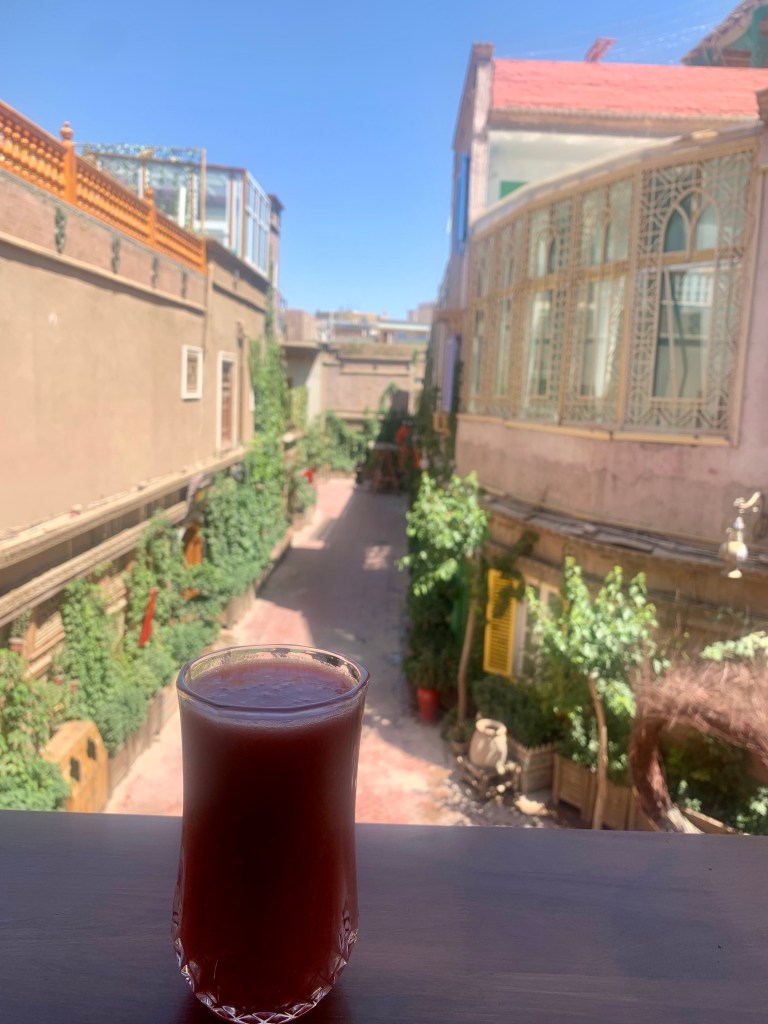
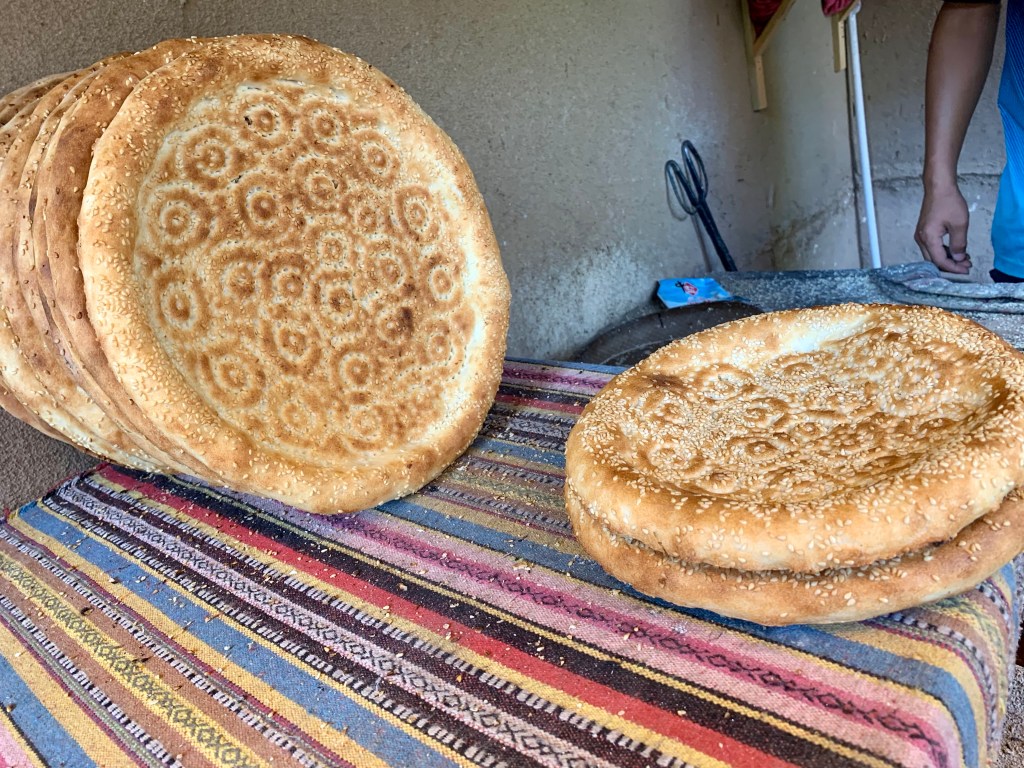
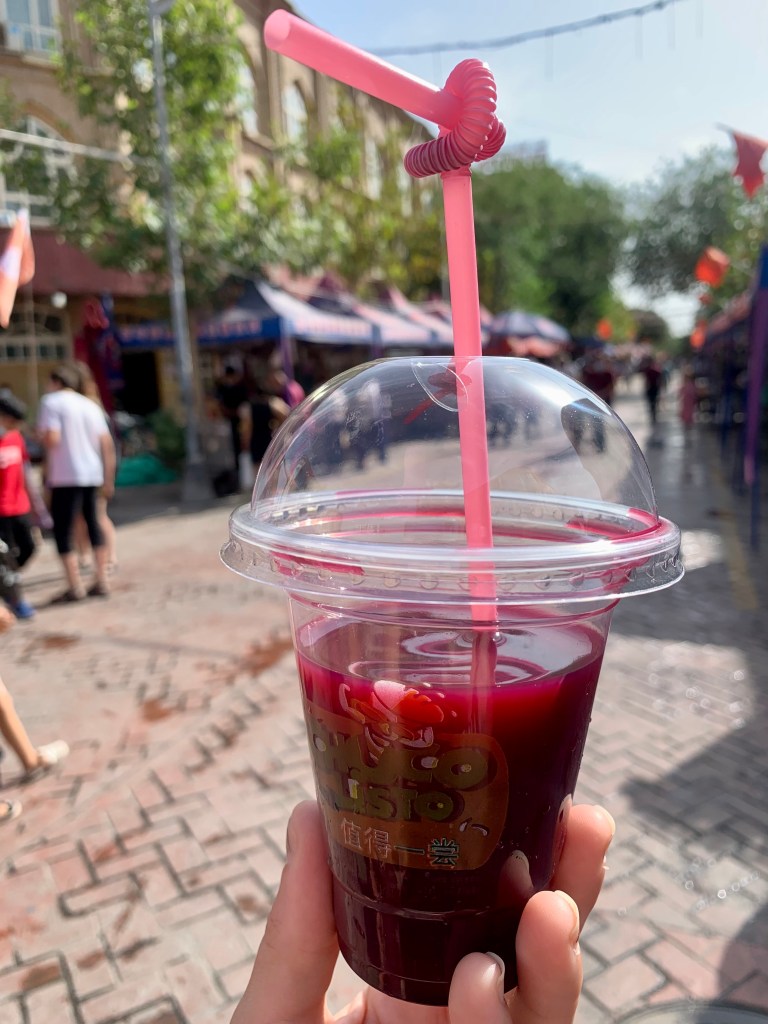
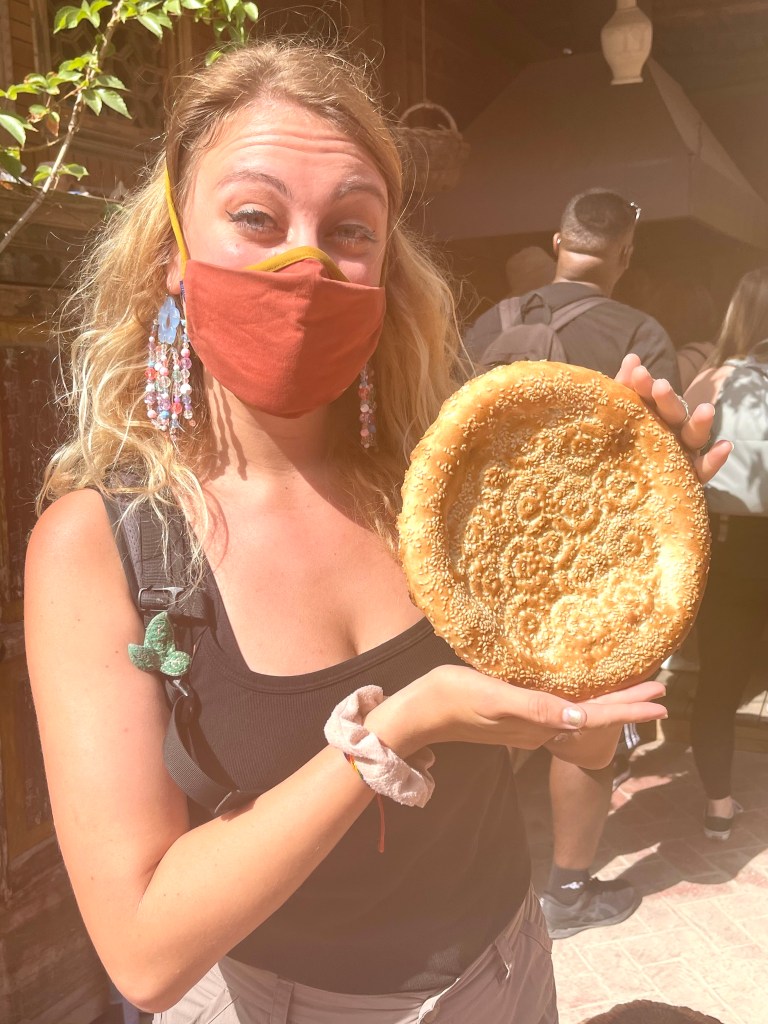
While we walked, we made sure to make time to stop and taste the local treats. We had some fresh nang straight out of the oven, figs, pomegranate juice (since we were not there in true pomegranate season), and… camel milk!



So there. After nearly 50 pictures (and this WAS me only picking and choosing the best from my camera roll), perhaps you can see why I had to dedicate an entire post to this beautiful, fascinating, important, complicated, magical place. The sights, the sounds, the smells, the tastes of Kashgar will live with me forever, and I think of it whenever I see the beautiful carpets bringing life and color into my home.
 Adventure in the Great Wide Somewhere