(Read Part I here! Read Part II here!)
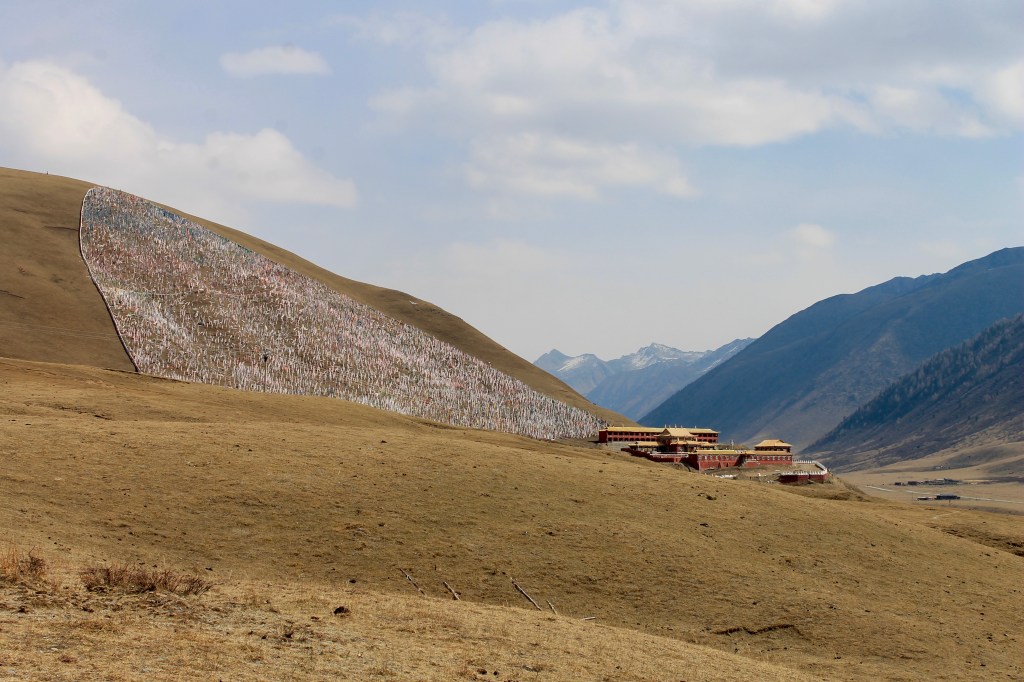
As our journey continued through the Garzê Tibetan Autonomous Region in western Sichuan, our next stop was the 龙灯草原 Longdeng Gesar Grassland, also known as the Dragon Lantern Grassland. The 12th century legend of The Epic of King Gesar tells the story of the divine Tibetan hero: a brave general who spent his life defending his people and vanquishing evil demons. King Gesar was said to have ascended to a hidden realm or celestial paradise after completing his adventures; he may someday yet return to save his people from their enemies. Legend tells us that King Gesar once set up camp in the Longdeng Gesar Grassland, building the largest tent in the Tibetan area in this spot.
We were given a few hours to hike up through the hills and take in the scenery. Though not an intense hike by any stretch of the imagination, the adjustment to the changes in altitude certainly had me huffing and puffing my way up to see all of the beautiful statues and pagodas. After so many hours in the tour bus (and so many more hours to go) a stop for some fresh air (even if strained) is always welcome. While exploring the grassland, I also got to hang out with a herd of dzo, or dzomo (མཛོ་ in Tibetan) – similar to mules, this yak-cow hybrid has been bred by farmers, and is used for its strength and size.





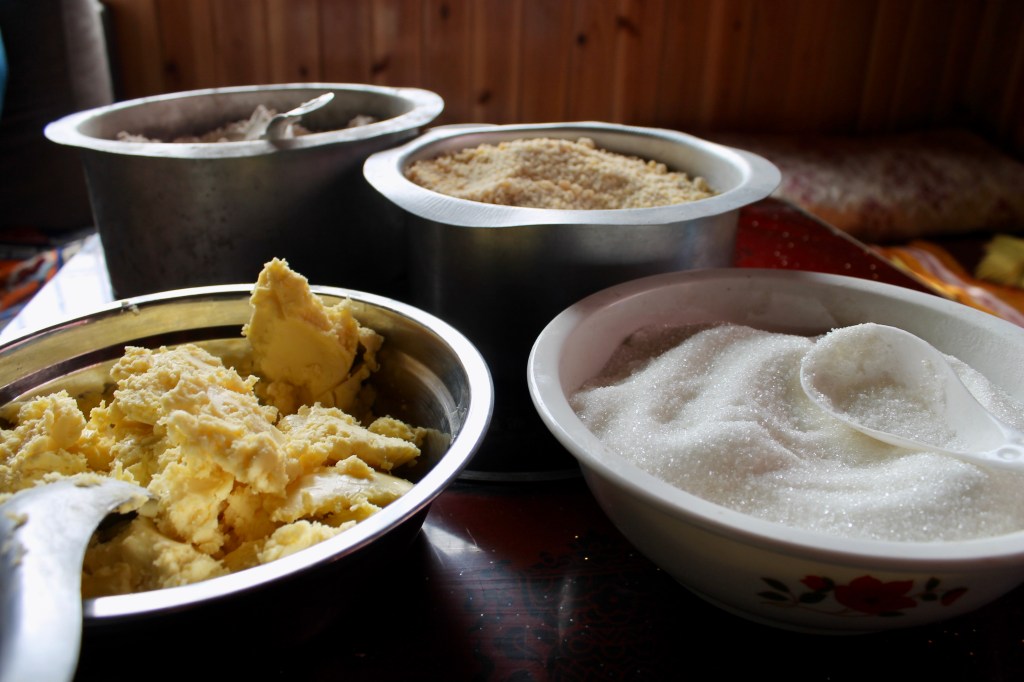
After exploring the grasslands for a bit, we were invited in to have tea with a local nomadic family in their home. Covered in rugs and blankets, the cozy one-room home was equipped with everything they needed to work and live in the grasslands while they were staying here. I especially loved the cooking area: they burned both wood and dzo poop to heat the stove! The family had prepared a spread of apples, little cookies and crackers, and yak butter tea for us. When in Rome… have another cup of yak butter tea!



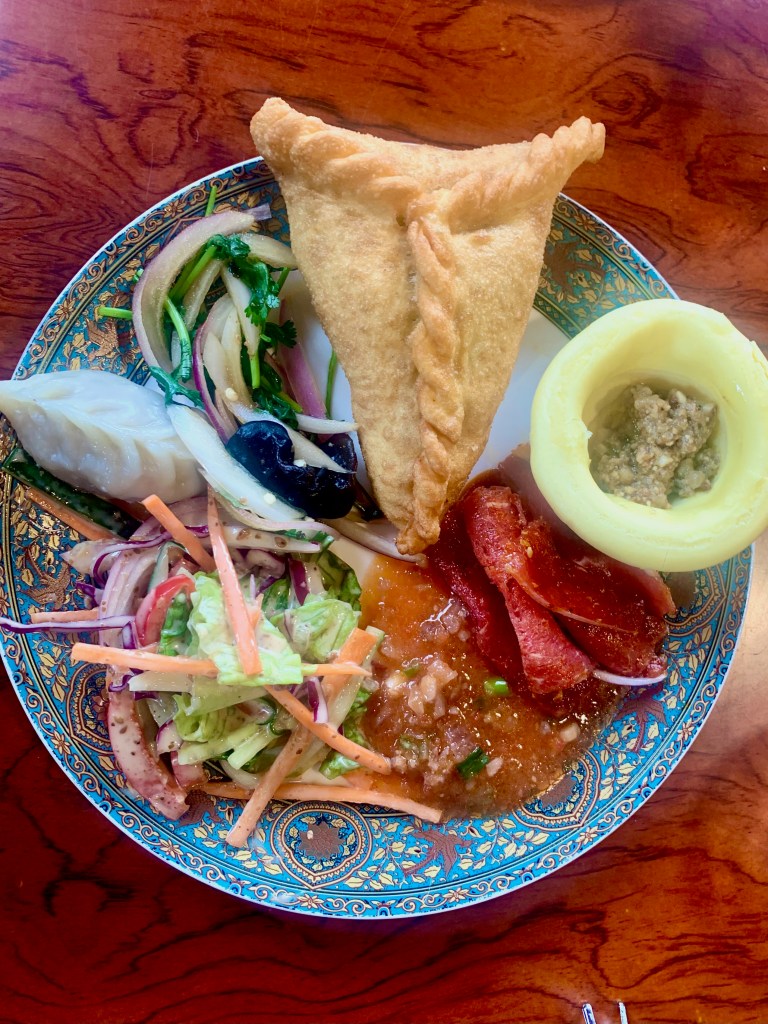
After tea, we got back on the bus to keep making our way west. As we continued slowly climbing up the Tibetan plateau, we saw more and more mountains starting to pop up around us. Mountains and grasslands – such a wonderful change from the sights I get back home in Shanghai. We stopped for lunch at the Daofu Himalayan Kitchen and were given one of the best meals we had on the trip. As usual, all of the dishes were brought out and shared in the middle of the table; but where often we are only given dishes that have been boiled or fried, there was an abundance of fresh salads and vegetables in addition to the samosas, dumplings, and everything else delicious on the table. Yum!!

Since we had our own private bus for our tour (rather than attempting this trek on public transportation – I don’t think it would be possible!) we were able to pull over for photo opportunities or stretch breaks whenever we needed. One such pit stop was to take in the beauty of Kasa Lake. A freshwater lake surrounded by mountains on three sides, Kasa Lake is regarded as a holy lake by local Tibetans, and is referred to as “Mother Lake.” Many will come here to pray or wish for good harvest/good luck.
Additionally, Kasa Lake is home to mandarin ducks, black-necked cranes, yellow ducks, and many other birds; this lake is the largest waterfowl habitat in northwest Sichuan! (No, we did not have time to go down and actually look for said birds. Which is probably a good thing. Because a beautiful lake and a bunch of cute ducks would not bode well for my getting back into the bus within a reasonable time frame…)

A few hours later we reached our hotel for the evening. Now, when I say hotel, what I really mean is something more like: magical little lakeside resort city, complete with golf carts and random statues everywhere you look. And hypothetical hot springs. (They said they were there. I could not find them. Unclear.) I don’t entirely understand the place, nor could I actually tell you where it was; I tried searching literally any kind of key word I have about where we were/what it was called, and can’t find anything. Thus the only conclusion I can come to is that we were somehow transported into a magical little fairy village somewhere in Garzê for an evening. I am not complaining. It was wonderful.
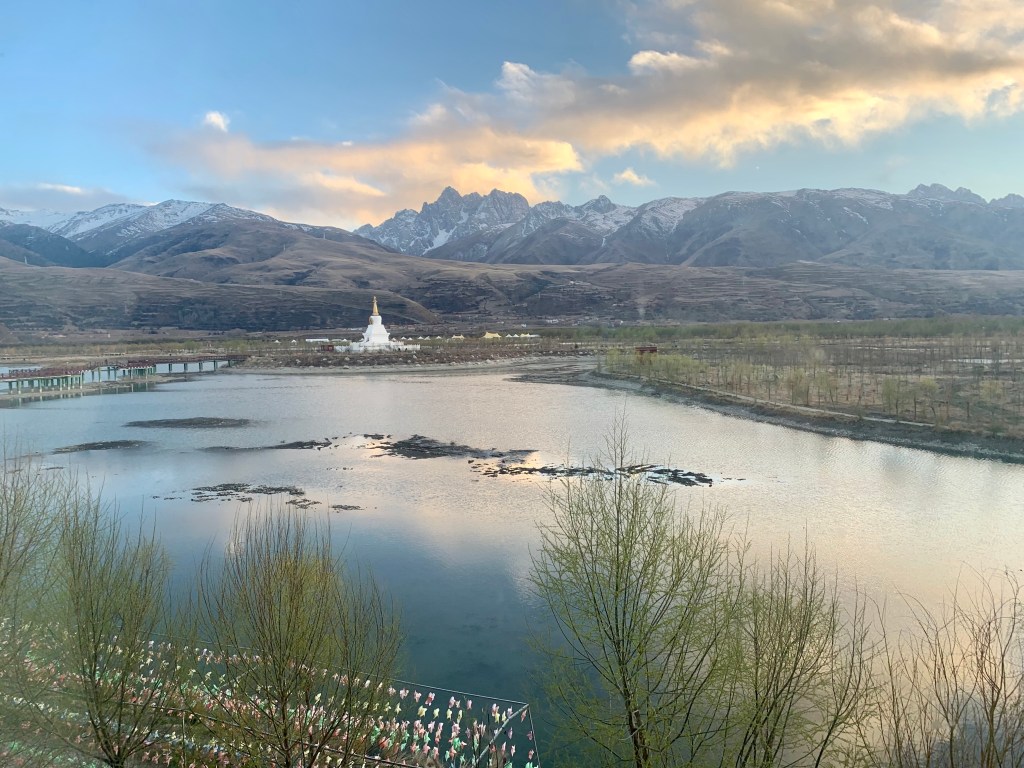


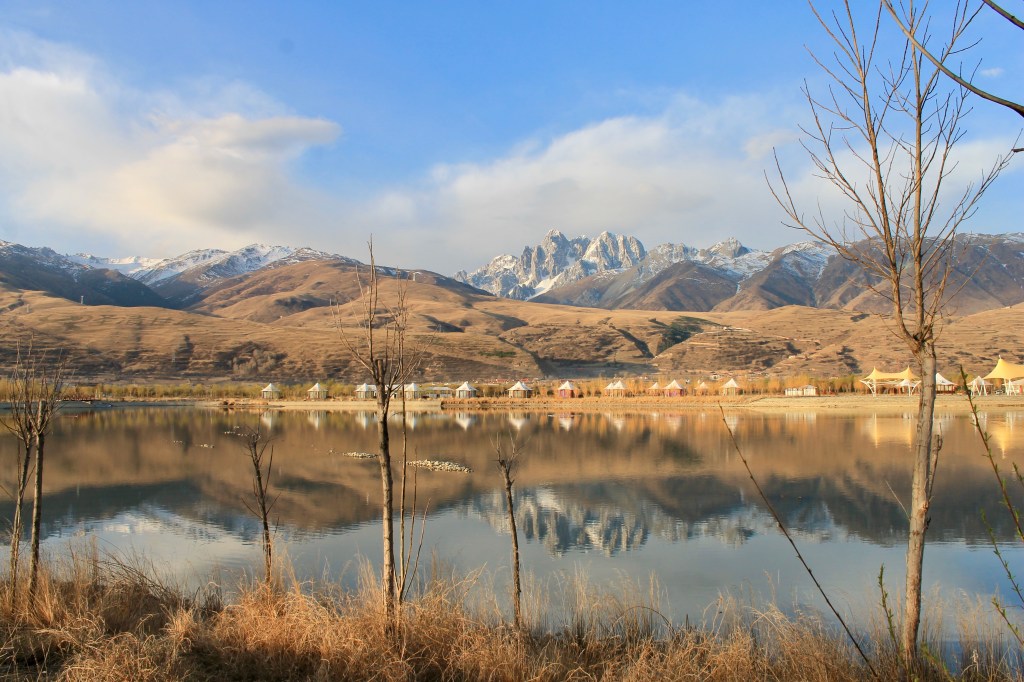
The next day brought us to another beautiful mountain lake (there’s quite a lot of those in this part of the world, it turns out); after leaving our tour bus to get into smaller vans and drive up a bumpy, steep, winding road (and thanking the old gods and the new that these drivers have made this drive as many times as they have… oof) we reached the 措卡寺 Tsokha Monastery (མཚོ་ཁ་དགོན། ). Founded in the early 20th century, this monastery and the lake it sits next to provided a much appreciated moment of quiet and calm. We were given an hour or so to wander and explore, so I decided to take the time to just sit, listen, and reflect. I climbed up on top of a rather large rock (as I am wont to do), pulled out my sketchbook, and took in the details. Sometimes on these trips, when you are always on the go and always around a group of people, it’s nice to find these moments to just sit in the stillness.

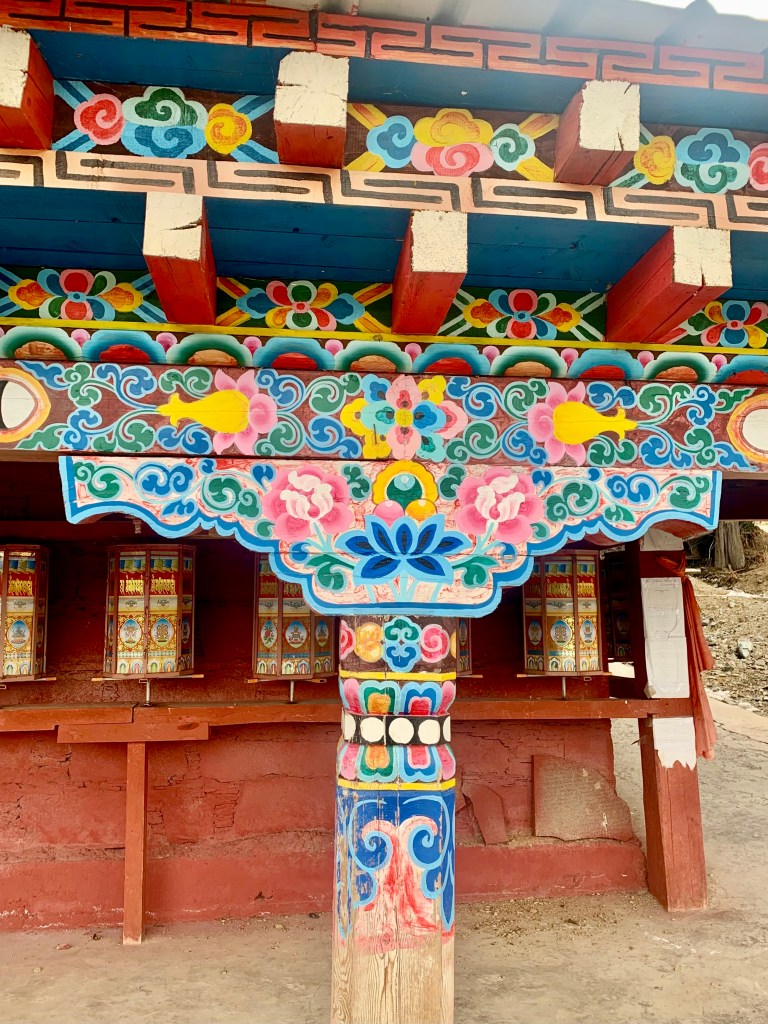
I just love all of the colors. So many buildings were painted like this! 
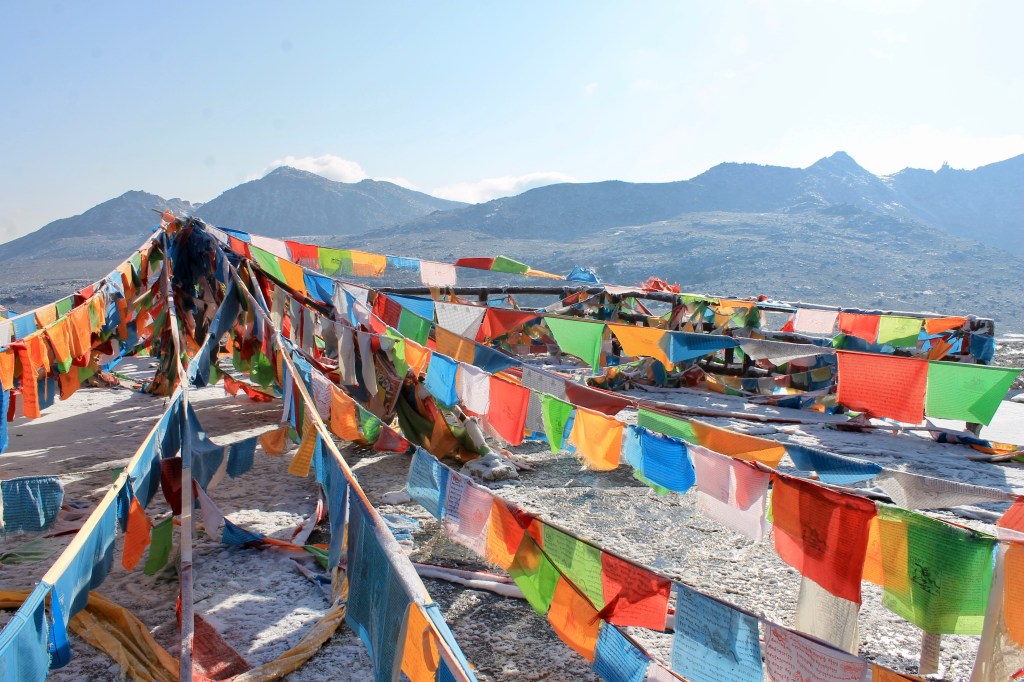
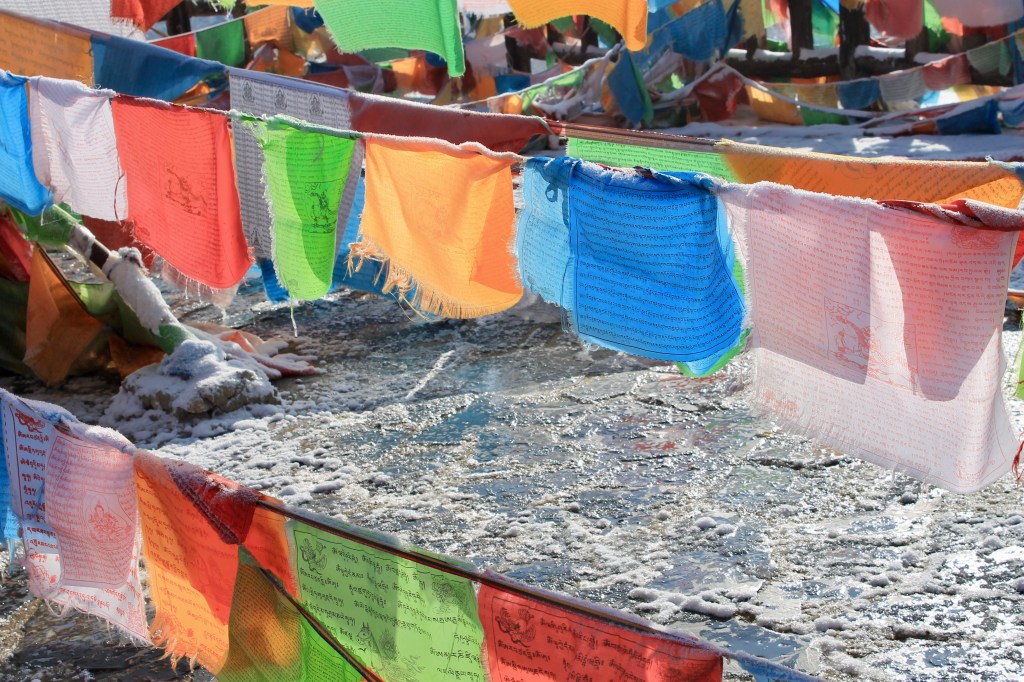
As we continued on and started getting higher and higher into the mountains, we were greeted by a welcome sight: SNOW! As someone who’s almost always had snow growing up, being here in Shanghai over the winter was a bit disappointing. Hard to feel like Christmas when there are palm trees by the side of the street, even if it does get cold. We found a small gathering of prayer flags by the side of the road, and couldn’t resist getting out to explore and take a few pictures. The contrast of the rainbow of colors against the white of the snow was so vibrant and beautiful. And yes, I did throw a few snowballs. (It’s beginning to look a lot like….spring break?)


That evening we drove to 理塘 Lithang (ལི་ཐང་།). At an altitude of around 4,000 meters above sea level (about 400 meters higher than Lhasa), Lithang is known as a “town up in the air.” In fact, it is one of the highest towns in the world! A blend of the traditional and modern, this town is considered a major center of Tibetan culture in Kham. While there, we are able to pass by the birthplace of the Seventh Dalai Lama Kelzang Gyatso (ཏ་ལའི་བླ་མ ༠༧ སྐལ་བཟང་རྒྱ་མཚོ།). Tibetans believe that the Sixth Dalai Lama predicted his own rebirth when he wrote the following song: White crane, lend me your wings. I go no further than Lithang, and thence, return again. As predicted, in 1708 – two years after the disappearance of the Sixth – the Seventh was born.
Though we didn’t have much time to explore Lithang, it was cool to get to walk around old town. We saw a performance of a traditional song and dance in one of the town squares, and ate a delicious meal at a small local restaurant! As the snow picked up on my walk back to the hotel, I couldn’t help but grow excited to leave the next day for the real reason I chose to go on this trip… Stay tuned!

The birthplace of the Seventh Dalai Lama 
As always, I will try to get the next post out sooner rather than later. (As always, it will probably end up more towards later.) Thanks for sticking around after my months-long hiatus from posting; during my online absence, I’ve been lucky enough to travel around much much more of China, and can’t wait to share it all with you. Adventure is out there!

 Adventure in the Great Wide Somewhere
Brilliant as always! Enjoy, enjoy, enjoy!
xo, Stacy Russell *The seven wonders of the world: to see, to hear, to touch, to taste, to feel, to laugh, to love.*
On Mon, Jan 3, 2022 at 5:41 AM Adventure in the Great Wide Somewhere wrote:
> madiebree posted: ” (Read Part I here! Read Part II here!) As our journey > continued through the Garzê Tibetan Autonomous Region in western Sichuan, > our next stop was the 龙灯草原 Longdeng Gesar Grassland, also known as the > Dragon Lantern Grassland. The 12th century legen” >
LikeLiked by 1 person