When it became clear that we would finally be allowed to leave Shanghai over our spring break – COVID restrictions have started easing up, and I received my vaccine in February – I immediately started thinking about travel plans. Though Shanghai is an exciting city to live in, I couldn’t wait to start seeing some of the rest of China! There are many places to see on my China bucket list, and in a way, I am thankful that I can use this time to really see them. Were I able to travel elsewhere, I would probably be going to Thailand or Japan or Indonesia or who knows where else on these breaks; instead, I am being given the time and opportunity to really explore this country. And explore I shall!
Though I’ve not been one to travel with a group in the past – I’m more of a “do a bunch of research then do it yourself” kind of gal – I decided to go on an organized trip for my spring break holiday. Were I to go up to Beijing (the Forbidden City! The Great Wall!), Xian (the Terracotta Warriors!), or Chengdu (Pandas!) I could easily do it on my own, but I set my sights on something a bit wilder, a bit less touristy… and I booked a 7-day trip with OK Deal Travel out to Western Sichuan/the Tibetan Autonomous Prefecture! Let’s pull up a handy map for reference, shall we? (I knew pathetically little about the layout of China before moving here, so no shame if you also need the visual reference! Hopefully by the time I leave China, both you and I will have a much better sense of the geography here!)
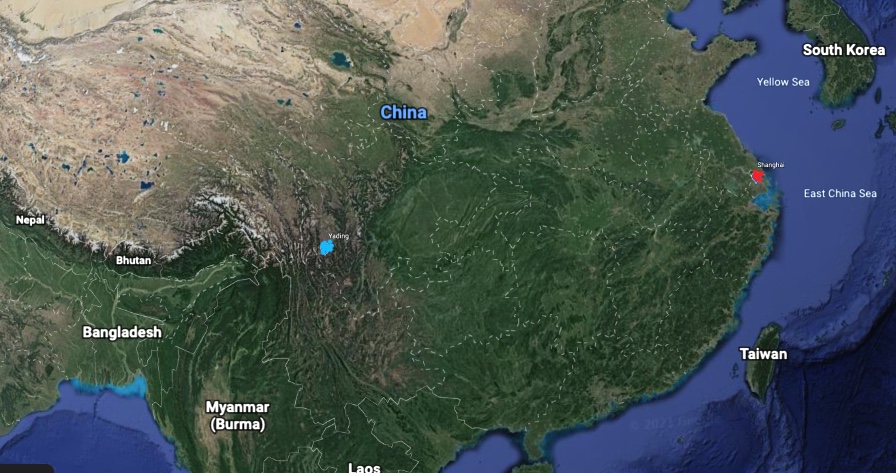
Shanghai is located on the very eastern coast of China (alas, there are not beautiful beaches near me…) – remind me sometime to do a “history of Shanghai” post, it’s actually quite interesting! China is divided up into 23 provinces, 5 autonomous regions, 4 municipalities, and 2 special administrative regions. (For obvious reasons, this can all get quite political and heated – I will refrain from going too deeply into it publicly on the internet; I am happy to chat about it in person, and encourage you to do some research of your own.) 四川 Sichuan (or, alternatively, Szechuan or Szechwan) is the 2nd largest of China’s provinces, and is located in the southwestern area of the country. This province is bordered by the Himalayas to the west, the Qinling Range to the east, and the mountains of Yunnan to the south. So while many of my colleagues were heading down south to the beaches of Sanya to soak up the sun, I was packing my hiking boots and my winter coat – I didn’t get to see snow over Christmas, so I was going to see some now, damn it!
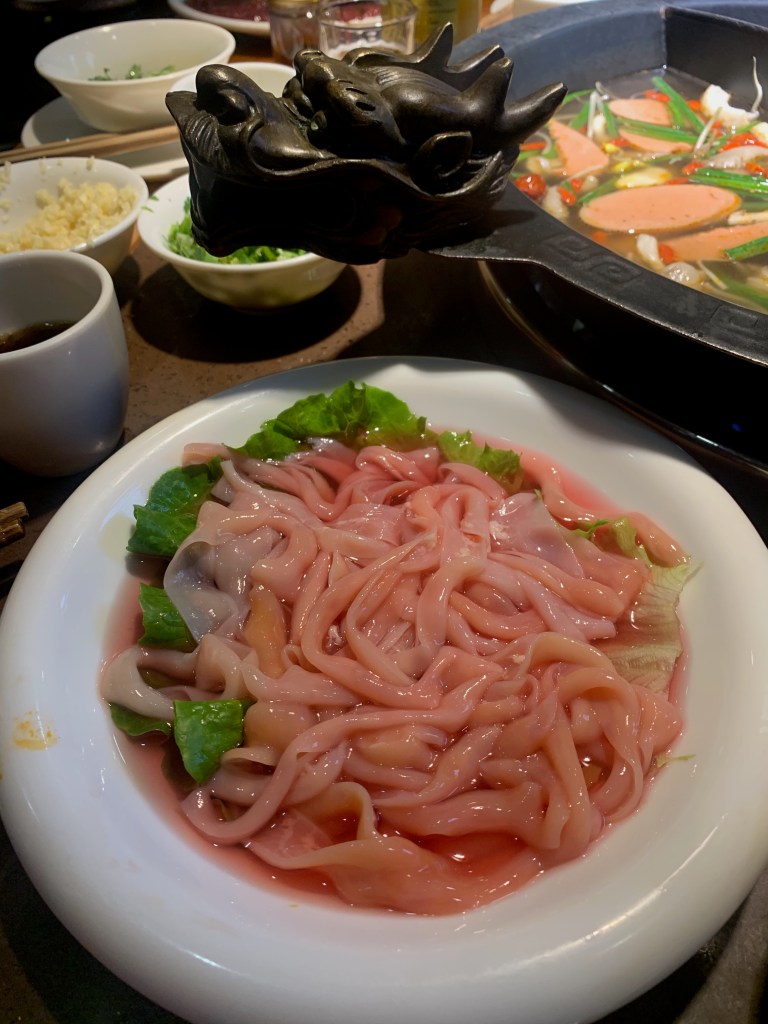
Going to the airport felt a bit surreal. The last time I’d been in one had been my flight moving over here last September, which, let’s be honest, was a pretty intense experience. At least I didn’t need anxiety meds this time around! (If you’re new to my blog and want to read about it, I wrote a whole post about the process. You can read it here!) (Oooh, how very clickbait-y of me!!!) We started the trip flying from Shanghai over to 成都 Chengdu, the capital of China’s Sichuan province and the home of the giant pandas! Though I wasn’t in Chengdu long enough to do very much exploring (no giant pandas this time around), I did get to have a classic Sichuan meal for dinner that night – hot pot! As is the custom with many meals here, hot pot is a meal shared by a group of people sitting around a table together. Similar to fondue, a pot of hot boiling broth (usually spicy!) is placed into the middle of the table, then an assortment of raw ingredients are placed on the table that can be held in the pot and cooked: mushrooms, vegetables, thin slices of meat, quail eggs, tofu, leafy greens, potatoes, and (a new food adventure for me)… duck intestines! What do duck intestines taste like, you may be wondering? Not much, to be honest – all I could taste was the spice from the broth! The texture was what left the biggest impression on me: like a very long, very chewy noodle!

Hot pot!
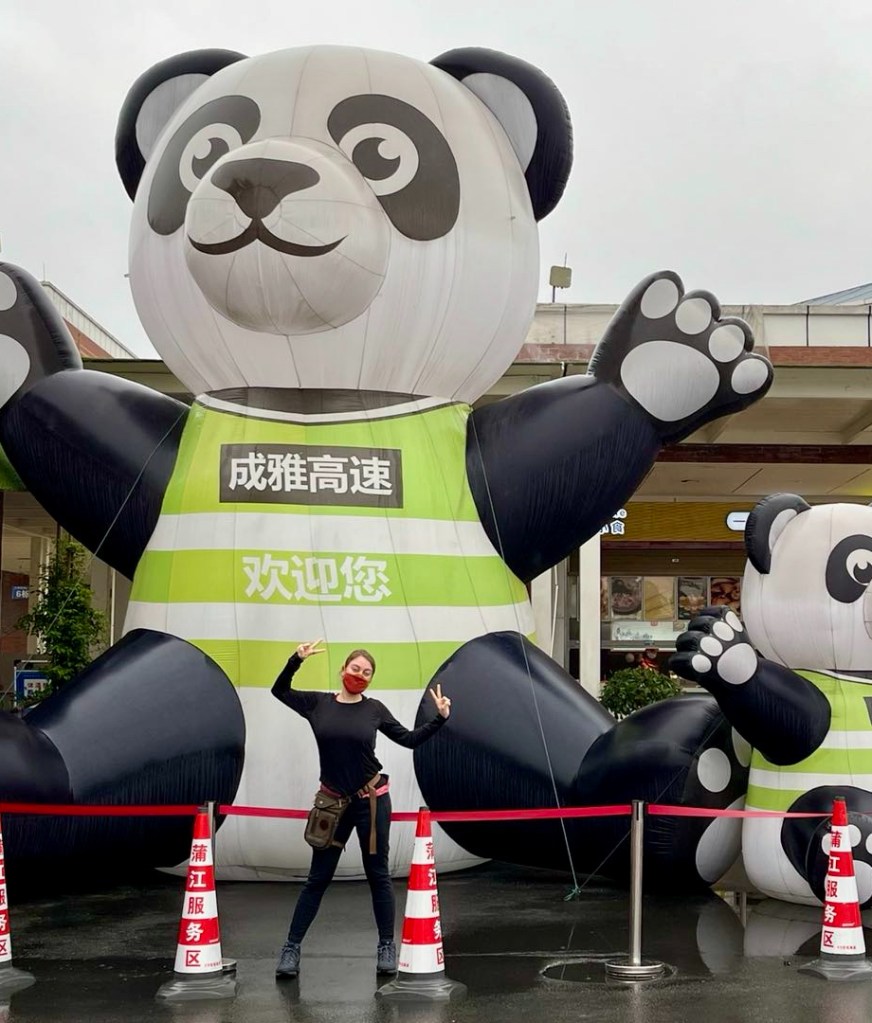
The next morning, we hopped on to our tour bus (where we would be spending many, many hours over the next week) and made our way to our first stop: 康定 Kangding! Kangding (or, in Tibetan, དར་རྩེ་མདོ་ Dartsendo) is the capital town of the Garzê Tibetan Autonomous Prefecture, and is known as the gateway to the Tibetan world. Historically, this is recognized as the border between the Kham region of Tibet and the Sichuan region of China. East of Kangding, the population and culture is primarily Han Chinese; west of Kangding, it’s predominantly Tibetan. (For our trip, we were starting here and moving west!) Kangding is known as having always been an important trading center between mainland China and Tibet – here, Chinese tea from Ya’an was brought to be traded for Tibetan wool. Imagine, carrying hundreds of pounds’ worth of tea and wool through the mountains on your back! What a beautiful place to stop and rest!

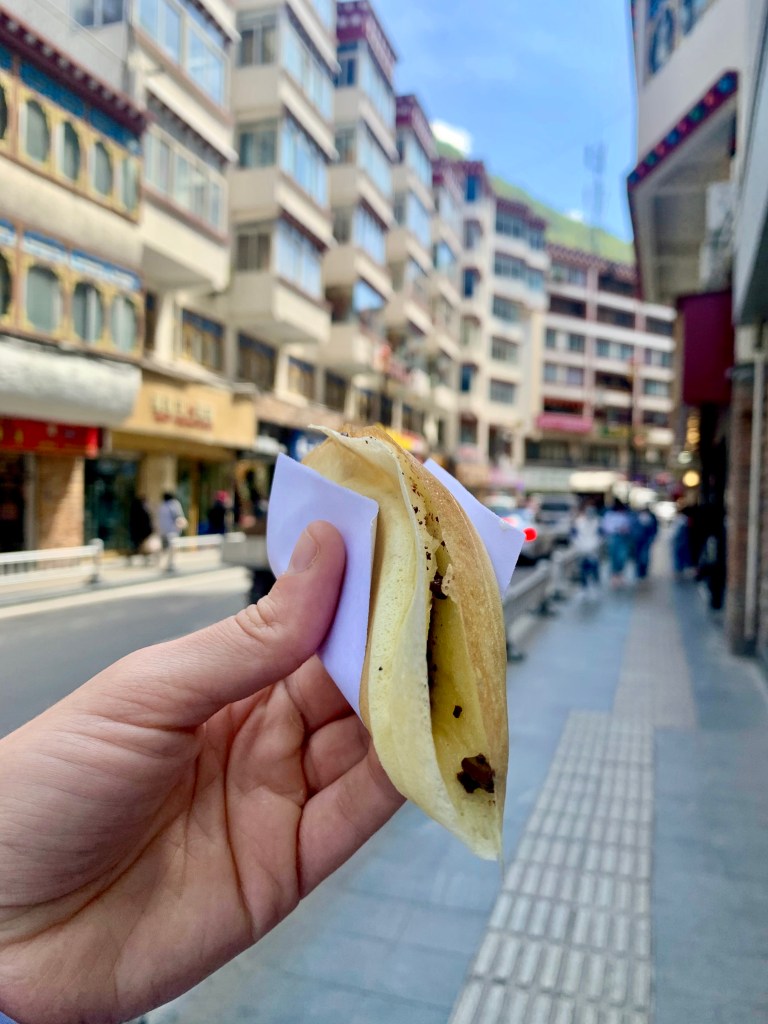
Though we didn’t spend more than a few hours exploring Kangding, it was so much fun to get to walk around and get a sense of the culture. The first thing I noticed was all of the COLOR! (This would be a common theme on this trip, I would soon learn.) Buildings were painted with all sorts of vibrant colors and designs, and it was beautiful to see the rainbows popping out against the backdrop of the mountains and the sky. I wandered through the streets looking through various shops and markets, and even got to try some street food – a yummy little pancake/crepe!

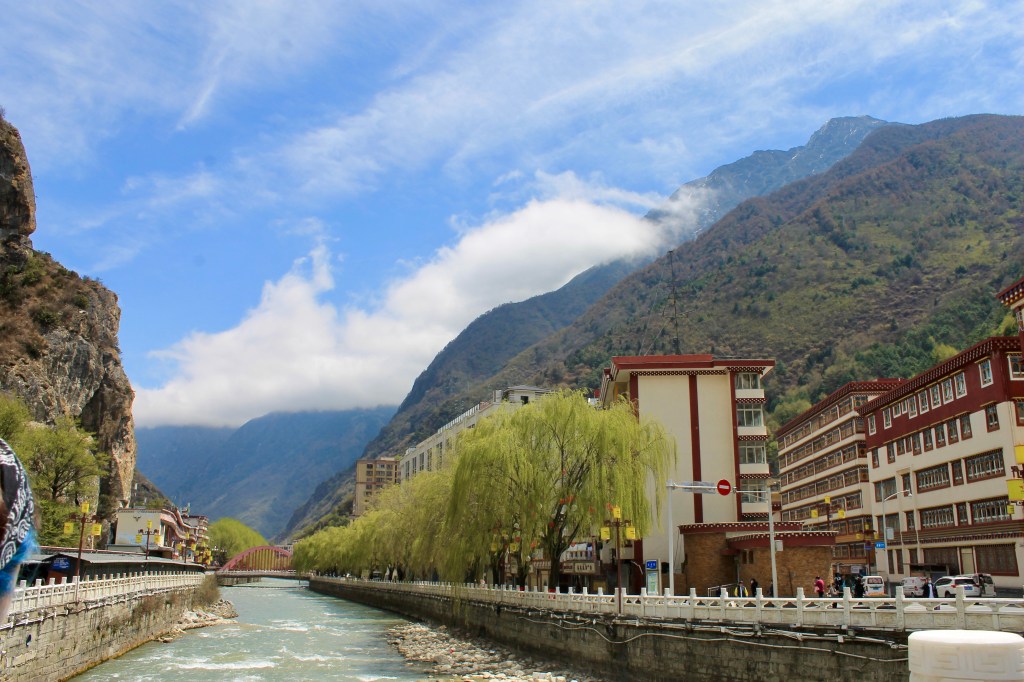


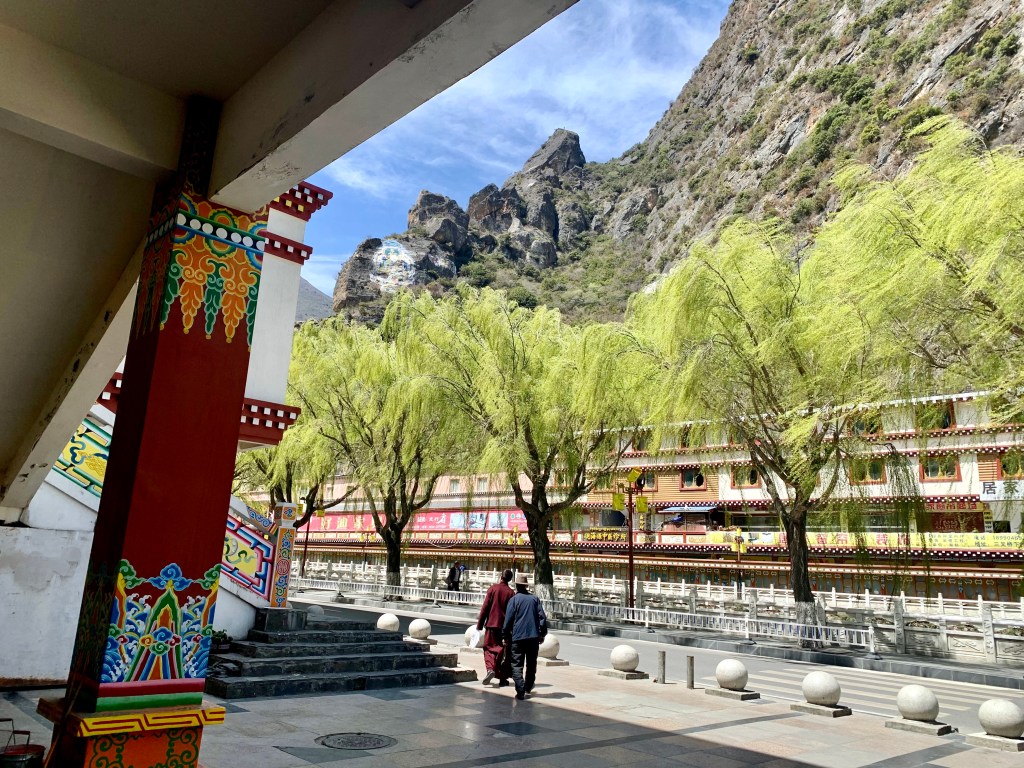
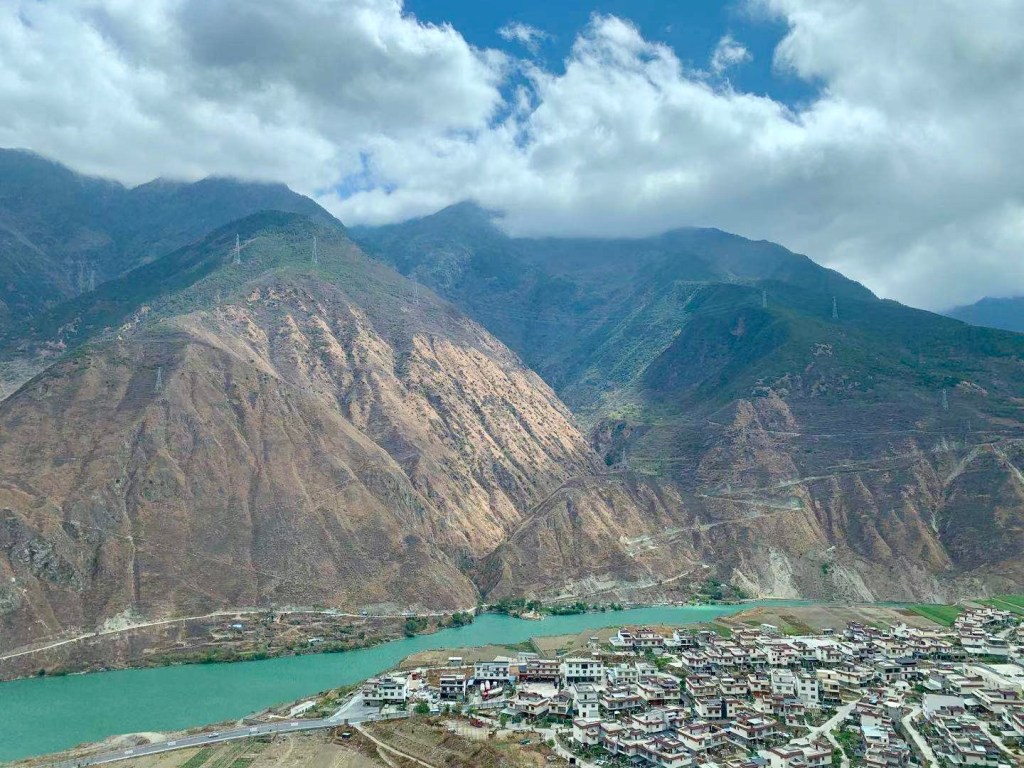
We drove on for a few more hours, slowly heading further and further west. Though it can be tiring, I secretly love long bus rides. I find it so interesting to see the scenery change outside my window – there’s an intimacy with the land that you just can’t get from flying over it. Though we had been driving through mountains and valleys, we soon started moving up in elevation and going instead through beautiful open grasslands and farmland, until we reached 新都桥 Xinduqiao (ར་རྔ་ཁ Rangakha) – known as a paradise for photographers and “a world of light and shadows,” Xinduqiao certainly did not disappoint! We stopped at the Gongkar Dzong Castle Lodge to stretch our legs and have a cup of yak butter tea, a traditional Tibetan drink! Creamy, savory, and nutty, yak butter tea is a warm respite from the cold grasslands, and is often drunk by Tibetan nomads for energy, fat, and calories. Though I’m not much of a tea drinker to begin with, this new sensation for my tastebuds was actually pretty good! (And I’d be having a lot of it on this trip.) When we left the lodge to get a good look around, we were gifted a view of 贡嘎山 Mount Gongga (མི་ཉག་གངས་དཀར་རི་བོ། Minyak Gangkar).
At 7,556 meters (24,790 feet) above sea level, Mount Gongga is the highest peak east of the Himalayas! With a name that translates to “snow white mountain,” there is no question as to why this mountain is known as the King of the Sichuan Mountains – its snowy peak towers above the rest! Fun fact: Mount Gongga was relatively unknown to the western world until 1930, when Joseph Rock (we’ll talk more about him in a future blog) miscalculated the height of the peak and excitedly sent a telegram to National Geographic claiming it was the highest mountain in the world! (He was 2,364 meters off, but don’t worry, Joseph Rock; everybody makes mistakes. Everybody has those days!) In 1932, Terris Moore and Richard Burdsall were the first (that we know of) to successfully reach the summit; afterwards, they called it “one of the great mountain giants of our planet.” Great mountain giant, indeed – Mount Gongga is one of the most difficult mountains in the entire world to climb. To put it in perspective: over 5,000 climbers have summited Mount Everest, Earth’s highest mountain. How many have reached the peak of Mount Gongga? Somewhere between 22-32. Until 1999, more people had died attempting than had made it to the top. Like I said: great mountain giant, indeed.
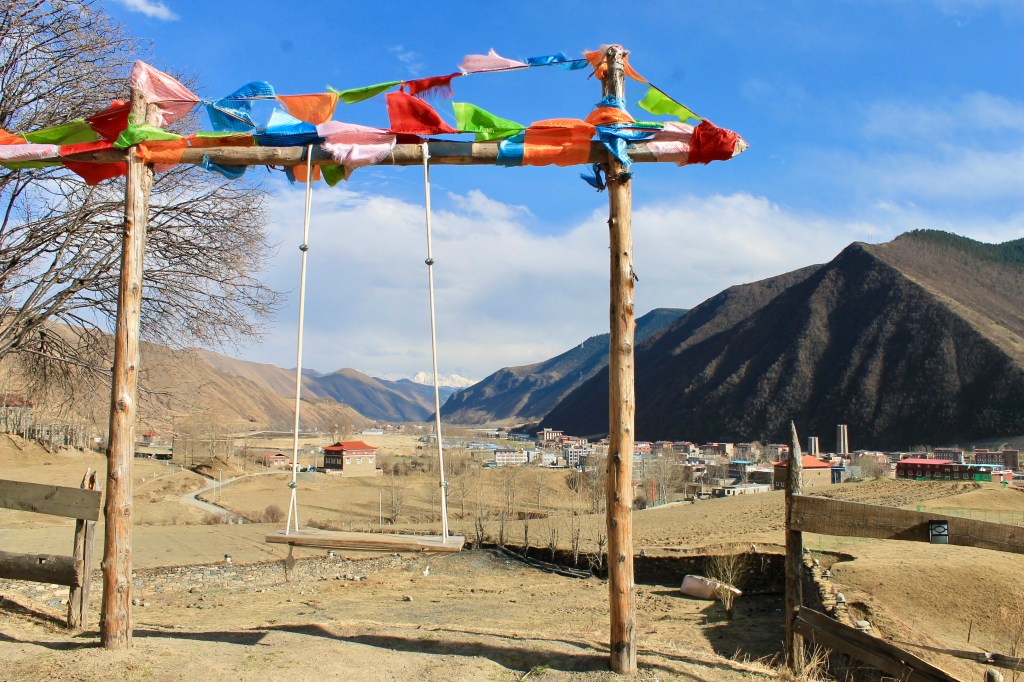
There’s the snowy peak of Mount Gongga! 
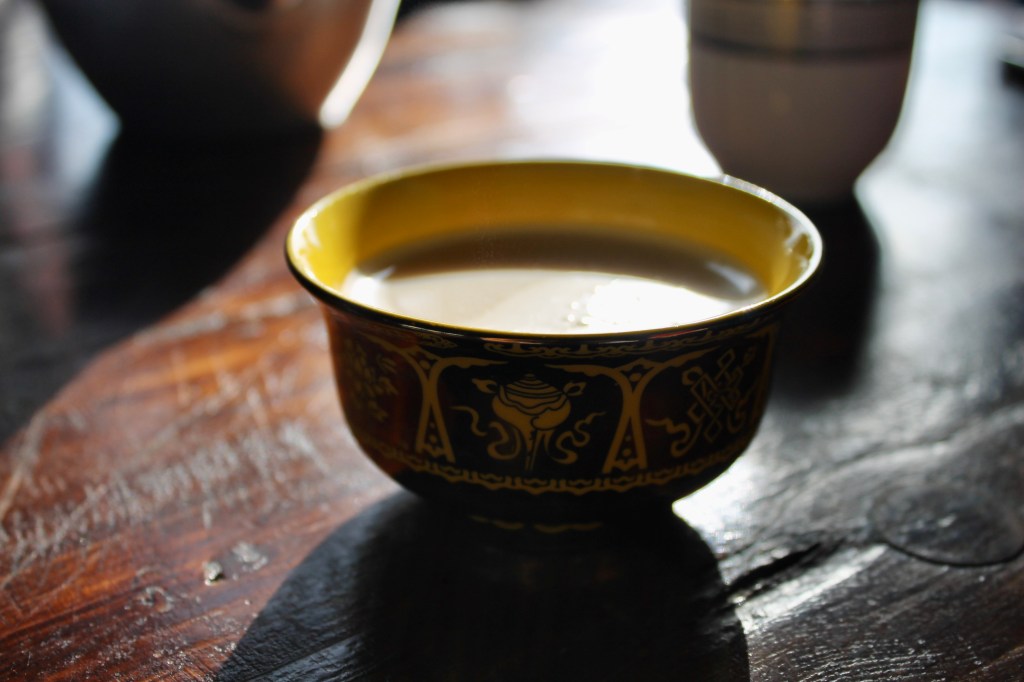
My first cup of yak butter tea! 
Gongkar Dzong Castle Lodge 

From there, we got back onto the bus and drove another hour or so to Tagong. I’ve got to be honest: this was when the altitude really started to hit me. My body had not yet adjusted to being that high, and so the only thing I really remember from that night was a wicked headache and feeling nauseous. In lieu of an exciting description of dinner that night (because I truly don’t think I had anything but warm water), I will leave you for today with this: my attempt to get some more oxygen into my system. (Note: the oxygen can did nothing, but luckily a good night’s sleep was all I needed to get back on my feet again! Onwards!)
 Adventure in the Great Wide Somewhere
Oh! How interesting. Did you send me this Kristin or did it come straight from Madie Bree. She is such a good writer— I couldn’t hold as much in my brain as she does!
Sent from my iPad
>
LikeLiked by 1 person
Hey Grandma! Since you subscribed to my blog, anything I post will just get emailed to you directly without anyone having to send it to you. Pretty cool, huh? And I can’t hold this much in my brain either – I always travel with a notebook, and I do a lot of research and take a lot of notes. For me, part of the fun of traveling is getting to learn new things; I’ve been trying to share that in my blog so that other people can learn new things too! Love you!
LikeLiked by 1 person
Thanks for sending the very interesting blogs about your travels. I really enjoyed.
LikeLiked by 1 person